Summary
- KDDI's enterprise account is best understood as a continuity contract. A buyer can assemble cheaper pieces from Rakuten Mobile, IIJmio, an NTT-based fibre line and direct cloud accounts, but KDDI sells one accountable stack across mobile, fixed access, data centres, device management, IoT, security and support.
- The hidden fixed cost is national telecom infrastructure. Spectrum, base stations, transport, peering, data centres, cloud partnerships, cyber response, storefronts, engineers and field operations must be paid for before any one customer uses a marginal gigabyte.
- The weakest evidence hinge is whether KDDI can make 5G, enterprise digital services and data-centre growth earn enough incremental return to offset mobile price pressure, the July 2022 outage memory, the June 2026 email-system breach, accounting-governance damage and the capital intensity of AI infrastructure.
- Public evidence supports a strong base: KDDI reported FY3/2026 consolidated operating revenue of 6,071.9 billion yen, Business Services revenue of 1,527.9 billion yen, 72.76 million au subscriptions, about 400,000 corporate customers and a three-year 1.2 trillion yen Digital Belt plan.
- The judgment would change if enterprise churn, data-centre utilisation, AI compute margins, service-credit history, power-cost exposure, cyber remediation costs or mobile ARPU moved materially away from the public trend.
The Buyer Is Not Shopping for a Cheaper SIM
Start with a manufacturer in Saitama, a logistics company in Osaka, or a regional retailer with stores that cannot go dark on a wet Monday morning. The procurement team already knows the cheap substitute. For staff phones, it can compare KDDI's au account with Rakuten Mobile's Rakuten SAIKYO Plan, which advertises a usage-based unlimited data offer and positions itself against Japan's large carriers (https://network.mobile.rakuten.co.jp/en/fee/saikyo-plan/). For light users and back-office tablets, it can buy IIJmio voice SIMs from 850 yen a month or data eSIMs from 440 yen a month, choosing either the NTT Docomo or au network type during application (https://www.iijmio.jp/hdc/visitors/en/). For benchmark discipline, it can point to NTT Docomo's ahamo at 2,970 yen a month for 30 GB, with an 80 GB option on top (https://www.docomo.ne.jp/english/charge/). For fixed access, it can use building fibre, NTT-based alternatives, cable or a local integrator. For cloud, it can buy directly from AWS, Microsoft, Google or a Japanese managed-service provider.
The visible unit in the KDDI negotiation is a monthly account. It includes mobile lines, a fibre or VPN layer, data-centre or cloud connectivity, endpoint controls, support numbers, service-level language and perhaps a device-refresh schedule. The hidden job is not the SIM. It is continuity across radio, fixed access, enterprise applications, data-centre rooms, cloud routes and incident support. KDDI's own business-segment page describes the Telecom Core segment as smartphones, mobile phones, FTTH and CATV services for individuals and corporations, while its Business Growth segment includes AI Integration, Cybersecurity, Connected Solutions, Data Center and AI-BPO (https://www.kddi.com/english/corporate/ir/finance/about-kddi-business/). That is the product boundary that matters for an enterprise buyer. KDDI is not asking to be judged only against a discount mobile plan. It is asking to be judged against the cost of managing unbundled suppliers when a store payment terminal, delivery app, factory sensor or executive phone fails.
The premium begins as a complaint. The account is more expensive than the buyer's spreadsheet of cheap mobile, fibre and cloud alternatives. KDDI's au consumer page lists high-value mobile plans packed with limitless data, tethering allowances, entertainment bundles, Ponta Pass, au Starlink Direct on supported models, 5G Fast Lane on eligible 5G SA contracts and overseas data benefits (https://www.au.com/english/mobile/charge/). Enterprise procurement will strip away most of that consumer packaging, but the signal is clear: KDDI's strategy is not to be the cheapest raw connection. It wants to make the account feel richer, stickier and safer. The economic question is whether the extra bundle lowers the customer's total operating risk more than it raises the monthly bill.
That is also where the thesis can fail. If the customer believes that mobile coverage, fibre resilience, cloud connectivity and endpoint security are easy to orchestrate internally, the KDDI premium looks like legacy carrier rent. If the customer remembers that a national outage can stop connected cars, airport radios, bus IC cards, ATMs and water-meter collection, the premium looks more like insurance. KDDI itself said the July 2022 failure affected corporate customers in logistics, automobiles, administrative services, banking and transportation (https://www.kddi.com/english/important-news/20220729_01/). The buyer is therefore weighing a service bill against the cost of being the person who chose the cheaper stack before the next failure.
KDDI's Identity Is Infrastructure, Not a Sales Brochure
KDDI Corporation is a Tokyo-headquartered telecommunications company. Its corporate profile lists establishment on June 1, 1984, main business as telecommunications, headquarters at The Linkpillar 1 North in Takanawa, Minato-ku, President and CEO Hiromichi Matsuda, capital of 141,852 million yen and 73,198 consolidated employees as of March 31, 2026 (https://www.kddi.com/english/corporate/kddi/profile/). The modern KDDI brand was created by the merger of DDI, KDD and IDO in 2000, with the au mobile brand unified in 2000 and KDDI Corporation becoming the corporate name in 2001 (https://www.kddi.com/english/corporate/kddi/history/).
This history matters because KDDI's economic asset is an inherited and rebuilt national stack. The old pieces included long-distance circuits, international cables, regional mobile businesses and fixed access. KDDI's history page notes that KDD started service on the No. 3 Trans-Pacific Cable in 1989, calling it the first submarine optical cable in the Pacific Ocean and describing a 13,300 km route connecting Chikura, Guam, Hawaii and the U.S. mainland (https://www.kddi.com/english/corporate/kddi/history/). It also records KDDI Hikari Plus, now au Hikari, launched in 2003 as optical fibre internet, phone and TV over one fibre (https://www.kddi.com/english/corporate/kddi/history/). The current enterprise buyer is not just buying this history, but that history explains why KDDI can plausibly sell continuity rather than only capacity.
Public scale is visible. KDDI's investor "at a glance" page reports, as of the end of March 2026, 73,198 employees, 72.76 million mobile contracts, approximately 400,000 corporate customers, over 60 million connected connections worldwide including SORACOM, operating revenue of 6,072 billion yen and operating cash flow of 1,789 billion yen (https://www.kddi.com/english/corporate/ir/ataglance/). Its mobile subscription page shows au subscriptions rising from 70,347,100 in March 2025 to 72,760,600 in March 2026, with Kanto alone rising to 41,481,200 (https://www.kddi.com/english/corporate/ir/finance/mobile-subscription/). A buyer can read these numbers two ways. Scale makes KDDI harder to displace because the company touches so many customer, device and support surfaces. Scale also means mistakes become national events.
The company's own FY3/2026 results put the account in context. KDDI reported consolidated revenue of 6,071.9 billion yen, up 4.1% year on year, and consolidated operating income of 1,099.1 billion yen, up 1.1% (https://www.kddi.com/english/corporate/ir/finance/result-forecast/). The same page reports Business Services operating revenue of 1,527,914 million yen and operating income of 263,884 million yen, with growth area revenue including IoT-related services and Data Center (https://www.kddi.com/english/corporate/ir/finance/result-forecast/). This is not a small managed-service wrapper around a mobile reseller. It is a large carrier attempting to turn its core network into a platform for enterprise growth.
The Hidden Fixed Cost Is the Network Before the Customer Uses It
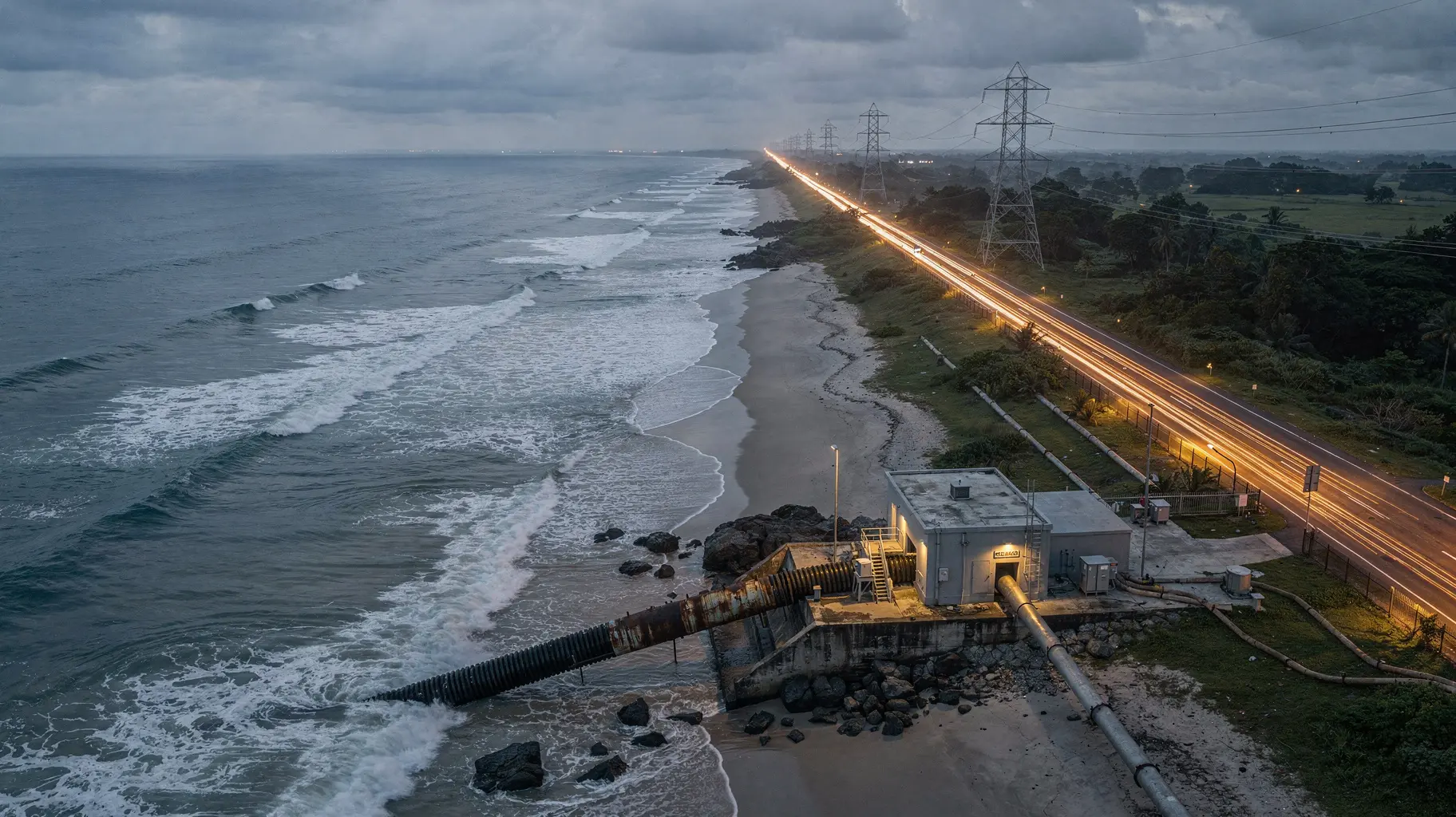
The cheap-SIM comparison hides a cost that telecom buyers often know but dislike paying for: the network exists before the line is activated. KDDI has to reserve spectrum, build and lease sites, install radios, operate core network functions, maintain transport, buy routers and software, monitor traffic, support emergency recovery, run customer systems, manage stores and contact centres, and carry idle capacity for peak or disaster scenarios. The marginal cost of one more gigabyte can look low. The fixed cost of making that gigabyte reachable in a railway station, warehouse, ferry route, disaster zone or rural service area is not low.
Spectrum is the first fixed cost. In April 2019, KDDI said it received a total of 600 MHz of 5G frequencies, including two 100 MHz ranges in the 3.7 GHz band and one 400 MHz range in the 28 GHz band, the most bandwidth it had ever been allocated (https://www.kddi.com/english/corporate/ir/ir-library/annual-report/2019-online/feature2/). The point is not that spectrum alone creates cash flow. It creates an obligation to deploy, optimize and monetize. Mid-band 5G is useful because it adds capacity, but it needs denser radio planning than low-band coverage. Millimetre-wave spectrum is powerful but narrow in reach. A KDDI account that promises enterprise-grade performance has to pay for the engineering bridge between coverage and capacity.
KDDI's recent network work shows how much that bridge depends on partners. Fujitsu's January 2023 release says KDDI, Samsung and Fujitsu began commercial deployment of O-RAN compliant 5G Open vRAN sites in Osaka, using Samsung virtualized CU/DU software, Fujitsu radio units and a zero-touch provisioning system to automate base-station setup (https://www.fujitsu.com/global/about/resources/news/press-releases/2023/0124-01.html). Ericsson said in 2021 that it was selected by KDDI and SoftBank for Japan's first Multi-Operator RAN, letting the operators accelerate nationwide 5G deployment while lowering cost and time to market (https://www.ericsson.com/en/press-releases/2021/6/ericsson-sets-up-japans-first-multi-operator-ran-with-kddi-and-softbank). Nokia said KDDI selected Nokia's 5G Core and Converged Charging software to support a fully automated, cloud-native standalone 5G core, with network slicing and monetization capabilities (https://www.nokia.com/newsroom/nokia-to-drive-kddis-5g-transition-with-standalone-core-and-monetization-solutions/).
These sources are vendor announcements, so they are not neutral profit evidence. They are still useful because they reveal the cost structure. KDDI's continuity promise is assembled from radio vendors, core software, automation, routers, cloud platforms, field engineering and spectrum. Supplier dependence is therefore not a side issue. If a key vendor's roadmap, security posture, licensing cost, delivery schedule or support model changes, the KDDI account absorbs that pressure before the enterprise buyer sees it. If the automation works, KDDI can lower the cost of keeping coverage and quality ahead of traffic.
If it does not, the enterprise premium has to carry more labour and more operational risk.
Pricing Power Has to Survive Unbundling
The enterprise account is vulnerable because every component has a visible substitute. Mobile users can move downmarket. IIJmio's English page makes the low end concrete, with data-only eSIM from 440 yen a month and voice SIM from 850 yen a month before call charges (https://www.iijmio.jp/hdc/visitors/en/). Rakuten Mobile markets a simple national plan and says speed may be restricted at peak times, but its basic proposition is that customers should not need a premium carrier plan to get generous data (https://network.mobile.rakuten.co.jp/en/fee/saikyo-plan/). NTT Docomo's ahamo gives another low-friction reference point at 30 GB for 2,970 yen (https://www.docomo.ne.jp/english/charge/). SoftBank's English pricing page does not expose the same detail in its navigation, but it keeps the buyer's comparison set alive across Pay-toku2, Teigaku Unlimited and other plans (https://www.softbank.jp/en/mobile/price_plan/).
Fixed access is also unbundled. au Hikari sells home fibre with simple rate plans and positions fibre as a familiar broadband choice (https://www.au.com/english/internet/auhikari/). An enterprise with multiple sites can blend KDDI access, NTT-based fibre, cable, local ISPs and wireless backup. On cloud, the substitute is even clearer: direct hyperscaler contracts, SaaS, local managed service providers and in-house network engineers. KDDI's own Cloud Inventory page shows why the carrier wants to climb above connectivity. It describes integrated endpoint security for asset management, detection of policy-violating clients, HDD encryption, USB restrictions, operational logs, behavioural detection, automatic vulnerability diagnosis and device inventory that can scale from a few dozen devices to tens of thousands (https://biz.kddi.com/english/service/cloud-inventory/). Those are not SIM features. They are account-control features.
The economics depend on whether the buyer values one accountable operator. A small company may prefer cheap lines and ad hoc support. A chain with hundreds of tablets, routers, payment devices, store cameras and delivery handhelds may not. The line item that looks expensive on a telecom invoice may be cheaper than coordinating a mobile carrier, a fibre wholesaler, a cloud provider, a security vendor and a device-management platform during an incident. KDDI's task is to show that the bundle reduces the customer's management labour and outage cost.
The customer's task is to avoid paying for bundle features that are not actually integrated.
This is why KDDI's pricing power is not a pure market-share story. The company can have 72.76 million au subscriptions and still lose specific customers to cheap substitutes if the customer sees no continuity premium. Conversely, it can keep a more expensive enterprise account if the account manager can prove that mobile, fixed access, cloud connectivity, security and incident support are coordinated in practice. The visible unit is a monthly bill. The real unit is the avoided Monday morning war room.
Revenue Growth Looks Solid, but the Quality of Growth Matters
KDDI's FY3/2026 results show a company with enough scale to invest. Consolidated operating revenue rose 4.1% to 6,071.9 billion yen, while operating income rose 1.1% to 1,099.1 billion yen (https://www.kddi.com/english/corporate/ir/finance/result-forecast/). KDDI projects FY3/2027 operating revenue of 6,410.0 billion yen and adjusted operating income of 1,210.0 billion yen (https://www.kddi.com/english/corporate/ir/finance/result-forecast/). Its May 2026 results presentation says mobile revenues in the Personal Services segment rose from 1,972.7 billion yen in FY25-03 to 2,005.4 billion yen in FY26-03, with mobile ARPU at 4,440 yen, up 100 yen year on year, and smartphone subscriptions at 33.23 million (https://www.kddi.com/extlib/files/english/corporate/ir/library/presentation/2026/pdf/kddi_260512_e_main_AOyaWA.pdf).
The Business Services story is more important for this article. KDDI's results page reports Business Services revenue of 1,527.9 billion yen and operating income of 263.9 billion yen for FY3/2026 (https://www.kddi.com/english/corporate/ir/finance/result-forecast/). The May 2026 results presentation shows DX operating income rising from 40.6 billion yen in FY25-03 to 43.2 billion yen in FY26-03, while the broader Business Services segment is described as growth driven by value creation (https://www.kddi.com/extlib/files/english/corporate/ir/library/presentation/2026/pdf/kddi_260512_e_main_AOyaWA.pdf). A February 2026 Q3 Q&A said Business Services growth was driven by base mobile business and growth areas including IoT and data center, while BPO and SI-related services turned around in Q3 alone (https://www.kddi.com/extlib/files/english/corporate/ir/library/presentation/2026/pdf/kddi_260206_e_qa_pnY7Gj.pdf).
The quality question is whether these numbers are still mostly carrier economics or whether they prove a higher-value continuity platform. Mobile ARPU improvement is useful, but Japanese mobile pricing remains politically and competitively sensitive. Business Services growth is useful, but enterprise digital work can be labour-heavy and margin-variable. Data-centre growth is useful, but it requires power, cooling, land, chips, network capacity and long payback periods. KDDI's new strategy tries to address that by reorganizing into Telecom Core, Personal Growth and Business Growth segments, with Business Growth covering AI Integration, Cybersecurity, Connected Solutions, Data Center and AI-BPO (https://www.kddi.com/english/corporate/ir/finance/about-kddi-business/).
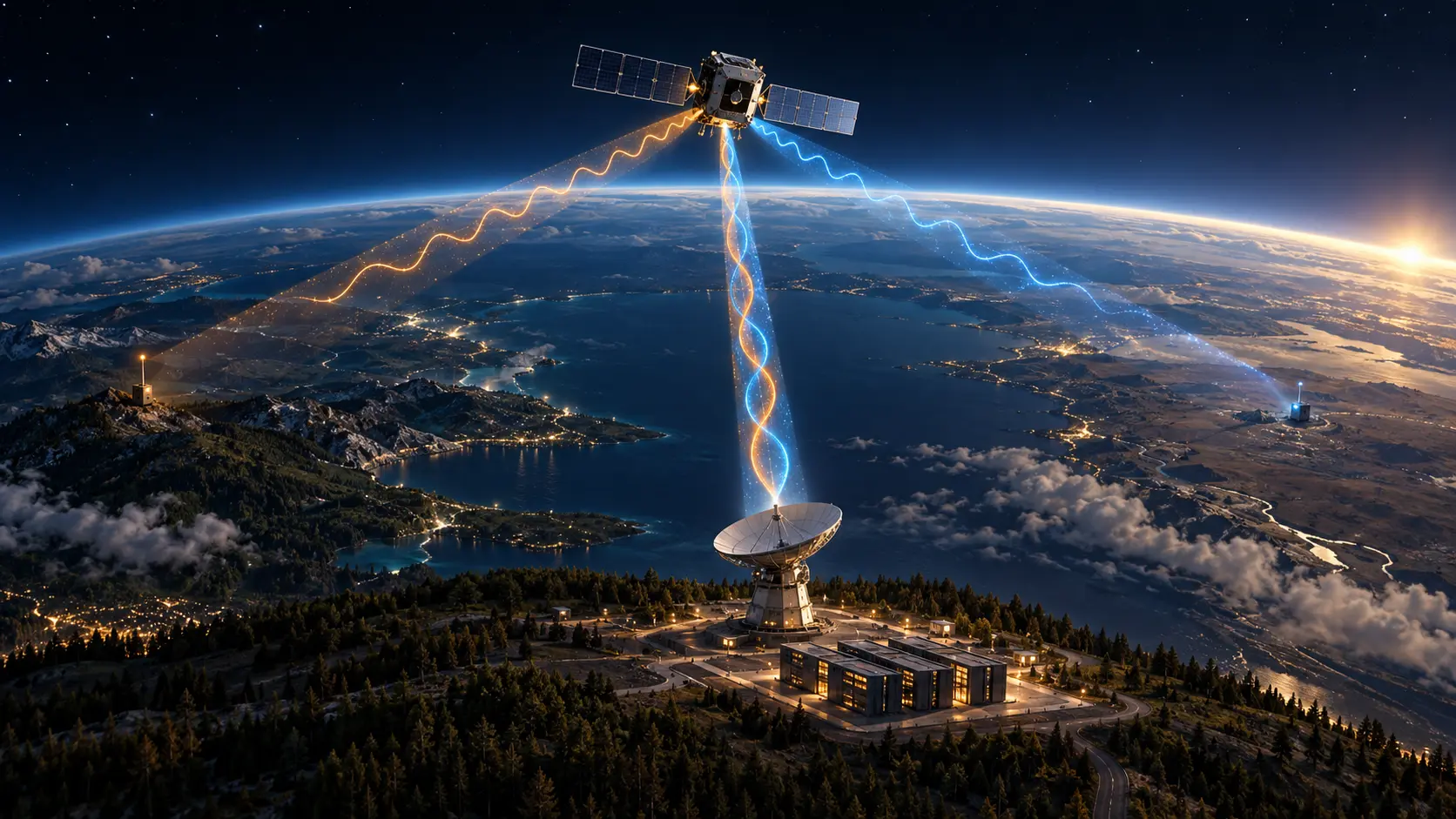
The official strategy language is ambitious. KDDI says its Power-to-Connect 2028 plan aims to build a nationwide low-latency network and AI computing resource infrastructure covering land, sea and air across Japan, integrating conventional communications infrastructure with new AI infrastructure (https://newsroom.kddi.com/english/news/detail/kddi_nr-1031_4537.html). The mid-term strategy presentation gives the capital number: the Digital Belt initiative includes investment of 1.2 trillion yen over three years, improving infrastructure operations through AI and automation, and technologies such as submarine cables, AI data centres, cable landing stations, satellite ground stations, low-earth-orbit satellites and about 100,000 base stations as sensing hubs in the 6G era (https://www.kddi.com/extlib/files/english/corporate/ir/library/presentation/2026/pdf/kddi_260527_e_plan_INeC9Y.pdf).
That makes the investment case cleaner and riskier at the same time. KDDI is not only defending mobile revenue. It is asking investors and customers to believe that a national telecom operator can become a low-latency AI and continuity infrastructure layer. The upside is that enterprise customers may pay more for secure, local, integrated services. The downside is that the capital cycle gets heavier before the proof of margin arrives.
The Outage Memory Is a Real Cost
The July 2022 outage is the event that prevents this from becoming a simple scale story. KDDI's own incident page says the failure began at about 1:35 a.m. on July 2, 2022 and lasted until 3:00 p.m. on July 4, a total of 61 hours and 25 minutes, nationwide (https://www.kddi.com/english/important-news/20220729_01/). KDDI said voice impact was about 22.78 million users and data impact was 7.65 million or more on a KDDI non-consolidated basis, with corporate effects across logistics, connected cars, administrative services, banking and transportation (https://www.kddi.com/english/important-news/20220729_01/). Its 2022 integrated-report special page says that with Okinawa Cellular included, the effect rose to about 23.16 million voice users and 7.75 million or more data users (https://www.kddi.com/extlib/files/english/corporate/ir/ir-library/sustainability-integrated-report/2022-online/pdf/kddi_sir2022_e06.pdf).
The mechanism matters more than the headline. KDDI described a maintenance-related routing misconfiguration that caused location registration request signals to be resent, congesting VoLTE nodes and subscriber databases nationwide (https://www.kddi.com/english/important-news/20220729_01/). KDDI said it reviewed operation procedure rules, risk assessment and recovery procedures, developed tools to detect and recover congestion at VoLTE nodes, and improved customer announcements (https://www.kddi.com/extlib/files/english/corporate/ir/ir-library/sustainability-integrated-report/2022-online/pdf/kddi_sir2022_e06.pdf). It also submitted a serious accident report under Article 28 of the Telecommunications Business Act and received a reprimand and administrative guidance from the Ministry of Internal Affairs and Communications on August 3, 2022 (https://www.kddi.com/extlib/files/english/corporate/ir/ir-library/sustainability-integrated-report/2022-online/pdf/kddi_sir2022_e06.pdf).
For a buyer, the outage cuts both ways. It proves that KDDI is a critical infrastructure provider whose failure can touch many industries. It also weakens the comfort of the continuity premium. A vendor that sells continuity has to carry the memory of a continuity failure. That memory does not necessarily drive customers away. It changes the evidence required to keep them. A procurement committee can ask for outage response procedures, emergency roaming options, redundant access, service credits, escalation paths and recovery test evidence. The July 2022 event becomes part of the price negotiation.
KDDI and Japan's other mobile carriers have since moved toward cross-carrier emergency backup. In March 2026, NTT Docomo, KDDI, Okinawa Cellular, SoftBank and Rakuten Mobile announced JAPAN Roaming, a nationwide emergency roaming service available from April 1, 2026, allowing users to temporarily connect to another carrier's 4G LTE network when their primary service is disrupted by large-scale disasters or major outages (https://newsroom.kddi.com/english/news/detail/kddi_nr-958_4373.html). Full Roaming mode includes voice, data up to 300 kbps and SMS, while Emergency Calls Only mode covers emergency numbers (https://newsroom.kddi.com/english/news/detail/kddi_nr-958_4373.html). This is positive for public resilience, but it also reveals the market truth: continuity is now collaborative because no single operator can credibly claim that its own network is enough in every major emergency.
Cyber and Governance Incidents Test the Same Promise
Continuity is not only radio uptime. It includes trust in managed systems, credentials, billing, audit controls and group governance. KDDI's June 2026 email-system incident is therefore directly relevant to enterprise buyers, even though it was not a mobile radio outage. KDDI's Japanese press release dated June 23, 2026 says it confirmed unauthorized access on June 17 to an email system provided for internet service providers, implemented repairs and defensive measures the same day, and found that a vulnerability in third-party software had been exploited (https://newsroom.kddi.com/news/assets/2026/kddi_nr_s-71_4593/kddi_nr_s-71_4593_pdf_01.pdf). KDDI said up to 14.22 million email addresses and passwords tied to mailboxes for six ISP services may have leaked, including cancelled and dormant customers, and that some passwords were hashed or encrypted (https://newsroom.kddi.com/news/assets/2026/kddi_nr_s-71_4593/kddi_nr_s-71_4593_pdf_01.pdf).
The incident does not by itself prove that KDDI's enterprise security products are weak. It does prove that shared infrastructure can multiply blast radius. KDDI's business pages sell endpoint security, cloud inventory, automatic vulnerability diagnosis and managed controls (https://biz.kddi.com/english/service/cloud-inventory/). The June 2026 incident forces a buyer to ask how third-party software vulnerability management, credential storage, tenant isolation, incident notification and password-change campaigns are handled in shared services. A continuity account is only as good as the weakest shared layer.
The governance issue is separate but still important. In March 2026, KDDI disclosed the receipt of a Special Investigation Committee report into inappropriate transactions at consolidated subsidiaries BIGLOBE and G-PLAN (https://newsroom.kddi.com/english/ir-news/assets/2026/kddi_ir-1111_4393/kddi_ir-1111_4393_pdf_A.pdf). The committee's findings described fictitious circular transactions lacking substance, with the investigation reviewing documents, digital forensics and interviews (https://newsroom.kddi.com/english/ir-news/assets/2026/kddi_ir-1110_4385/kddi_260331_e_main_01_nwCxPn.pdf). The accounting impact slide reports total restatements of 246.1 billion yen in operating revenue, 49.9 billion yen in gross profit and 32.9 billion yen in external outflows across periods through Q3 FY3/2026 (https://newsroom.kddi.com/english/ir-news/assets/2026/kddi_ir-1110_4385/kddi_260331_e_main_01_nwCxPn.pdf).
For the KDDI account, the governance problem has a specific economic meaning. Enterprise customers do not only buy network metrics. They buy confidence that the group can operate complex subsidiaries, partner channels and managed services without hidden control failures. KDDI's May 2026 results presentation says it is implementing initiatives to strengthen group governance, including top-management visits to strategic subsidiaries, rule reviews, dialogue sessions, AI and system evaluation, and measures to preserve lessons learned (https://www.kddi.com/extlib/files/english/corporate/ir/library/presentation/2026/pdf/kddi_260512_e_main_AOyaWA.pdf). Those remedies may be real. The buyer's question is whether they reach the operational surfaces that matter: service desks, partner sales, data-centre operations, managed security, subcontractors and customer-support workflows.
Data Centres Make the Continuity Account More Capital Intensive
KDDI's data-centre story is no longer only colocation. KDDI's business data-centre page says it operates the Telehouse brand with over 45 locations in major cities across Europe, North America and Asia, offering 24/7, 365-day operational maintenance, more than 30 years of experience, over 3,000 customers worldwide and strong connectivity with cloud service providers and telecom companies (https://biz.kddi.com/english/service/data-center/). Telehouse's Japan page says that in partnership with KDDI, Telehouse offers an extensive network of Japan data centres, with KDDI facilities in nine strategic locations throughout the country and end-to-end ICT solutions (https://www.telehouse.net/data-centre-services/japan/).
Telehouse gives KDDI an international continuity asset. In October 2025, Telehouse announced it had broken ground on Telehouse West Two at London Docklands, a 275 million pound investment due for completion in 2028, with two meet-me rooms, four secure connectivity risers, BREEAM Excellent design, 100% renewable energy, 99.999% uptime guarantees, 32,000 square metres of gross area, 11,292 square metres of white space and 33 MW building capacity (https://www.telehouse.com/2025/10/23/telehouse-breaks-ground-on-new-275m-data-centre-telehouse-west-two/). That is not a Tokyo enterprise account, but it shows the capital profile behind KDDI's data-centre promise: power, cooling, interconnection, security and long construction timelines.
The more consequential domestic move is Osaka Sakai. KDDI announced that the Osaka Sakai Data Center commenced operations on January 22, 2026, using the former Sharp Sakai Plant site to provide GPUs and on-premises services for Google's Gemini model, aimed at pharmaceuticals, manufacturing and other industries (https://newsroom.kddi.com/english/news/detail/kddi_nr-916_4323.html). KDDI said the facility reuses high-capacity power and cooling from the Sharp plant acquired in April 2025, uses water-cooling technologies developed at KDDI Telehouse Shibuya, launched in half a year, includes NVIDIA GB200 NVL72 systems, and uses 100% renewable energy (https://newsroom.kddi.com/english/news/detail/kddi_nr-916_4323.html). HPE separately said it and KDDI would deploy NVIDIA GB200 NVL72 by HPE at Osaka Sakai, using hybrid air and direct liquid cooling to support startups and enterprises developing AI applications and training large language models (https://www.hpe.com/us/en/newsroom/press-release/2025/06/kddi-and-hpe-join-forces-to-launch-ai-data-center-operations-by-early-2026.html).
This is strategically coherent. KDDI wants the enterprise buyer to see AI compute, telecom connectivity, cloud access and data sovereignty as one stack. KDDI's earlier announcement with Sharp said it would acquire land, buildings and electrical facilities from Sharp, aiming to start construction by end-March 2025 and full-scale operation by end-March 2026 (https://newsroom.kddi.com/english/news/detail/kddi_nr_s-22_3630.html). The June 2024 discussion announcement framed the project around three challenges in large AI data centres: procuring state-of-the-art computing equipment, developing efficient cooling and securing electric power and space (https://newsroom.kddi.com/english/news/detail/kddi_nr_s-9_3387.html). Those are the same hidden fixed costs in a new form.
The risk is that AI data centres are not a simple extension of telecom margin. They require power contracts, GPU supply, cooling expertise, customer demand, utilization and software ecosystems. If KDDI fills the capacity with sticky enterprise workloads that need Japan-based AI compute and low-latency network integration, the continuity account becomes more valuable. If demand is price-sensitive, if GPU economics compress, if power costs rise, or if customers prefer direct hyperscaler services, the data-centre capital cycle can drag returns even while revenue grows.
Enterprise Services Are a Labour Business Before They Are a Platform
KDDI's enterprise thesis depends on work that cannot be automated away immediately. Device management, security exceptions, VPN changes, router replacements, access design, cloud interconnects and incident calls all require people. KDDI's Cloud Inventory page promises automation and accurate device information, but it is selling relief from administrator workload because that workload exists (https://biz.kddi.com/english/service/cloud-inventory/). KDDI's SORACOM-with-KDDI page says SORACOM provides wireless communications for IoT/M2M from a single line up, managed through a web console or API, with security, device management and cloud integration, while KDDI adds local support in more than 100 countries on that page (https://us.kddi.com/en/services/iot/soracom-with-kddi/).
IoT makes the labour issue bigger. SORACOM-KDDI announced in May 2026 that Gartner positioned it as a Leader in the 2026 Magic Quadrant for Managed IoT Connectivity Services, and said KDDI Group provides global IoT connectivity to multinational enterprises across 86 countries and territories, including connected vehicles and industrial IoT operations (https://soracom.io/press-releases/soracom-kddi-named-a-leader-in-the-2026-gartner-magic-quadrant-for-managed-iot-connectivity-services-worldwide/). The same release says the Soracom platform spans cellular and satellite connectivity, cloud integration with AWS, Azure and Google Cloud, AI services for IoT, multi-IMSI orchestration and SGP.32 eSIM profile management (https://soracom.io/press-releases/soracom-kddi-named-a-leader-in-the-2026-gartner-magic-quadrant-for-managed-iot-connectivity-services-worldwide/).
This gives KDDI a stronger answer to the cheap-SIM substitute. A factory sensor or connected vehicle is not a consumer phone. The buyer needs lifecycle controls, remote profile changes, cloud routing, support and security boundaries. But the same complexity also makes the account harder to serve. The cost is not only bandwidth. It is the engineering team that understands SIM profiles, cloud endpoints, firmware, API calls, field devices and customer operations. KDDI's mid-term strategy presentation recognizes the people constraint by planning sales support, SME DX support, frontline deployment to customer sites, AI engineers, cybersecurity engineers, network/operation talent, software development, data/AI, security, facility and telecom engineers (https://www.kddi.com/extlib/files/english/corporate/ir/library/presentation/2026/pdf/kddi_260527_e_plan_INeC9Y.pdf).
For small and medium-sized enterprises, the proposition is especially delicate. The SME wants someone to answer when something breaks, but it may not pay for an elaborate consulting stack. KDDI has to package continuity in a way that is simple enough to buy, rich enough to be defensible and efficient enough to make money. The risk is that the company ends up doing custom support at carrier scale without enough software leverage. The opportunity is that AI-assisted support, automation and standardized device/security packages reduce labour per account while keeping the account sticky.
Peering and Internet Evidence Shows Scale, Not Invulnerability
Network-resource records help ground KDDI's infrastructure claim. PeeringDB lists AS2516 for KDDI with a selective peering policy, multiple locations preferred, no ratio requirement and RIR status OK (https://www.peeringdb.com/asn/2516). BGP.tools lists AS2516 as a KDDI Corporation network with hundreds of originated prefixes, many marked with valid RPKI certificates, and a large peer/upstream profile (https://bgp.tools/as/2516). These records are not financial statements. They do not show customer satisfaction or enterprise revenue. They do show that KDDI is not a virtual-only provider. It operates an internet-scale network footprint.
For the enterprise buyer, the question is not whether KDDI has an ASN. It is whether the specific account has route diversity, private cloud access, redundancy and escalation paths that match the business process. PeeringDB and BGP.tools support the fact that KDDI has a meaningful network presence. They do not prove that a store's fibre path, a factory's backup LTE router, a cloud interconnect or an overseas VPN is resilient. That proof sits in the design document and service test.
Japan's broader geography makes this more important. CSIS wrote in a 2025 Japan subsea-cable case study that, as an island nation, 99% of Japan's communications depend on subsea cables and that Japan is a significant connectivity hub between North America and Asia (https://www.csis.org/analysis/strategic-future-subsea-cables-japan-case-study). KDDI's own history of international cables and its Digital Belt strategy around submarine cables, cable landing stations and satellite ground stations make sense in that context. National continuity is not only mobile radio. It includes international routes, cable landing sites, domestic backhaul, cloud regions, disaster recovery and policy resilience.
Peering and transit are therefore part of the KDDI premium, but they are also part of the diligence burden. A buyer should ask which traffic stays on-net, which routes use third-party transit, where cloud interconnects terminate, how failover is tested, how cross-border data is handled and whether backup access depends on the same physical duct or power feed as primary access. KDDI's scale is a starting advantage. Continuity is proven only at the path level.
Regulation Turns Continuity Into a Public Obligation
KDDI sells into a regulated environment where telecoms are treated as public infrastructure, not only private services. Japan's Telecommunications Business Act states that its purpose is to ensure smooth provision of telecommunications services, protect users' interests, promote fair competition and improve public welfare (https://www.japaneselawtranslation.go.jp/en/laws/view/3648/en). That purpose explains why the July 2022 outage triggered a serious accident report and administrative guidance. A carrier can compete on price, but it cannot behave like an ordinary app vendor when emergency calls, transport, banking and public services are affected.
Recent regulation also raises the security burden. ICLG's 2026 Japan telecoms overview says Japan passed an active cyber defence bill on May 16, 2025, including provisions that allow the government to enter agreements with critical infrastructure operators, including certain major carriers, to receive telecoms data for cyber threat analysis and to request access to telecoms data with oversight approval in certain circumstances (https://iclg.com/practice-areas/telecoms-media-and-internet-laws-and-regulations/japan/). Morrison Foerster's note on the 2023 Telecommunications Business Act amendments says a primary purpose was enhancing telecom operators' governance in response to increasing cyber-security risks and potential information leakage (https://www.mofo.com/resources/insights/230328-taking-a-byte-the-impact). CMS's Japan 5G guide says nationwide 5G population coverage reached 98.1% at the end of March 2024 and that MIC plans for sub-6 coverage and millimetre-wave base stations continue into 2027 (https://cms.law/en/int/expert-guides/cms-expert-guide-to-5g-regulation-and-law/japan).
Regulation protects and pressures KDDI at the same time. It protects KDDI because national telecom infrastructure is not easily replaced by a foreign app or a cheap SIM reseller. It pressures KDDI because outages, security incidents, network sharing, universal service, emergency roaming, privacy and competition are public matters. KDDI, SoftBank and Rakuten Mobile have also opposed changes to NTT regulation, arguing in 2025 that NTT's special assets and fair competition obligations matter for regional communities and national security (https://newsroom.kddi.com/english/news/detail/kddi_nr_s-24_3660.html). That debate is not merely legal. It is about who pays for national infrastructure and who can use it to compete.
For an enterprise buyer, regulation adds a practical test. The vendor must not only be technically good. It must know how to operate inside Japanese telecom, privacy, critical infrastructure and emergency-communications rules. KDDI's scale and regulatory experience are valuable here. But they also mean the company is exposed when rules tighten or when failures become public cases.
Market Chatter Reveals the Buyer Psychology
Unofficial customer comments are not operating facts, but they are useful demand signals. Reddit's Japan communities contain the same split a procurement committee will show in more formal language. In a thread about au Hikari options, one user wrote that au Hikari infrastructure is KDDI and that it was "pretty good" in their area, while preferring an NTT line for fewer restrictions (https://www.reddit.com/r/japanlife/comments/1h0hhu6/best_au_hikari_options/). Another au Hikari thread includes users praising 10G speeds and saying they had not had issues, while asking about router controls and device details (https://www.reddit.com/r/japanlife/comments/11h1hgh/anyone_here_use_au_hikari_internet_thoughts/). Other threads complain about slow speeds, support discovery or installation constraints (https://www.reddit.com/r/japanlife/comments/9lbt2d/slow_au_hikari_speed_at_night/ and https://www.reddit.com/r/japanlife/comments/1mo4835/looking_for_kddi_internet_provider_technical/).
The 2022 outage also lives in customer memory. A Japanlife outage thread captured users tracking restoration language and voice-service uncertainty during the incident (https://www.reddit.com/r/japanlife/comments/vpdi8n/au_network_outage_72/). A later thread about switching from au to Rakuten framed the decision exactly as KDDI should fear: au had given the user no trouble, but Rakuten's roughly 3,000 yen monthly deal was tempting (https://www.reddit.com/r/japanlife/comments/1dhoo46/au_has_given_me_no_trouble_but/). That is not a representative survey. It is a concise expression of the economic problem. Reliability can be appreciated and still lose to a cheaper substitute if the user cannot price the difference.
Enterprise buyers behave more formally, but the psychology is similar. Some will pay for the support desk and route diversity after one bad incident. Some will unbundle after three quiet years because the premium looks unnecessary. Some will keep KDDI for headquarters and store failover while using cheap alternatives for low-risk lines. KDDI's challenge is to make the premium visible before the outage, not only after it.
What Would Change the Judgment
The first fact that would change the judgment is enterprise churn by product bundle. If KDDI is retaining integrated mobile, fibre, cloud, data-centre and security accounts at improving margins, the continuity thesis is working. If customers are keeping only mobile lines while moving cloud, security and data-centre workloads elsewhere, the bundle is weaker than the strategy suggests. Public segment revenue does not answer this.
The second fact is service-credit and outage history after 2022. KDDI has documented the July 2022 cause and remedies, and JAPAN Roaming improves the public resilience story. But enterprise buyers need current evidence: major incident frequency, recovery time, refund or service-credit exposure, emergency roaming usage, path-diversity tests and customer escalations. A national operator can recover from one famous outage. It cannot sell continuity indefinitely without proof that the operating culture changed.
The third fact is Osaka Sakai utilisation and margin. KDDI's AI data-centre launch is strategically strong because it combines power, cooling, GPUs, networks and local enterprise demand. It becomes economically strong only if customers use it at attractive prices and if power, cooling, depreciation and GPU refresh costs stay under control. KDDI has disclosed building size of about 57,000 square metres and reuse of Sharp power/cooling assets (https://newsroom.kddi.com/english/news/detail/kddi_nr-916_4323.html). It has not publicly disclosed utilisation, contracted revenue, GPU service margins, power unit costs or customer concentration.
The fourth fact is cyber remediation cost and credential handling. The June 2026 email-system incident touches exactly the shared-infrastructure problem that a telecom continuity vendor must control. If final incident reporting shows limited exposure, strong credential protection and fast remediation, the damage is manageable. If it shows weak password storage, long dwell time, poor tenant separation or high customer churn, it damages KDDI's managed-service credibility.
The fifth fact is supplier leverage. KDDI's 5G, Open RAN, core, AI data-centre and GPU plans depend on Samsung, Fujitsu, Ericsson, Nokia, HPE, NVIDIA, Google, Sharp and others. Supplier diversity can reduce lock-in, but multi-vendor systems add integration complexity. KDDI's ability to automate, govern and secure those supplier layers will decide whether 5G and AI infrastructure create operating leverage or new failure modes.
The sixth fact is pricing pressure. If Rakuten Mobile, MVNOs, ahamo, SoftBank and fibre substitutes keep compressing the customer's reference price, KDDI needs more value-added revenue to hold ARPU. KDDI's May 2026 presentation shows mobile ARPU rising by 100 yen year on year to 4,440 yen (https://www.kddi.com/extlib/files/english/corporate/ir/library/presentation/2026/pdf/kddi_260512_e_main_AOyaWA.pdf). That trend supports the current case. A reversal would make the continuity account more dependent on enterprise services and data-centre returns.
The Underwriting Case
KDDI is not a simple incumbent rent story. The company has real scale, national network assets, millions of subscriptions, hundreds of thousands of corporate customers, a serious data-centre platform, IoT assets through SORACOM, and a plausible strategy for AI-era low-latency infrastructure. It also has real scars: the July 2022 outage, the June 2026 email-system breach, the 2026 fictitious-transactions investigation and the continuing threat that customers can unbundle the account into cheaper components.
The bullish case is that those scars make KDDI more valuable to serious buyers. A buyer who has seen outages, cyber incidents and supply-chain fragility may prefer one carrier with a national support obligation, emergency roaming participation, data-centre assets, endpoint controls and senior-account escalation. KDDI's Digital Belt plan, Osaka Sakai AI Data Center and Business Growth segment could turn the telecom core into a higher-value operating base.
The bearish case is that the same strategy increases capital intensity before it proves incremental returns. A national operator has to keep investing in spectrum, automation, cyber response, data centres, fibre, satellite, cable landing and support while fighting cheaper mobile and cloud substitutes. AI data-centre demand can be real and still produce lower-than-expected margins if power, hardware and depreciation costs rise. Enterprise services can grow and still disappoint if too much work is bespoke labour.
The most reasonable view is conditional. KDDI deserves a continuity premium when the customer genuinely needs accountable operations across radio, fixed access, cloud, devices, data centres and incident support. It does not deserve that premium for ordinary lines that can be safely bought as commodities. The enterprise buyer should therefore underwrite KDDI by workflow. Which sites and devices cannot fail? Which applications require private routes or local support? Which security functions need one owner? Which data must stay in Japan or near Japanese users? Which incidents must have a named escalation path?
If those answers point to integrated operations, KDDI's account can be worth more than the sum of cheap substitutes. If not, the cheaper substitutes are not a threat at the edge of the model. They are the correct price.
Evidence Register
KDDI's identity and scale are supported by the corporate profile at https://www.kddi.com/english/corporate/kddi/profile/, the history page at https://www.kddi.com/english/corporate/kddi/history/, the investor at-a-glance page at https://www.kddi.com/english/corporate/ir/ataglance/, and the mobile subscription data at https://www.kddi.com/english/corporate/ir/finance/mobile-subscription/.
Financial evidence comes from the FY3/2026 result and forecast page at https://www.kddi.com/english/corporate/ir/finance/result-forecast/, the May 2026 financial-results presentation at https://www.kddi.com/extlib/files/english/corporate/ir/library/presentation/2026/pdf/kddi_260512_e_main_AOyaWA.pdf, the Q3 FY3/2026 Q&A at https://www.kddi.com/extlib/files/english/corporate/ir/library/presentation/2026/pdf/kddi_260206_e_qa_pnY7Gj.pdf, the business-segment page at https://www.kddi.com/english/corporate/ir/finance/about-kddi-business/, the Power-to-Connect 2028 release at https://newsroom.kddi.com/english/news/detail/kddi_nr-1031_4537.html, and the mid-term strategy presentation at https://www.kddi.com/extlib/files/english/corporate/ir/library/presentation/2026/pdf/kddi_260527_e_plan_INeC9Y.pdf.
Outage, cyber and governance evidence comes from KDDI's July 2022 incident page at https://www.kddi.com/english/important-news/20220729_01/, the 2022 integrated-report outage page at https://www.kddi.com/extlib/files/english/corporate/ir/ir-library/sustainability-integrated-report/2022-online/pdf/kddi_sir2022_e06.pdf, the June 2026 email-system unauthorized-access notice at https://newsroom.kddi.com/news/assets/2026/kddi_nr_s-71_4593/kddi_nr_s-71_4593_pdf_01.pdf, the March 2026 investigation-report receipt at https://newsroom.kddi.com/english/ir-news/assets/2026/kddi_ir-1111_4393/kddi_ir-1111_4393_pdf_A.pdf, and the investigation findings presentation at https://newsroom.kddi.com/english/ir-news/assets/2026/kddi_ir-1110_4385/kddi_260331_e_main_01_nwCxPn.pdf.
Data-centre and AI infrastructure evidence comes from KDDI's data-centre service page at https://biz.kddi.com/english/service/data-center/, Telehouse Japan at https://www.telehouse.net/data-centre-services/japan/, Telehouse West Two at https://www.telehouse.com/2025/10/23/telehouse-breaks-ground-on-new-275m-data-centre-telehouse-west-two/, the Osaka Sakai operations announcement at https://newsroom.kddi.com/english/news/detail/kddi_nr-916_4323.html, HPE's KDDI AI data-centre collaboration at https://www.hpe.com/us/en/newsroom/press-release/2025/06/kddi-and-hpe-join-forces-to-launch-ai-data-center-operations-by-early-2026.html, the Sharp-KDDI MOU at https://newsroom.kddi.com/english/news/detail/kddi_nr_s-22_3630.html, and the June 2024 Sakai discussion announcement at https://newsroom.kddi.com/english/news/detail/kddi_nr_s-9_3387.html.
Network, supplier and spectrum evidence comes from the 2019 KDDI 5G feature at https://www.kddi.com/english/corporate/ir/ir-library/annual-report/2019-online/feature2/, Samsung's 2026 AI RAN optimization trial at https://news.samsung.com/global/samsung-and-kddi-successfully-complete-ai-powered-network-optimization-trial-on-commercial-5g-standalone-network-in-japan, Ericsson's MORAN release at https://www.ericsson.com/en/press-releases/2021/6/ericsson-sets-up-japans-first-multi-operator-ran-with-kddi-and-softbank, Nokia's 5G core release at https://www.nokia.com/newsroom/nokia-to-drive-kddis-5g-transition-with-standalone-core-and-monetization-solutions/, Fujitsu's Open vRAN release at https://www.fujitsu.com/global/about/resources/news/press-releases/2023/0124-01.html, PeeringDB at https://www.peeringdb.com/asn/2516 and BGP.tools at https://bgp.tools/as/2516.
Substitute and customer-signal evidence comes from au pricing at https://www.au.com/english/mobile/charge/, au Hikari at https://www.au.com/english/internet/auhikari/, Rakuten Mobile at https://network.mobile.rakuten.co.jp/en/fee/saikyo-plan/, IIJmio at https://www.iijmio.jp/hdc/visitors/en/, NTT Docomo charges at https://www.docomo.ne.jp/english/charge/, SoftBank pricing at https://www.softbank.jp/en/mobile/price_plan/, KDDI Cloud Inventory at https://biz.kddi.com/english/service/cloud-inventory/, SORACOM with KDDI at https://us.kddi.com/en/services/iot/soracom-with-kddi/, SORACOM-KDDI's 2026 Gartner release at https://soracom.io/press-releases/soracom-kddi-named-a-leader-in-the-2026-gartner-magic-quadrant-for-managed-iot-connectivity-services-worldwide/, and public Reddit threads at https://www.reddit.com/r/japanlife/comments/1h0hhu6/best_au_hikari_options/, https://www.reddit.com/r/japanlife/comments/11h1hgh/anyone_here_use_au_hikari_internet_thoughts/, https://www.reddit.com/r/japanlife/comments/vpdi8n/au_network_outage_72/, https://www.reddit.com/r/japanlife/comments/1dhoo46/au_has_given_me_no_trouble_but/, and https://www.reddit.com/r/japanlife/comments/1mo4835/looking_for_kddi_internet_provider_technical/.
Regulatory and resilience context comes from Japan's Telecommunications Business Act translation at https://www.japaneselawtranslation.go.jp/en/laws/view/3648/en, ICLG's Japan telecoms 2026 overview at https://iclg.com/practice-areas/telecoms-media-and-internet-laws-and-regulations/japan/, Morrison Foerster's 2023 Telecommunications Business Act note at https://www.mofo.com/resources/insights/230328-taking-a-byte-the-impact, CMS's 5G Japan guide at https://cms.law/en/int/expert-guides/cms-expert-guide-to-5g-regulation-and-law/japan, KDDI's 2025 NTT-policy joint statement at https://newsroom.kddi.com/english/news/detail/kddi_nr_s-24_3660.html, the JAPAN Roaming announcement at https://newsroom.kddi.com/english/news/detail/kddi_nr-958_4373.html, and CSIS's Japan subsea-cable case study at https://www.csis.org/analysis/strategic-future-subsea-cables-japan-case-study.