
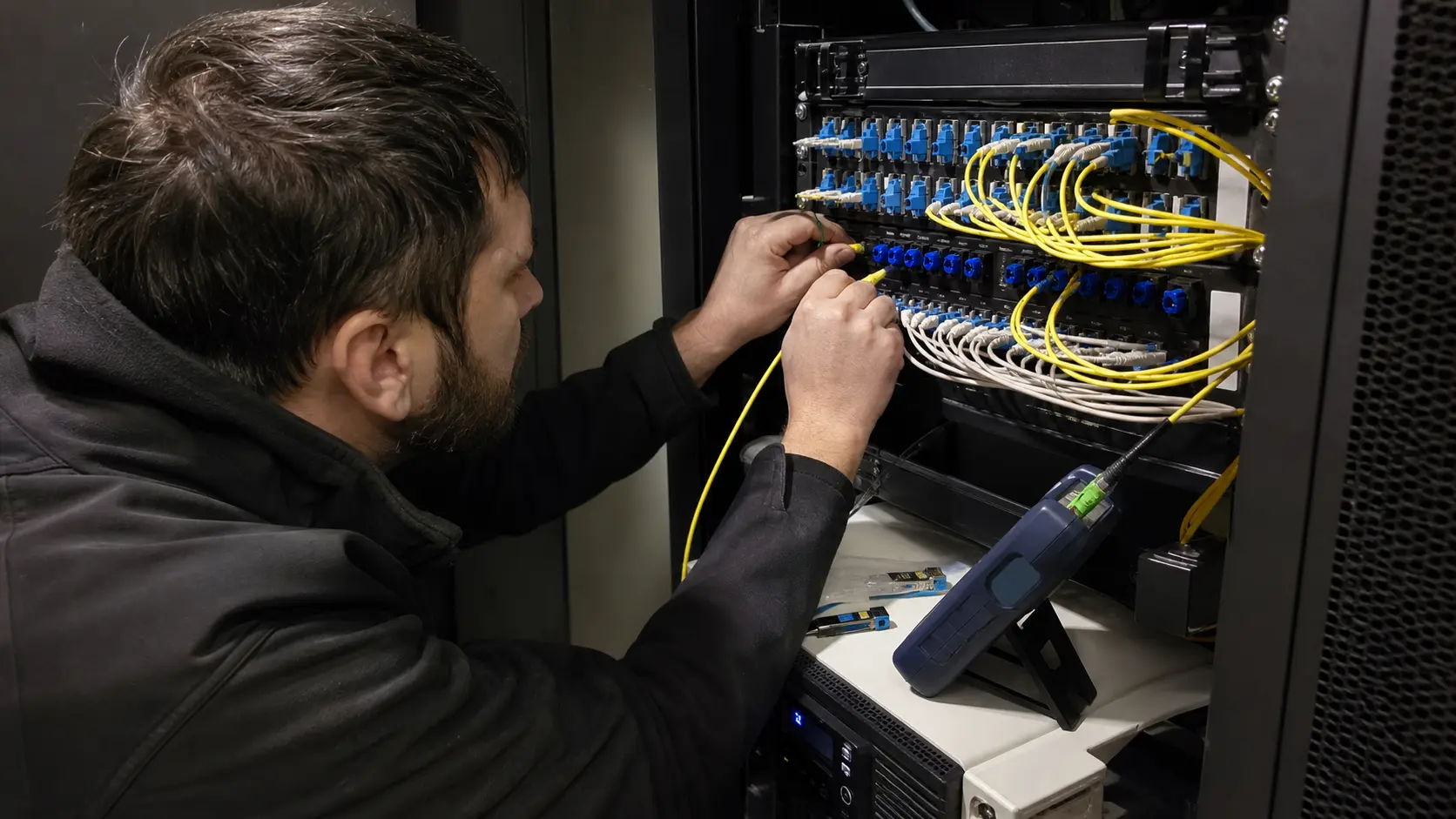
Summary
- LLC "INTS" has a defensible identity and network-control record: its public company site, Ukrainian company-data summaries and RIPE organisation record align on EDRPOU 41812326; RIPE ties that registration number to ORG-LA1342-RIPE; AS6886 remains assigned; and RIPE allocation records show 4,096 IPv4 addresses plus an IPv6 /29 under the organisation.
- The economic case is much weaker than the administrative record. Public routing sources show AS6886 broadly invisible as of 2026-08-10, with RIPEstat and Hurricane Electric both pointing to 2024-12-09 as the last visible date for the main 212.66.48.0/21 route. Opendatabot reports 2025 revenue of only UAH 264,600, two employees and a UAH 643,600 loss.
- INTS can plausibly defend a narrow continuity premium only if it can prove current customers value local support, managed resource control or resilient service more than substitutes. The public evidence does not justify claims of active scale, current customer concentration, live traffic, long-term contracts or enough cash flow to absorb transit, power, repair and imported-equipment risk.
One route and the missing bill
Begin with one route: 212.66.48.0/21. RIPEstat's routing-history view shows that prefix visible from AS6886 through November 2024 and into 2024-12-09, with hundreds of full-feed peers seeing it during the preceding periods. RIPEstat's current routing-status view then marks the same AS as having no announced IPv4 or IPv6 space at the 2026-08-10 query time. Hurricane Electric's BGP Toolkit tells the same story in plainer terms: AS6886 has not been visible in the global routing table since 2024-12-09. That does not prove every switch, fibre run or customer circuit went dark.
It does prove that the main public signal of an independently routed internet access network is absent from common global BGP views.
Now add the bill, or rather the absence of one. INTS's own site does not publish a tariff card, a current customer invoice, a public procurement contract or a service-level schedule. It says price questions should be handled by phone, email or callback. The closest public number that can be read without guessing is not a bill at all: Opendatabot reports 2025 company revenue of UAH 264,600. Spread evenly across a year, that is UAH 22,050 per month for the entire company.
With two reported employees, it is UAH 11,025 of revenue per employee per month before any transit, power, repair, tax, rent, hosting, fuel, equipment, banking or salary cost. A single business-customer invoice could be above or below that figure; no public source proves it. The defensible point is narrower: the public revenue base looks too small to fund a conventional, resilient, independently routed regional ISP operation at meaningful scale.
This is why INTS is not a generic profile story. The company has more than a name and a website. It has a RIPE LIR record, registered number 41812326, an assigned AS, scarce IPv4 allocations, an IPv6 allocation, a route6 object, UA-IX and PeeringDB records, and historical global visibility. Those are not decorative facts in telecom economics. They are control surfaces. They can reduce dependence on another access provider, make business customers more confident about continuity, support local peering, and preserve strategic value even when retail scale is modest. But a control surface is not automatically an operating business.
It has to be converted into cash from customers who have alternatives.
The judgment therefore starts in tension. INTS has credible administrative network evidence and weak current public operating evidence. The economic question is whether scarce resource control and local support can produce enough retained contribution to survive transit, electricity, backup power, repair and imported-equipment exposure. On the public record available here, the answer is conditional and skeptical: possible in a narrow support-and-resource niche, not yet proven as a resilient access business.
Identity and control boundary
The identity match is unusually clean for a small operator. INTS's official site lists EDRPOU 41812326. Opendatabot maps that code to LLC "INTS", registered in December 2017, with a Pokrovsk address, wired telecommunications as the main KVED activity, director Olga Nikulina, statutory capital of UAH 140,000 and two equal founders and beneficial owners. RIPE's organisation record for ORG-LA1342-RIPE names LLC "INTS", gives country UA and explicitly lists registration number 41812326. That triangulation matters because "INTS" is not a globally unique string.
Without the EDRPOU number, public searches can drift toward unrelated entities. With the number, the company-site identity, registry identity and RIPE resource-holder identity point to the same Ukrainian company.
The control boundary is also specific. RIPE records show AS6886 assigned as INTS-ASN and described as LLC "INTS". The organisation is a RIPE local internet registry. The IPv4 allocation search under the RIPE organisation lists three allocated PA blocks: 141.98.148.0 through 141.98.151.255, 185.29.252.0 through 185.29.255.255, and 212.66.48.0 through 212.66.55.255. In address arithmetic, that is one /21 and two /22 blocks, or 4,096 IPv4 addresses. The IPv6 allocation search lists 2a09:10c0::/29. A route6 object exists for that IPv6 allocation with origin AS6886.
The Telecom SudParis RIPE-statistics mirror independently reports the same 4,096 IPv4-address total for LLC "INTS" in Ukraine.
Those resources are economically meaningful even if the company is small. IPv4 is scarce, and a Ukrainian LIR with 4,096 IPv4 addresses has an asset-like administrative position that many access resellers do not have. An assigned AS and RIR-maintained contact objects can also let a provider manage routing policy, abuse handling, peering and customer prefixes more directly than a pure retail reseller. A small company can use that control to serve business accounts, downstream local networks, public institutions or continuity-sensitive sites that care about local troubleshooting and routing autonomy.
But the same boundary creates a discipline. The evidence supports "resource holder" and "historically routed network"; it does not support a claim that INTS currently lights every allocation, serves a particular number of households, carries measurable traffic, or has live business contracts. RIPE's aut-num policy lists upstreams, peers, internet exchanges and customers, but RPSL policy is not a live invoice or a route collector. PeeringDB lists exchange ports and facilities, but PeeringDB is a self- or community-maintained interconnection database, not a traffic meter.
The control claim is strong only when it stays inside those limits.
The company's public business description is broader than the routing evidence. Its site says the provider serves corporate clients, commercial structures, private entrepreneurs, state enterprises and organizations, and offers internet plus related services such as mailboxes and domain registration. That sounds like a business-facing regional ISP rather than a mass consumer brand. Yet the site gives no tariff table or current SLA detail. The control boundary is therefore asymmetric: administrative network facts are visible, while commercial facts are thin.
What the network evidence really says
The strongest current network evidence is not the most flattering. RIPEstat's AS overview reports AS6886 as not announced on 2026-08-10. Its routing-status endpoint reports no announced IPv4 or IPv6 space, no observed neighbours and zero RIS full-feed peers seeing the AS in either protocol family. Its announced-prefixes endpoint returns an empty prefix list for the latest two-week window. Prefix overview calls for the three administrative IPv4 blocks also show the aggregate prefixes as not announced at query time. IPinfo and IPGeolocation's ASN pages similarly characterize the AS as having no current routes in their views.
BGP.he says the AS has not been visible in the global table since 2024-12-09.
The historical signal is different. RIPEstat's routing-status view identifies 212.66.48.0/21 as AS6886's last seen prefix, with the last-seen timestamp on 2024-12-09. The routing-history view for that prefix shows the route broadly visible in November 2024 and on 2024-12-09, not merely flickering at the margin. That makes the route a useful starting point for the economic story. It was a real public route, visible enough to matter. Its subsequent absence is therefore also meaningful. A route that had hundreds of full-feed peers seeing it and then has no broad current visibility is not the same as a route that was never operational.
The PeeringDB and UA-IX records add another layer. UA-IX lists INTS LLC, AS6886 and address 185.1.50.69. PeeringDB lists INTS as a regional NSP with open peering policy, IPv4 and IPv6 support, UA-IX and DTEL-IX entries, and facilities at NewTelco Kiev and Ucomline Kiev. The API records show a listed 10 Gbps UA-IX speed and 20 Gbps DTEL-IX public speed. Those numbers should not be read as traffic volume, but they do show a network profile built around Kyiv interconnection rather than only a local last-mile website.
The listed exchange addresses and facilities are consistent with a provider that at least historically maintained a backbone or upstream/peering function outside Pokrovsk.
The RIPE aut-num policy is more ambitious than the current route view. It lists upstream imports from networks including Datagroup-linked AS3326, RETN's AS9002, AS12883, AS13249 and Fiord's AS28917; peer and exchange imports including Google, UA-IX, DTEL-IX, Gigatrans, DATAIX and Giganet-related ASNs; and customer policy lines for several downstream ASNs including AS57033 under an AS-POKROVSK set. In a healthy operating network, that policy would describe supplier diversity, peering breadth and downstream relationships.
In the current public record, it instead describes latent or historical topology that must be checked against live route visibility before being valued.
That distinction matters for unit economics. A small operator can use upstream and peering diversity to reduce blended traffic cost, improve latency, and offer local resilience. It can also use downstream relationships to sell wholesale service. But if the AS is not broadly announced, the revenue associated with that topology either vanished, moved elsewhere, became private, became too low-visibility for public collectors, or is being expressed through arrangements the public internet cannot easily see. The article cannot choose among those explanations without inventing.
The honest conclusion is that network-resource control is verified, current global routing operation is not.
Business model visible at the edges
INTS's public site gives a business model outline without quantities. Internet access is the main advertised service. Mailboxes and domain registration sit beside it, suggesting a classic small-business ISP bundle: access plus identity, email and web-adjacent support. The customer description emphasizes corporate clients, commercial structures, private entrepreneurs, state enterprises and organizations. That is the right market for a small regional operator trying to earn a continuity premium. Residential access tends to be price-sensitive and exposed to churn.
Business and public-sector accounts may pay for answerable support, static addresses, faster troubleshooting, and a provider that knows local buildings, ducts and power conditions.
The company's address history and public positioning make that logic plausible but not proven. Pokrovsk is not a normal market. By 2024 and 2025, public reports described forced evacuation, severe attacks, loss of electricity, gas and water, population collapse and widespread property damage. If INTS's commercial base was concentrated around Pokrovsk, the addressable retail market was radically disrupted. If it had shifted operational control to Kyiv facilities and resource administration, the business might survive in a different form, but the public financials do not yet show a replacement revenue stream.
The Opendatabot revenue series sketches a company that was modest but real before the 2025 collapse. Reported revenue was UAH 4.76 million in 2020, UAH 5.91 million in 2021, UAH 5.33 million in 2022, UAH 5.83 million in 2023 and UAH 4.06 million in 2024. That range is not large by telecom standards, but it is enough to fit a small local ISP, support provider or network-resource business. Profitability was volatile: positive in 2020 and 2021, sharply negative in 2022, slightly positive in 2023, negative in 2024.
The 2025 figure changes the interpretation: UAH 264,600 revenue and a UAH 643,600 loss look less like a normal operating year and more like a company in severe contraction, interruption or transition.
Because no public tariff is visible, any customer-count estimate would be false precision. If one assumed a small monthly business line, a handful of accounts could explain the 2025 revenue. If one assumed residential access, the same annual revenue would imply a very small subscriber base. If one assumed IP leasing, mailbox/domain services, support retainers or residual receivables, it could represent something else entirely. The public data does not identify the revenue mix. A serious economic reading should resist filling that gap with average Ukrainian broadband prices or competitor tariffs.
Those figures can frame market affordability, but they cannot be assigned to INTS customers.
The most defensible business-model inference is this: INTS has the ingredients for a niche business-service provider but lacks public evidence of current scale. The value proposition, if it still exists, would have to be local continuity, familiar support, scarce address resources, routing autonomy, and perhaps downstream or business accounts that need static, accountable connectivity. That value proposition can work, but only when customers believe the operator can actually keep service alive or restore it faster than substitutes. The visible route withdrawal and revenue collapse make that claim something to prove, not something to assume.
Unit economics under a small-company lens
The unit economics are harsh because many telecom costs do not shrink smoothly to match a two-employee, low-revenue year. A regional ISP can be small, but it still needs upstream connectivity or wholesale backhaul, exchange or facility presence, power, cabinets, repairs, spares, monitoring, billing, customer support, abuse handling and regulatory administration. Even when traffic is low, a router still needs power, optics still fail, batteries age, contracts renew, and customers still expect someone to answer during an outage.
If 2025 revenue was truly UAH 22,050 per month for the whole company, almost any meaningful combination of those costs would consume the entire revenue base.
The employee count makes the same point from another angle. Six employees on UAH 4.06 million of 2024 revenue is a lean but conceivable small-operator structure. Two employees on UAH 264,600 of 2025 revenue is not a normal staffed network operation unless most activity is dormant, outsourced, unpaid owner-operated, seasonal, or hidden in categories not visible in the public summary. The public sources do not say which. What they do show is that the retained contribution available for resilience spending appears extremely limited if the 2025 figures reflect ongoing business rather than an accounting anomaly.
A continuity premium is supposed to improve this arithmetic. Customers pay more because the provider keeps working when others fail, restores service quickly, maintains backup power, understands local topology, has spares, and gives them a named escalation path. In Ukraine's wartime communications market, that is not abstract. The Ministry of Digital Transformation and LUN made blackout readiness searchable. The Digital Ministry's outage-stabilization announcements turned backup power into a national policy issue. Freedom House notes that subscribers switched providers looking for stable internet during blackouts.
These conditions create demand for reliability, but they also raise the cost of delivering it.
For INTS, the premium has to clear four obstacles. First, it has to be large enough to pay for upstream and interconnection costs while current public routing is invisible. Second, it has to pay for power resilience in a country where electricity infrastructure is under repeated attack. Third, it has to pay for repair and replacement in or around a frontline region where access to damaged infrastructure can require security clearance or may be impossible. Fourth, it has to cover imported equipment and currency exposure while revenue is likely UAH-denominated. The public evidence does not show that INTS clears those obstacles today.
This does not mean the company has no value. In a constrained market, a small operator may generate value through a few high-touch business accounts, static addressing, IP resource administration, domain/email services, consulting, or wholesale relationships that do not resemble consumer broadband. It may also preserve option value in its RIPE resources. But option value is not the same as operating cash flow. The economic question is whether the company can turn that control into recurring retained contribution. The 2025 public financials say that if it did, the amount visible in public accounts was very small.
Cost and capital pressure
Power is the first cost pressure because connectivity has become inseparable from electricity resilience. The IEA describes systematic attacks on Ukraine's power system, damaged dispatchable capacity, rolling blackouts and winter supply risk. OHCHR's monitoring report describes attacks on electricity infrastructure and their consequences for water, heating, education, health and communications. Donetsk regional authorities continue to report repeated power restoration after shelling, with crews repairing grids when conditions permit. A small ISP in that environment cannot treat power as a normal utility line item.
Backup power becomes part of the product.
Large operators disclose the scale of this burden. Kyivstar's public materials describe batteries, generators, fuel use, fixed-internet UPS deployments and hundreds of millions of hryvnias invested in power resilience for fixed access. INTS is not Kyivstar, and those numbers should not be transferred onto INTS. They are useful because they show the category of cost. Backup energy is not a token expense. Batteries have duty cycles and replacement schedules. Generators require fuel, maintenance and physical access. UPS equipment has to be installed close to the customer or network node it supports.
The smaller the revenue base, the more difficult it is to make these costs invisible to the customer.
Transit and interconnection are the second pressure. Peering can lower costs and improve performance, but it also requires facilities, ports, routers, optics and operational knowledge. A listed 10 Gbps or 20 Gbps exchange presence does not mean the company pays for that exact capacity today, but it shows the kind of interconnection architecture the network presented publicly. If those ports are still active, they must be justified by traffic, customers, downstreams, IP-resource services or strategic option value. If they are not active, PeeringDB and UA-IX listings become historical evidence rather than economic support.
Equipment and currency are the third pressure. The National Bank of Ukraine's exchange-rate data matters because small operators often collect revenue in local currency while many inputs are imported or priced with reference to dollars or euros. Routers, switches, optics, batteries, generators, solar equipment, radios, servers, software support and even some upstream or data-center services can embed foreign-exchange exposure. The public sources do not disclose INTS's supplier contracts or currency mix.
The safe conclusion is not that the company has a measured FX loss; it is that any operator trying to rebuild or maintain network resilience in Ukraine faces a plausible currency mismatch unless it has pricing power or indexed contracts.
Capital is the fourth pressure. Opendatabot reports assets falling from UAH 2.03 million in 2024 to UAH 1.37 million in 2025, with liabilities falling to only UAH 7,700. Low liabilities can mean a clean balance sheet, but with a low revenue base it can also mean limited external financing, reduced operating scale, or a business that is not carrying large creditor obligations because it is not investing aggressively. The public record does not show new capital injections, major grants, insurance proceeds, equipment donations or a post-2024 rebuild plan.
A continuity premium would need to fund not only day-to-day service but also renewal of the physical network.
Suppliers, customers and concentration
The RIPE aut-num policy lists several upstreams and peers, but that list should be read as policy evidence, not supplier invoices. If active, upstream diversity can protect a small ISP against single-provider failure and improve routing options. If inactive or stale, it proves only that the network's administrative policy once described such relationships. The same caution applies to downstream policy lines. AS57033 under an AS-POKROVSK import line is suggestive because it points to a local downstream relationship in the same regional logic, but public BGP views do not prove current traffic or contract revenue.
Customer concentration is not visible. INTS's site describes a business/public-sector customer set; Opendatabot gives total revenue; RIPE policy lists downstream ASNs; but no public customer ledger, tariff sheet, contract register or procurement result for the exact EDRPOU was found. That means concentration risk cannot be measured. It may be severe if one or two institutions or downstream networks accounted for most revenue. It may be moderate if the company historically served many small local accounts. It may now be irrelevant if the active business has shifted toward resource administration.
The available sources cannot decide among those possibilities.
The 2025 revenue figure makes concentration more important. At UAH 264,600, a single lost business customer, a single evacuated institution, a single cancelled downstream arrangement or a single unpaid account could move the annual result materially. That is the danger of a small operator in a frontline economy. Revenue is not just low; it may be lumpy. If customers are local businesses or public institutions in Pokrovsk, evacuation and utility loss can compress demand at the same time that repair cost rises. If customers are remote or Kyiv-based, the public site does not show how INTS sells to them.
Supplier concentration also matters. The RIPE policy lists multiple upstreams, but current routing invisibility removes the ability to confirm live supplier diversity. A two-employee company cannot maintain the same operational posture as a larger network unless it outsources heavily or keeps a very simple architecture. Outsourcing can reduce payroll but may increase dependence on upstreams, facilities, contractors and remote hands. In wartime, dependence on any single facility, power feed, contractor or transport route becomes a resilience risk. Again, the public record supports the risk category, not a specific supplier map.
The right standard is therefore not "prove there is no concentration." It is "do not claim concentration is solved." INTS would change the analysis if it disclosed current active customers by category, renewal rates, one-year revenue bridge, public or private SLA references, downstream sessions, active upstream invoices, facility continuity, or an outage-ready map entry. Without those facts, the business should be treated as a small operator with unmeasured concentration risk.
Competition and substitutes
Ukraine is not a market where a small ISP can rely on regulatory scarcity alone. Freedom House describes a diverse internet ecosystem with thousands of ISPs, multiple internet exchanges, strong local peering and decentralized international exits. It also names major fixed-broadband competitors such as Kyivstar, Ukrtelecom, Datagroup-Volia, Vodafone with Vega and Freenet, Lanet, Triolan, Fregat and Uarnet. Those national or larger regional players can outspend a small operator on power resilience, marketing, support platforms and network rebuilds. They also set customer expectations for backup options.
Substitution is not only fixed broadband. Mobile networks absorb demand when fixed access fails, even though heavy mobile use during blackouts can overload cells. Public Wi-Fi zones, temporary humanitarian connectivity, enterprise failover links and Starlink all compete for the "stay connected during disruption" job. Starlink is not a perfect substitute for fixed broadband. It has equipment costs, policy constraints, line-of-sight and authorization issues, and it may not replace a local provider for building wiring, local support or business LAN needs.
Still, it is a credible emergency option for some customers, especially in damaged or remote areas. That caps how much a small ISP can charge merely for being present.
The LUN and Digital Ministry blackout-ready map changes the competitive surface. It makes resilience legible. If a provider can operate for four hours, ten hours or longer during outages, that can become a selection criterion. If it cannot, customers may switch. For INTS, this creates both opportunity and risk. A small provider that truly knows its buildings and can power critical nodes may win loyal accounts. But a provider that cannot document backup time, repair capability and current routing may lose the continuity argument to larger operators or specialized alternatives.
The business customer is the key segment. Residential users may tolerate lower support in exchange for price, or they may move to whoever has a working building node during outages. Businesses, public offices, medical sites, schools, logistics points and local services may pay for someone who answers the phone and understands their physical path. INTS's site speaks to that world. But the public record gives no current proof that those accounts remain, that they pay a premium, or that INTS can support them under present Pokrovsk conditions.
Competition therefore pushes the valuation toward proof. Administrative assets create the right to compete; they do not guarantee demand. The company has to show customers why a small operator with invisible public routing is safer or more responsive than a larger ISP, mobile failover, satellite backup, or a direct contract with a national carrier. If the answer is "local support," the support evidence must be current. If the answer is "routing control," routes must be visible or privately documented. If the answer is "scarce IPv4," then revenue should show monetization of those addresses.
Regulation and geopolitical risk
The regulatory framework is not a simple license moat. Ukraine's Electronic Communications law establishes provider notification, a register, interconnection principles, provider rights and obligations, market analysis and wartime network-management rules. NCEC's clarification explains that providers notify the regulator and that an extract from the register is the document that confirms the right to provide specific services. INTS's site hosts an older regulator-inclusion PDF and lists regulatory documents, but the modern current extract was not retrieved in this research.
Before any publish or commercial conclusion, current NCEC provider-register status should be rechecked.
The law and regulator guidance matter economically because they define what a provider must do beyond selling access. Providers operate in a market where interconnection, security, reporting, continuity and wartime obligations can apply. Compliance overhead is not enormous for a large operator, but for a two-person company it can be material. If INTS remains active, its administrative competence as a RIPE LIR and provider must be maintained even when revenue is low. If it is dormant, the cost of retaining that status is part of the option value calculation.
Geopolitical risk is direct. The company's public and registry identity ties it to Pokrovsk, a city repeatedly described in 2024 and 2025 as a frontline evacuation and attack zone. Public reports describe mandatory evacuation, attacks less than ten kilometres away in August 2024, later Russian forces less than three kilometres away, loss of electricity, gas and water, and severe damage to homes and infrastructure. A government interview later described the community population falling dramatically and the city being without water, gas or electricity for about a year.
These facts do not prove what happened to INTS's cables or customers. They do make ordinary continuity assumptions untenable.
War risk also affects repairs. Donetsk power-grid updates describe restoration work in frontline settlements only when military permission and safety allow. Telecom repair shares similar constraints: crews need access, power, fuel, spares and a survivable route to damaged sites. If a line is cut, the economic problem is not just the cable cost. It is whether a crew can safely reach the fault, whether there is electricity at the node, whether customers remain nearby, and whether the expected monthly revenue justifies another repair in a repeatedly shelled area.
There is also security risk around connectivity itself. Freedom House describes Russian pressure on occupied-area ISPs, rerouting through Russian networks, cyberattacks and infrastructure disruption. Starlink's 2026 verification regime shows that emergency connectivity can become part of national security policy. For a Ukrainian operator, being small does not remove exposure to blocking orders, security directives, customer metadata obligations, cyber risk, abuse handling or wartime communications control.
A continuity premium must therefore compensate not only for physical resilience but for operating in a high-friction regulatory and security environment.
Unofficial signals and what to do with them
The most useful unofficial signals are routing databases and exchange records. They are not audited accounts, but telecom analysts use them because they reveal operational posture that companies often do not disclose. Here, those signals point in two directions. RIPE, PeeringDB and UA-IX preserve evidence of a real network operator with resource control and interconnection. RIPEstat, BGP.he and third-party ASN pages point to current route invisibility. The tension is the story.
Third-party IP databases add noise. IP2Location still lists selected AS6886 ranges and a 1,024 IPv4 total in its view, while RIPE allocation records show 4,096 IPv4 addresses and RIPEstat sees no current broad announcement. That does not mean one source is malicious or useless. It means each source is measuring a different layer: administrative allocation, active/geolocation mapping, historical visibility, or current route collection.
For investment or operating analysis, the safest hierarchy is clear: use RIPE for allocation and legal resource records; use RIPEstat and BGP.he for current broad route visibility; use PeeringDB and UA-IX for interconnection profile; use IP intelligence sites as corroborating or contradictory signals, not as primary proof.
Financial summaries are also unofficial in the sense that they come through an aggregator. Opendatabot is useful because it compiles Ukrainian registry-derived company data and provides a multi-year financial series. But the figures should not be treated as a full audited report, and wartime registry access can be constrained. Still, the magnitude of the 2025 change is too large to ignore. Even if later revisions alter the exact amount, the public summary currently says revenue collapsed by more than ninety percent and employees fell to two. That is a material signal.
The absence of a tariff sheet is a signal too. Many small Ukrainian ISPs do not maintain polished public pricing pages, and business pricing may be negotiated. Therefore the missing tariff does not prove inactivity. But it does block customer-bill analysis. No serious unit-economic model can be built from a hidden price list. The right treatment is to say that the customer-bill evidence is unavailable and that public revenue provides only a whole-company run-rate.
The last unofficial signal is website posture. INTS's site is sparse, functional and still reachable. It lists contact details and public documents, but not current news, tariffs, outage notices, coverage maps or resilience claims. For a continuity-premium business, that is a weak public sales surface. Perhaps customers are relationship-driven and do not need a public site. Perhaps the site is neglected while operations continue. Perhaps the business is minimal. The website alone cannot answer. Combined with routing invisibility and 2025 financial contraction, it supports caution.
Facts that would change the judgment
The first fact that would change the judgment is live routing. If AS6886 again announced 212.66.48.0/21, 185.29.252.0/22, 141.98.148.0/22 or the IPv6 /29 with stable visibility across multiple collectors, the analysis would move from "resource holder with absent public routing" toward "small active operator." If the routes are intentionally private or announced through another ASN, documentation of that arrangement would also matter. Route visibility is not the whole business, but for an autonomous-system story it is the heartbeat.
The second fact is current customer revenue. A tariff card would help, but actual contract categories would help more: number of business customers, number of residential or small-office accounts, downstream network customers, public-sector accounts, monthly recurring revenue, churn, arrears and the split between access, IP resources, support, domains, mailboxes and one-off repairs. Even anonymized ranges would sharpen the unit economics. The public 2025 revenue figure is so low that the burden of proof is now on recurrence and customer quality.
The third fact is resilience evidence. INTS would need to show which nodes have backup power, how long they can run, what fuel or battery replenishment process exists, what equipment is staged, how faults are reached, and what has been restored since the route disappearance. A listing on a blackout-ready provider map, current customer references, outage logs or independently observed uptime would materially improve the continuity-premium case. Without that, "local support" remains a plausible narrative rather than proven economics.
The fourth fact is a current regulatory extract. The older regulator PDF and company site document set are useful historically, but Ukraine's telecom framework changed. A current NCEC provider-register extract would confirm the legal surface under the modern electronic communications regime. It would not prove profitability, but it would reduce uncertainty around authorization.
The fifth fact is a capital plan. If the company has owner funding, grants, insurance recovery, asset sales, IP-resource monetization, a merger, a route migration, a managed-services pivot or a specific Kyiv-based interconnection strategy, public financials would read differently. Low liabilities and low revenue can be a sign of a clean but tiny balance sheet; they can also be a sign of underinvestment. A credible plan would explain whether INTS is shrinking, preserving resources, rebuilding, or repositioning.
The sixth fact is geographic scope. If INTS's active customer base is no longer Pokrovsk-centric, the frontline risk profile changes. If it still depends on Pokrovsk local access, the risk is severe. If it mainly administers address resources and interconnection from Kyiv, the business is less exposed to local physical destruction but more exposed to the question of why routes are not visible. Public sources currently leave that boundary unresolved.
Final economic view
INTS should be valued, described and monitored as a small operator with real network-resource control but unproven current operating scale. The cleanest positive case is not "INTS is a large ISP." It is that a lean Ukrainian LIR with 4,096 IPv4 addresses, an assigned AS, historical route visibility, Kyiv interconnection records and a business-facing local-service identity can still extract value from customers who need address control, support continuity or managed connectivity in a disrupted market. That case is possible and source-backed at the control level.
The negative case is more immediate. Public BGP visibility is absent. The main visible route disappeared in December 2024. Reported revenue collapsed in 2025. Employees fell to two. The official site offers no current tariffs, customer proof, SLA evidence or resilience claims. The registry address sits in a city whose civilian and utility base has been devastated by war. Under those facts, it would be careless to claim that INTS currently earns enough from service revenue to cover the full burden of transit, power, repair and equipment risk.
The most honest conclusion is conditional. INTS can earn a credible continuity premium only if it can demonstrate that customers still pay for something competitors and substitutes cannot easily provide: locally accountable support, survivable access, controlled addressing, or a specialized routing/resource service. The public record verifies the ingredients for that premium but not the cash flow. Until live routing, current customer bills, resilience evidence or a capital plan appears, INTS is a watch-list case: administratively real, strategically interesting because of scarce resources, and economically fragile on the visible record.
Sources
- https://ints.net.ua/
- https://ints.net.ua/docs/NKRZ.pdf
- https://ints.net.ua/docs/zvit_po_pokaznikam_2018.pdf
- https://opendatabot.ua/c/41812326
- https://opendatabot.ua/trademarks/m202012032
- https://ix.net.ua/en/user/170
- https://ix.net.ua/en/members
- https://www.peeringdb.com/net/20477
- https://www.peeringdb.com/api/net/20477
- https://www.peeringdb.com/api/netixlan?net_id=20477
- https://www.peeringdb.com/api/netfac?net_id=20477
- https://rest.db.ripe.net/ripe/aut-num/AS6886?unfiltered
- https://rest.db.ripe.net/ripe/organisation/ORG-LA1342-RIPE?unfiltered
- https://rest.db.ripe.net/search?inverse-attribute=org&type-filter=inetnum&source=ripe&query-string=ORG-LA1342-RIPE&flags=r
- https://rest.db.ripe.net/search?inverse-attribute=org&type-filter=inet6num&source=ripe&query-string=ORG-LA1342-RIPE&flags=r
- https://rest.db.ripe.net/ripe/route6/2a09:10c0::%2F29AS6886
- https://stat.ripe.net/data/as-overview/data.json?resource=AS6886
- https://stat.ripe.net/data/routing-status/data.json?resource=AS6886
- https://stat.ripe.net/data/announced-prefixes/data.json?resource=AS6886
- https://stat.ripe.net/data/whois/data.json?resource=AS6886
- https://stat.ripe.net/data/prefix-overview/data.json?resource=212.66.48.0/21
- https://stat.ripe.net/data/prefix-overview/data.json?resource=185.29.252.0/22
- https://stat.ripe.net/data/prefix-overview/data.json?resource=141.98.148.0/22
- https://stat.ripe.net/data/routing-history/data.json?resource=212.66.48.0/21&starttime=2024-11-01T00:00:00&endtime=2025-01-15T00:00:00
- https://www.ripe.net/membership/member-support/list-of-members/UA/
- https://ipinfo.io/AS6886
- https://bgp.he.net/AS6886
- https://whois.ipip.net/AS6886
- https://ipgeolocation.io/browse/asn/AS6886
- https://www.ip2location.com/as6886
- https://www-public.telecom-sudparis.eu/~maigron/rir-stats/ripe-allocations/allocations/ua-ip-allocations.html
- https://www-public.telecom-sudparis.eu/~maigron/rir-stats/ripe-allocations/ipv4/by-lir/ua-ipv4-by-lir.html
- https://nkek.gov.ua/pro-nkek/zvity-nkek/richnyi-zvit-nkek-za-2024-rik
- https://nkek.gov.ua/en/about-ncec/ncec-reports
- https://zakon.rada.gov.ua/laws/show/1089-20/ed20250808?lang=en
- https://zakon.rada.gov.ua/rada/show/v0170897-24
- https://freedomhouse.org/country/ukraine/freedom-net/2024
- https://thedigital.gov.ua/news/technologies/mintsifra-ta-lun-zapustili-mapu-internet-provayderiv-gotovikh-do-blekautiv
- https://thedigital.gov.ua/news/technologies/pratsyuemo-nad-stabilizatsieyu-mobilnogo-zvyazku-pid-chas-znestrumlen
- https://www.undp.org/ukraine/publications/mobile-communications-and-internet-access-ukraine-results-sociological-survey
- https://www.iea.org/reports/empowering-ukraine-through-a-decentralised-electricity-system/executive-summary
- https://ukraine.ohchr.org/en/Attacks-On-Ukraines-Electricity-Infrastructure
- https://dn.gov.ua/en/news/za-tyzhden-dtek-donetski-elektromerezhi-povernuv-svitlo-zhyteliam-21-naselenoho-punktu
- https://dn.gov.ua/en/news/za-cherven-dtek-donetski-elektromerezhi-vdalosia-vidnovyty-elektropostachannia-dlia-2685-tysiach-osel-pislia-obstriliv
- https://www.msf.org/msf-provides-medical-care-people-evacuating-pokrovsk-ukraine
- https://www.pravda.com.ua/eng/news/2024/08/19/7470950/
- https://www.pravda.com.ua/eng/news/2025/01/09/7492655/
- https://decentralization.gov.ua/en/news/20071
- https://bank.gov.ua/en/markets/exchangerate-chart
- https://bank.gov.ua/en/open-data/api-dev
- https://www.oecd.org/en/publications/competition-market-study-of-ukraine-s-electricity-sector_f28f98ed-en/full-report/component-11.html
- https://www.oree.com.ua/index.php/newsctr/n/26409?lang=english
- https://www.globalpetrolprices.com/Ukraine/electricity_prices/
- https://kyivstar.ua/news/id120720241415
- https://kyivstar.ua/news/id170520241630
- https://kyivstar.ua/about/resilience
- https://starlink.com/en-mn/support/article/a47087a0-5178-9b34-0633-1dcb6276a09b
- https://mod.gov.ua/en/news/ukraine-rolls-out-starlink-terminal-verification-to-counter-russian-aerial-terror
Member Briefing
Deeper Profile Context
Sign in with the right membership level to unlock the full briefing and source notes.
Only for Strategic Circle
Strategic Circle
Open to all readers. Unlock profile briefings after joining and signing in.
Join Strategic CircleOnly for Leadership Alliance
Leadership Alliance
For qualified IP-asset owners and management; sign in to unlock alliance briefings.
Join Leadership Alliance