- Shanghai-based FoloToy is retrofitting ordinary companion toys with large language models, turning plush animals into conversational companions for children, adults and the elderly.
- Co-founders Larry Wang and Guo Xinghua partner with established toymakers, keeping the shells and rebuilding the brains — a shortcut that turned a hardware experiment into a shipping product.
- Wang's thesis is simple and quietly subversive: AI doesn't have to be serious to be useful, and the cheapest route to closing the education gap may be a talking rabbit.
Larry Wang never set out to build a company. He set out to build a toy for his son — and discovered that the market had nothing to offer a father with a robotics background, a soldering iron and a stubborn idea. Today his Shanghai start-up, FoloToy, is doing something the toy industry's giants have spent billions trying to crack: making a stuffed animal that talks back, remembers you, and costs less than a games console.
Co-founded by Wang and Guo Xinghua, FoloToy has spent the past two years persuading a growing roster of established toymakers to let it rip out their electronics and drop in a large language model (LLM) — the same class of technology behind ChatGPT. The pitch is deceptively simple: the plush stays plush, the personality gets an upgrade. The result is a companion toy that holds a natural, conversational back-and-forth with a child, riding the broader wave of technology-infused play.
We sat down with Wang to talk about the bunny that started it all, the unglamorous engineering of making a toy safe enough for a three-year-old, and why he thinks the future of AI hardware is cheap, cuddly and everywhere.
Inside the inspiration behind FoloToy: a father, a bunny and a gap in the market
“Story-telling toys can be significantly enhanced by integrating them with large language models. This would improve interactivity and impart a greater volume of knowledge, making the learning experience more engaging and beneficial for children.”
Larry Wang, co-founder of FoloToy
The origin story is domestic rather than corporate. Drawing on his background in robotics and intelligent hardware, Wang began building AI toys for his own children — and quickly hit a wall. Nobody was building language models with a child on the other end of the conversation.
So he built one himself, then assumed he would not be alone. “Given that I have customised toys for my son, I believe there must be many developers and fathers like myself who share this passion,” he says. “These hands-on enthusiasts would also derive enjoyment from creating such items.” That hunch — that the maker instinct and the parental instinct are the same instinct — became FoloToy's first market research.
From circuit boards to plush: the unglamorous engineering of an AI toy
Ask Wang about the hard part and he does not talk about models. He talks about safety. “Initially, our team didn't have much experience in toy design; we focused mainly on hardware,” he recalls. “Our main priority was ensuring that the toys were safe and easy to use, especially for children.”
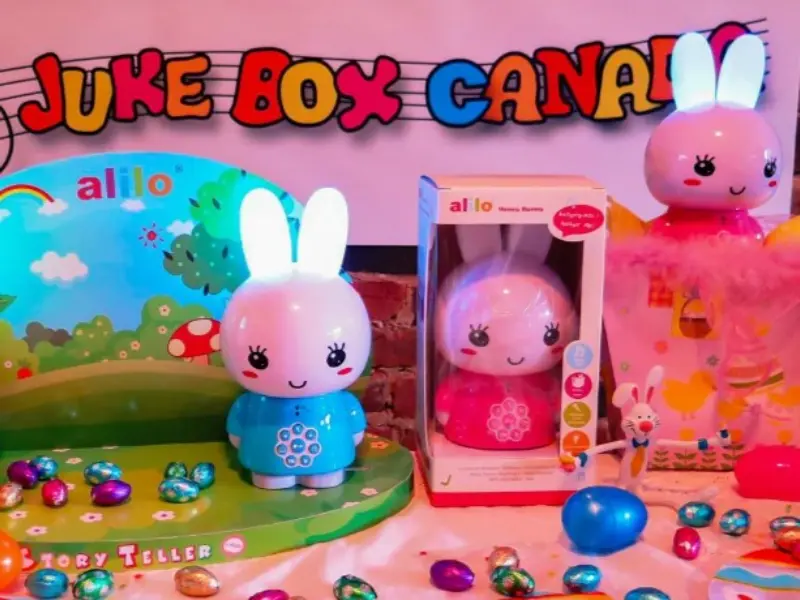
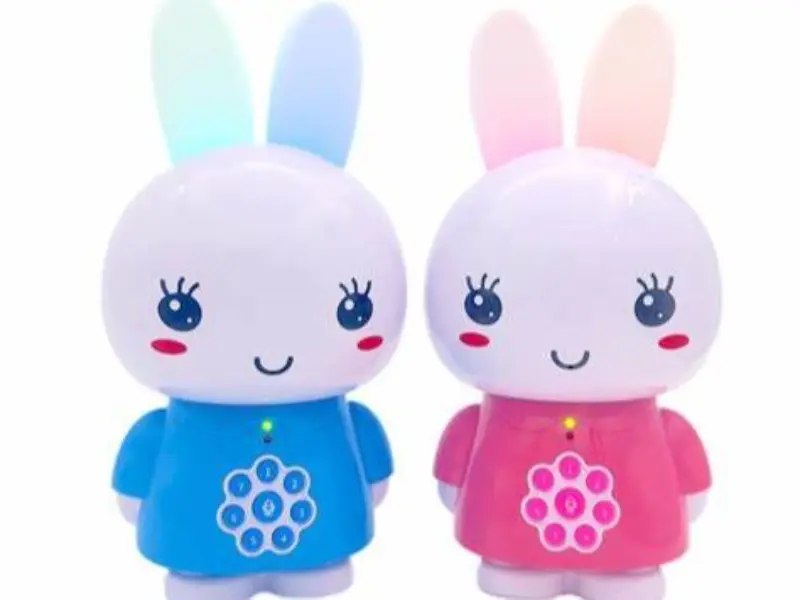
That priority shaped the materials from day one — only environmentally friendly, child-safe components made the cut. It also shaped the strategy. Rather than mould a new plush animal from scratch, the team took toys that already existed, such as the Alilo Bunny, kept the outer shell, and redesigned the circuit board inside. They wrote the server programs and the supporting software, then handed the whole stack to established toymakers to manufacture.
The shortcut mattered. Partnering with manufacturers who already knew how to stitch, stuff and ship let FoloToy move at software speed through a hardware world — and skip the years it would have taken to learn the toy business from zero.
Also read: Interview with Plutoless, co-founder of Project Astra: Advancing real-time interactive AI technology
One toy, one child: why personalisation is FoloToy's real product
“AI doesn't need to be that serious – it can be fun, too”
Larry Wang, co-founder of FoloToy
Here is the belief the whole company rests on: “Each toy should become uniquely personal to its owner, even if many others have the same model.”
Large language models make that possible in ways a fixed phrase library never could. A FoloToy can borrow the voice of a favourite character, or of a parent. It learns what a child keeps coming back to and leans into it, so two identical rabbits leaving the same factory end up as two different companions. The toy, in Wang's framing, learns to speak the child's language — literally and otherwise.
Ages three to twelve: how FoloToy tunes a conversation to the child in front of it
The design brief changes with the birthday. For children aged three to five, the toy listens more than it speaks — recognising basic commands and answering with simple phrases or stories. Between five and twelve, it opens up: real back-and-forth conversation, and movement in response to commands.
FoloToy also builds for adults and the elderly, with conversational styles tuned to each. For adults, light-hearted humour; for older users, something closer to company. “Even for the elderly, we have products tailored specifically for them,” Wang says. “The appearance of these products may vary, and for the elderly, we focus more on addressing their potential loneliness. We aim to make the conversations more comforting and companionable, discussing topics such as daily life or health and wellness.”
Two markets, two model stacks: how a FoloToy hears, thinks and answers
The plumbing differs by geography. In China, FoloToy runs on compliant large language models from domestic providers. Abroad, it leans on ChatGPT and other major AI platforms. The mechanics are the same either way: a microphone captures the child's voice, the audio becomes text, the text goes to a language model, and the reply comes back as speech.
Over time, the toys have evolved to process and generate responses more directly, without leaning on external models for every turn — which is what makes the conversation feel less like a query and more like a chat.
Cheap hardware, equal access: Wang's plan to close the education gap
“The widespread use of large language models can help achieve a certain level of knowledge and educational equity.”
Larry Wang, co-founder of FoloToy
Wang's long-term goal is bigger than the toy aisle. By keeping AI-enabled toys affordable, he wants to narrow the gap in information access and education — pushing low-cost AI hardware out to children regardless of postcode or household income. “We hope to create a world where everyone can access high-quality educational resources through these toys, ensuring equal opportunities for learning and growth,” he says.
A personal insight: the founder who refused to wait for the market
What stays with me after talking to Larry Wang is how unromantic his ambition is. He is not chasing a moonshot; he is chasing a toy that a family can actually afford, that a three-year-old can actually use, and that a lonely eighty-year-old might actually want to talk to.
His insistence on personalisation is the sharpest part of the argument. A toy that adapts to one child — and to one grandparent — is a different product category from a toy that recites the same twelve phrases to everyone. It also quietly reframes what large language models are for. Not chatbots that answer questions, but companions that pay attention.
And the education argument is more practical than it sounds. Hardware gets cheaper every year; curiosity does not. If a plush rabbit that costs less than a games console can put a decent conversation in front of a child who would otherwise never have one, that is a return on investment no benchmark captures.
The toy industry has always sold comfort. FoloToy is betting it can sell curiosity too — one conversation at a time.