- Intelsat is delivering satellite internet to 10 WPDI Community Learning Centers across South Sudan and Uganda.
- The three-year partnership, starting June 2025, bundles hardware, installation, managed connectivity and on-site training — the parts that usually get quietly dropped.
What happened: Intelsat and WPDI go where the fiber does not
In much of South Sudan and northern Uganda, the shortest path to the internet runs 35,786 kilometres straight up. Intelsat and the Whitaker Peace & Development Initiative (WPDI) have announced a multi-year partnership to bring high-speed satellite internet to 10 Community Learning Centers across the two countries. From June 2025, Intelsat supplies the dish, the modem, the router, the installation crew, the managed connectivity and the technical support — the whole stack, not a crate left in the courtyard with a manual.
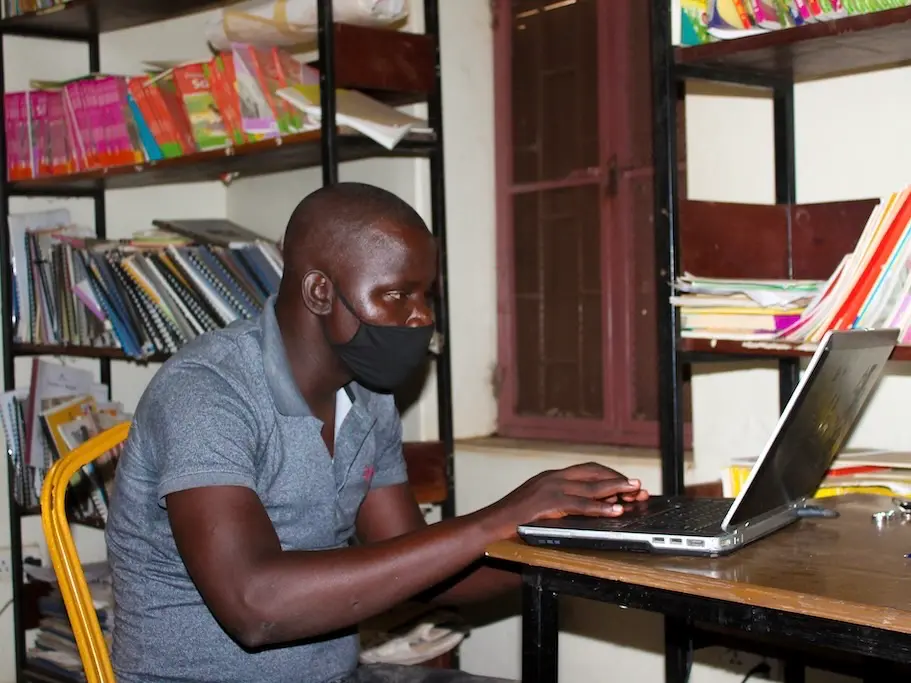
For most of these centers, it is the first reliable digital infrastructure they have ever had. The sites sit in post-conflict districts where the grid is patchy, broadband is a rumour, and a fiber build is a decade-long argument with a ministry. Satellite skips the ground problem entirely: no trenching, no cell tower, no waiting for a national backbone that may never be scheduled.
At the launch event, WPDI founder Forest Whitaker framed education as a pillar of peacebuilding and social healing, while Intelsat leaned on the broader mission of using space-based technology to widen equity in underserved regions. Fine words. The interesting part is the contract structure underneath them.
Also Read: Intelsat links Solomon Islands to LEO satellite broadband
Also Read: Infrasat: Connecting Africa through technology services
Why satellite beats fiber in South Sudan and Uganda
The economics are brutally simple. A kilometre of fiber is cheap per user in a dense city and ruinous per user in a village of three hundred people scattered across a flood plain. A satellite terminal does not care about terrain, distance to the nearest splice point, or whether the road is passable in the rainy season. It cares about line of sight and electricity — and the second one is solvable with panels and batteries.
The trade-off is latency. A geostationary link carries roughly 600 milliseconds of round-trip delay, which is perfectly fine for browsing, video lessons, downloads and messaging, and mildly annoying for live voice. Modern operators increasingly blend geostationary capacity with low-Earth-orbit constellations to shave that down, and the direction of travel is obvious. For a classroom, a 600-millisecond pause is not a barrier to learning. A missing connection is.
The 19% problem is really a maintenance problem
In regions where only about 19% of citizens have internet access, connectivity is not a luxury — it is the difference between a curriculum and a photocopied handout. But rural connectivity projects rarely die on launch day. They die in month fourteen, when the inverter fails, the trained technician takes a better job in Kampala, the spare part sits in a customs warehouse for nine weeks, and the terminal becomes the most expensive paperweight in the district.
That is why the least glamorous line in the announcement is the most important one: managed connectivity, technical support, and training for local staff. Remote monitoring plus a support contract plus people on site who know which cable to reseat is the actual innovation here. Hardware is a purchase order. Uptime is a discipline.
What the WPDI centers become once they are online
WPDI's centers already function as hubs for conflict resolution and trauma healing. Add bandwidth and they become something else: e-learning outposts, coding workshops, digital storytelling studios, small-business incubators. Young people who arrived to process the past get tools to build a future with — and, crucially, a reason to stay in the district rather than migrate to a capital city for a connection.
Zoom out and the project is a live test case for commercial space infrastructure as a development instrument. Not media distribution, not navigation, not defence procurement — education. If ten centers in two of the hardest operating environments on Earth can hold a stable link for three years, the case for satellite-first connectivity stops being a slide in a conference deck and becomes a procurement template.
The bottom line
Ten learning centers will not fix East African connectivity, and nobody at Intelsat is pretending otherwise. But the deal is structured like a service rather than a donation, which is the only version of this story that survives contact with reality. The satellite is the cheap part. Keeping the lights on, the spares stocked and the local engineer employed — that is the revolution.