
Summary
- Hut 8 signed a second 15-year lease for 352MW of IT capacity at Beacon Point, with stated base-term value of $9.8bn.
- The same unnamed high-investment-grade tenant now has 704MW contracted at the campus, giving Beacon Point $19.6bn of stated base-term value.
- Hut 8 says the 1GW utility position is already secured under an AEP Texas interconnection agreement, but initial Phase 2 data-hall delivery is only expected in Q2 2028.
- Contract value and forecast NOI describe a long future stream, not current revenue; construction, finance, customer concentration and delivery risk remain.
One tenant. Two leases. Seven hundred and four megawatts.
That concentration sits behind Hut 8’s announcement of a second 352MW artificial-intelligence data-centre lease at Beacon Point in Texas. The new agreement runs for 15 years and carries stated base-term contract value of $9.8bn. It matches the capacity of the first lease announced in May and goes to the same unnamed high-investment-grade counterparty.
The campus total has therefore doubled to 704MW of contracted IT capacity and $19.6bn of stated base-term value. That is evidence of demand and a large commercial achievement. It is also a reminder that diversification cannot be inferred from the size of a campus: both phases depend on one disclosed counterparty category but one undisclosed identity.
Power came before the second contract
Hut 8’s advantage is not a completed building. It is control of a scarce sequence.
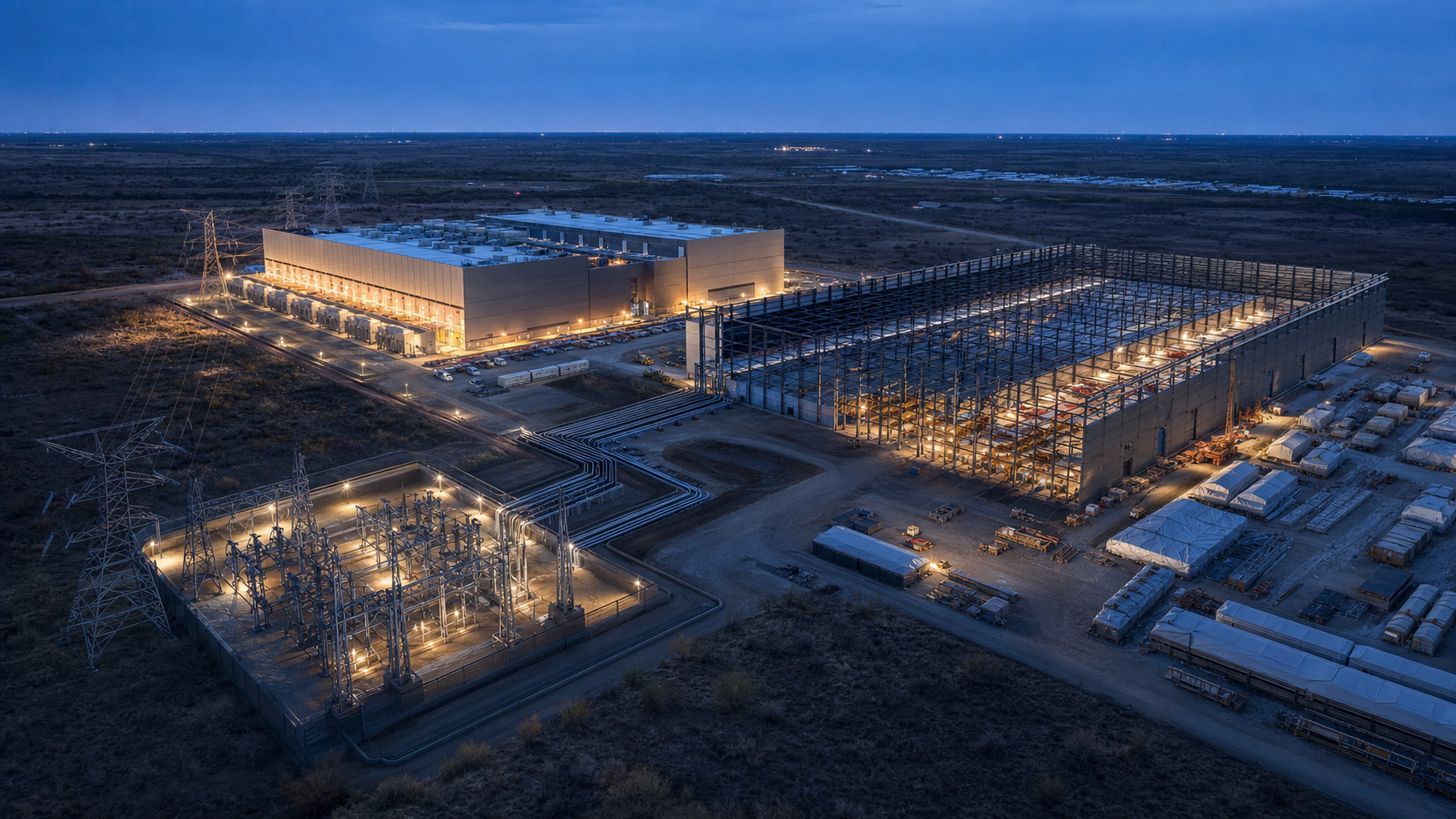
The company says all 1GW of utility capacity at Beacon Point is secured through an interconnection agreement with AEP Texas and that Phase 2 requires no additional utility capacity. Site preparation is underway, long-lead critical equipment has been procured and initial energization remains scheduled for the first quarter of 2027.
In a market where large data-centre projects can wait years for grid access, that position gives Hut 8 something it can commercialize before every wall is built. The first 352MW lease, disclosed in May, provided the initial tenant commitment. The July agreement is a distinct second-phase event: the tenant has doubled its footprint on substantially the same terms.
Those terms are described as triple-net, with the tenant bearing operating expenses covered by that structure, and include a 3% annual base-rent escalator. Such a lease can make future property cash flows easier to finance. It does not remove development risk. Hut 8 still has to arrange capital, coordinate contractors, avoid cost overruns and deliver infrastructure that meets the customer’s technical requirements.
The timetable makes that boundary visible. Initial energization is planned for Q1 2027, while the first Phase 2 data hall is not expected until Q2 2028. A signed lease and a secured grid position precede physical acceptance by a substantial margin.
Contract value is not today’s income statement
Hut 8 expects Phase 2 to contribute cumulative net operating income of $9.8bn over the base term, or an average $655m a year at stabilization. For the full campus, it forecasts average annual NOI of $1.31bn.
The closeness of contract value and forecast NOI reflects the triple-net framing, but the measures should not be treated as guaranteed profit. Hut 8 defines expected NOI as lease revenue minus non-reimbursable property operating expenses. It excludes selling, general and administrative expenses, depreciation and amortization, among other items with real economic effect. The company does not provide a GAAP reconciliation because future amounts cannot be quantified without what it considers misleading precision.
The scale comparison is striking. Hut 8 reported $71m of revenue in the first quarter of 2026, up from $21.8m a year earlier. A $9.8bn 15-year contract value is not comparable with one quarter of company revenue, but the contrast shows why the headline must be spread over time. It depends on a facility that has not yet reached its Phase 2 delivery date.
Three five-year renewal options on each lease could take potential campus contract value to $50.2bn if every option is exercised. That is upside, not base-term commitment. The $19.6bn figure is the relevant stated base-term total.
The portfolio grows, while concentration remains visible
After the second lease, Hut 8 describes its AI data-centre portfolio as 949MW of contracted IT capacity: 704MW at Beacon Point and 245MW at River Bend. That portfolio is supported by 1,330MW of utility capacity, $26.6bn of aggregate base-term contract value and forecast average annual NOI above $1.75bn. The company says all of it is leased to or backstopped by investment-grade counterparties.
Those totals broaden the company beyond Beacon Point, but they do not erase the campus-level concentration. One tenant doubling its commitment is the strongest possible validation of that tenant’s demand. It also means a change in that customer’s financing, architecture, deployment schedule or technical requirements would affect both phases.
The tenant’s identity is not public. Speculation about who it might be cannot be used as evidence. The economically relevant facts are already disclosed: one counterparty, two substantially similar 352MW leases, a long construction schedule and a large shared power position.
Investors initially welcomed the transaction, with Reuters reporting Hut 8 shares about 6% higher before the market opened. The longer test is operational. Securing power created the option. Signing the second lease commercialized it. Financing, constructing and handing over the second phase will determine whether the option becomes the cash flow described in the announcement.