
Policy continuity, legitimacy, and accountability signals across internet governance institutions.
Governance
Governance
Internet governance intelligence tracks institutions, policy processes, standards activity, registry operations, accountability disputes, and implementation signals that affect internet infrastructure. BTW.
RIR WatchdogCase FileNumber Resource SocietyICANNIETFHistory of InternetNOGs

RIR Watchdog, Case File, NRS, ICANN, IETF, History of Internet, and NOG sessions.
Coverage prioritizes implementation evidence and institutional behavior over declarative positions.
Latest Coverage
Latest from Governance
7,725 articles

History
The Proxy Acknowledged the Bytes. The Application Had Not Received Them: RFC 3135
The sender saw an acknowledgement and accelerated. Somewhere beyond that reassuring signal, the bytes were still sitting in an intermediary, waiting to cross the link that had caused the problem in the first place. RFC 3135 made that gap—the distance between faster feedback and…

IETF
A Private Transaction ID Is Not a Private Transaction
Two services can receive tokens for the same task without seeing the same transaction identifier. That sounds like a privacy boundary. A new OAuth proposal makes it explicit—and then admits that the rest of the token and the timing of its arrival may still give the task away.

IETF
The Envelope Was Signed. The Detached Ciphertext Was Outside the Signature.
The verifier returned green, the COSE entity was intact and the recipient decrypted a plausible message. None of those facts, alone, proves that the separately stored ciphertext was inside the outer signature. Detached content turns a neat security diagram into a custody problem…

IETF
The Calendar Called Them the Owner. It Had Not Granted Control.
A portable calendar record can call a entity an owner without making that person an authorized editor. The label describes a role; the exchange protocol still decides who may reschedule the event, change its entities, or send an update in its name.

History
The Nested Upload Had No Known Senders: RFC 2388
An early file-upload proposal put several selected files inside one nested MIME part. RFC 2388 carried that shape into a standard; seventeen years later, its successor said no sending implementations were known and rewrote the rule around separate parts with a shared field name.

History
The Delivery Ratio Looked Good. The Application Performed Badly: RFC 3133
One small acknowledgement disappeared. Almost every other frame arrived. The percentage stayed handsome while the sender repeated a much larger body of work and the user waited. In 2001, RFC 3133 put that contradiction inside the definition of the metric itself.
History
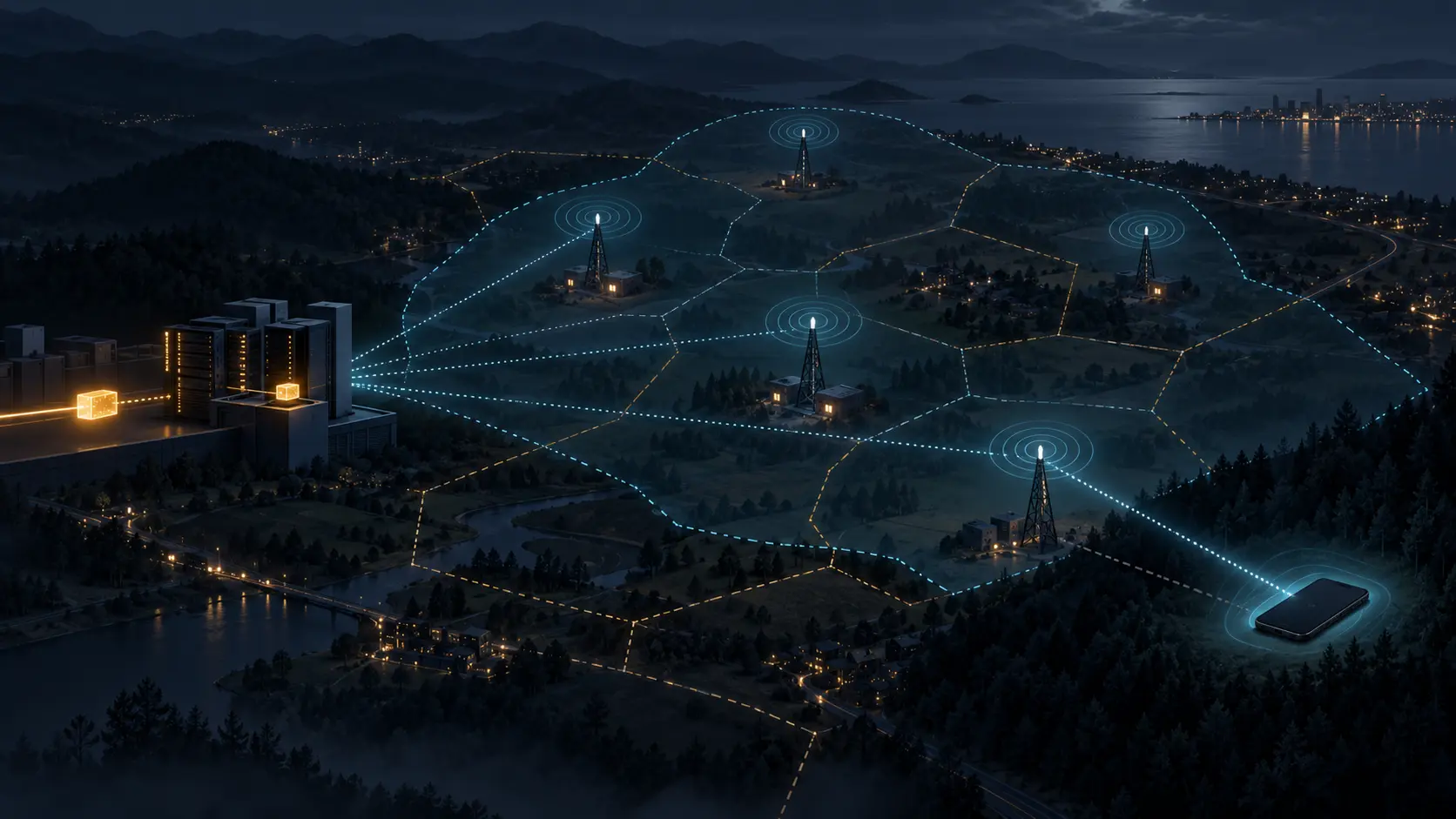
The First Packet Had to Wake the Host Before It Could Reach It: RFC 3132
The mobile saved power by ceasing to listen. From that moment, the network could no longer treat an arriving packet as mere traffic. The packet first became a request to remember, search and wake.

IETF
The Redirect Succeeded. The Credential Had Already Crossed in Plaintext.
The final URL was HTTPS, the API returned useful data and every dashboard showed green. Yet the credential had already travelled in the first cleartext request. A redirect can repair where the client goes next; it cannot recall bytes the network has already seen.

History
The Variant List Was Not the Representation: RFC 2295
One HTTP address could name several versions of a resource, but naming the candidates did not deliver any of them. RFC 2295 made that distinction part of the protocol: a list could expose the alternatives, a server could sometimes return a chosen representation, and a client…
History
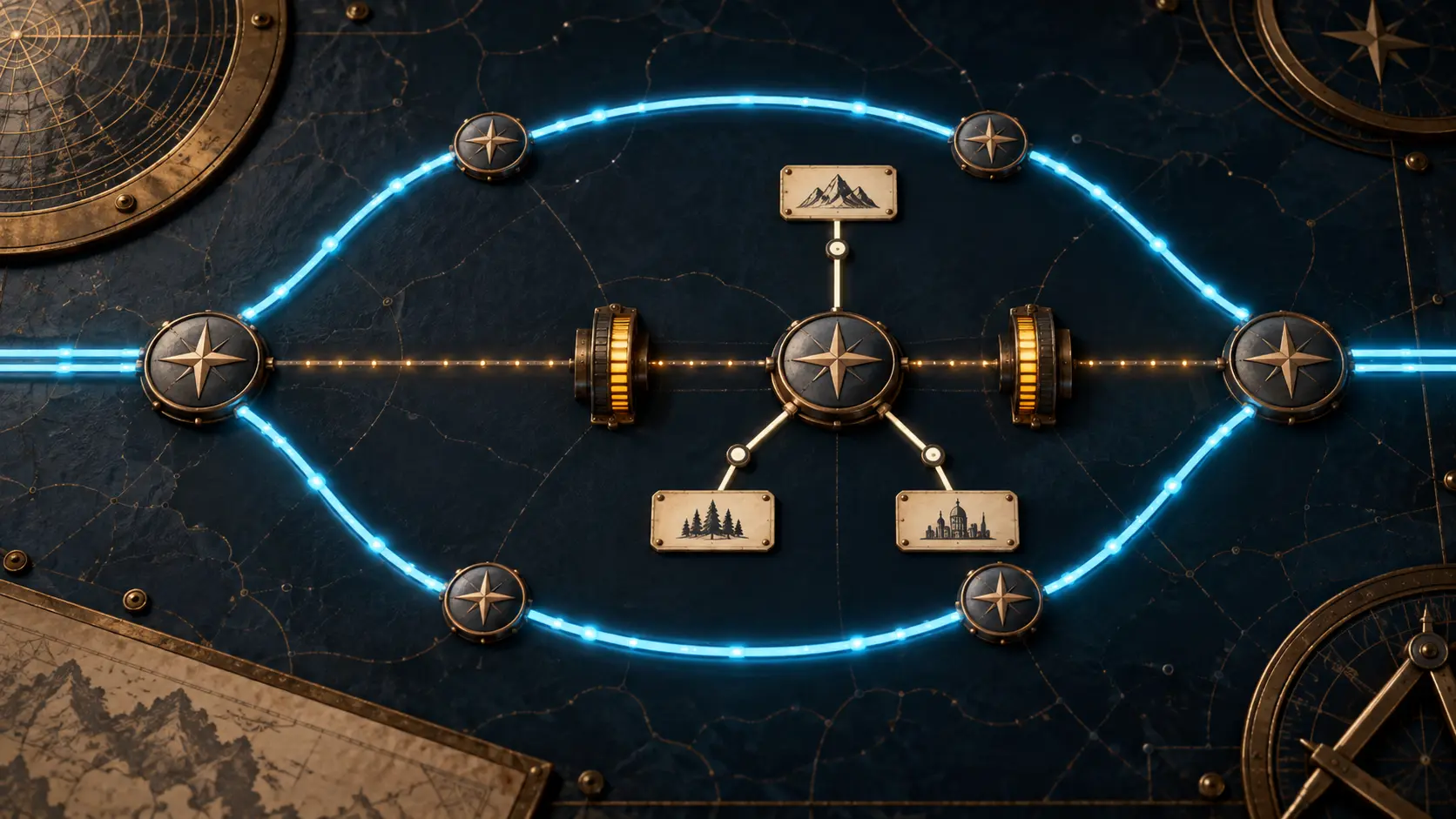
The Router Stayed Reachable After It Stopped Carrying Transit: RFC 3137
A router did not have to disappear merely because the network should stop crossing it. RFC 3137 turned that distinction into an OSPF advertisement: remain a destination, become an unattractive path.

IETF
The Chain Validated Against the Anchor It Carried. The Relying Party Had Not Trusted It.
The did:x509 resolver can finish every check it was asked to perform and still leave the decisive question untouched. A supplied certificate chain may be internally valid, its CA fingerprint exact and its leaf predicates true, while the relying party has not yet accepted the…

History
A One-Day Workshop Could Not Test an Expiring Signature: RFC 3130
By the time DNSSEC specialists met around IETF 49, the short workshop had become a misleading unit of proof. A signer could run, a validator could answer and a demonstration could end successfully before the clocks, organisations and independent implementations that determined…

History
Syntax Stopped Being Copied: RFC 2234 and ABNF
When every protocol note had to carry its own explanation of the grammar notation, a reader needed to learn the rulebook again before reading the rules. RFC 2234 made that rulebook separately citeable. Its small institutional move was to give Internet specifications a common…
Story
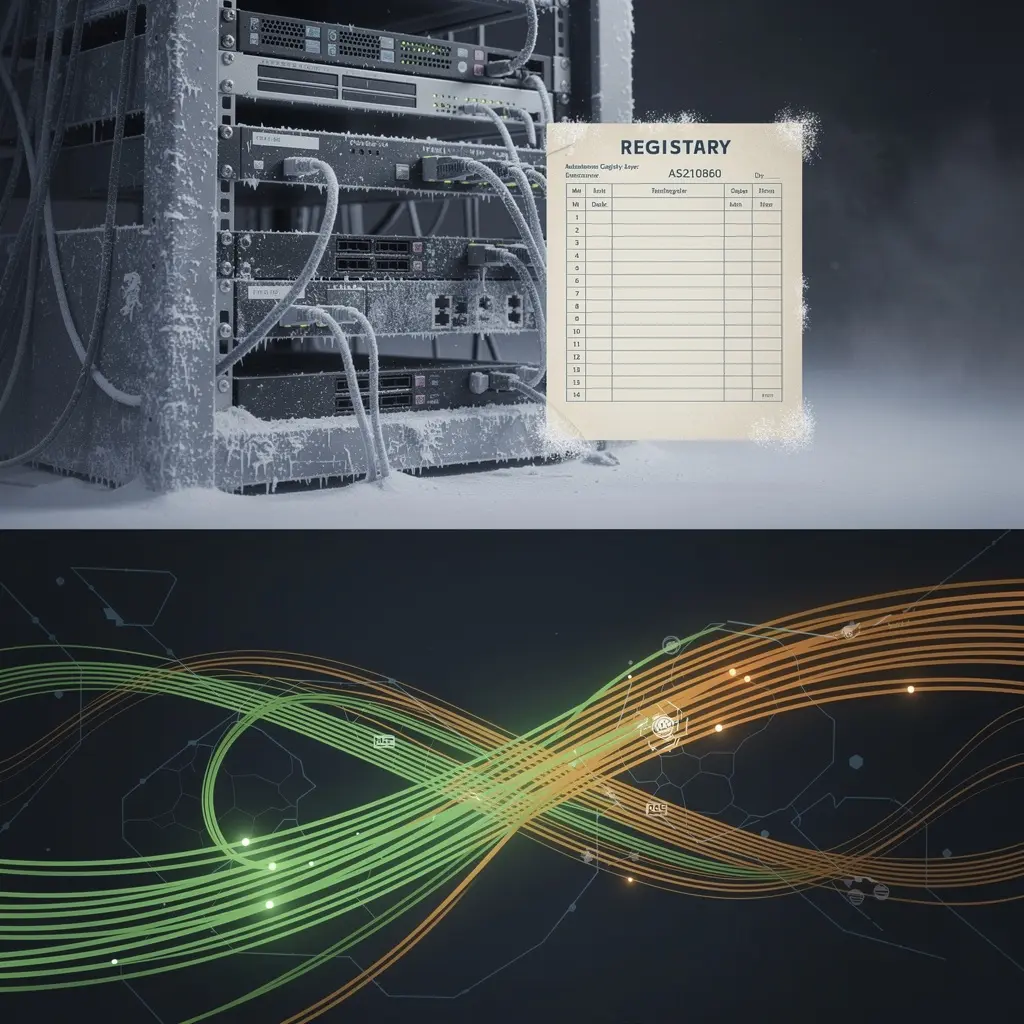
Two tiers of EDEKA: where the frozen registry ends and live routing begins
Two tiers of EDEKA: where the frozen registry ends and live routing begins intelligence summary explains the development, the public evidence available to readers, the organisations involved, the regional context, market exposure, and the infrastructure consequences that may…

History
The KDC Carried the Trust That Every IPsec Peer Could Not: RFC 3129
In June 2001, RFC 3129 treated Internet key exchange less as a contest between cryptographic algorithms than as a problem of institutional placement. Its question was blunt: if every IPsec peer had to carry policy, certificates, computation and pairwise secrets, could a Kerberos…

IETF
The Backup Lost Sight of the Primary. The Multicast Path Was Still Alive.
A BIER backup ingress can lose its monitoring path to the selected ingress while every protected receiver path still works. If that narrow observation is allowed to command a takeover, resilience creates the very duplicate traffic it was meant to contain.

History
A Plus Sign Was Only One Local Dialect: RFC 5233
An address can carry a delivery hint inside its local part, but the hint is not a universal language. RFC 5233 let Sieve inspect a “user” part and a “detail” part without claiming every mail system split them the same way—or even used a plus sign.

History
The First Fragment Passed. The Overlap Changed the Port: RFC 3128
In 2001, a short security note exposed a difficult truth about packet filtering: a firewall could approve one set of bytes while the receiving host later assembled another. RFC 3128 did not discover fragmentation, or even overlapping fragments. Its contribution was to show how…

History
Long-Term Proof Had to Outlive the Key: RFC 3126
RFC 3126 treated an old signature as an evidence-preservation problem. A valid calculation made in 2001 would not explain itself decades later if certificates, revocation records, exact signed bytes or trustworthy algorithms had disappeared. Its answer was a ladder of timestamps…

IETF
It Opened the Handshake. It Still Needed the Group's Memory.
An MLS external receiver can open the same commit or proposal seen by group members and still lack the state needed to authenticate who sent it. The missing receipt is not more ciphertext. It is the current GroupContext that joins an epoch, a sender leaf, a credential and an…
Session Map
Governance Branch
RIR Watchdog
Five regional sessions tracking allocation policy, board legitimacy, and institutional continuity.
Open RIR WatchdogCase File
Long-cycle governance dossiers with legal, election, and institutional stress analysis.
Open Case FileNumber Resource Society
Membership, charter, and resource-governance intelligence from the NRS ecosystem.
Open NRS SessionICANN
DNS coordination, accountability frameworks, and global multi-stakeholder process dynamics.
Open ICANN SessionIETF
Protocol standardization trajectory and interoperability risk under fragmented policy conditions.
Open IETF SessionHistory of Internet
Long-cycle infrastructure history used for governance interpretation and structural forecasting.
Open History SessionNOGs
Operator-level implementation intelligence from APRICOT plus regional and national NOG ecosystems.
Open NOGs Session