
Policy continuity, legitimacy, and accountability signals across internet governance institutions.
Governance
Governance
Internet governance intelligence tracks institutions, policy processes, standards activity, registry operations, accountability disputes, and implementation signals that affect internet infrastructure. BTW.
RIR WatchdogCase FileNumber Resource SocietyICANNIETFHistory of InternetNOGs

RIR Watchdog, Case File, NRS, ICANN, IETF, History of Internet, and NOG sessions.
Coverage prioritizes implementation evidence and institutional behavior over declarative positions.
Latest Coverage
Latest from Governance
7,655 articles

IETF
The Locator Was Signed. The Path Was Still Unverified.
The mobility UPDATE was authentic. Its new address was syntactically valid, its sequence was fresh, and its sender belonged to the existing HIP association. RFC 5206 still called that address `UNVERIFIED`. The signature answered who announced the route; a nonce on the route had…

IETF
The DNS Record Was Fresh. The HIP Endpoint Was Gone: RFC 8005
A DNSSEC-valid HIP resource record can faithfully publish a Host Identity and rendezvous name while the runtime path behind it has already failed. RFC 8005 makes discovery useful precisely by keeping its claim narrower than liveness, key use and delivery.

History
Base64 Was Never Just Base64: RFC 3548 and the Encoding Profile
An encoding can carry the same bytes and still behave differently at the edges. In 2003, RFC 3548 tried to make those edges explicit before one protocol’s mail-era habits became another protocol’s assumptions.

IETF
The Rekey Was Signed So the Middlebox Could Read It
The payload stayed dark, but the rotation did not. In a HIP capture, the old and new ESP selectors crossed the network inside an authenticated UPDATE that an intermediary was expected to inspect. Calling the session “encrypted” was true about the data and false about the control…

IETF
The Registrar Said Yes. The Service Had Already Gone: RFC 5203
A signed registration response can be entirely valid and still answer a smaller question than an operations dashboard assigns to it. RFC 5203 separates permission to hold soft registration state from the later availability and use of the service behind that state.

Story
RIPE NCC’s €10.5m infrastructure plan enters member review
The proposed 2027 budget lifts capital expenditure to €10.5 million for a renewal programme running through 2028. The Board has approved publication of the draft, not the final plan; members are being asked to discuss it and provide feedback before a December version is approved.

History
The Registry Relaxed Its Gate, Not Its Question: RFC 3546 and TLS Extensions
In two decades, TLS extension registration moved from a standards-track gate to expert review of a public specification. The change made code points easier to request; it did not turn a registry entry into a verdict on security, implementation or use.

IETF
The Responder Replied Before It Committed: RFC 5201's Precomputed R1
The probe returned a signed HIP R1 in 18 milliseconds. The dashboard translated that into three green claims: peer alive, session admitted, secure path ready. The packet justified none of them. It could have been selected from a precomputed pool while the responder retained no…

IETF
The HIP Handshake Crossed the Firewall. ESP Still Had No Path: RFC 5207
A control exchange can pass through a middlebox, authenticate two hosts and still leave the protected data plane unusable. RFC 5207 makes that split unusually concrete: HIP has a base-exchange phase and an ESP phase, while NATs and firewalls need different evidence to carry each…

History
The Checksum Left One Field Out: RFC 3545 and RTP Repair
A 16-bit header checksum could help a decompressor validate a rebuilt CRTP header, but it did not cover the IPv4 Identification field. RFC 3545 made that blind spot decisive when packet loss exceeded the recovery budget.

IETF
The Application Did Not Change. Its Unicode Boundary Did: RFC 5198
The deployment record showed the same application digest before and after the maintenance window. Yet a string rejected on Monday was accepted on Tuesday. The change lived below the application: the refreshed base image had loaded a newer Unicode database, turning one formerly…

Story
RIPE NCC’s LIR pause also covers pending requests
RIPE NCC’s temporary restriction on acquiring additional Local Internet Registry accounts took effect from 29 September and includes requests already in progress. The decision pauses an intake route; it does not order the closure or consolidation of accounts already held, and it…

IETF
The Rendezvous Server Forwarded I1. The Peer Was Still Not Proven Reachable: RFC 5204
A HIP rendezvous server can accept an initial packet for a mobile host, recover a registered locator and forward the packet there. That is a useful act of coordination. It is not a receipt from the peer. RFC 5204 makes the boundary visible: the server helps an initiator knock on…

IETF
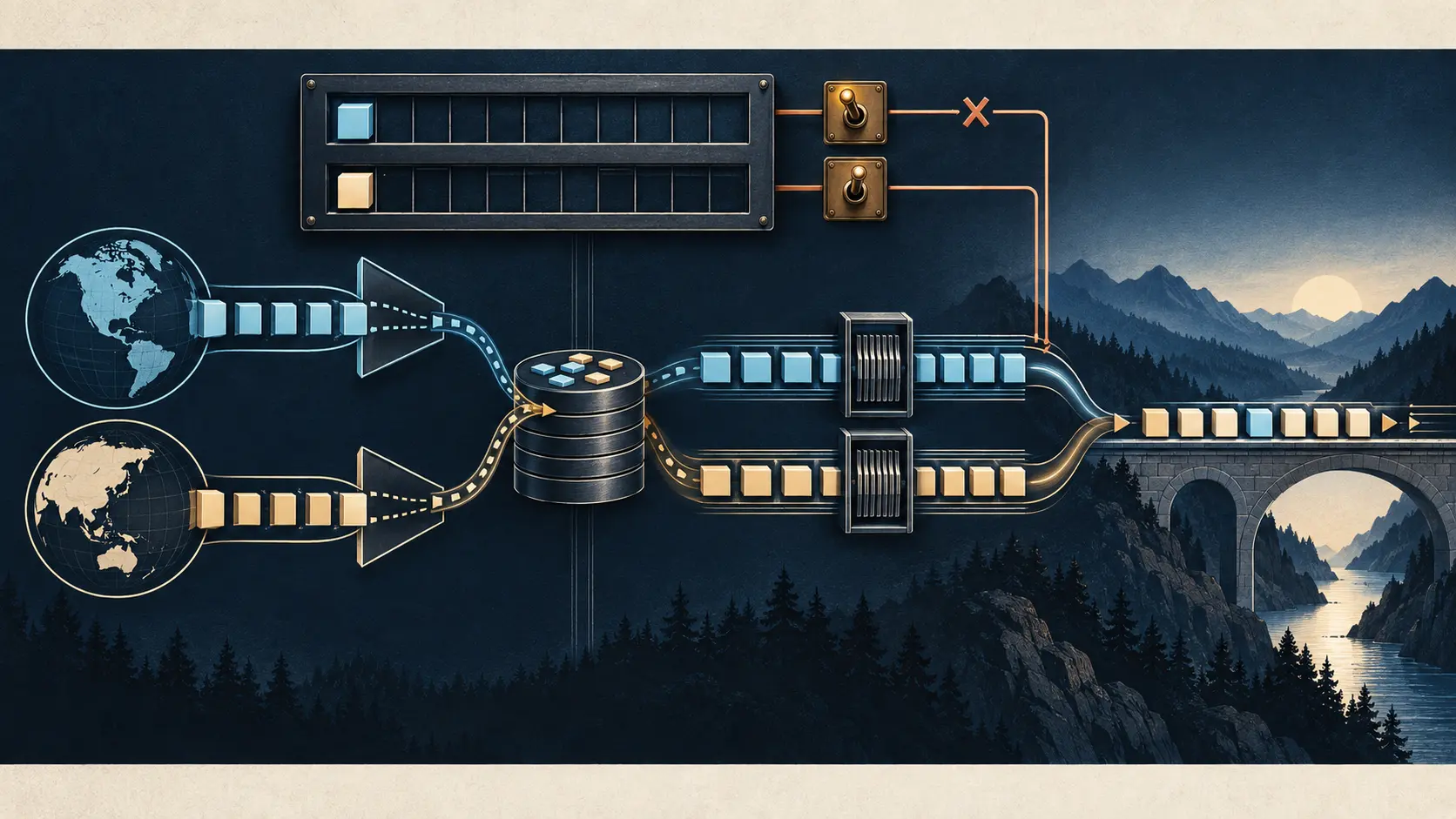
MIKEY Was Green. The Proxy Could Still Read the Master Key.
The session dashboard showed a reassuring result: MIKEY active, SRTP encrypted, policy passed. The exchange had used MIKEY-NULL over TLS, and the TLS connection ended at a signaling proxy. On the wire outside that hop, the media key looked protected. Inside the trust boundary…
History
Zero Was Already One: RFC 3544 and PPP Compression Negotiation
An operator could ask PPP to keep compressing TCP headers while leaving other traffic untouched. The obvious instruction—set the non-TCP context space to zero—did not mean “none.” RFC 3544 added a small, explicit override for the value the older field could not express.

IETF
The Patch Localized the Card. It Did Not Create Another Authority: RFC 9553
A contact card can present a name, title and address in another language without becoming a second contact record. RFC 9553 makes that distinction concrete: a language-tagged PatchObject is applied to a copy of one base Card. The view may be fluent and valid while its identity…

IETF
Presence Said Video Was Supported. SDP Said No.
The watcher chose video because the presence document advertised it. Seconds later the session offer failed. Nothing in that sequence was contradictory: the first signal was a filtered, time-bound hint about a service or device; the second was a live negotiation with the endpoint…

IETF
IETF makes PCR index-to-value pairing explicit in attestation draft -14
The latest revision of an IETF remote-attestation subscription draft converts a reviewer’s correlation question into a testable rule: PCR identifiers and their values must travel as equal-length lists whose positions correspond. The change sharpens what a receiver may expect, but…

IETF
The Probe Shared the Path. It Still Did Not Prove the SLO: RFC 9551
The operations screen showed the DetNet test packet crossing the right links with the right priority. That was valuable evidence—and still not the same thing as proving that every protected packet arrived within its delay, loss and ordering objective. RFC 9551 is most useful when…

History
The Bridge Reached 100%. It Had Not Proved Settlement or Delivery: RFC 3538
A payment interface can finish every message it was designed to carry and still leave the most important commercial questions open. RFC 3538 made that limit visible in a five-step progress meter whose final mark belonged to a protocol bridge, not to the whole transaction.
Session Map
Governance Branch
RIR Watchdog
Five regional sessions tracking allocation policy, board legitimacy, and institutional continuity.
Open RIR WatchdogCase File
Long-cycle governance dossiers with legal, election, and institutional stress analysis.
Open Case FileNumber Resource Society
Membership, charter, and resource-governance intelligence from the NRS ecosystem.
Open NRS SessionICANN
DNS coordination, accountability frameworks, and global multi-stakeholder process dynamics.
Open ICANN SessionIETF
Protocol standardization trajectory and interoperability risk under fragmented policy conditions.
Open IETF SessionHistory of Internet
Long-cycle infrastructure history used for governance interpretation and structural forecasting.
Open History SessionNOGs
Operator-level implementation intelligence from APRICOT plus regional and national NOG ecosystems.
Open NOGs Session