
Policy continuity, legitimacy, and accountability signals across internet governance institutions.
Governance
Governance
Internet governance intelligence tracks institutions, policy processes, standards activity, registry operations, accountability disputes, and implementation signals that affect internet infrastructure. BTW.
RIR WatchdogCase FileNumber Resource SocietyICANNIETFHistory of InternetNOGs

RIR Watchdog, Case File, NRS, ICANN, IETF, History of Internet, and NOG sessions.
Coverage prioritizes implementation evidence and institutional behavior over declarative positions.
Latest Coverage
Latest from Governance
7,647 articles

IETF
The Handshake Timer Started Before the Packet Left. The Retry Made Congestion Worse.
A DTLS handshake record waits inside DCCP's congestion-controlled queue. The upper layer sees no reply, starts counting too early and adds a retry beside an original that has not yet crossed into IP. RFC 5238 turns that small timing mistake into a governance lesson: a timeout is…

History
The Address Was Already There. DHCPv6 Still Had Work to Do: RFC 3736
An IPv6 host could form an address without asking DHCPv6 for one and still need the network’s DNS or service parameters. RFC 3736 made that second job a small, separate exchange—and its missing refresh clock became the next design problem.

IETF
The Packets Were Out of Order. The Metric Still Did Not Name the Cause.
A reordering histogram can be exact and still be silent about why the path changed. RFC 5236 is most valuable when its Reorder Density and Reorder Buffer-occupancy Density are treated as bounded measurements—complete with thresholds, observation points and sequence rules—rather…

IETF
The Filter Returned Zero. That Did Not Prove the Message Was Clean.
Two messages can arrive at the same RFC 5235 percentage score of zero by opposite routes. One was examined and judged clear. The other was not examined, or the Sieve engine cannot tell whether a check occurred. Portability made their outputs equal. It did not make their evidence…

IETF
IETF’s RFC 1602 reuse clarification needs a date line, not just a starting RFC
The IETF LLC says counsel traced standards-work reuse rights back to RFC 1602. That 1994 text itself draws a 1 April cutoff and sends earlier material to a direct rights inquiry—an important boundary for the Chairs Wiki guidance now being drafted.

History
The Logo Could Be Checked. It Could Not Validate the Certificate: RFC 3709
In 2004, RFC 3709 put a visual identity cue inside the X.509 certificate ecosystem while drawing a firm line around what that cue could prove. A fetched logo could be checked against a hash in the certificate; it could help a person recognize an issuer or subject. It could not…

IETF
The Registry Had an Expert. The Expert Still Needed a Mandate.
RFC 5226 solved a real continuity problem by giving IANA a durable expert to consult after a working group disappeared. But expertise is not self-authorizing. The review becomes legitimate only when the registry defines the evidence, criteria, reasons, conflicts, change rights…

IETF
The Header Decompressed. The Control State Still Needed Its Own Proof.
RFC 5225 draws a line that modern control systems routinely blur. A current output can be valid while the state written for the next output is wrong. ROHCv2 therefore gives a repair packet two checks with different jobs: one validates the reconstructed header; the other validates…

History
The Duplicate Arrived. The Loss Verdict Did Not: RFC 3708
A receiver can report that a segment arrived twice. In 2004, RFC 3708 asked senders to resist turning that one observation into a verdict that an entire recovery window was loss-free.

IETF
The Policy Engine Returned a Result. Enforcement Was Still a Different Event.
RFC 5224 gives Diameter a precise carrier for asking a policy system to process a request and return an answer. The answer is valuable evidence, but it belongs to the decision layer. Installation, activation and observed effect still need witnesses of their own.

IETF
The Network Supplied a LoST Domain. It Had Not Proven an Authority.
RFC 5223 makes a small DHCP option carry a large governance boundary. The access network can give a client one domain name for LoST discovery, but that string is only the beginning of a chain through DNS, U-NAPTR, server security and mapping. A discovery pointer is not an…

IETF
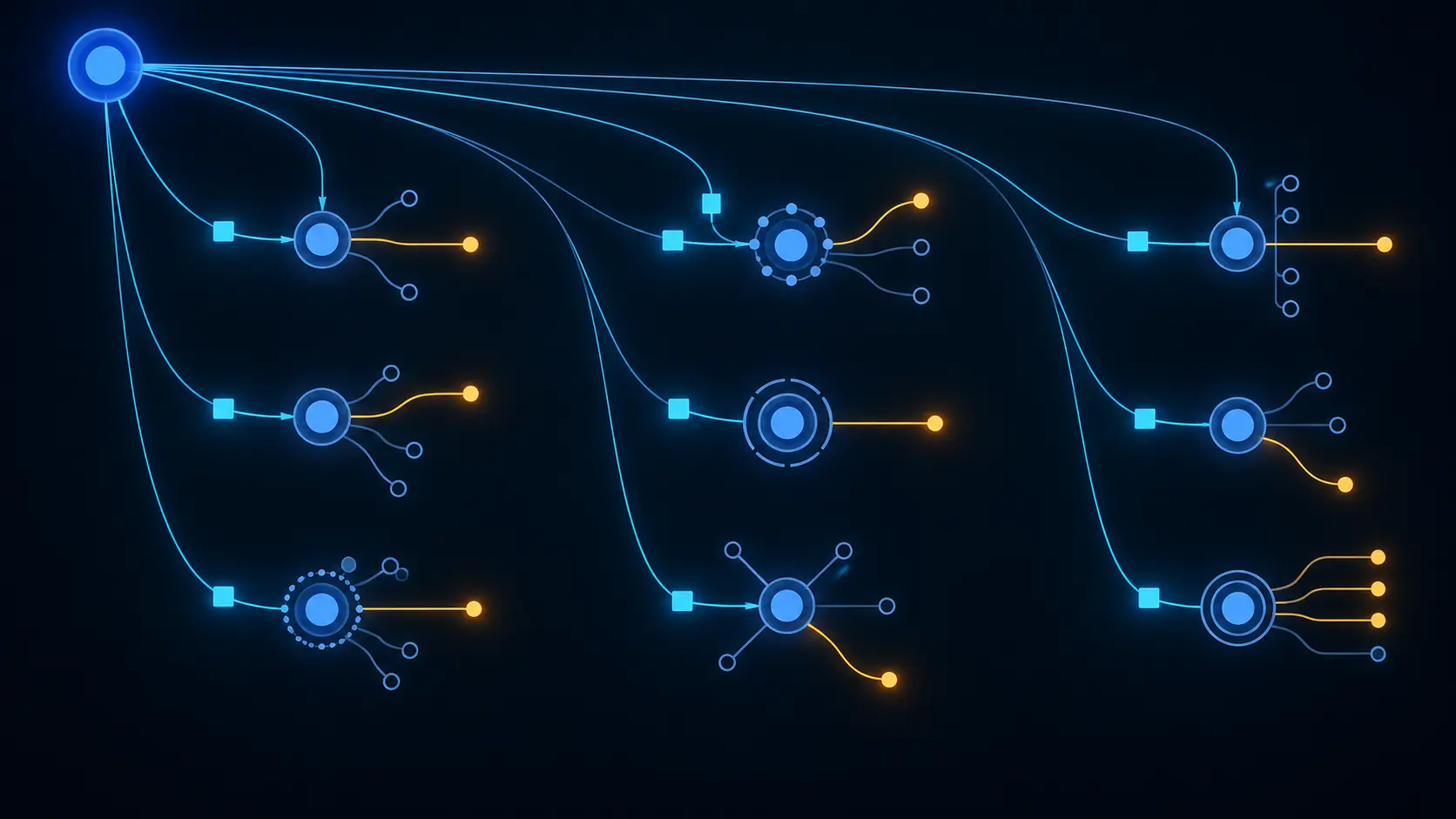
The Network Named a LoST Server. It Had Not Proved Authority.
RFC 5223 gives an access network a precise, useful power: place one fully qualified domain name in DHCP so an endpoint can begin discovering a LoST service. The option is a pointer into the next protocol layer, not a transferable warrant for everything that follows.
IETF
The Address Policy Reached Every Host. Its Scope Did Not.
RFC 5221 exposes a management trap hidden inside centrally distributed network policy. A table can be authentic, current at the controller and successfully installed, yet still be wrong for the node, application, interface or next hop making the decision. Delivery is evidence of…

IETF
The Map Returned the Right URI. Nobody Had Answered Yet.
RFC 5222 gives emergency-service routing a disciplined answer to a narrow question: for this stated location and service, which contact URI does the mapping system return? The danger begins when that answer is promoted into proof that the location was current, the route remained…

History
An Empty Contact List Was Still a State: RFC 3680
SIP could report more than which devices were registered. RFC 3680 gave an address-of-record a state even when it had no contacts—and made subscribers rebuild that state from ordered changes without mistaking registration for presence or reachability.

IETF
The ANRP paper is not an IRTF contribution; its award talk is
Six papers made the IRTF’s 2026 Applied Networking Research Prize list after 70 nominations. At IETF 127 in November, Mona Wang and Protick Bhowmick are named for recognition. The program’s own rules draw a useful line: the research paper is not an IETF or IRTF contribution, but…

IETF
The Protocol Won. Its Original Design Space Did Not.
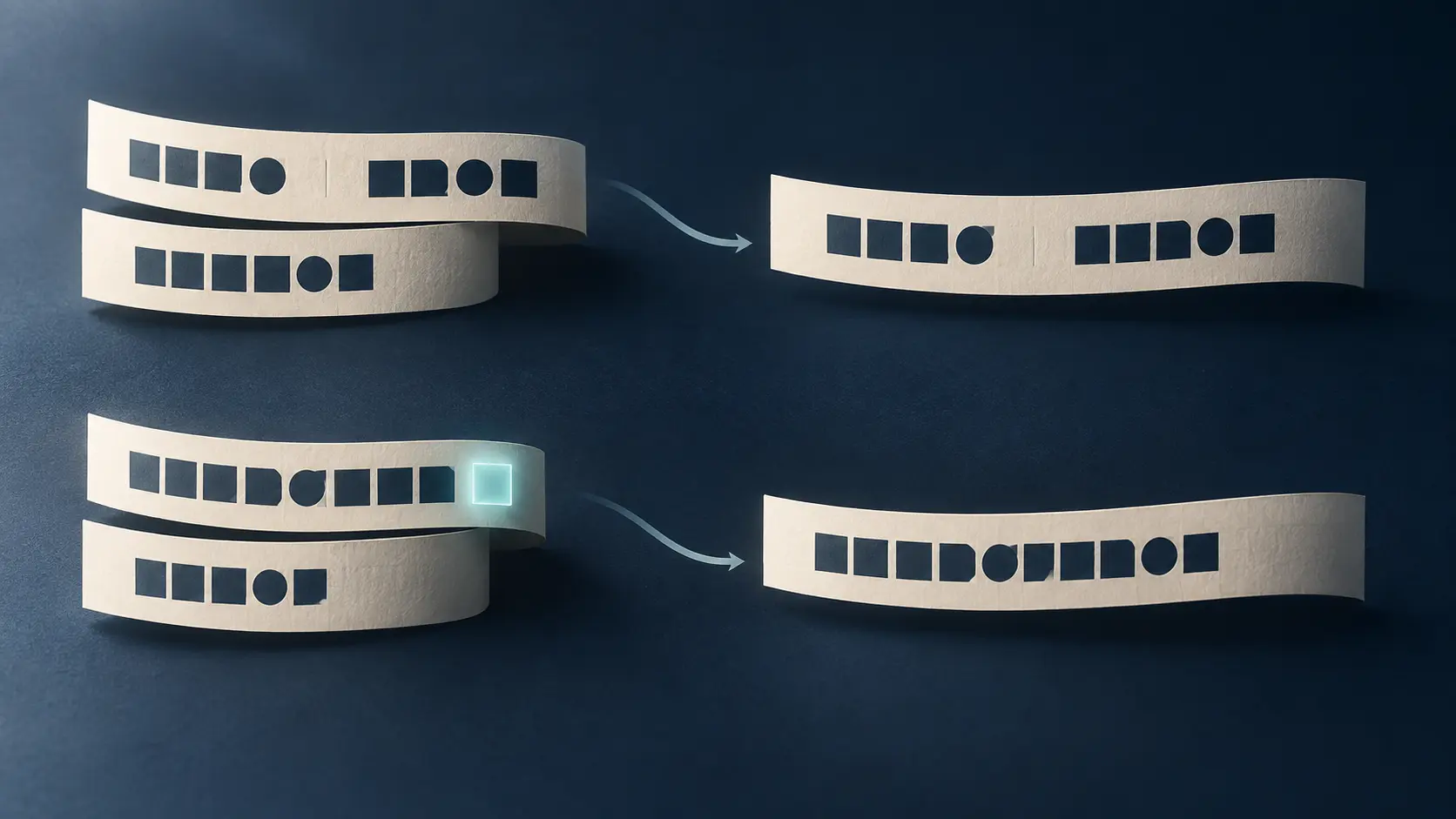
RFC 5218 treats success as a moving boundary, not a trophy. Once a protocol is used at a scale or for a purpose its designers did not plan for, adoption becomes a new engineering and governance problem: the installed base is real, but its safety, extension behaviour and…
History
The Space Was a Signal—Until It Wasn't: RFC 3676
An email line could end with a space that belonged to the sentence, or with a space inserted to mean “continue on the next line.” RFC 3676's `DelSp` parameter tells a receiving client which of those two histories to reconstruct.

IETF
The Certificate Was Valid. The Port Stayed Closed.
EAP-TLS can complete a strong certificate exchange, bind a TLS transcript and derive fresh keys while the access edge still has no authority—or no ability—to deliver the requested network. RFC 5216 is most useful when its cryptographic result is kept inside that boundary.

IETF
The Certificate Path Existed. Policy Still Required It to Fail.
A validator can assemble an intact chain of signed certificates and still be correct to reject it. RFC 5217 turns that apparent contradiction into an operating rule: technical reachability across PKI domains is not authority to accept a certificate.
Session Map
Governance Branch
RIR Watchdog
Five regional sessions tracking allocation policy, board legitimacy, and institutional continuity.
Open RIR WatchdogCase File
Long-cycle governance dossiers with legal, election, and institutional stress analysis.
Open Case FileNumber Resource Society
Membership, charter, and resource-governance intelligence from the NRS ecosystem.
Open NRS SessionICANN
DNS coordination, accountability frameworks, and global multi-stakeholder process dynamics.
Open ICANN SessionIETF
Protocol standardization trajectory and interoperability risk under fragmented policy conditions.
Open IETF SessionHistory of Internet
Long-cycle infrastructure history used for governance interpretation and structural forecasting.
Open History SessionNOGs
Operator-level implementation intelligence from APRICOT plus regional and national NOG ecosystems.
Open NOGs Session