
RIR Watchdog
Five regional sessions tracking allocation policy, board legitimacy, and institutional continuity.
Open RIR WatchdogGovernance
The internet runs on institutions most people never see. We follow the regional registries, ICANN, the IETF and the operator communities through every board vote, policy fight and court case, and tell you what each move means for your network.

Latest Coverage
9,368 articles

History
In 1988 the Internet chose a short-term management protocol, and one rival stepped aside to make agreement possible. Seven months later, that rival published a remarkably rich query language anyway. RFC 1076 is the record of what selection can retire, what it can preserve, and…

History
In the early 1990s, IP multicast met a local medium with an awkwardly small vocabulary. A Token-Ring adapter could be told which hardware destinations to accept, but its scarce functional addresses could not give each IP group a private physical label. RFC 1469 solved the…

CASE FILE
A contact card without a globally convenient identifier can make a synchronization team uncomfortable. The usual reflex is to manufacture one: a string is easy to add, relational tables prefer stable keys, and downstream software wants a value to point at. RFC 9982 takes a more…
CASE FILE
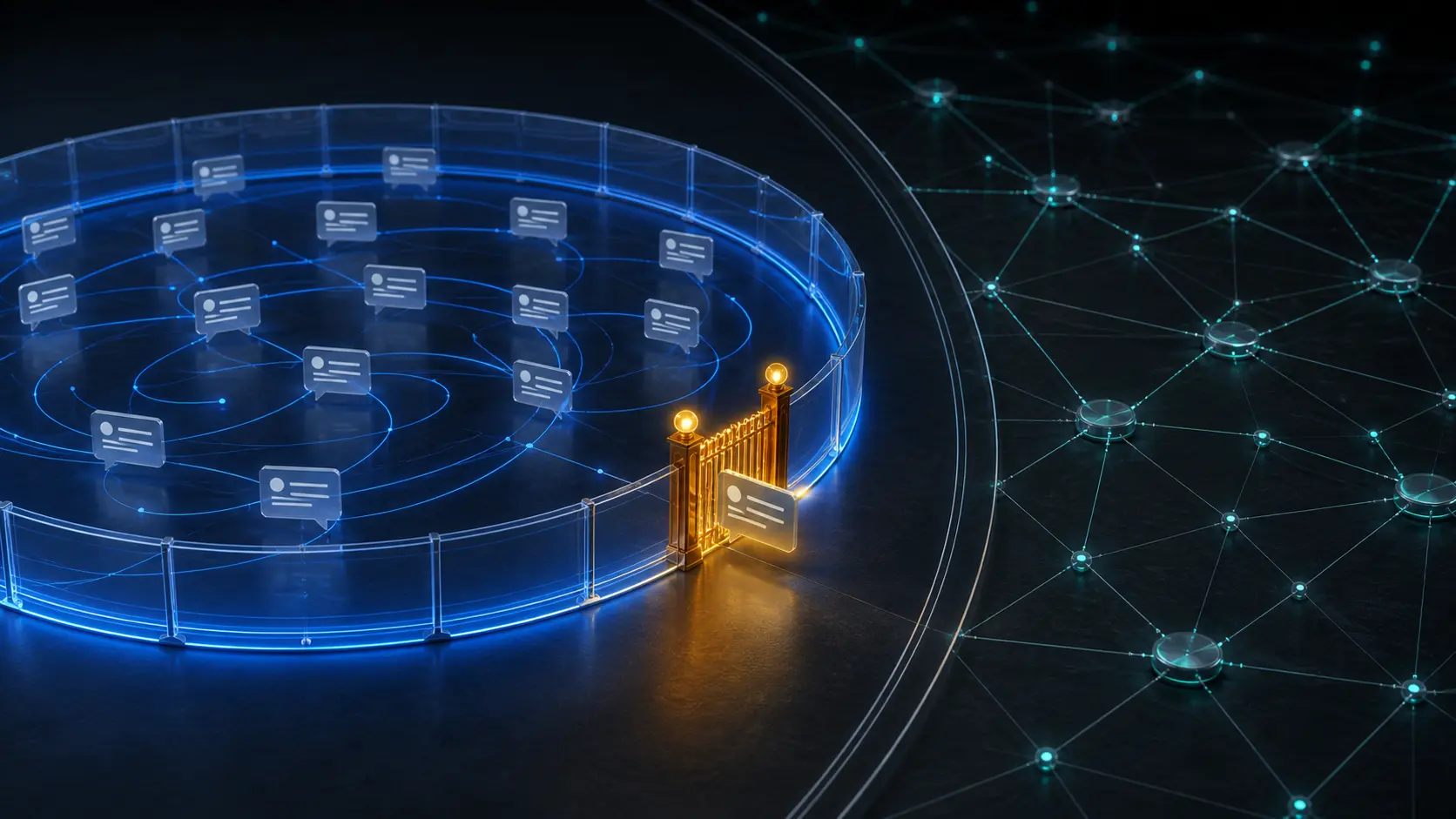
A forum needs a way to stop disruption without mistaking that housekeeping power for a title over everything discussed there. RFC 9945 makes that distinction unusually visible: it gives the IETF a shared procedure for its public online spaces, while repeatedly locating the…

ICANN
ICANN’s updated process for amending GNSO Stakeholder Group and Constituency charters is now in force. It adds earlier contact with ICANN org, templates and room for deeper review. It also removes the old process’s public 10-business-day and 30-calendar-day clocks and its…

IETF
A power meter can report a precise number while leaving the environmental claim undecided. Turning that number into energy, emissions or permission to switch off spare capacity requires separate evidence—and a record of who accepted the trade.

Story
APNIC has recorded the service window and the stuck email processor. That is a useful notice. It is not yet a public account of the transition from a delayed mailing-list queue to a reconciled delivery record.

History
In 1989, as the Internet outgrew a single privileged core, RFC 1136 offered a vocabulary for a problem that diagrams often conceal. A network could be one thing for routing procedure and another for administration. The distinction did not decide who owned a network, prove a path…

CASE FILE
One protected request can look wonderfully decisive. A controller addresses a CoAP group, the network fans it out, several endpoints answer, and the panel records a quiet burst of acknowledgements. In a constrained environment, that economy matters. It is also exactly where an…
History
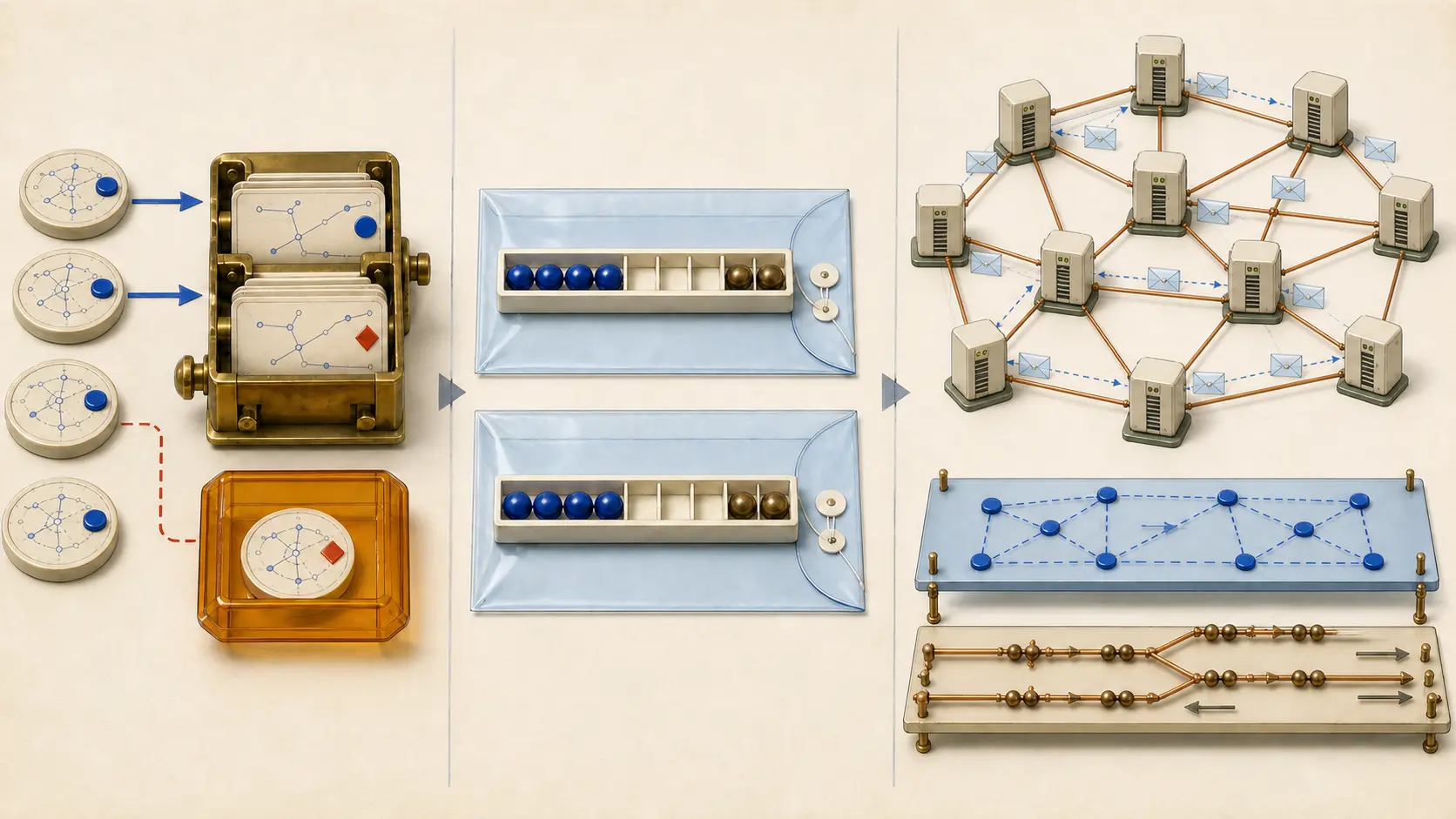
Thirteen T1 sites did not become one routing domain by choosing a pure protocol family. The 1988 NSFNET backbone carried IS-IS control packets over IP, fitted Internet addresses into NSAP-shaped fields, and let a policy database decide which EGP claims could become interior…

IETF
One line in the IETF Administration LLC’s 2026 Risk Register names the institutional failure that open technical organizations are often least comfortable naming: “The IETF, or a key part of it, is captured.” The same line says two controls are complete and two remain unfinished…

CASE FILE
A protected message can leave one sender and be intelligible to a group. It cannot make five receivers one decision-maker. RFC 10020 matters because it gives constrained systems a disciplined way to speak to a group without erasing the separate evidence required for membership…

CASE FILE
W3C’s open Web Machine Learning charter patch does more than add an AI-labelled deliverable. It would put JavaScript tool registration, browser mediation and declarative annotations on HTML forms inside the Working Group’s proposed scope. Yet the same diff leaves the charter’s…

IETF
A certification request can carry a valid signature and still have no right to become the certificate it asks for. The signature answers a narrow question about a key; identity, namespace entitlement, intermediary action and issuance remain separate decisions.

CASE FILE
An HTTP endpoint can look settled long before it exists in practice. A URI is present in a management tree; permitted versions are listed; TLS parameters and a proxy are named; a server has a name and an apparent stack. Those are useful, reviewable decisions. RFC 10009 makes…

History
An 80-by-24 terminal window became 80-by-64 without opening a new Telnet connection. Four small values crossed the link, and the remote host gained a better chance of placing its cursor correctly. Nothing in that exchange required the host to use the new geometry. RFC 1073 made…

History
In 1989, DNS could already distribute host information, but it did not yet offer a standard way to ask what a network number was called. RFC 1101 proposed a small answer: use PTR records, host-zero names and masks in `IN-ADDR.ARPA`. Its lasting discipline is equally small. A…

CASE FILE
A call can arrive at a real endpoint and still arrive at the wrong decision. That is the uncomfortable gap RFC 9970 brings into view. STIR made it possible to carry cryptographic information about the originator of a SIP request. A caller, however, has a different question after…

CASE FILE
A DMARC dashboard can make a narrow observation look like a verdict. One receiver reports a large count from a source range, records an evaluated policy and shows a disposition. That is valuable operational evidence. It is not a global traffic census, proof of a sender's intent…
History
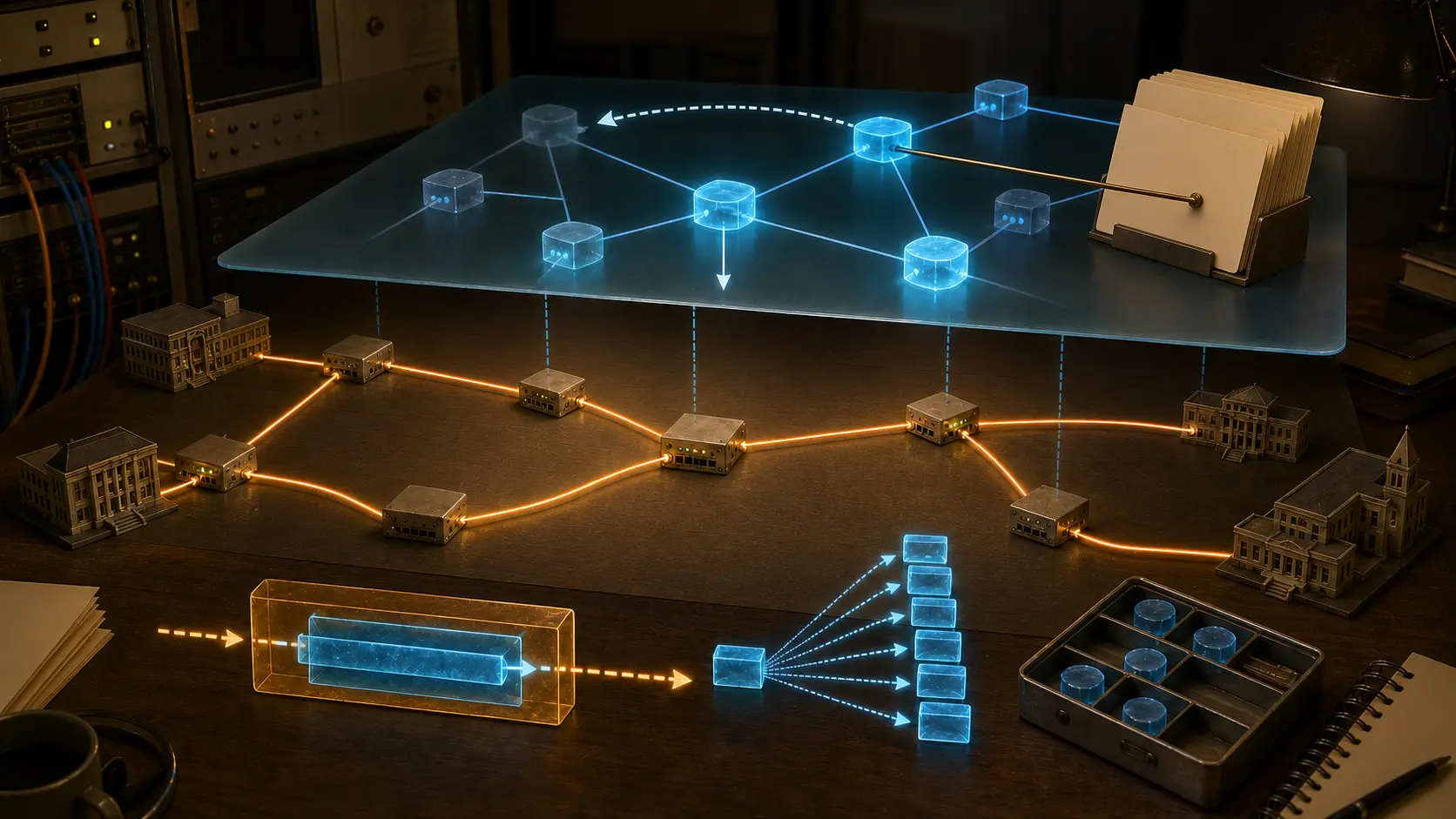
In one of RFC 1070's imagined laboratories, two machines could exchange their OSI roles without changing either Internet address or cable. Every host would remain reachable by IP. Yet the experimental network could briefly lose its new router because an old list still pointed…
Session Map
Five regional sessions tracking allocation policy, board legitimacy, and institutional continuity.
Open RIR WatchdogLong-cycle governance dossiers with legal, election, and institutional stress analysis.
Open Case FileMembership, charter, and resource-governance intelligence from the NRS ecosystem.
Open NRS SessionDNS coordination, accountability frameworks, and global multi-stakeholder process dynamics.
Open ICANN SessionProtocol standardization trajectory and interoperability risk under fragmented policy conditions.
Open IETF SessionLong-cycle infrastructure history used for governance interpretation and structural forecasting.
Open History SessionOperator-level implementation intelligence from APRICOT plus regional and national NOG ecosystems.
Open NOGs Session