
RIR Watchdog
Five regional sessions tracking allocation policy, board legitimacy, and institutional continuity.
Open RIR WatchdogGovernance
The internet runs on institutions most people never see. We follow the regional registries, ICANN, the IETF and the operator communities through every board vote, policy fight and court case, and tell you what each move means for your network.

Latest Coverage
9,349 articles

IETF
An AIS may suppress cascaded client alarms while its L-Flag remains clear, so alarm suppression is not proof of server failure. The server or intermediate node can send the indication downstream in affected client LSPs, but the receiving MEP still validates it and decides the…

IETF
A link can look healthy where traffic leaves but damaged where it arrives. RFC 9917 turns that far-end evidence into a policy input: an operator-defined threshold can place an Extended Administrative Group on the reverse edge, allowing the forward edge to be removed from a…
History
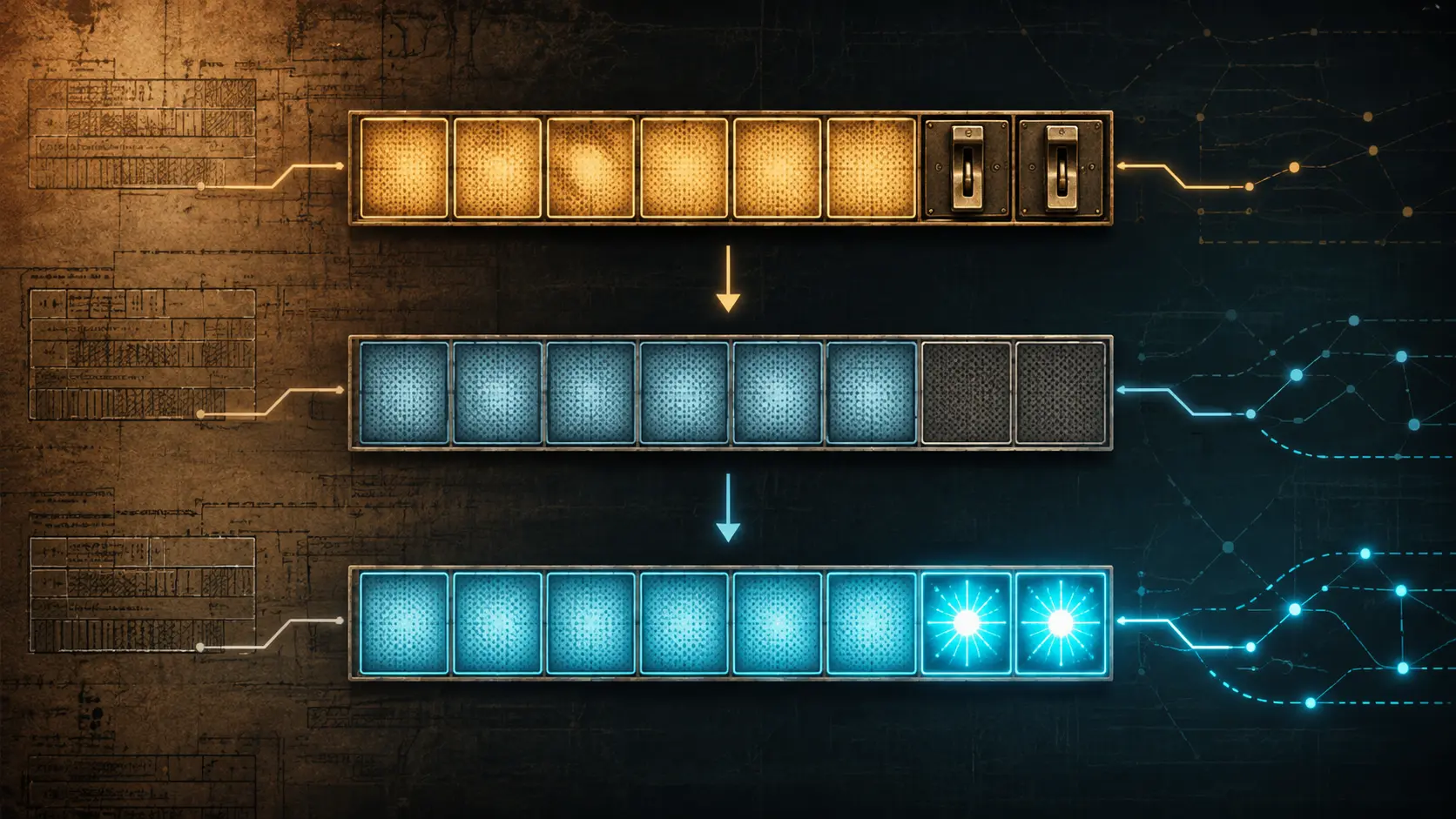
The second octet of the IPv4 header did not move, but its contract did. What began as precedence and desired service qualities became a configurable per-hop behavior selector plus an explicit congestion signal—a history of compatibility managed by redefining bits in place.
Story
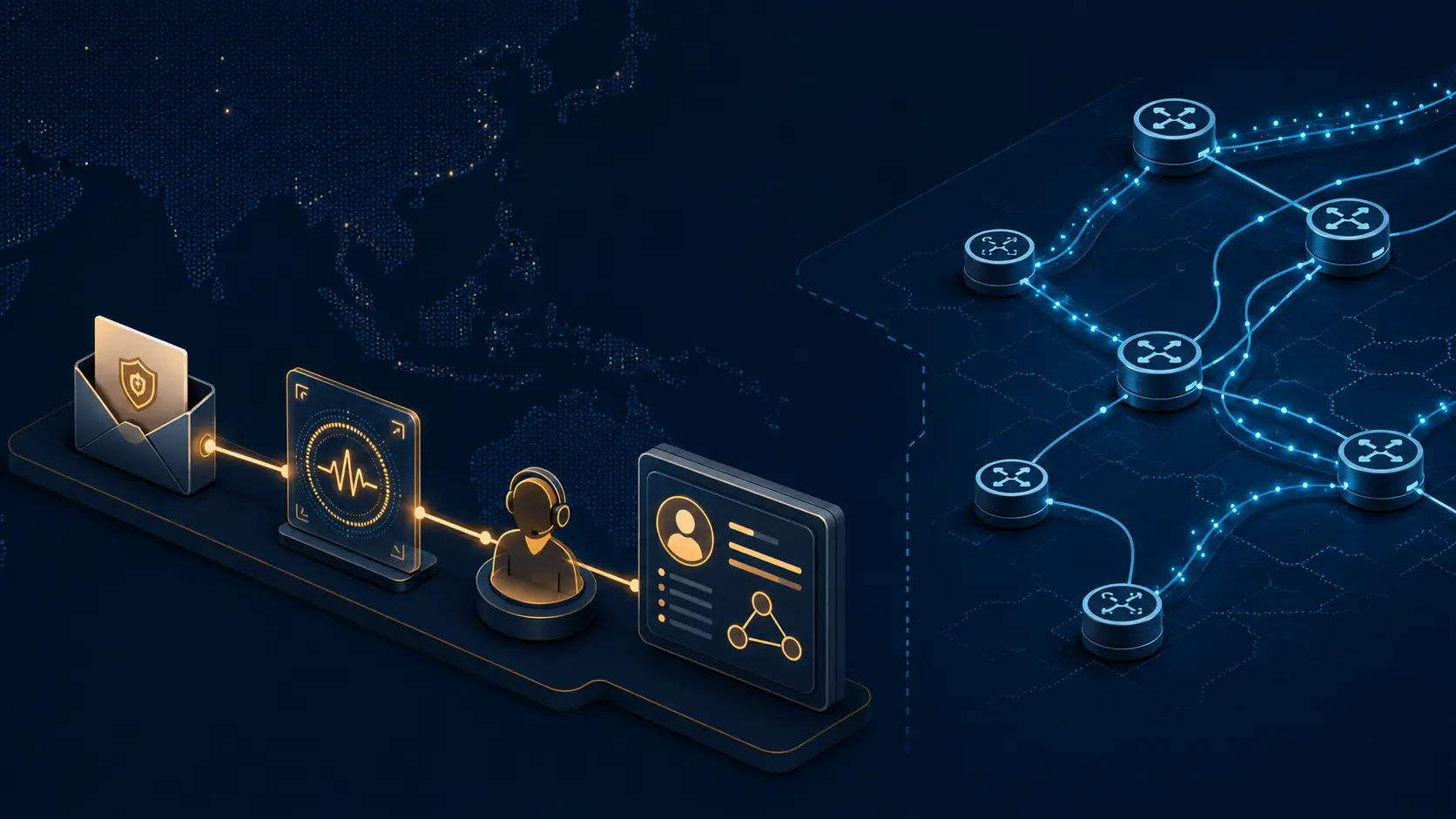
A mandatory contact pointer can look like a declaration of who runs a network. In APNIC Whois, `mnt-irt` has a narrower and more useful meaning: it connects a number-resource record to an Incident Response Team entity for security and abuse handling. That link strengthens…
History
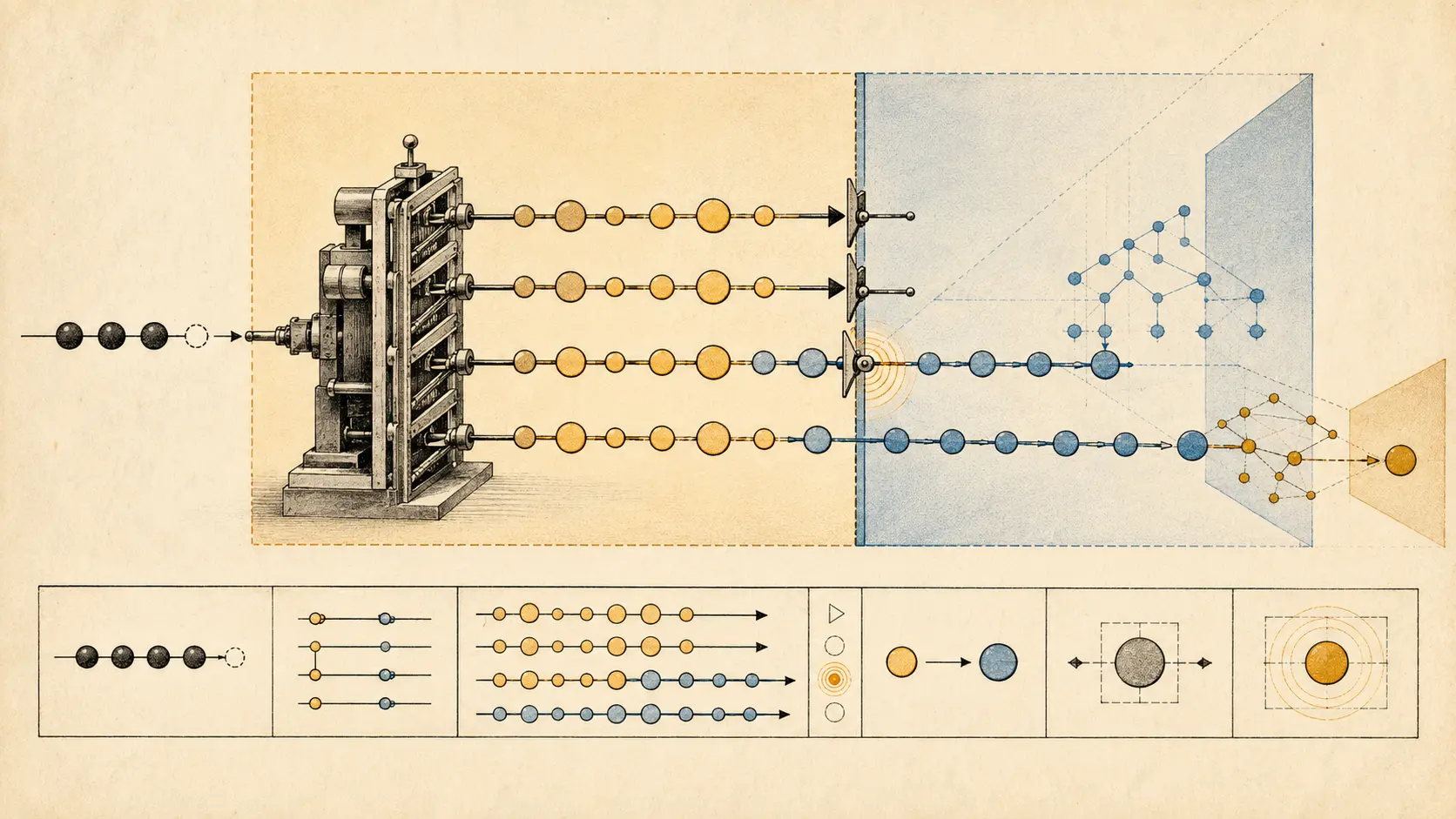
`UnivHost.University.EDU` looks like an address already supplied. To one 1993 resolver, it was only the beginning of a search. Before asking for the rooted name the user appeared to mean, the software could manufacture three longer candidates, cross from a locally managed suffix…

ICANN
ICANN’s Administrative Check verifies filing facts and prepares identical-string sets; it does not approve an application on its merits.

Story
An AFRINIC draft sets out exact rules for recovered addresses and a post-exhaustion queue. Its procedural history shows why operators also need an exact record of when those rules acquire authority.

IETF
A PCE controller can save one handshake round trip and still create a worse incident if path-control data is accepted before replay-safe handshake completion. RFC 9916 therefore treats the PCEPS session boundary as a control-state boundary: negotiate the newest supported TLS…

AFNOG
AfNOG’s 2007 call said presenters and tutorial instructors were expected to cover travel while being exempt from registration fees, but the cited page did not say beside that rule whether a travel-support exception route existed.

IETF
A BFD session can remain **UP** while receiving RDI, and recurring packets can arrive from the wrong maintenance endpoint. Continuity therefore proves neither that the intended source is transmitting nor that the live path is the correct connectivity relationship.

History
An IPv4 packet can sit inside a link-layer frame that is longer than the packet itself. The small field that resolves the ambiguity does more than count payload: it declares the complete IP datagram, header included, so the network layer keeps its own boundary when the enclosing…

CASE FILE
Revision 01 of Wathīqa repairs an important weakness in its evidence record: the first beacon value is no longer merely a time-shaped field but a signed pulse tied to a pinned certificate, with an optional successor that can prove immediate chain continuity. The repair is real.…

CASE FILE
A small advertised TCP window is often read as proof that the receiving application cannot keep up. RFC 9840 makes that shortcut unsafe. It gives the receiver a second reason to limit the window—deliberate low-priority transport—while leaving the sender’s congestion-control…

IETF
A full-size Initial datagram can look reassuring on an operations dashboard. Its added bytes may still be only PADDING, with no content that advances the handshake or the application.

IETF
A client can receive an address successfully and still fail hours later when renewal, rebinding or delegated-prefix continuity crosses a server or relay boundary. DHCPv6 is therefore a state machine, not a one-shot response: the operational question is whether identity, lifetime…

AFNOG
AfNOG’s 2007 call asked for permission to reproduce the contributor’s presentation after the event, including permission to post it on the AfNOG website. That sentence names two requested acts, but it does not state how long the permission would last, where it would apply…

Story
An organization identifier used to be available for an upstream provider’s reassignment workflow unless another requirement failed. Since ARIN’s January 2026 release, the recipient can refuse that association before it is created. The new switch changes registry accountability in…

ICANN
One evaluation may be reused across gTLDs, but ICANN qualification remains tied to specific registry services.

IETF
A loopback request can reach a specifically addressed LSP node, but that target MUST ignore it unless the ADMIN_STATUS A bit proves that the LSP remains locked. The point is not a sovereign ingress command: it is a distributed authorization sequence.

IETF
A leaf-to-leaf packet may climb a stretched RPL DODAG path through the Root even when a shorter directional path exists. RFC 9914 lets the Root project a PCE-computed shortcut as routing state into selected nodes—improving path choice, but also making freshness, precedence…
Session Map
Five regional sessions tracking allocation policy, board legitimacy, and institutional continuity.
Open RIR WatchdogLong-cycle governance dossiers with legal, election, and institutional stress analysis.
Open Case FileMembership, charter, and resource-governance intelligence from the NRS ecosystem.
Open NRS SessionDNS coordination, accountability frameworks, and global multi-stakeholder process dynamics.
Open ICANN SessionProtocol standardization trajectory and interoperability risk under fragmented policy conditions.
Open IETF SessionLong-cycle infrastructure history used for governance interpretation and structural forecasting.
Open History SessionOperator-level implementation intelligence from APRICOT plus regional and national NOG ecosystems.
Open NOGs Session