
Policy continuity, legitimacy, and accountability signals across internet governance institutions.
Governance
Governance
Internet governance intelligence tracks institutions, policy processes, standards activity, registry operations, accountability disputes, and implementation signals that affect internet infrastructure. BTW.
RIR WatchdogCase FileNumber Resource SocietyICANNIETFHistory of InternetNOGs

RIR Watchdog, Case File, NRS, ICANN, IETF, History of Internet, and NOG sessions.
Coverage prioritizes implementation evidence and institutional behavior over declarative positions.
Latest Coverage
Latest from Governance
7,575 articles

History
Seychelles Atlas Built a Direct Satellite Gateway, 2004
When Atlas replaced an unupgradeable third-party international route with its own leased circuit to Europe, it gained more control over a crucial path—but paid for that control in foreign currency and a new operational dependency.

History
Belgium Had to Agree on One Network Before Building BELNET, 1993
BELNET is often dated to its first connected institutions. The more revealing milestone came before the backbone: Belgian academics and science-policy officials had to decide whether EARN and EUnet would keep growing as separate camps or move toward a shared national network. A…

History
Latvia’s First Wireless Internet Link Joined Two University Sites, 1993
In Riga, weak telephone infrastructure made an ordinary wired connection a poor fit for one university route. LATNET adapted inexpensive spread-spectrum wireless LAN equipment to bridge about five kilometres between University of Latvia campuses, turning a local workaround into…

History
The CERN Line Spoke TCP/IP. ACOnet Still Ran X.25: Austria, 1990–92
Austria’s first fixed Internet milestone and its national academic backbone were not the same event: a Vienna–CERN circuit changed protocols in 1990, while ACOnet’s countrywide core remained an X.25 ring until 1992.

Story
RIPE NCC board ties surplus vote to IT renewal
RIPE NCC’s Board recommends Yes on both resolutions at its 28–30 October General Meeting. It links the expected 2026 surplus to a reserve buffer for a major IT rebuild, while asking members to choose the Arbiters Panel candidates themselves.

History
A Routing Entry Did Not Prove Global Reach: Romania, 1993
On 9 April 1993, a line in an NSFNET policy-routing update named RO-EARN in Bucharest and listed preferred paths through European and Atlantic networks. A week later, Romania’s ICI says it received notice that NSFNET would route traffic for Romania and calls 16 April the…

History
Wellington Opened City Net to the Public—and Put Its By-Laws on Gopher, 1992–93
A council dial-up system and an Internet Gopher menu made Wellington’s local records easier to reach by different routes. Richard Naylor’s 1993 account shows how the experiment depended on existing municipal computers, staff willing to publish, and a registration process that…

Number Resource Society
The Number Resource Organization: How Five Registries Coordinate the Internet's Address Space
The Number Resource Organization: How Five Registries Coordinate the Internet's Address Space intelligence summary explains the development, the public evidence available to readers, the organisations involved, the regional context, market exposure, and the infrastructure…

Story
RIPE’s space-address draft names the NRO. Who sets the policy?
A September Internet-Draft requests IPv6 space for use beyond Earth and gives the NRO a role in structuring and distributing it. The institutional handoff remains unspecified: how would that coordination connect to the separate policy processes of five RIR communities, including…

History
Stanford Ran 18 IP Subnets Before the Standard, 1984
In October 1984, RFC 917 described subnetting as a proposal. Stanford had already used IP subnets since early 1982, adapting an older Pup network and routing system rather than waiting for a common Internet procedure.

History
SMTP Made Mail a Relay Conversation Across Networks, 1982
RFC 821 treated mail delivery as a command-and-reply transaction over a reliable stream. Its relay model could bridge different transport-service environments, while sender and recipient paths stayed in the SMTP envelope and message text had its own format standard.

History
Sweden’s EUnet Email Route Preceded Its IP Link, 1983
A test message that reached Enea Data in April 1983 joined a Swedish Unix host to an international mail service. It did not make that host a TCP/IP node, and it was not the first electronic message ever handled in Sweden.

History
HEPnet Sought a Distinct Identity as ESnet Expanded, 1987
As the Department of Energy planned a more coordinated research network, high-energy physicists faced a governance question: could a shared backbone serve their community without absorbing its identity or local operating authority? HEPnet’s 1987 committee record shows both…

Story
AS48019 and Terra-Telecom LLC: A Registry Record With an Unanswered Question
AS48019 and Terra-Telecom LLC: A Registry Record With an Unanswered Question intelligence summary explains the development, the public evidence available to readers, the organisations involved, the regional context, market exposure, and the infrastructure consequences that may…
History
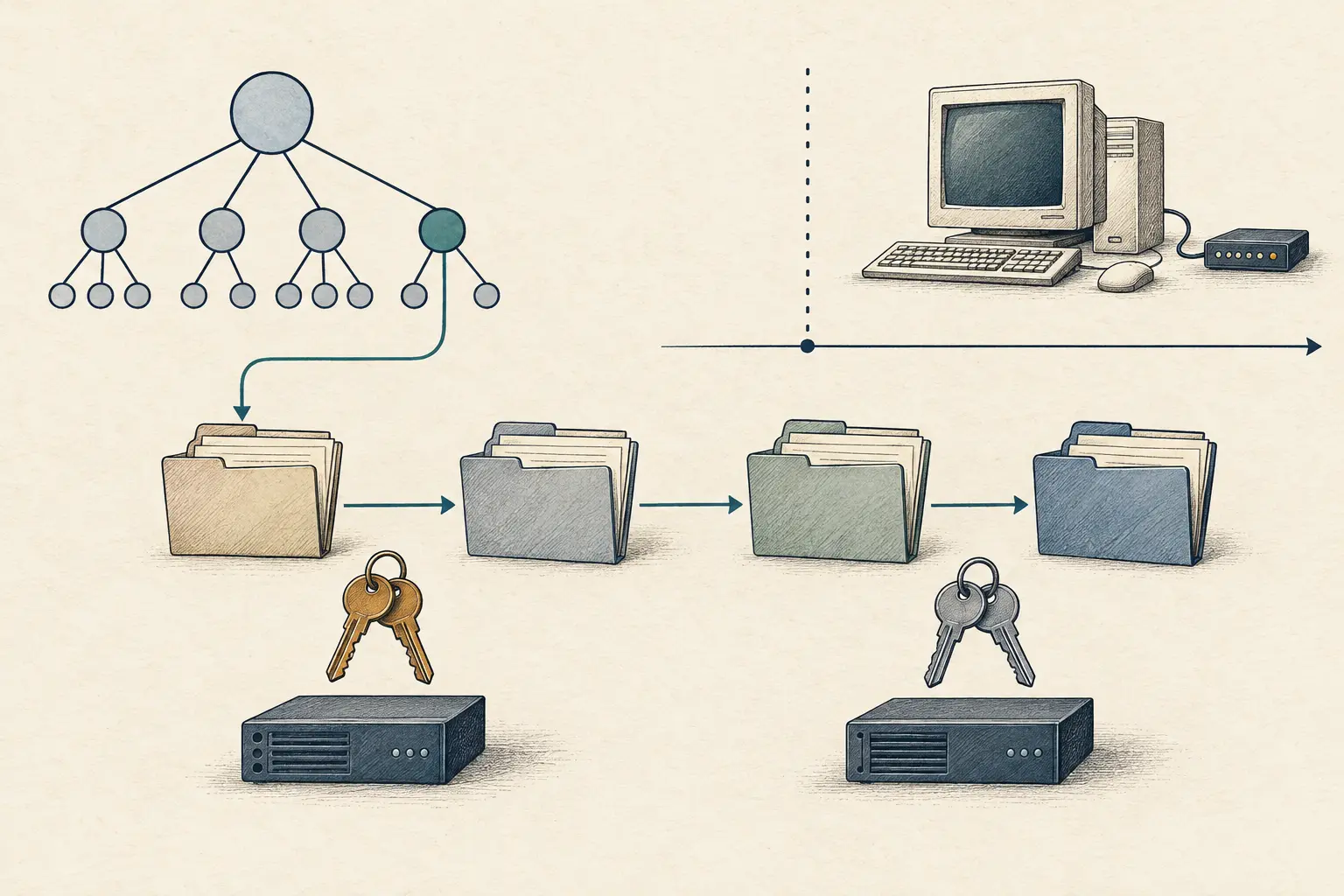
Bhutan’s .bt Changed Hands Before the Internet Arrived
Bhutan’s country-code domain was already recorded in the global naming system before the country opened Internet service to its citizens. Its early history was not a simple handoff from one national operator to another: a retrospective describes an initial private arrangement, a…
History
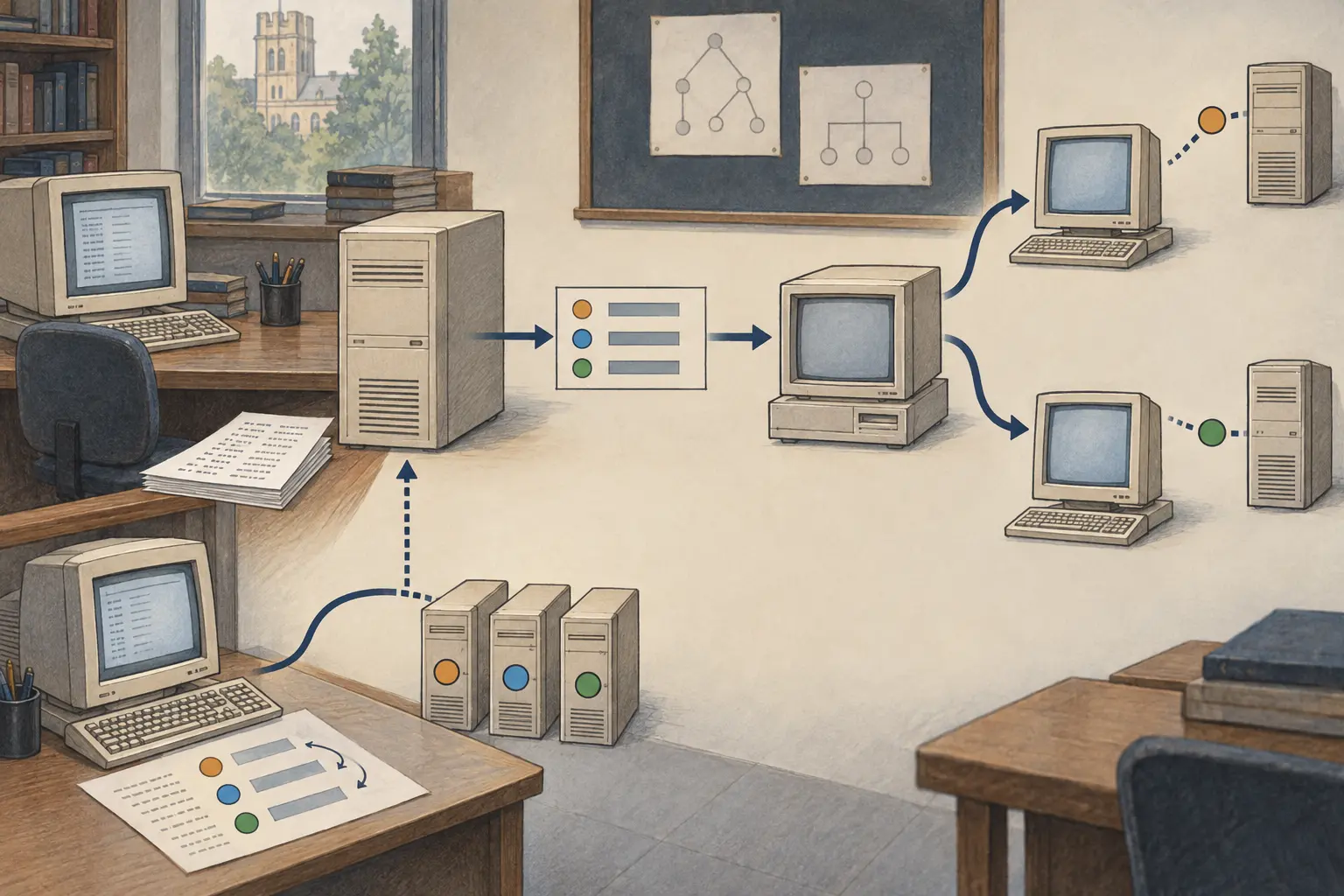
The DNS Answer Had an Order. The Client Kept the Choice: RFC 1794
In 1995, engineers wanted DNS to steer requests toward a less-loaded machine without changing the protocol or breaking the installed base. The compromise could rank addresses before a reply went out. It could not make every resolver or application obey that ranking.

History
WIDE Put IPv6 on Half a T1 Before It Used Tunnels, 1996–98
The first WIDE 6bone packet crossed a serial circuit. Splitting a T1 let IPv6 begin without another leased line or direct interference with the existing IPv4 network.

History
SSL Worked Before It Had a Stable Reference
Netscape’s secure connection protocol reached commercial software while its public specification was still a vendor document and working draft. That sequence exposes a gap between deployment, an engineering description and a durable standards citation.

History
Six Sites, One 56 kbps Line: NSFNET Before the T1 Upgrade, 1986–1988
Before NSFNET became shorthand for a national high-speed backbone, it was a deliberately small bridge between six scientific computing sites. Its first 56 kbps links exposed a mismatch: access to supercomputers had been funded, but useful access depended on moving data between…

History
The .hk Registry Changed Hands in Stages: Hong Kong, 2000–2002
Hong Kong’s domain-name handover was not a midnight switch in the Internet’s root. It was a sequence of policy, service and corporate changes: a public consultation, new registration rules, a nonprofit registry, and a transfer of the operating company and its records.
Session Map
Governance Branch
RIR Watchdog
Five regional sessions tracking allocation policy, board legitimacy, and institutional continuity.
Open RIR WatchdogCase File
Long-cycle governance dossiers with legal, election, and institutional stress analysis.
Open Case FileNumber Resource Society
Membership, charter, and resource-governance intelligence from the NRS ecosystem.
Open NRS SessionICANN
DNS coordination, accountability frameworks, and global multi-stakeholder process dynamics.
Open ICANN SessionIETF
Protocol standardization trajectory and interoperability risk under fragmented policy conditions.
Open IETF SessionHistory of Internet
Long-cycle infrastructure history used for governance interpretation and structural forecasting.
Open History SessionNOGs
Operator-level implementation intelligence from APRICOT plus regional and national NOG ecosystems.
Open NOGs Session