
Policy continuity, legitimacy, and accountability signals across internet governance institutions.
Governance
Governance
Internet governance intelligence tracks institutions, policy processes, standards activity, registry operations, accountability disputes, and implementation signals that affect internet infrastructure. BTW.
RIR WatchdogCase FileNumber Resource SocietyICANNIETFHistory of InternetNOGs

RIR Watchdog, Case File, NRS, ICANN, IETF, History of Internet, and NOG sessions.
Coverage prioritizes implementation evidence and institutional behavior over declarative positions.
Latest Coverage
Latest from Governance
8,092 articles

CASE FILE
The Reply Omitted the Option. Retirement Was Still Unproven: RFC 9915
The NTP option was gone from the new DHCPv6 Reply, yet the client kept sending packets to the old time server. That is not a contradiction in the standard. It is a warning that a server-side withdrawal, a client-side state change and an observed service outcome are three…

CASE FILE
The Latest TLS Version Won. The First PCEP Message Still Had to Wait: RFC 9916
RFC 9916 makes a narrow security judgment with large operational consequences: PCEPS should negotiate the newest TLS version it can, but it must not let PCEP application data travel before the handshake is complete.

IETF
VELOCE’s Call Chose an IANA Pointer. The WG Draft Still Says No IANA Actions
On 25 August, an attributed VELOCE project-call summary said that an IANA indirection model had been confirmed: a registry would point to the repository rather than place the module itself inside an RFC. The Working Group revision issued the same day ends with a contrary-looking…

IETF
Heather Flanagan and the RFC Archive That Cannot Freeze
An RFC can look unchanged to a reader while its publication machinery has changed underneath it. It can also acquire a cleaner HTML rendering, repaired XML or a regenerated PDF without acquiring a new protocol meaning. The two statements are easy to say and hard to govern.…

History
The Master Said Accepted. The Applications Had Not Reported an Outcome: RFC 1301
Twelve small verdicts travelled inside every Multicast Transport Protocol packet. One could say accepted, another pending, a third rejected. They looked like receipts, but they were not votes from twelve receivers. RFC 1301 gave one master the right to set those values after…

CASE FILE
The Track Was Acknowledged. No Packet Had Used It Yet: RFC 9914
RFC 9914 gives constrained networks a disciplined way to project a routed Track through an RPL topology. Its acknowledgments establish specific control-plane facts. They do not certify that traffic has traversed the Track, met a deadline or reached an application.

CASE FILE
W3C’s Data-Governance Workshop Can Reroute a Proposal. That Is an Agenda Decision.
W3C’s call for a TPAC 2026 mini-workshop on Data Governance & Ownership asks a useful question: what is broken, and what should Web standards do next? It also reserves a quieter power. Because the subject overlaps AI and Society and Age Assurance, organisers may ask a contributor…

CASE FILE
The Link Named the Parent. It Had Not Frozen the Hierarchy: RFC 9910
RFC 9910 gives RDAP clients typed paths through number-resource hierarchies. Those paths are useful navigation, but they are not sealed records of what the registry would have returned at an earlier time.

History
The Agent Spoke with One Voice. The Subtree Had Another Owner: RFC 1227
To a management station, an SNMP agent looked like one speaker. RFC 1227 placed a switchboard behind that voice: local processes registered branches of the MIB, priorities chose which process answered, and a broader branch could hide a narrower one. The reply was real, but its…

CASE FILE
The Module Passed Validation. The Registry Had Already Changed: RFC 9907
RFC 9907 draws a line automation teams often blur: an IANA-maintained YANG module is a useful machine-readable representation, but the IANA registry remains the unique authority. Green syntax is not a freshness receipt.

History
The Trap Carried 0.0.0.0. The Envelope Named the Agent: RFC 1298
An SNMP trap crossed an IPX network with four zeroes where its agent address might have been expected. That was not missing data by accident. RFC 1298 deliberately emptied the Trap-PDU field and told the receiving manager to take the source from the transport layer instead. The…

IETF
Nandita Dukkipati and the TCP Recovery That Stopped Lurching
A sender can finish loss recovery at exactly the intended congestion window and still have taken the wrong journey there. A long pause followed by a burst and a sequence of small, ACK-clocked releases may move the same number of bytes. They do not place the same strain on a…

CASE FILE
The Server Described the CSR. It Had Not Approved the Certificate: RFC 9908
RFC 9908 lets an EST server describe a certificate request with far greater precision. That instruction is valuable precisely because it remains separate from possession, authentication, authorization, issuance and deployment.

History
The Radio Frame Entered IP. Its Physical Edges Did Not: RFC 1226
A packet can cross a boundary without carrying every trace of the medium it came from. RFC 1226 put an AX.25 frame inside one IP datagram, discarded the HDLC marks that had framed it on a serial link, and retained the checksum. That choice made a useful tunnel format—and a…

IETF
PROCON Agreed to Document Current Policy. Its Drafts Also Revise It
Nine words adopted at IETF 126 are supposed to steady a difficult editing programme: “The outcome documents shall document current policy accurately.” The sentence sounds like a promise of faithful transcription. PROCON’s drafts, however, do more than copy two old RFCs into…

CASE FILE
AGWG’s Public Charter Date Passed. Its Minutes Still Recorded a WCAG 3 Resolution.
The public page for W3C’s active Accessibility Guidelines Working Group charter ends on 28 August 2026. Four calendar days later, draft minutes record the group accepting a new set of WCAG 3 updates and freezing the reviewed document while preparing a Call for Consensus. That…

CASE FILE
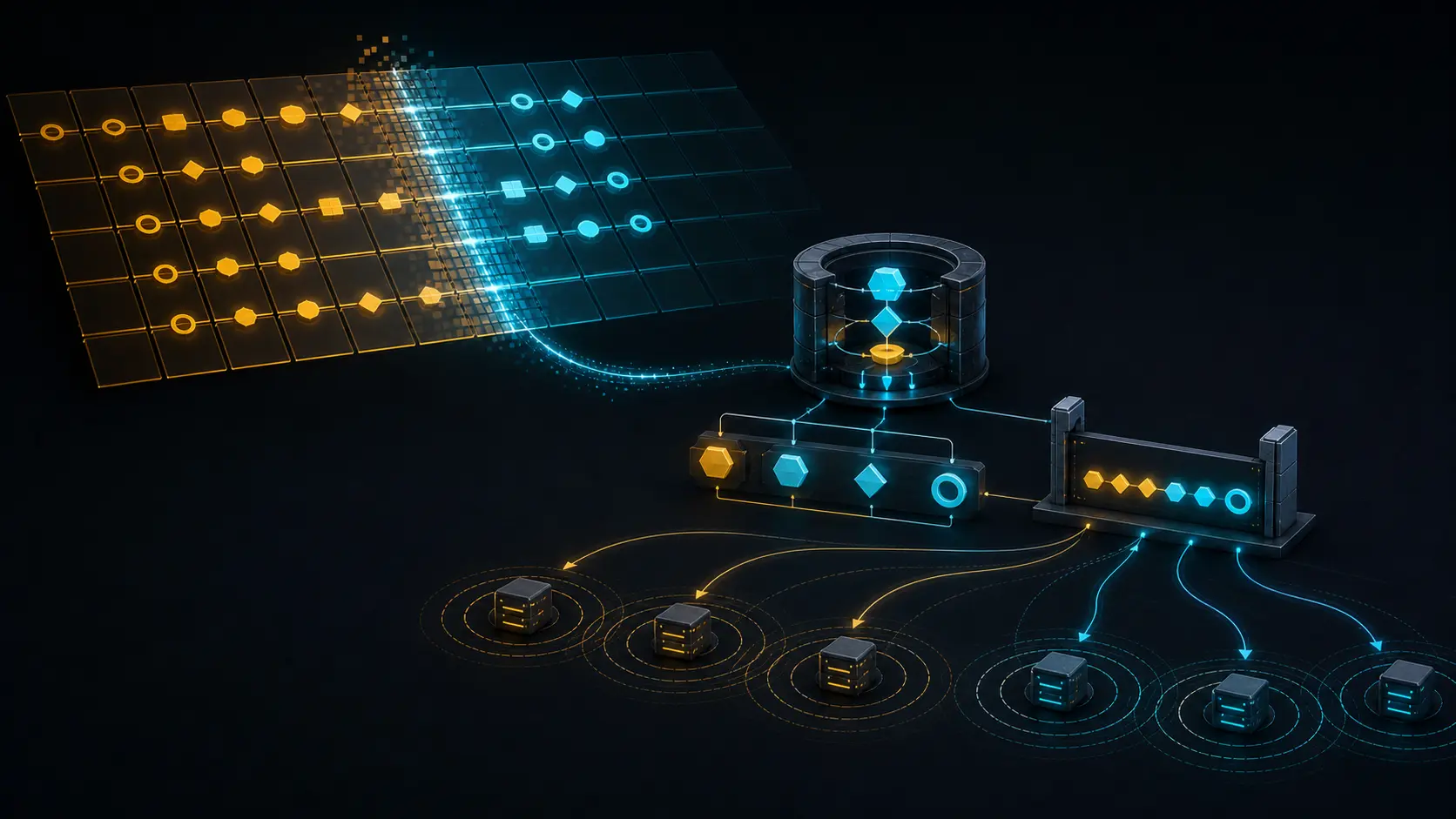
The Registry Released the Port. The Appliance Did Not Hear: RFC 9900
RFC 9900 correctly returns three unused NETCONF port assignments to the registry. That global record cannot by itself retire a listener, a firewall entity or an old image inside an operator's estate.
CASE FILE
The Registry Said Stop Signing. The Zone Still Needed a Rollover: RFCs 9904 and 9905
RFC 9904 made IANA's DNSSEC algorithm tables the living recommendation record. RFC 9905 used that record to stop new SHA-1 signing while preserving validation support. Neither action remotely changes a live zone.

History
The Host Said Down Before the Controller Had Finished: RFC 1307
A transport provider asked to release an expensive switched link. Its local control layer answered that the link was down, yet the external controller had not necessarily finished—or even recognised—the teardown transaction. RFC 1307 made that apparent contradiction part of a…

History
The Alarm Flood Stopped Itself. The Silence Still Needed a Ledger: RFC 1224
A quiet management console can mean that nothing is wrong. It can also mean that the alarm path deliberately shut itself down. RFC 1224 made that second possibility explicit: cap an agent's alert rate with a sliding-window pin, then keep a separate numbered log so silence did not…
Session Map
Governance Branch
RIR Watchdog
Five regional sessions tracking allocation policy, board legitimacy, and institutional continuity.
Open RIR WatchdogCase File
Long-cycle governance dossiers with legal, election, and institutional stress analysis.
Open Case FileNumber Resource Society
Membership, charter, and resource-governance intelligence from the NRS ecosystem.
Open NRS SessionICANN
DNS coordination, accountability frameworks, and global multi-stakeholder process dynamics.
Open ICANN SessionIETF
Protocol standardization trajectory and interoperability risk under fragmented policy conditions.
Open IETF SessionHistory of Internet
Long-cycle infrastructure history used for governance interpretation and structural forecasting.
Open History SessionNOGs
Operator-level implementation intelligence from APRICOT plus regional and national NOG ecosystems.
Open NOGs Session