Summary
- W3C is inviting contributions to a Data Governance & Ownership mini-workshop at TPAC 2026, with submissions due on 30 September.
- The call asks three questions in no more than 500 words and says selected contributors will give one-to-five-minute pitches.
- Organisers may ask a contributor to resubmit to AI and Society, Age Assurance or a standalone breakout so overlapping programmes remain coherent.
- That routing can shape who hears a proposal and how it enters a planned W3C paper, but it does not decide the proposal’s merits or create W3C consensus.
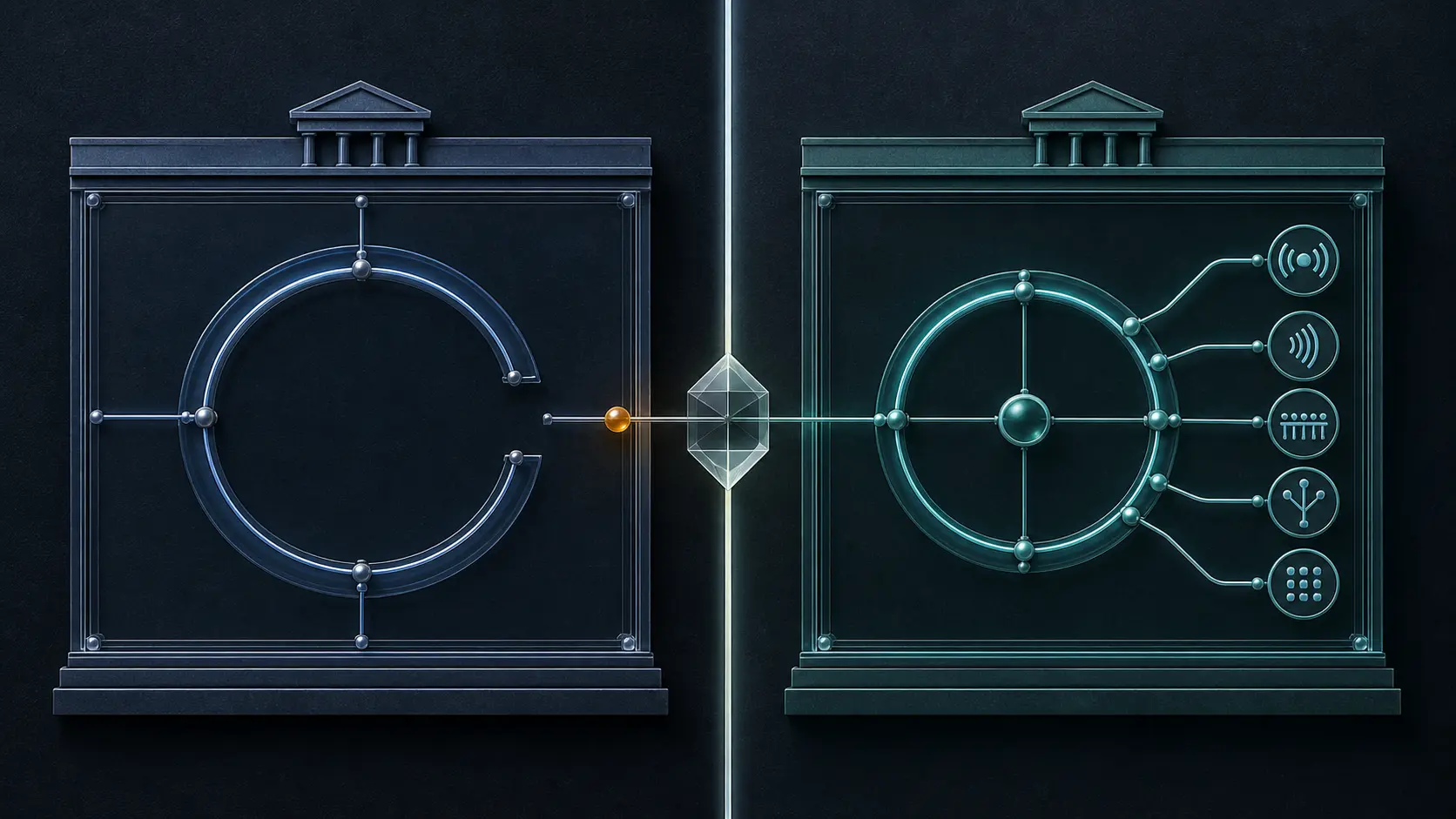
- A privacy-bounded routing receipt should preserve the original track, requested move, reason, contributor choice, final agenda state and later paper disposition.
The governance starts before the workshop opens
The public Data Governance & Ownership call is deliberately exploratory. It asks what is most broken in data governance and ownership, what W3C is doing and should do next, and what question the organisers failed to ask. Responses must fit within 500 words. Selected proposals are expected to become short pitches of one to five minutes, although the exact duration is still to be confirmed.
This is an intake design, not a vote. The questions determine what kind of evidence is easy to submit. The word limit rewards compression. The pitch format determines which claims can receive live attention. Selection determines which contributions become part of the scheduled room rather than only part of the repository.
None of that is inherently suspect. A conference cannot place every contribution in every session. Organisers need to remove duplication, build a legible sequence and give participants enough time to respond to one another. The governance question is narrower: can a later reader reconstruct how a contribution moved from the open call into the evidence set used by the workshop and its paper?
The call makes that question concrete. It says the topic overlaps two other mini-workshops, AI and Society and Age Assurance. A contributor may therefore be asked to resubmit to one of them or to propose a standalone breakout. The stated reason is programme coherence.
That is a reasonable purpose. It is also a real classification act. A paper about a creator’s right to limit AI training may look like a data-ownership problem in one room and an AI-social-impact problem in another. A proposal about age credentials may be treated as data governance, age assurance, identity architecture or regulation. Routing does not settle the claim. It changes the claims heard beside it.
A request to resubmit is a distinct state
The important distinction is between a move and a verdict. An organiser who asks for resubmission is not necessarily rejecting the work. The contributor may accept, decline, revise, withdraw or propose an independent breakout. A new track may be a better intellectual fit and give the proposal a more informed audience. It may also separate the proposal from the evidence against which its author expected it to be tested.
A public programme that shows only the final slot cannot preserve those possibilities. The absence of a proposal from Data Governance & Ownership might mean it was never submitted, moved by agreement, consolidated with another pitch, left as an unscheduled public paper, withdrawn or not selected. Those states have different meanings.
The checked sources do not show that any proposal has been moved, accepted or rejected. They also do not publish a selection rubric, named programme committee, appeal route or report-disposition method. That is not evidence that such rules do not exist. The call is still open, and a new mini-workshop format can acquire more detail as the programme develops.
The public submission template, added on 31 August, preserves the three questions, the 500-word ceiling and a contact-information field. That creates a useful common input shape. It does not yet create a durable state model for what happens after submission.
The planned paper raises the value of provenance
The call says contributions are expected to be compiled into a W3C paper on Data Governance & Ownership. The formulation is careful: the paper is expected, not published; its document class, authorship, review method and conclusions are not given on the checked page.
That uncertainty should remain visible. A workshop paper can map problems, record proposals and recommend further work. It is not automatically a W3C Group Note, a W3C Statement or a Recommendation. Even a recommendation to begin standards work would still be a proposal for a later institutional act, not the charter, Working Group decision, wide review, implementation evidence or adoption itself.
W3C’s general Workshops Guide supplies an adjacent benchmark. It describes workshops as a way to gather informed views before the right standards path is clear. A report may recommend a Working Group, a Community Group, a liaison or, sometimes, no standards-track work. The checked record does not say that every rule in that guide applies to the new TPAC mini-workshop format. The useful principle is the plurality of possible outcomes.
That is why provenance matters. If a later paper says a theme appeared repeatedly, readers should be able to distinguish three independently submitted versions from one contribution routed through three discussions. If it says an issue drew little support, readers should know whether related submissions were moved elsewhere. If it quotes a pitch, the route should not be mistaken for endorsement by the organisers or W3C.
A small routing receipt is enough
The record does not need to expose private contact details or turn programme construction into a public referendum. It can be compact.
Start with an immutable submission reference, time and content hash. Record the contributor’s chosen track. If organisers request a move, add the requested destination and a short overlap reason: duplicate subject, better specialist audience, merged panel or independent breakout. Record the contributor’s response as accepted, declined, revised, withdrawn or pending. Preserve the final agenda state separately from the paper state.
After the event, add whether the contribution was presented, linked as background, cited in the paper, consolidated into a theme, referred to a named W3C group or closed with no further action. A later standards proposal should receive its own process identifier rather than inheriting the workshop’s apparent authority.
Explicit non-conclusions do most of the protective work. Submission is not selection. Selection is not endorsement. A pitch is not consensus. A room is not a constituency. A paper is not a standard. Referral to a Working Group is not adoption. A contributor speaking personally does not bind an employer or the public.
Lu Heng’s Multi-Stakeholder Mirage supplies the first boundary: participation can contribute evidence without becoming authority over absent parties. His Minimum Initial Specification supplies the second: a coordination artifact does not create operational obligation merely by being published. Applied here, those are reporting disciplines, not a verdict against W3C or the workshop.
TPAC is a coordination surface, not a shortcut
TPAC 2026 will run from 26 to 30 October in Dublin with hybrid participation. W3C describes the event as a place where Members, Boards and technical groups coordinate across boundaries, with breakout sessions determined by attendees and most meeting records public. July Web & AI Interest Group minutes describe mini-workshops as a first for this year and as longer sessions operating alongside breakouts.
That makes the experiment worth watching. A longer session can connect evidence that a one-hour breakout would fragment. Three coordinated calls can stop AI, age and data questions from duplicating one another. A planned paper can preserve what otherwise disappears when the room closes.
The same design concentrates agenda judgement at the intake boundary. That is not a reason to abolish curation. It is a reason to publish its state transitions. When the route is visible, organisers can show that coherence did not become silent exclusion; contributors can show whether they accepted the new venue; readers can understand what the final paper actually sampled.
The workshop may identify valuable standards gaps. It may conclude that some problems belong to law, market practice, other standards bodies or voluntary implementation. It may produce no single answer. The public record should allow all of those outcomes without making the workshop appear weaker than it is or more authoritative than it can be.
Sources
- Lu Heng, “The Multi-Stakeholder Mirage”
- Lu Heng, “Minimum Initial Specification, Localized Future Decision, and Voluntary Adoption”
- W3C Strategy issue 567: Data Governance & Ownership
- Data Governance & Ownership submission template
- Commit adding the submission template
- W3C Strategy issue 565: AI and Society
- W3C Strategy issue 569: Age Assurance
- W3C TPAC
- W3C Workshops Guide
- W3C Process Document
- Web & AI Interest Group minutes, 14 July 2026
Member Briefing
Deeper Profile Context
Sign in with the right membership level to unlock the full briefing and source notes.
Only for Strategic Circle
Strategic Circle
Open to all readers. Unlock profile briefings after joining and signing in.
Join Strategic CircleOnly for Leadership Alliance
Leadership Alliance
For qualified IP-asset owners and management; sign in to unlock alliance briefings.
Join Leadership Alliance