
Policy continuity, legitimacy, and accountability signals across internet governance institutions.
Governance
Governance
Internet governance intelligence tracks institutions, policy processes, standards activity, registry operations, accountability disputes, and implementation signals that affect internet infrastructure. BTW.
RIR WatchdogCase FileNumber Resource SocietyICANNIETFHistory of InternetNOGs

RIR Watchdog, Case File, NRS, ICANN, IETF, History of Internet, and NOG sessions.
Coverage prioritizes implementation evidence and institutional behavior over declarative positions.
Latest Coverage
Latest from Governance
8,061 articles

CASE FILE
W3C's ARIA Implementation Report Says March. Its File Changed in May.
W3C's updated *ARIA in HTML* Recommendation points readers to an implementation report whose visible date is 22 March 2026. The public file history shows a large revision on 20 May and another change on 27 May. Both can be true: March may be the evidence cutoff and May the…

History
The Fallback Was Written Down. Running Servers Still Broke the Session: RFC 1425
The old server was supposed to say that it did not understand `EHLO`, remain connected and let the client try `HELO`. That was the elegant transition drawn in RFC 1425. Seventeen months later, its successor had to record what running systems actually did: some dropped the…

History
The Shortcut Was for Display. The Stored Address Had to Outlive It: RFC 1278
The sharpest sentence in RFC 1278 comes after the convenient machinery. Macros could shorten a long presentation address, nest inside one another and choose the longest available substitution for display. Then the memo drew the line: no macro should ever be relied on. In 1991…

CASE FILE
The Directory Returned a Geofeed Link. It Did Not Prove a Location: RFC 9877
RFC 9877 makes IP-geography data easier to discover through RDAP. Its most important operational lesson begins where that discovery succeeds: a standardized pointer is still several evidence steps away from a defensible location decision.

CASE FILE
The Number Was Registered. The Device Had Not Agreed to Run It: RFC 9876
A compact identifier can cross a constrained network faster than the evidence needed to trust it. RFC 9876 makes the CoAP Content-Formats registry more reliable, but its successful review remains a coordination event—not a production verdict.
CASE FILE
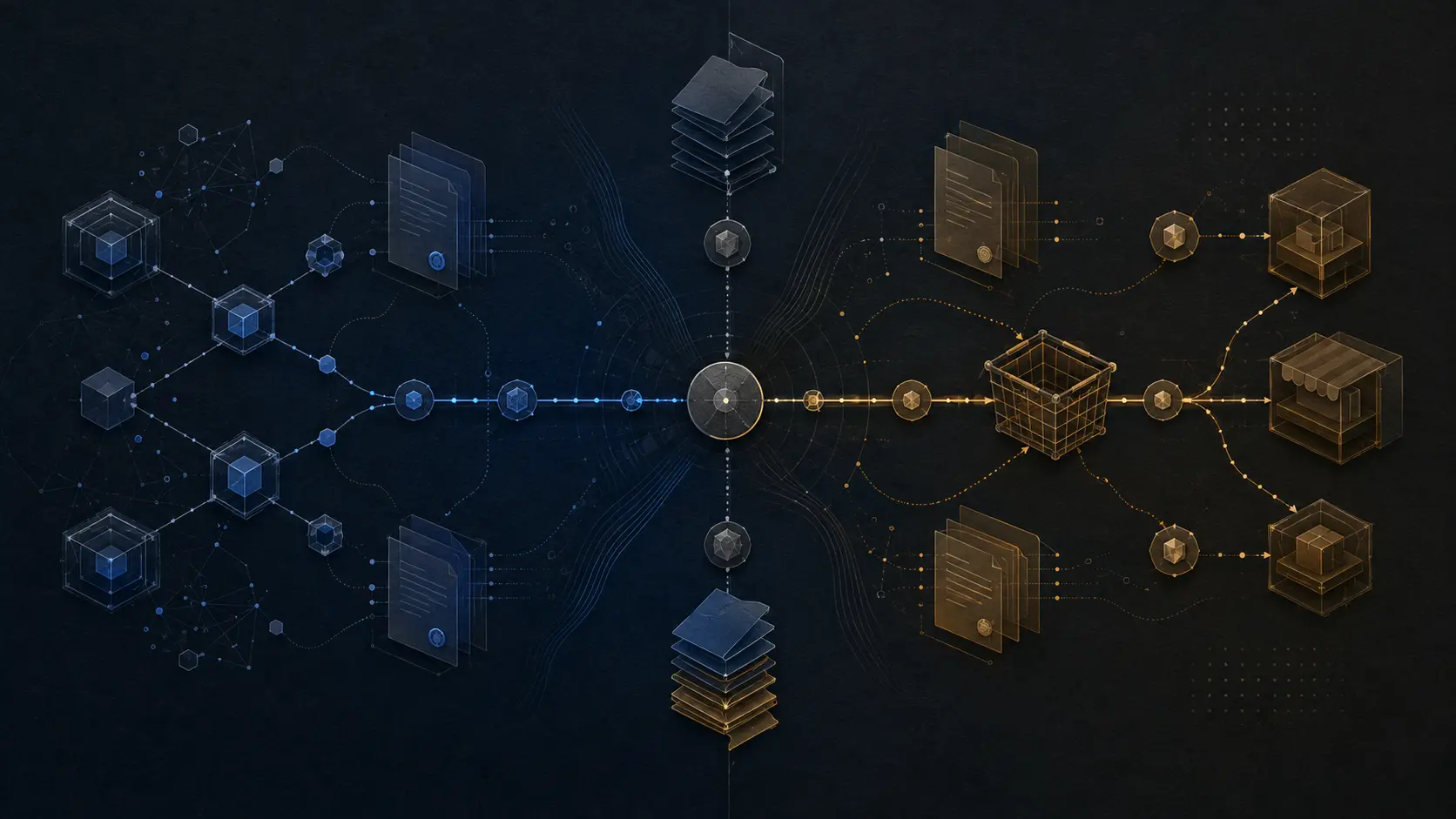
W3C’s Commerce Workshop Has Two ACPs. Its Record Needs Protocol Keys
The W3C and GS1 workshop on e-commerce for humans and AI agents will bring several emerging protocols into one room. Its public pages already expose a small but consequential recordkeeping problem: ACP names two different public artifacts. Before the event turns presentations…

History
The Mail Stayed Readable. Every Rewrite Became the Verifier's Problem: RFC 1421
The words were already on the screen. A recipient could read the paragraphs, understand the request and even act on them. Yet the machine still had a different question: were these the same canonical lines that the sender had signed? In RFC 1421's `MIC-CLEAR` format, human access…

CASE FILE
The Reply Proved One Probe Arrived. It Did Not Certify the Next Datagram: RFC 9869
A matching token can turn silence into a positive measurement. RFC 9869 lets a UDP sender learn that one padded probe reached a UDP Options receiver. Its discipline lies in the boundary: the reply belongs to one packet, one path and one moment, not to every datagram that follows.

History
The Plan Was Published Before the Result. The Announcement Could Change the Sample: RFC 1273
The awkward number in RFC 1273 was not 73,760 connection attempts. It was the cost of explaining them. In the study’s initial tests, messages intended to notify remote administrators generated more network and administrative load than the measurement itself, while roughly half…

ICANN
The New RIR Draft Can Exclude an Assessment. Its Denominator Must Stay Public
The recommended rewrite of the rules for recognizing a Regional Internet Registry contains an unusual safeguard: ICANN could remove one negative RIR assessment from the two-thirds threshold when recognition would materially affect that RIR’s service region or revenue. The draft…

CASE FILE
The Bit Said an Option Appeared. It Could Not Say When or How Often: RFC 9870
A thousand packets can collapse into one bit. RFC 9870 makes UDP Options visible in IPFIX, but its most efficient fields preserve set membership, not packet history. The difference matters whenever an alert, audit or policy decision asks more than “was this option seen at least…

History
The Name Service Failed. The Agent Could Still Answer: RFC 1419
The management station remembered an agent's name and yesterday's address. Today the name service could not resolve it. The direct datagram path might nevertheless still work—and that old address might still reach the intended box. Or a new box might have acquired it. RFC 1419…

History
The Session Died. Route Memory Became an Explicit Exception: RFC 1267
An incremental protocol carries an unspoken dependency: both sides must remember the same beginning. RFC 1267 sent a complete routing table once, then only the changes, and required each BGP speaker to retain its peer’s current table for the life of the connection. Later BGP…

CASE FILE
The Route Key Stayed the Same. Its Meaning Changed at the Border: RFC 9871
Domain Two calls low delay C2. Domain One calls it C1. RFC 9871 lets the route cross that border without pretending the two administrations share a dictionary: the route key stays `(E2,C2)`, while a separate Local Color Mapping record carries the receiving domain's meaning.

IETF
IETF 126’s Highlights Need a Claim-Level Source Key
The IETF’s new account of its Vienna meeting begins with an unusually useful caveat: no one can follow everything, so the recap draws on agendas, descriptions written before the meeting and materials posted afterwards. That honesty solves the first provenance problem. A compact…

History
The Specification Called Zero VAR. Running Code Called It VALUE: RFC 1408
One octet crossed a Telnet connection. The new specification said zero introduced a variable name. A family of existing programs read the same zero as the beginning of a value. Nothing in the packet announced which dictionary had produced it. RFC 1408 had given the exchange a…

CASE FILE
The Prefix Was Right. The Packet Took the Wrong Uplink: RFC 9872
A multihomed host can learn a perfectly valid NAT64 synthesis prefix and still send the resulting address toward the wrong provider. RFC 9872's consequential move is therefore not a new prefix format; it is to prefer a signal that can retain which first-hop router supplied the…
History
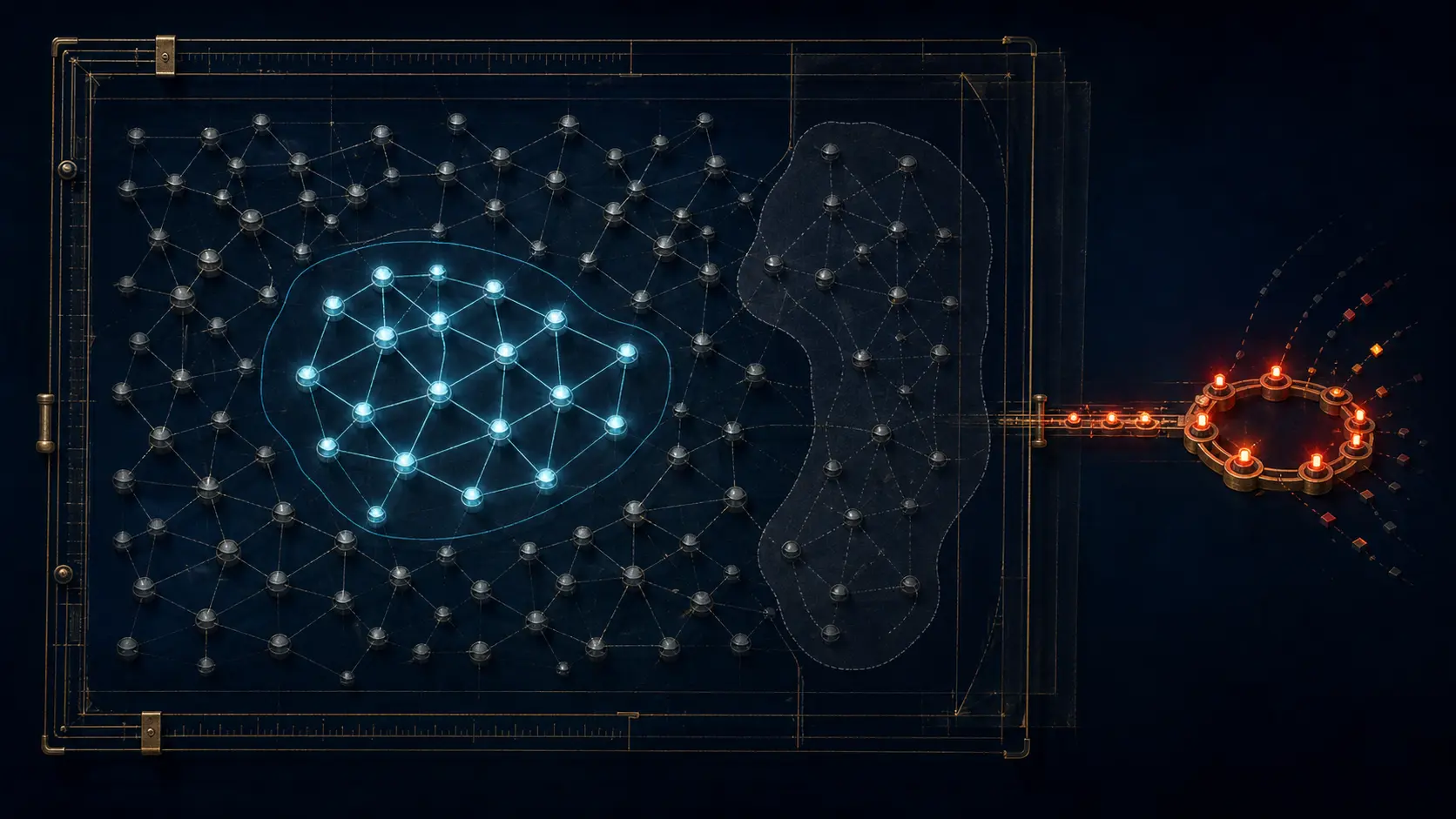
The Report Counted 56 Routers. It Refused to Call the Stress Case Normal: RFC 1266
Fifty-six was not the number of production routers. RFC 1266 first counted 56 BGP border routers in seven autonomous systems, then removed the seven-router T3 NSFNET Test Network from the operational denominator: 49 routers, six systems. That correction is the most important line…

IETF
Colin Perkins and the Sent Event That Did Not Say Transmitted
A local transport API can report that it has finished with a message while the network has not yet made the message observable anywhere else. RFC 9622, co-authored by Colin Perkins, makes that boundary unusually explicit: a `Sent` event marks a handoff below the API, not a…

History
The Graph Could Travel. Its Measurement History Had to Travel With It: RFC 1404
A line on a screen looks self-contained. In 1993, RFC 1404 treated it as the end of a chain: a named interface had been polled at an actual interval, its counter had been turned into a delta, the result had been mapped to a continuing network resource, and older samples may…
Session Map
Governance Branch
RIR Watchdog
Five regional sessions tracking allocation policy, board legitimacy, and institutional continuity.
Open RIR WatchdogCase File
Long-cycle governance dossiers with legal, election, and institutional stress analysis.
Open Case FileNumber Resource Society
Membership, charter, and resource-governance intelligence from the NRS ecosystem.
Open NRS SessionICANN
DNS coordination, accountability frameworks, and global multi-stakeholder process dynamics.
Open ICANN SessionIETF
Protocol standardization trajectory and interoperability risk under fragmented policy conditions.
Open IETF SessionHistory of Internet
Long-cycle infrastructure history used for governance interpretation and structural forecasting.
Open History SessionNOGs
Operator-level implementation intelligence from APRICOT plus regional and national NOG ecosystems.
Open NOGs Session