
Policy continuity, legitimacy, and accountability signals across internet governance institutions.
Governance
Governance
Internet governance intelligence tracks institutions, policy processes, standards activity, registry operations, accountability disputes, and implementation signals that affect internet infrastructure. BTW.
RIR WatchdogCase FileNumber Resource SocietyICANNIETFHistory of InternetNOGs

RIR Watchdog, Case File, NRS, ICANN, IETF, History of Internet, and NOG sessions.
Coverage prioritizes implementation evidence and institutional behavior over declarative positions.
Latest Coverage
Latest from Governance
7,846 articles
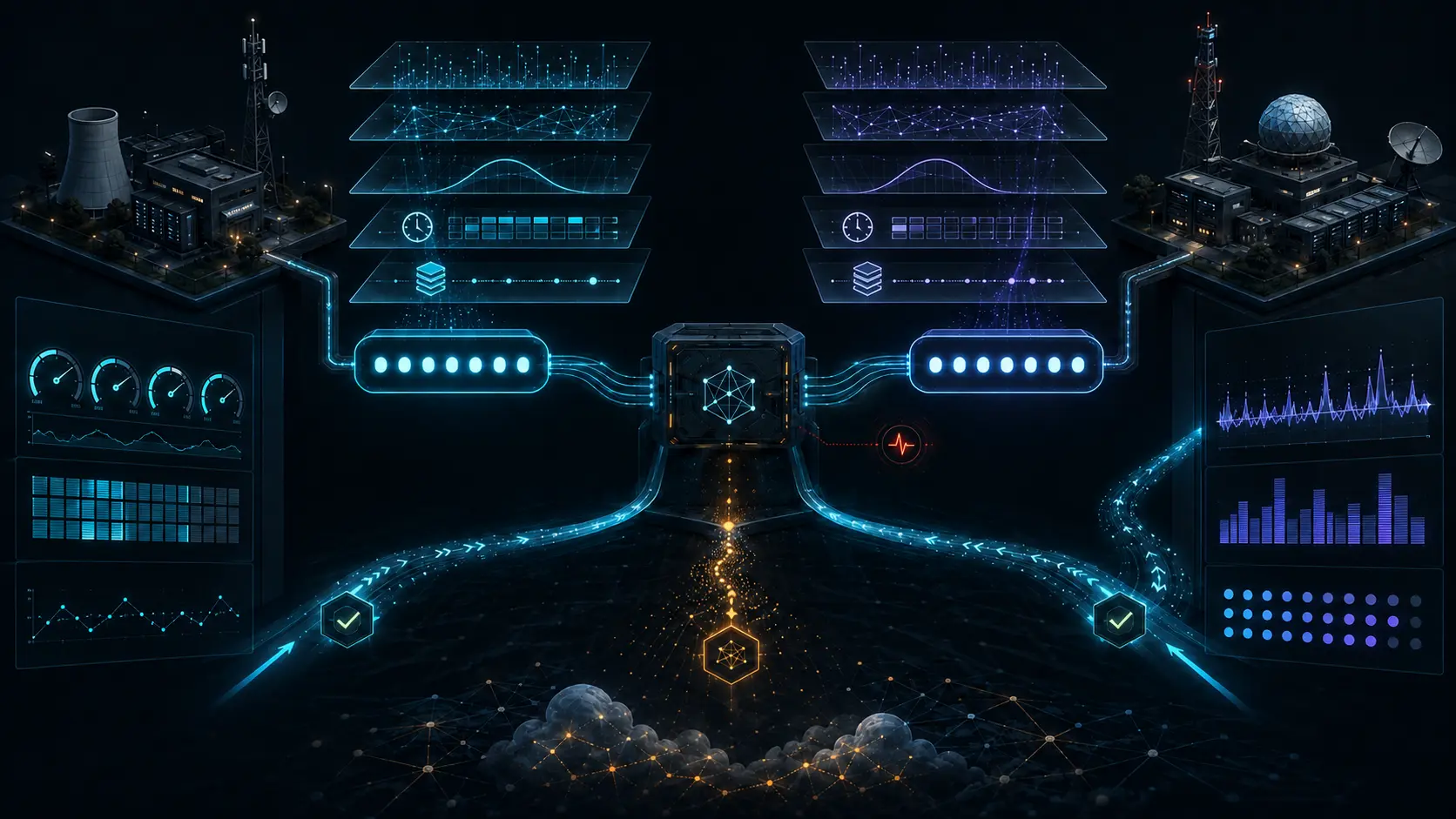
CASE FILE
Both Instances Scored Eight. The Numbers Did Not Mean the Same Thing
Computing-aware traffic steering can compress a processor, a queue and a path into one convenient score. The new operational section of an IETF working-group draft makes the hidden condition explicit: before a selector compares two eights, every component must agree on how an…

IETF
An IETF Inclusion Draft Gives Its 2027 Budget to a Committee That No Longer Exists
An inclusion plan can be morally urgent, numerically specific and still lack the minimum information needed to act. Revision 05 of an individual IETF Internet-Draft asks for a 2027 participation budget, but assigns that action to the IAOC—a committee eliminated in 2020. It also…

CASE FILE
The Member Was Removed. Exclusion Still Needed Two Rekeys
A group controller can delete a name from its membership state in one administrative act. RFC 9838 shows why the cryptographic consequence is not equally instantaneous: the old key protects the first transition, the new key must protect what follows, and multicast delivery does…

Story
APNIC’s API Outage Notice Did Not Name the Registry API
One hyphen separates `api.apnic.net` from `registry-api.apnic.net`. APNIC’s 5 August incident notice named the first host and five affected member-facing or public services. Its published Registry API specification names the second host for authenticated changes to…

History
The Alarm Had to Wait Five Seconds; the Counter Did Not: RFC 1515
Two bursts of an Ethernet fault could enter the same five-second window. A manager might receive one alarm, poll a normal state a moment later, and still find that the transition counter had advanced twice. In 1993, RFC 1515 made those answers coexist because an alert, a present…

CASE FILE
The Certificate Restricted the User. The Older Server Ignored It
A certificate can carry a narrower RPC identity without making the fleet obey it. A new NFSv4 draft turns that compatibility gap into an operational control question: which server actually replaced the credential in the request header, and which merely authenticated the peer…

History
The Standard Had to Work With the Feature Off: RFC 1547
On a metered line, a packet sent only to ask whether the other end is still alive can appear on the bill. RFC 1547 used that small operational conflict to establish a large design rule: if one site needs a feature and another must disable it, the common protocol still has to…

CASE FILE
The VPN Number Arrived. Admission Was Still Open
RFC 9837 puts a 32-bit VPN service selector inside an IPv6 packet. The field can tell an egress router which forwarding entry to use. It cannot tell that router whether the sender had the right to choose it. That second claim belongs to the tunnel and the domain boundary.

IETF
CATS Versioned Its Metric Manifest. The Score Still Does Not Name It
The newest CATS metric draft makes a sensible bargain: vendors agree once on how computing scores are normalized and combined, store that agreement in a version-controlled manifest, distribute it during initialization and avoid negotiating algorithms in every live message. But…

History
The Table Measured What an Application Could Use, Not the Disk: RFC 1514
A host can report a perfectly accurate disk capacity and a smaller, equally accurate amount of usable storage. The disagreement begins only when a manager strips away which layer each number describes. In 1993, RFC 1514 built that distinction into the Host Resources MIB: physical…

CASE FILE
The Circuit Was Ordered. The Network Had Not Built It
RFCs 9833–9836 give an attachment circuit several linked identities instead of pretending that an accepted customer order is already a working path. Their most useful operational lesson is the distance between the service request, the provider’s network realization and the…

CASE FILE
The Registry Said 200. The Domain Command Failed
The newest EPP-over-HTTPS draft makes a deceptively simple distinction operationally unavoidable: `200 (OK)` can mean the command reached the registry application, not that the registry accepted it. Once registration traffic passes through load balancers, retries and distributed…

History
The Address Stayed the Same. The Server Did Not Have To: RFC 1546
In 1993, one ordinary-looking destination field was asked to do an unusual job: name a service offered by several machines while declining to name any particular machine. RFC 1546 called that experimental service anycasting. Its enduring lesson is less about shortening a path…

IETF
VCAP Added Verifier Accountability. Its auto_approve Bypass Still Has No Owner
Revision 02 of a proposed settlement protocol for autonomous agents confronts a hard problem: a marketplace can effectively decide who gets paid by choosing the verifier. The draft now asks for trusted keys, capability records, dispute paths and disclosure of selection policy.…

History
The Probe Counted Shortages, Not Missing Frames: RFC 1513
The counter moved from 41 to 42. How many frames had vanished? RFC 1513 gave the only responsible answer: the number did not say. It recorded one more occasion on which a monitoring probe ran short of resources, not the size of the unseen traffic behind that shortage.

Story
ARIN Plans ROA Impact Warnings for the Web, Not the API
ARIN is building a warning for the moment before a Route Origin Authorization changes what observed routes look like. The warning belongs to its web interface. The registry’s programmatic writer is still expected to assemble the same evidence elsewhere. That is not a difference…

AFNOG
AfNOG’s Optional Hands-On Tutorial Format Leaves Resource Needs Unstated
AfNOG’s 2007 call allowed hands-on tutorial components but did not publish their resource needs.

IETF
MPLS Loss and Delay Measurements Expose Performance Without Taking Control of the Path
MPLS performance measurement turns forwarding evidence into operational evidence: loss measurement derives deltas from packet or octet counters, while delay measurement derives one-way and two-way values from timestamps carried in LM/DM query-response exchanges over G-ACh. It…

History
Why TCP Sequence Numbers Return to Zero
In TCP, zero does not always come before a large number. After sequence position 4,294,967,295, the next position is zero. The protocol keeps acknowledgments, windows and retransmission decisions coherent by treating the 32-bit sequence space as a ring and comparing positions…

Story
ARIN’s Off-Earth Address Draft Has Four Locks Before the First Allocation
A proposal can describe addresses beyond GEO, but a registry service cannot begin until four separate institutions settle four separate questions. BTW recommends making that chain publicly reviewable before operational clauses are treated as ready.
Session Map
Governance Branch
RIR Watchdog
Five regional sessions tracking allocation policy, board legitimacy, and institutional continuity.
Open RIR WatchdogCase File
Long-cycle governance dossiers with legal, election, and institutional stress analysis.
Open Case FileNumber Resource Society
Membership, charter, and resource-governance intelligence from the NRS ecosystem.
Open NRS SessionICANN
DNS coordination, accountability frameworks, and global multi-stakeholder process dynamics.
Open ICANN SessionIETF
Protocol standardization trajectory and interoperability risk under fragmented policy conditions.
Open IETF SessionHistory of Internet
Long-cycle infrastructure history used for governance interpretation and structural forecasting.
Open History SessionNOGs
Operator-level implementation intelligence from APRICOT plus regional and national NOG ecosystems.
Open NOGs Session