Summary
- ARIN’s 17 November announcement says the latest ARIN Online release was complete and all systems were operating normally, with new BGP announcement tools and unspecified minor fixes.
- The ARIN Status maintenance API records four completed ARIN Online windows from 17 through 23 November, totaling 480 minutes, but neither the status events nor the release index provides a shared version, artifact, rollback or acceptance identifier.
The sequence is concrete. Two windows ran on 17 November, one after the other. A third ran on 18 November. A fourth ran on 23 November. Every event is named “ARIN Online Maintenance” and every event ends in the same state: completed.
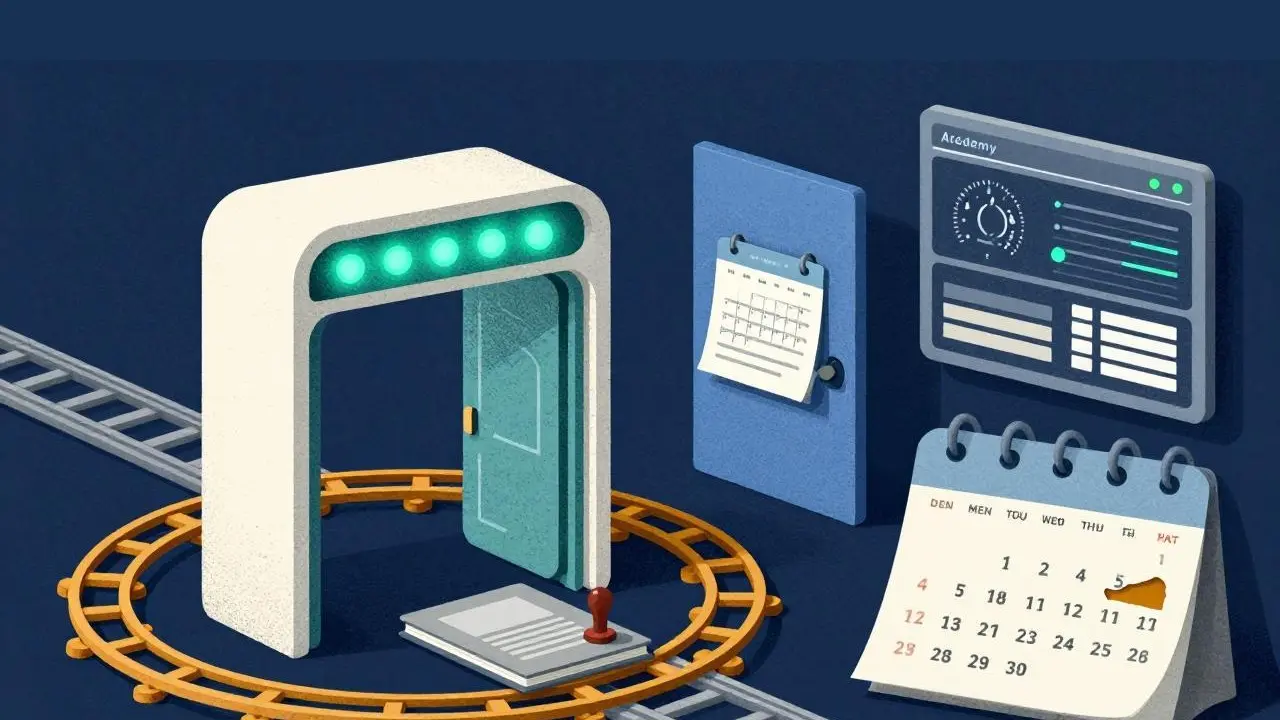
The first two windows cover 10:05–12:05 and 12:27–16:27 Eastern Time. That is 120 minutes, a 22-minute gap, then 240 minutes. The next day adds 60 minutes, and the 23 November event adds another 60. ARIN’s maintenance list supplies all four identities, times and status updates. It does not supply a release number, artifact, change list or explanation for the cadence.
ARIN’s public status page is doing the job a status page should do at the event level. The work was scheduled. Users were told it was starting. Three of the four events said customer tools and services should remain accessible. Each event was closed. The status layer is not empty.
The missing artifact sits one level above it. The Software Releases page displays one newest implemented-functionality date: 17 November 2026. The announcement describes BGP announcement review and “minor improvements and bug fixes.” It does not say whether the next three windows delivered follow-up fixes from the same release, independent maintenance, a staged rollout, a rollback, or unrelated operational work.
That comparison changes the meaning of “completed.” A maintenance event can complete because the installer exited, because the service was restored, because ARIN cancelled the work, or because operators accepted a no-change result. The public update exposes none of those distinctions. “Completed” is a final status, not an account of the change.
ARIN does not need to publish every internal commit or reveal exploit-sensitive detail. A shared release identifier would be enough to answer the first operational question: are these four windows one deployment campaign, three follow-ups and a routine task, or four unrelated events that happen to share the same component label?
The product announcement adds a second question. It says all ARIN systems were operating normally. That statement is useful customer service. It does not establish that the new BGP screen passed its own acceptance tests, that the later windows were unnecessary, or that a later fix changed the behavior users received on 17 November.
The release page compounds the ambiguity by describing the change set with a headline feature and “minor fixes.” Minor from whose perspective? A BGP announcement screen can combine registry authorization, RPKI status, IRR information and external route observations. A bug fix in one of those joins can be minor in code and decisive in the operator workflow.
The public record should map every maintenance window to one of three states: part of release X, follow-up to release X, or unrelated to release X. It can then attach actual time, scope, rollback status and post-change checks. That is a compact operational ledger, not a disclosure of source code.
Four events in seven days can be perfectly ordinary. A staged rollout, hotfixes, data preparation and routine platform maintenance all produce useful status entries. The question is not why ARIN needed eight scheduled hours. The question is why the public can count every minute and still cannot identify what those minutes belong to.
ARIN has the raw evidence. The status API is structured. The release index is dated. The two systems simply lack the join. A user deciding whether to trust the new BGP screen cannot tell whether the version shipped on 17 November is the version being tested on 23 November.
The smallest repair is a release key in the status record and a status-event list in the release note. Add one sentence when a window changes the customer-visible contract: what changed, whether it was rolled back, and which check passed. Four windows can remain four windows. The release ledger should stop pretending the relationship is obvious.
Member Briefing
Read the full trend briefing
Members read the full briefing with the source notes behind every finding.
Strategic Circle
A daily briefing in your language, built from changes we have verified.
Join for USD 20/monthCancel anytime.
Members also get the full research library, a daily briefing on the networks they follow and the private forum.