
Strategic Circle Briefing
Join to unlock strategic briefings after signing in.
Join Strategic CircleGovernance / IETF
The IETF writes the protocols every network runs on. We follow the drafts, the working-group fights and the standards that ship, and explain what each one changes for operators before it reaches production.

Latest Coverage
1,668 articles

IETF
A moderator presses mute. The console reports success. Yet RFC 5239 describes a longer chain: a request is authenticated, policy authorizes it, a shared conference entity changes, a media function enforces the change, and a notification service decides who may see the result.…

IETF
A DTLS handshake record waits inside DCCP's congestion-controlled queue. The upper layer sees no reply, starts counting too early and adds a retry beside an original that has not yet crossed into IP. RFC 5238 turns that small timing mistake into a governance lesson: a timeout is…

IETF
A reordering histogram can be exact and still be silent about why the path changed. RFC 5236 is most valuable when its Reorder Density and Reorder Buffer-occupancy Density are treated as bounded measurements—complete with thresholds, observation points and sequence rules—rather…

IETF
Two messages can arrive at the same RFC 5235 percentage score of zero by opposite routes. One was examined and judged clear. The other was not examined, or the Sieve engine cannot tell whether a check occurred. Portability made their outputs equal. It did not make their evidence…

IETF
The IETF LLC says counsel traced standards-work reuse rights back to RFC 1602. That 1994 text itself draws a 1 April cutoff and sends earlier material to a direct rights inquiry—an important boundary for the Chairs Wiki guidance now being drafted.

IETF
RFC 5226 solved a real continuity problem by giving IANA a durable expert to consult after a working group disappeared. But expertise is not self-authorizing. The review becomes legitimate only when the registry defines the evidence, criteria, reasons, conflicts, change rights…

IETF
RFC 5225 draws a line that modern control systems routinely blur. A current output can be valid while the state written for the next output is wrong. ROHCv2 therefore gives a repair packet two checks with different jobs: one validates the reconstructed header; the other validates…

IETF
RFC 5224 gives Diameter a precise carrier for asking a policy system to process a request and return an answer. The answer is valuable evidence, but it belongs to the decision layer. Installation, activation and observed effect still need witnesses of their own.

IETF
RFC 5223 makes a small DHCP option carry a large governance boundary. The access network can give a client one domain name for LoST discovery, but that string is only the beginning of a chain through DNS, U-NAPTR, server security and mapping. A discovery pointer is not an…

IETF
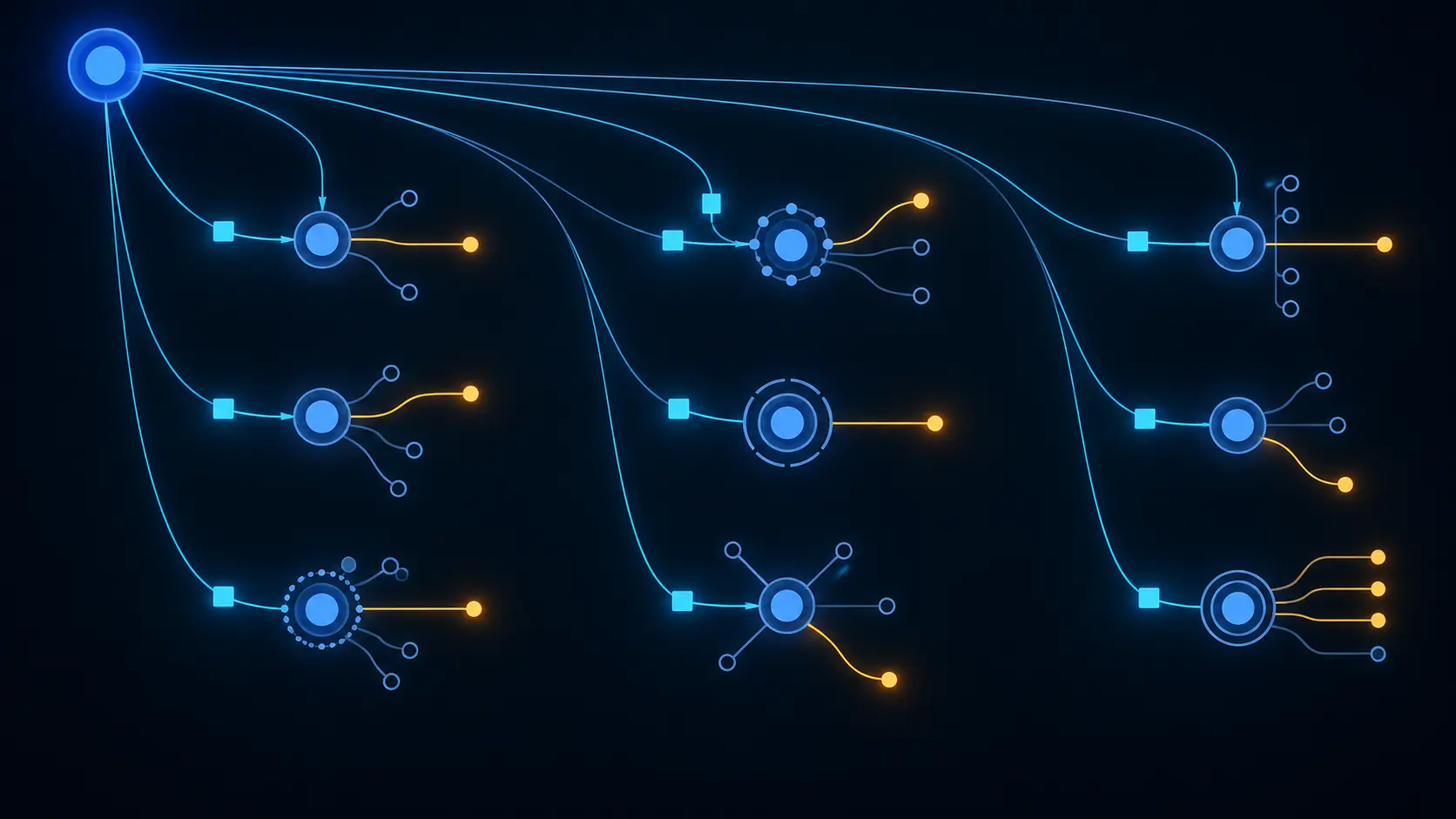
RFC 5223 gives an access network a precise, useful power: place one fully qualified domain name in DHCP so an endpoint can begin discovering a LoST service. The option is a pointer into the next protocol layer, not a transferable warrant for everything that follows.
IETF
RFC 5221 exposes a management trap hidden inside centrally distributed network policy. A table can be authentic, current at the controller and successfully installed, yet still be wrong for the node, application, interface or next hop making the decision. Delivery is evidence of…

IETF
RFC 5222 gives emergency-service routing a disciplined answer to a narrow question: for this stated location and service, which contact URI does the mapping system return? The danger begins when that answer is promoted into proof that the location was current, the route remained…

IETF
Six papers made the IRTF’s 2026 Applied Networking Research Prize list after 70 nominations. At IETF 127 in November, Mona Wang and Protick Bhowmick are named for recognition. The program’s own rules draw a useful line: the research paper is not an IETF or IRTF contribution, but…

IETF
RFC 5218 treats success as a moving boundary, not a trophy. Once a protocol is used at a scale or for a purpose its designers did not plan for, adoption becomes a new engineering and governance problem: the installed base is real, but its safety, extension behaviour and…

IETF
EAP-TLS can complete a strong certificate exchange, bind a TLS transcript and derive fresh keys while the access edge still has no authority—or no ability—to deliver the requested network. RFC 5216 is most useful when its cryptographic result is kept inside that boundary.

IETF
A validator can assemble an intact chain of signed certificates and still be correct to reject it. RFC 5217 turns that apparent contradiction into an operating rule: technical reachability across PKI domains is not authority to accept a certificate.

IETF
The receiver's graph showed an immaculate RTP run: no missing sequence numbers, no late burst, no obvious transport fault. Yet the loudest fact in the room was silence. RFC 5215 explains how both observations can be true—and why packet delivery must never be promoted into proof…

IETF
RFC 5214 gave IPv6 hosts on an IPv4 site a disciplined way to find candidate routers without pretending the underlay was a broadcast LAN. The discipline matters most at the point where an inventory entry is mistaken for a live path.

IETF
A Local Mobility Anchor has accepted a registration, installed a route and returned success. The mobile device that supposedly moved did none of that signalling. RFC 5213 designed this silence on purpose—and thereby gives operators a precise lesson about what an authenticated…

IETF
RFC 5212 gave one GMPLS control plane a view across packet, time-division and optical layers. Its most useful warning is hidden in that achievement: a route can be computable through a link that represents only the possibility of building the lower-layer resource.
Member Unlock
Login is required to unlock full profile briefings and deep-dive sections.
Join to unlock strategic briefings after signing in.
Join Strategic CircleFor IP-asset owners and leadership teams: alliance briefings, private reports and direct analyst support.
Join Leadership Alliance