Summary
- Google forecasts more than 37,000 jobs supported during the initial construction phase of its 2027–28 Finland investment, including roughly 16,000 in construction.
- Its estimate of about 7,000 jobs supported annually once the infrastructure operates measures a different phase of activity. Neither figure is a direct Google recruitment target.
A building order is not a maintenance contract
An electrical contractor hiring for a datacentre installation and a service company planning years of maintenance are responding to different customers' needs—even when the customer is Google. The company's Finnish investment announcement puts both opportunities beneath one large number. It does not make their duration the same.
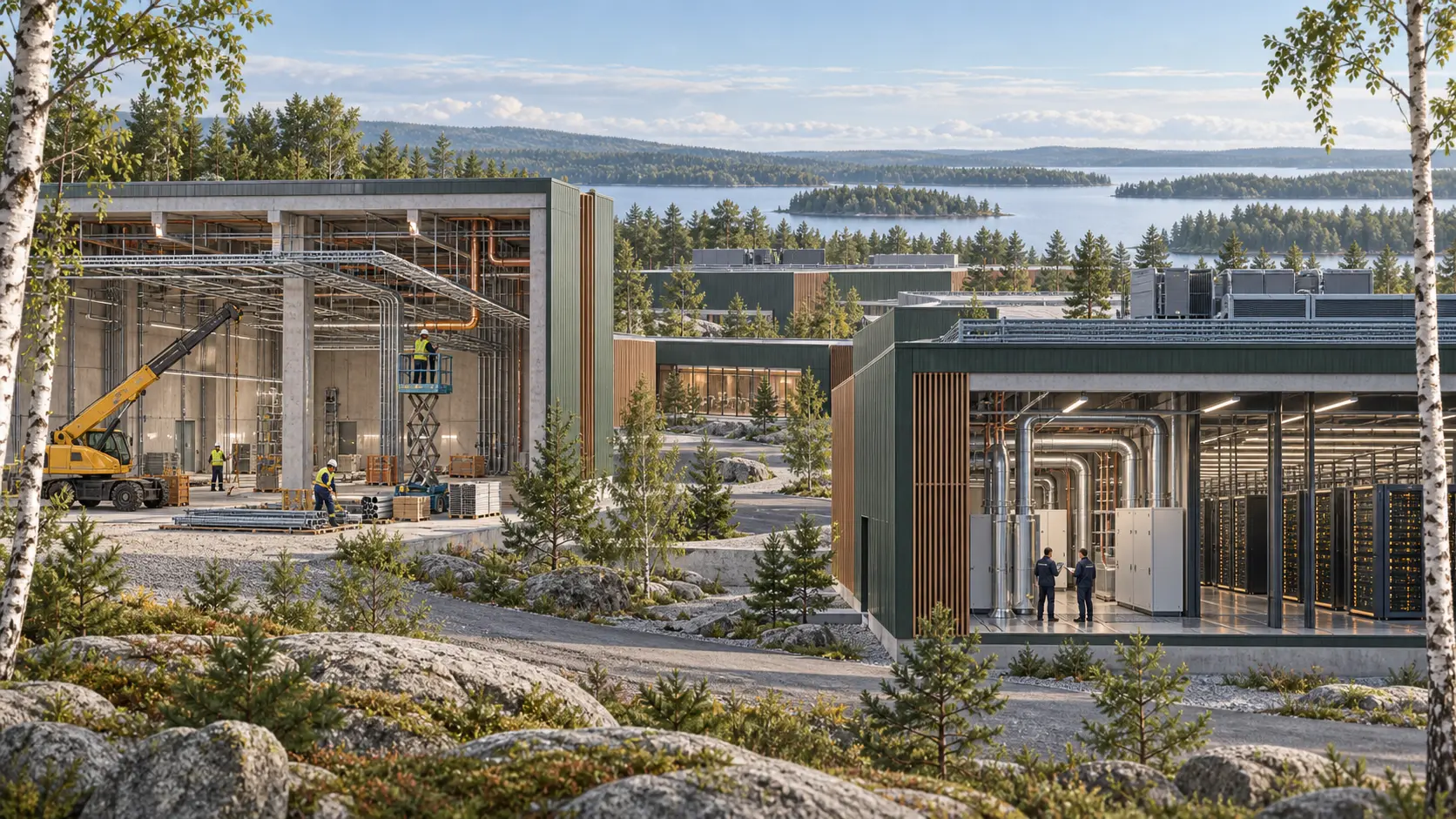
On September 9, Google committed at least €13bn to Finland in 2027–28, spanning datacentres, supporting infrastructure and partnerships in Hamina, Kajaani, Muhos and Vaala. This is a future investment commitment, not evidence that the whole sum has already been spent or awarded to Finnish suppliers. Its economic promises also need to be read by phase.
Google expects the initial construction period to support more than 37,000 jobs nationally, around 16,000 of them in construction, alongside an average annual GDP contribution of €3.6bn. For the operational period, it projects about 7,000 jobs supported each year. The latter includes people working at facilities, upstream suppliers and local shops, restaurants and amenities sustained by workers and their families. “Supported” is doing important work: the announcement does not give a corresponding count of people Google itself will employ.
The two employment estimates are therefore not a workforce shrinking from 37,000 to 7,000. Subtracting them would manufacture a redundancy story from forecasts with different time horizons and scopes. Nor does the operating estimate promise 7,000 additional recruits every year. These are Google's projections of economic activity, not observed hiring outcomes. The reviewed releases do not supply enough modelling detail to independently reproduce them.
Training opens a route, not a payroll
The skills initiatives have another distinction. Google describes basic AI training for more than 4,400 workers and, separately, a partnership with EKAMI offering up to 100 local students a year-long route towards datacentre careers. General AI skills and preparation for facility work are not interchangeable. Neither initiative, as announced, guarantees a Google job.
There is an existing supplier base to build upon: Google says it worked with more than 600 Finnish suppliers in 2023–25. That history makes local participation plausible, but it is not a list of contracts awarded under the new programme. A company deciding whether to buy equipment or train staff still needs a purchasable scope of work, a timetable and clarity over who awards the contract.
For the market, the relevant distinction is between a construction surge and repeat business. Installation demand can support an expansion that recurring maintenance demand cannot sustain at the same scale. Conversely, a smaller service contract lasting several years may matter more to a local firm than its modest contribution to a national employment headline.
Sources and limits
Google's September 9 announcement sets out the investment and skills plans. The official detailed release supplies the employment estimates and their scope. Kajaani's municipal publication reproduces Google's release; it is not an independent validation of the employment forecast.
Member Briefing
Deeper Profile Context
Sign in with the right membership level to unlock the full briefing and source notes.
Only for Strategic Circle
Strategic Circle
Open to all readers. Unlock profile briefings after joining and signing in.
Join Strategic CircleOnly for Leadership Alliance
Leadership Alliance
For qualified IP-asset owners and management; sign in to unlock alliance briefings.
Join Leadership Alliance