Summary
- On 25 November 2026 the CMA fined Firmenich, Givaudan and IFF £85,156,000 for coordinating their commercial responses to Unilever and agreeing not to recruit staff from each other's account teams.
- The CMA's published reductions — 65 per cent leniency for IFF, 40 per cent for Givaudan and Firmenich, plus 20 per cent settlement for all three — imply pre-discount penalties of roughly £214 million, so about £129 million was forgiven.
- Settling bought the discount with the right of appeal: the CMA states that because the companies settled, they cannot appeal the decision.
The fine is the announcement. The discount is the policy.
The products in this case are in every British home. Laundry detergent, washing-up liquid, cleaning spray, shampoo, plus the perfumes sold on the high street and online. The companies that make the smell in them — Firmenich, Givaudan and International Flavors & Fragrances — were found by the Competition and Markets Authority to have coordinated how they dealt with their biggest customer, and to have agreed not to hire each other's staff on that account.
The penalty, announced on 25 November 2026, is £85,156,000. The case page lists the three companies, the legal basis under the Chapter I prohibition of the Competition Act 1998, the Statement of Objections issued on 5 November 2026, and the investigation opening on 7 March 2023. Forty-four months from the file opening to the decision; six weeks from the objections to the penalty.
Then read the notes to editors, where the arithmetic of enforcement actually lives.
What was coordinated: the answer to a customer, and the hiring list
The findings are unglamorous, which is why they matter. The three companies shared commercially sensitive information so that they could refuse commercial requests from Unilever — including requests for price decreases. Givaudan and IFF went further and coordinated the level and timing of their general price increases. All three agreed not to recruit from each other's teams working on the Unilever account, which reduced disruption in those teams and, in the CMA's words, reinforced the coordination.
The mechanics were ordinary office plumbing: WhatsApp messages, telephone calls, and some discussions at in-person "beer and curry" meetings in London. Nobody signed a market-sharing agreement in a wood-panelled room. A group of suppliers decided, message by message, that the answer to the biggest buyer in their market would be the same answer.
That is why the no-poach clause deserves a second look. A no-poach agreement between competitors is not a price-fixing memo; it protects the team that services the shared account from being bid away. The effect is to make the coordination staff cheaper to maintain, which makes the coordination itself more stable. The CMA treated it as part of the infringement, and extended its investigation to recruitment arrangements in January 2024 for exactly that reason.
The discount arithmetic
Here is where the policy sits. In its notes to editors the CMA states the reductions it applied: 65 per cent off IFF's penalty under the leniency programme, 40 per cent off for Givaudan and Firmenich, and 20 per cent for each company for settling.
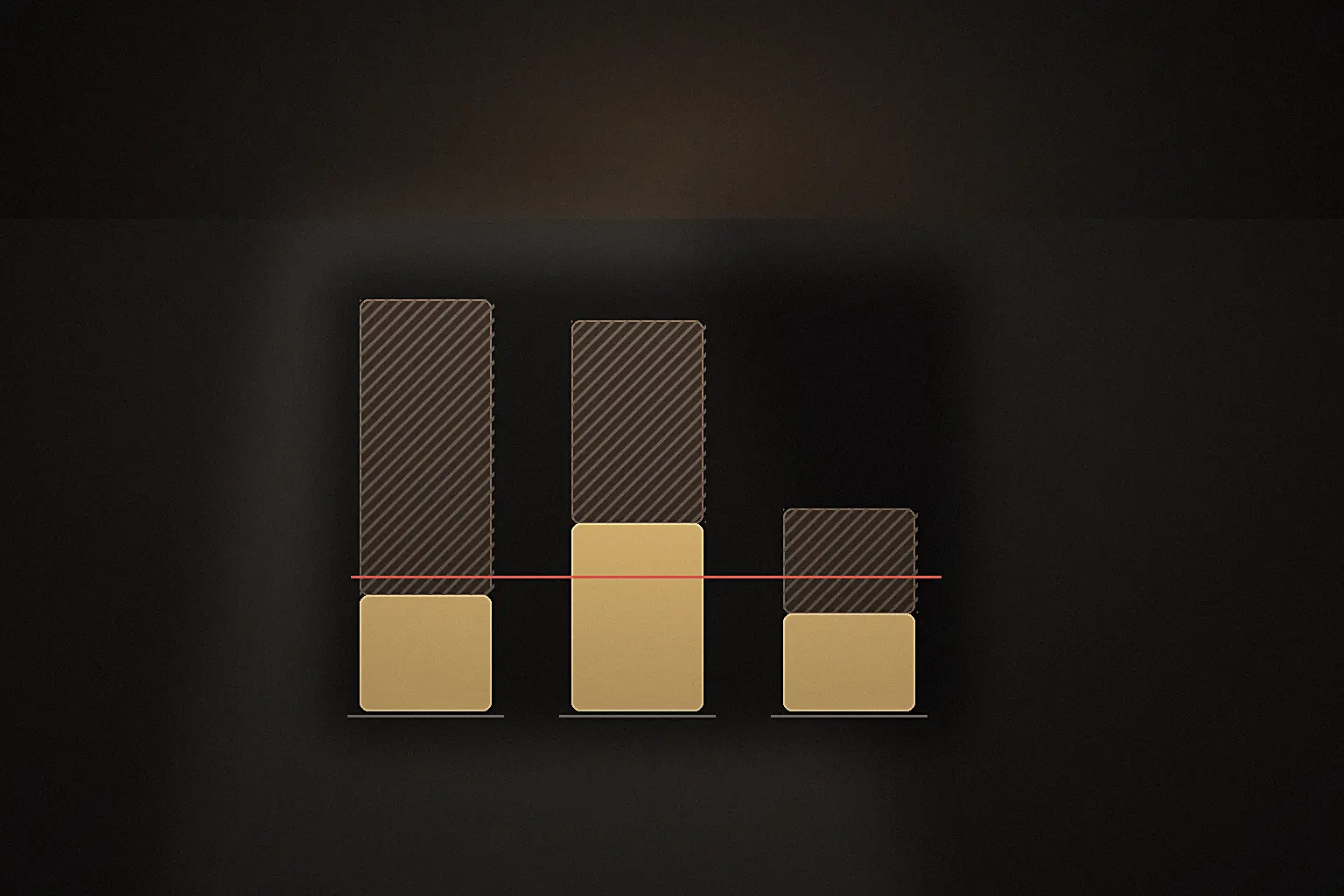
Take the published fines — IFF £24,570,000, Givaudan £39,960,000, Firmenich £20,640,000 — and work backwards through those percentages. IFF paid 28 per cent of its undiscounted figure (0.35 × 0.8), so that figure was about £87.8 million. Givaudan paid 48 per cent (0.6 × 0.8), implying about £83.3 million. Firmenich paid 48 per cent, implying about £43.0 million. Add those up and the penalties before discounts were roughly £214 million. The companies paid £85.2 million. About £129 million of penalty was exchanged for cooperation and for the waiver of appeal.
That calculation is mine, from the CMA's own percentages; the CMA published the fines, not the pre-discount base. The direction of the finding does not depend on the exact figures. The discount is larger than the fine.
Read that as policy rather than leniency. Cartel evidence lives in phones and in memories, and the CMA can either spend four years proving an agreement to a tribunal or buy the file with a discount. Buying it is rational. Buying it from all three at once — the CMA says all companies approached for leniency and were granted it before settling — is unusual and tells you how much the authority wanted a decision that could not be unpicked on appeal.
The price of a decision nobody can appeal
Settlement cuts both ways on paper. The companies admit, cooperate, pay less, and lose the right to appeal. The CMA gets finality: a decision with no litigation risk, published in a fortnight rather than argued for years.
The cost is visible in the same document. Leniency exists to reward the first company through the door; when every company in the infringement gets a leniency reduction, the incentive structure has been bent to fit the file. The next cartel reads this decision and learns two things: that cooperation is worth up to 65 per cent, and that a settlement on top is worth another fifth. A compliance officer doing arithmetic in 2027 will price the risk of getting caught against a penalty that, before discounts, is more than twice the number in the press release.
None of this makes the decision wrong. It makes the published number a poor guide to the deterrent. The CMA's statement of the total and the CMA's statement of the percentages sit four paragraphs apart in the same release, and only one of them describes what a cartel actually risks.
Four years, six weeks, fifteen months of silence about Symrise
Two dates in the case timetable are worth holding together. The investigation opened in March 2023. In May 2025 the CMA closed its investigation of a fourth company, Symrise AG, "on administrative priority grounds" while continuing against the other three. In November 2026 it issued objections, and three weeks later the decision.
So the public record shows a four-company investigation that became a three-company decision, with no published finding about the fourth. That is a normal use of administrative priority, and it is also the exact place where a reader cannot see whether the evidence gathered about Symrise shaped the settlement with the others. The CMA publishes no reasoning for the closure on the case page beyond the phrase.
The parallel European decision gives the answer to a different question: whether the same conduct is penalised twice for the same sales. The CMA says it worked in close cooperation with the European Commission, which issued its own decision the same day, and that it engaged the Swiss Competition Commission and the US Department of Justice during the investigation. The deterrent effect of this case is not the £85 million; it is the demonstration that four authorities were talking to each other while the companies were talking to each other.
What would change the reading
One disclosure would settle it: the pre-discount penalty for each company, published next to the fine, so that the discount is a stated sum rather than an exercise for the reader. The CMA already publishes the percentages; publishing the base costs nothing and ends the guesswork in every commentary written about this case, including this one.
The second thing to watch is the appeal column. Because these three settled, there will be no judgment testing whether agreeing not to answer a customer separately is itself an infringement, or whether a no-poach clause among fragrance suppliers is a restriction by object. The next contested cartel will have to establish both. Until then this decision is a settlement, not a precedent, and the difference is exactly the £129 million.
Sources
- CMA, Major fragrance suppliers fined £85 million by the CMA for illegal collusion, 25 November 2026.
- CMA case page: suspected anti-competitive conduct in relation to fragrances and fragrance ingredients, case timetable and decision summary, 25 November 2026.
Member Briefing
Read the full trend briefing
Members read the full briefing with the source notes behind every finding.
Strategic Circle
A daily briefing in your language, built from changes we have verified.
Join for USD 20/monthCancel anytime.
Members also get the full research library, a daily briefing on the networks they follow and the private forum.