Summary
- Five reviewed pages name Robert Elz as the party answerable for .au, and every one of them was written by the Commonwealth, ICANN or auDA rather than by him.
- The root zone record today names auDA and prints its two contacts as job titles, while auDA's own surfaces credit its authority to three instruments that never appear in the same document.
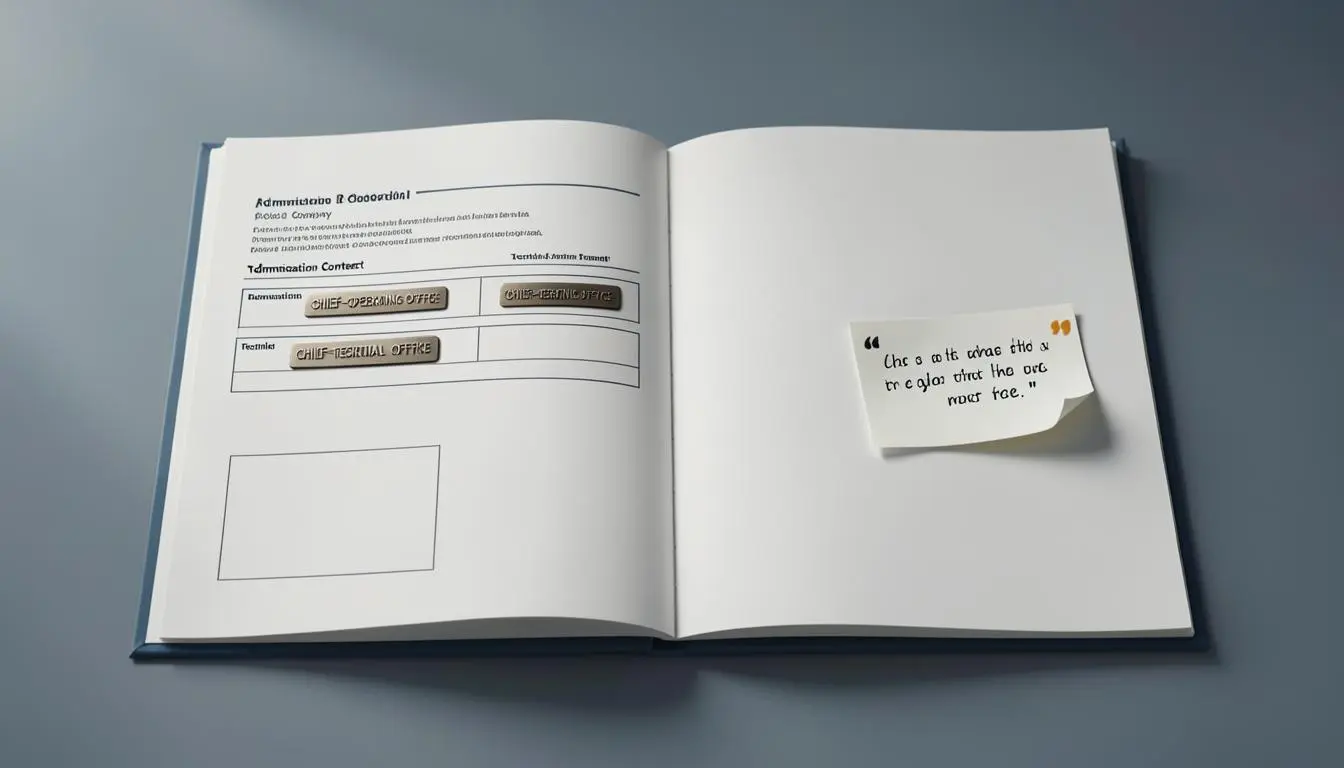
The Internet Assigned Numbers Authority's root zone record for .au lists the manager as ".au Domain Administration (auDA)" at Level 19, 8 Exhibition Street, Melbourne (IANA, .au). Below that line sit two contacts: "Chief Operating Officer" for administrative matters, "Chief Technical Officer" for technical ones. Not a name between them. The record reports "Technical Status: Delegated", five name servers — a.au, q.au, r.au, s.au, t.au — a DNSSEC DS record, and "Last Updated 2026-09-08". Its Related Information section links two documents from 2001, the IANA redelegation reports of 31 August and 19 November. It displays no delegation instrument and no signature.
That is a competent piece of housekeeping, and it is also a sleight of hand available to every registry on earth: keep the accountability, drop the accountable party. A country's names still resolve. Nobody is named as the person who answers for them.
The man the letters are about
On 4 July 2001, Senator Richard Alston wrote to ICANN's Stuart Lynn about "the requested redelegation of the .au country code top level domain (ccTLD) from its current administrator Mr Robert Elz to auDA". He acknowledged Elz's "significant contribution ... particularly with regard to his administration of the .au ccTLD", and added the sentence that officials write when a departure has been awkward: the Government's endorsement of auDA "is not to be construed as criticism of Mr Elz" (Alston to Lynn, 4 July 2001).
A month later Lynn wrote back. ICANN had, he said, "received communications from the existing manager, Robert Elz", and the matter in hand was the "transfer of the .au delegation from his personal stewardship to that of an organization broadly supported by the Australian Internet community" (Lynn to Alston, 8 August 2001).
Inside that second letter is the only reported sentence of Elz's own about who should hold .au. Lynn reports him doubting auDA was the right home and quoting him directly: "the govt of AU has a much broader base of support (whichever party is in control) than auDA does, or will ever achieve."
Read it twice. The man who had run .au since the 1980s did not think the company being handed the domain should have it, and thought the Australian Government was the better custodian. It is a sharp, unfashionable, entirely arguable position. It is also, on the evidence reviewed, all we have in his own words — a quotation inside his counterpart's letter, with the original message not reproduced.
The successor tells the story
The Australian Government's account, presented at the ITU's ccTLD workshop in Geneva in March 2003, supplies the timings. In November 1999 Elz delegated policy development for com.au to auDA, "retaining responsibility for org.au, the last of the 2LDs, until January 2002". auDA wrote to IANA in June 2001 requesting redelegation "from the current delegate, Robert Elz to auDA". And "On 25 October 2001, auDA signed an Agreement with ICANN to formalise the transfer of delegation for the .au country code Top Level Domain (ccTLD)" (NOIE, March 2003).
That paper also characterises the outgoing manager as "very reluctant to agree to the transfer of authority to auDA, and very reluctant to communicate his concerns to the Australian Government". The characterisation is the successor's, and the paper quotes no document of his. Reluctance is not obstruction; a man who thinks the wrong body is getting the contract is entitled to say so slowly.
Five pages, five authors, one missing author
Count the pages that name Elz in a sentence about who answers for .au, across the documents reviewed on 24 November 2026, and the number is five: the ministerial letter of 4 July 2001, the ICANN letter of 8 August 2001, the 2003 government paper, auDA's November 2010 Names Policy Panel discussion paper — "The .au 2LD hierarchy was created by the first administrator of the .au domain, Robert Elz" (auDA, November 2010) — and auDA's post of 11 January 2026, which states that "the delegation to manage .au was transferred from Robert Elz to auDA by the Internet Corporation for Assigned Names and Numbers (ICANN) in 2001" (auDA, 11 January 2026).
Five documents, written by the Commonwealth, ICANN, the Commonwealth, auDA, auDA. The count is mine and the reading was one day's. But the shape of it is the point: the manager is always the object of the sentence, never its author.
auDA's consultation record adds a turn of the screw. Its published submission lists for the 2010, 2015 and 2017 policy rounds name their submitters, and in the portions reviewed no Robert Elz entry appears (auDA, 2015 Names Policy Panel) (auDA, 2017 Policy Review Panel). The 2010 and 2015 lists were partial in the copy read and the 2017 list appeared complete, and confidential submissions were never excluded — auDA's own paper says submissions would be posted within two working days of receipt unless clearly marked confidential. So the man .au was built by did not visibly join the twenty years of argument about what .au should become. That is an absence with a scope, not a story about a recluse.
Three warrants for one authority
The successor's paperwork cannot agree with itself about where its authority came from. auDA's "Who we are" page says its Terms of Endorsement from the Australian Government "set out auDA's core functions", that auDA is a company limited by guarantee whose Constitution governs Board appointment and duties, and that it "operates under an agreement with ICANN" (auDA, Who we are). Its June 2025 Board Charter is blunter: the Board is "accountable to the Australian digital community, the Commonwealth Government, stakeholders and members", and in performing its role "refers to the Constitution, Terms of Endorsement from the Australian Government and auDA's contract with ICANN" (auDA Board Charter, June 2025).
Then the dates diverge. A January 2018 Policy Review Panel presentation records that "31 December 2000 – auDA entered into a formal agreement with the Government of Australia to hold administrative authority for the .au Domain Name Space" (auDA PRP presentation, January 2018). The 2026 post dates the federal endorsement to 2001. The 2003 government paper dates the ICANN agreement to 25 October 2001. Three warrants — a Commonwealth agreement of 31 December 2000, an ICANN agreement of 25 October 2001, Terms of Endorsement — and not one reviewed page puts two of them in the same document.
By my own count, 31 December 2000 to 25 October 2001 is 298 days. The ministerial letter of 4 July 2001 to that agreement is 113 days; the ICANN letter of 8 August 2001 to it is 78 days. Elz's residual responsibility for org.au is dated only to "January 2002", which is 68 to 98 days after the ICANN agreement. The ICANN–auDA agreement itself is not in the reviewed set: its date and existence come from the government paper's sentence, and no reviewed page reproduces its text or its signatures.
The company can print a name
This is not an operator that hides its people. auDA's board page names Marina Go AM as Appointed Director and Independent Chairperson and Sandra Davey as an Elected Director, and points to the Board Charter for the Board's role and structure (auDA, the Board). A company that can print two directors' names on a governance page, and one board's accountability to four constituencies on a charter, can print one name on a delegation record.
What a record owes a reader is three things in a row: who holds the duty, the instruments that moved it forward, and the date the previous holder's duty ended. The .au record gives the first as a job title, the second as three documents that never meet, and the third as a month. By my own count, 25 October 2001 to 24 November 2026 is 9,161 days, with six 29 Februaries in between, and no page in the reviewed set prints the moment Robert Elz stopped being answerable for .au.
The accountability survived the handover. The accountable person did not. He survives as a quotation, in somebody else's letter, making an argument the record has never answered.
Member Briefing
Read the full trend briefing
Members read the full briefing with the source notes behind every finding.
Strategic Circle
A daily briefing in your language, built from changes we have verified.
Join for USD 20/monthCancel anytime.
Members also get the full research library, a daily briefing on the networks they follow and the private forum.