
Summary
- Liberty Networks and CANTV published the joint Fénix announcement on 31 July 2026 inside the fixed reporting window.
- They described a 378-kilometre submarine system with a minimum ring capacity of 14 Tbps.
- The stated landing points are Camuri, about 50 kilometres from Caracas, and Willemstad in Curaçao.
- The project is intended to connect to Liberty Networks’ Curaçao IP hub and CANTV’s Festoon cable.
- The partners described onward links through Arcos, EC-Link, Jerry Newton, PCCS and IP transit to the NAP of the Americas in Miami.
- No ready-for-service date, supplier, financing, permit status, construction milestone, live traffic, measured latency or independent capacity verification was published.
The architecture matters more than the launch language
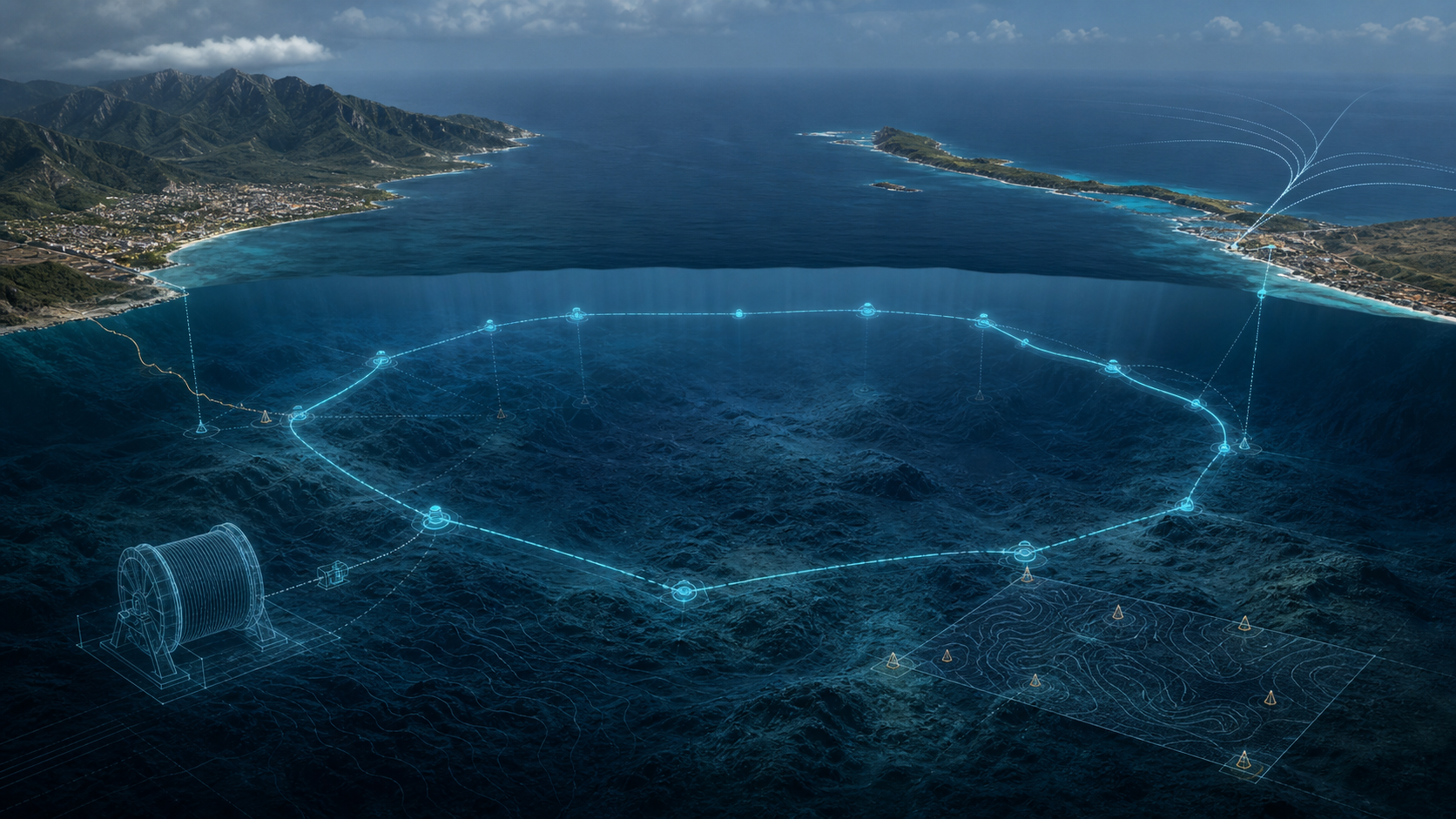
Fénix is presented as a ring rather than a single isolated point-to-point route. The two named landings would connect Camuri near Venezuela’s capital region with Willemstad, while CANTV’s Festoon system and Liberty Networks’ Curaçao hub provide the intended interfaces.
That architecture could add a new path into a regional network. It does not yet prove physical route diversity. Resilience depends on the final wet route, landing stations, terrestrial backhaul, shared ducts, power, optical equipment and operational practice—details absent from the announcement.
Fourteen terabits is a design statement
The release gives a minimum ring capacity of 14 Tbps. It does not say whether that number is lit capacity at launch, ultimate design capacity, protected capacity or aggregate capacity in both directions. No wavelength plan, fibre-pair count or equipment specification is supplied.
The number should therefore be attributed to the partners and kept in its exact form. It cannot be translated into sellable customer bandwidth or compared with live traffic without a clear capacity definition.
Curaçao is the announced integration point
Liberty Networks says its Curaçao hub connects through Arcos, EC-Link, Jerry Newton and PCCS. It also describes IP transit onward to the NAP of the Americas in Miami. These named systems outline the intended regional reach behind Fénix.
The announcement also refers to two ARCOS-1 systems at Punto Fijo and Colombian border interconnections at Cúcuta and Maicao, linked to landing stations in Cartagena. The text portrays an ecosystem, but does not publish routing policy, purchased capacity or failover behaviour.
Lower latency is an expected benefit, not a measurement
The partners expect Fénix to reduce latency to relevant digital content and improve experience in Venezuela. No baseline, test destination, round-trip time or service-level target accompanies the claim.
Latency depends on more than submarine distance: terrestrial paths, peering, routing policy, congestion and content placement also matter. Until a live system is tested, the claim remains a design rationale rather than an observed performance result.
The Caracas traffic figure needs attribution
A CANTV executive said the capital concentrates more than 40% of Venezuela’s international traffic volume. The release provides no measurement period, traffic definition, dataset or denominator.
The figure may explain the choice of a landing about 50 kilometres from Caracas, but it cannot be treated as independently verified market data. Attribution preserves both its relevance and its evidentiary limit.
“Launch” does not mean ready for service
The release contains no cable supplier, marine survey, manufacture, vessel, landing work, environmental or regulatory permit, financing package, customer contract or ready-for-service date. It also provides no evidence that the system is carrying traffic.
Submarine projects pass through commercial, regulatory, engineering and construction stages. Announcing the name and design is one milestone. Manufacturing, marine installation, landing, optical commissioning and customer acceptance are separate milestones.
The missing topology detail affects risk analysis
The partners call Fénix a submarine cable system and a ring, but do not explain whether it is an entirely new wet plant, a spur, a Festoon extension, leased fibre or another configuration. That distinction changes ownership, repair exposure and independence from existing assets.
Likewise, statements about availability and resilience cannot be assessed without shared-risk information. Two logical paths may still converge in one landing station, terrestrial corridor or power domain.
What would turn the announcement into an operating asset
The next verifiable milestones would include permits, supply and construction contracts, surveyed route, landing-station work, cable manufacture, marine installation, landing completion, optical tests, acceptance and a ready-for-service declaration. Live latency and traffic measurements would then test the performance claims.
For now, Fénix is a significant statement of intended topology: a 378-kilometre, minimum-14-Tbps ring linking Camuri and Willemstad into a wider Caribbean system. Its commercial and network value depends on execution that the 31 July announcement has not yet documented.
