Summary
- In the UCL facsimile experiment described by Tawei Chang in February 1982, a telephone-era fax machine fed an LSI-11 computer that imitated another fax machine. Images travelled as computer data among UCL, ISI and COMSAT over ARPANET/SATNET, but the network sometimes could not keep pace with the fax's steady output; the machine abandoned a page when the computer tried to slow it.
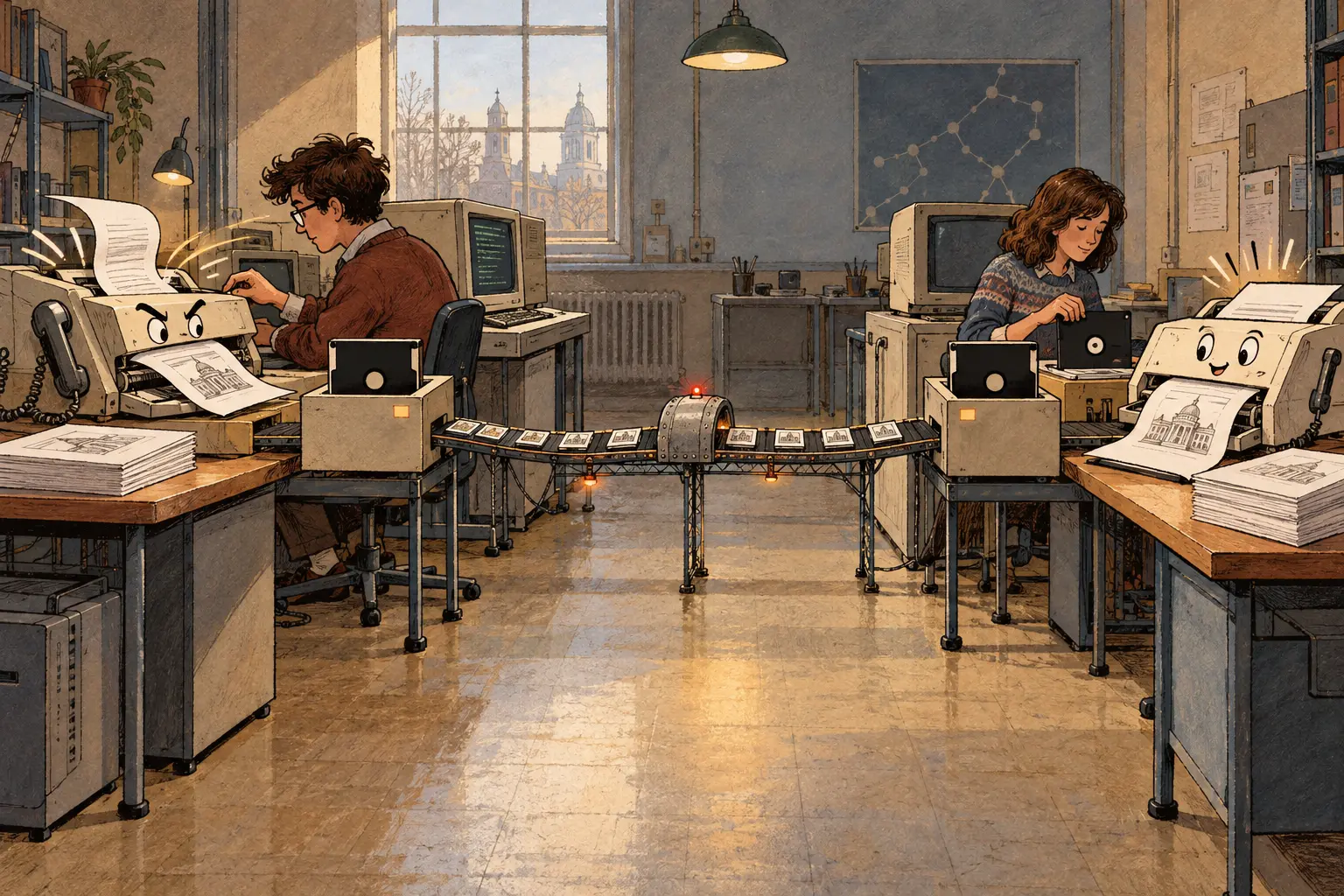
- UCL separated the two clocks with storage: read a page quickly onto local disk, send it disk-to-disk at network speed, then print only after the remote disk held the whole page. The sender gained quick intake and a queue, but lost immediate knowledge of when the far-side sheet emerged.
The fax machine thought it was on a telephone call. UCL's computer had learned to play the other fax machine, right down to an interface that looked to the device like a phone line. Then came the awkward moment when the computer network could not keep up. The computer tried to ask the fax to slow down; the fax interpreted the hesitation as a line fault and abandoned the page mid-transfer. If a device could slam down a receiver with its paper feed, this one did. Tawei Chang describes the experiment in RFC 809, published in February 1982.
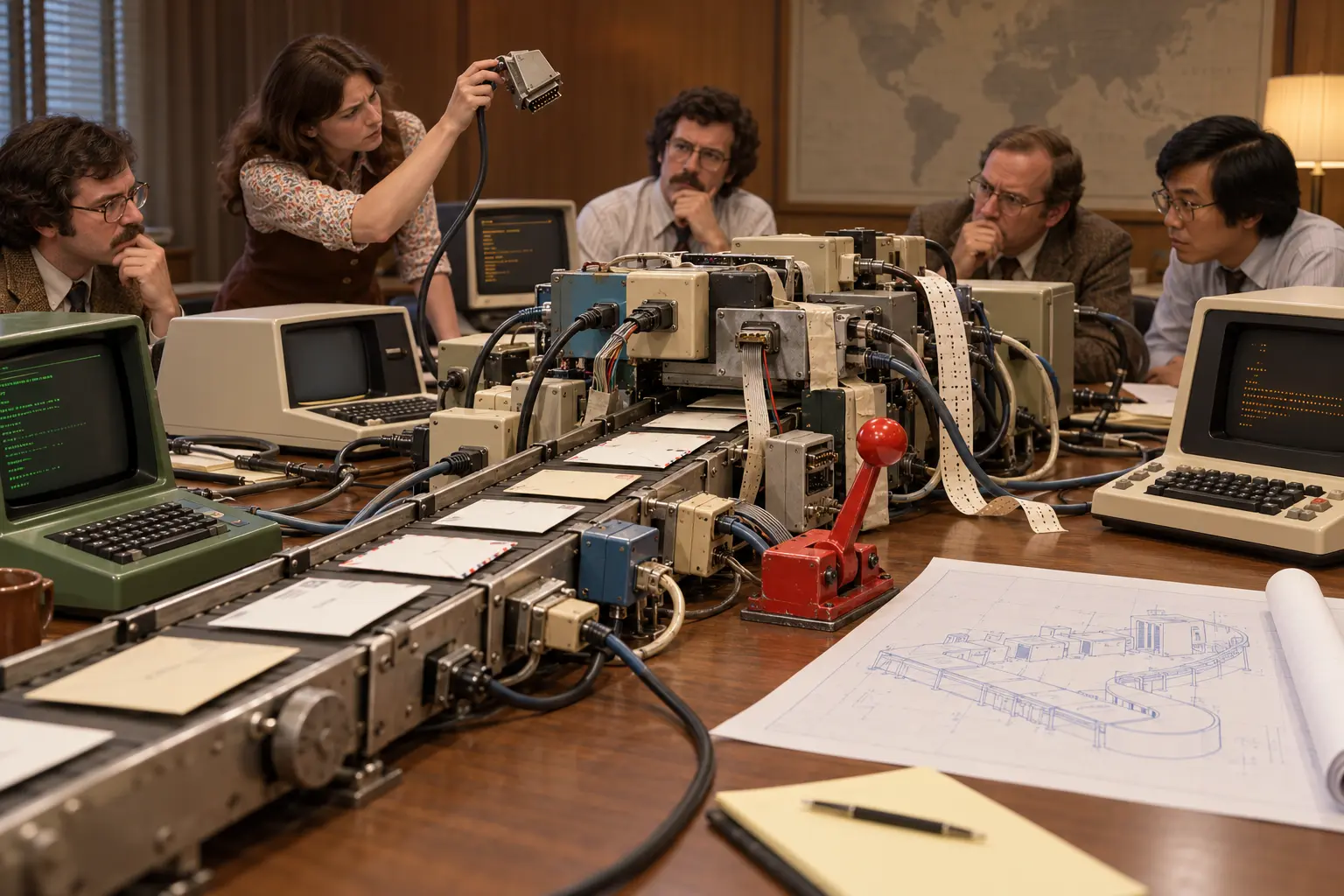
The setting was a real experimental system, not a drawing of a future office. UCL's Department of Computer Science connected a DACOM facsimile machine, an LSI-11 microcomputer, floppy disks, display and console. The computer was connected to ARPANET/SATNET and the UCL Cambridge Ring. Chang reports pictures exchanged among UCL in London, ISI in Los Angeles and COMSAT in Washington. The fax saw its local computer as the other end of a telephone connection. The computer saw the fax's image as data it could store, change and send across a network.
That little act of impersonation let a telephone device enter a computer system without knowing where it had landed.
The deception had a timing limit. A compressed page could, in Chang's comparison, carry as much data as more than 20,000 alphabetic characters. It needed storage and took longer to move than ordinary text. The DACOM machine sent at a constant rate suited to a telephone line. UCL's network path sometimes accepted data more slowly. When the computer applied backpressure, the fax did not understand a network being busy; it saw the sort of delay a telephone conversation was not meant to produce. The page stopped partway through. The failure was neither bad picture content nor a mistaken destination.
Two parts of one delivery chain disagreed about the passage of time.
Chang's repair was almost comically physical: give the fast end a place to drop the page. The revised transfer had three stages. First the fax scanned one page to local disk at its normal speed. Next the two computers transferred that stored image across the network to a disk at the far end, as slowly as the network required. Only after the whole page arrived did the receiving computer feed its fax machine at a rate that machine accepted. The remote fax never had to watch a transatlantic link think. Local intake, network carriage and local printout became separate jobs.
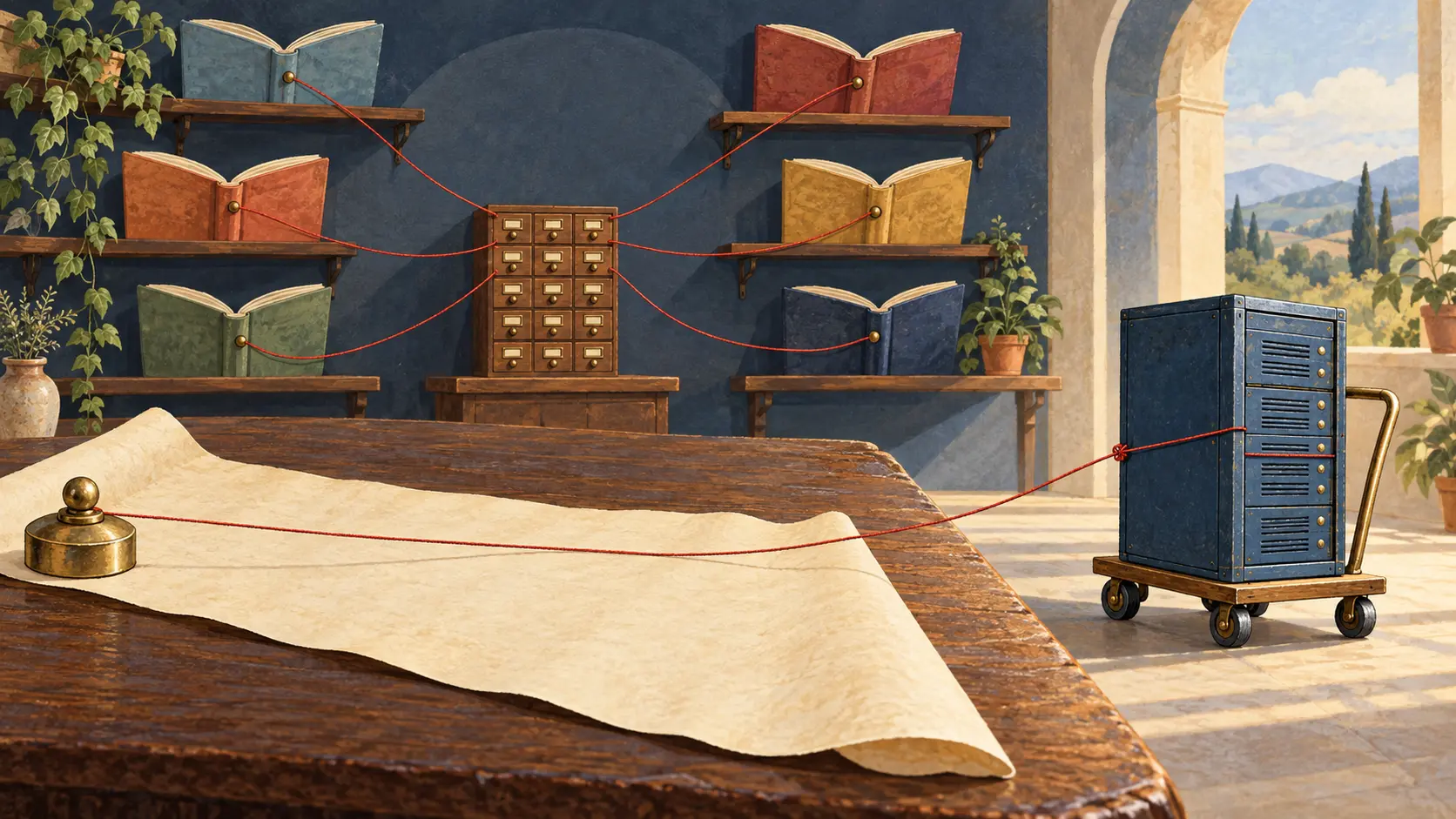
This changed what the operator could observe. Chang says the source page was read in less than a minute, freeing the person to feed the next one. Pages could queue when several operators aimed at one destination, avoiding the telephone ritual of redialing a busy remote fax. But quick intake was not quick delivery. A sender could no longer tell how long it would take before the page printed at the other end; a queue of pages might delay the last sheet. Disk storage made the system tolerant of a slow middle, while moving the completion signal farther away from the person who pressed send.
The broader UCL project did much more: it explored compression, conversion between fax formats, image cleaning, scaling, editing and mixing text with pictures. Those functions matter because they show why a computer sat in the middle at all. Yet the timing fix in RFC 809 is the more memorable piece of engineering. A fax machine could be fooled into talking to a computer; it could not be fooled into accepting arbitrary pauses. The solution did not make the network as fast as the fax. It let each side keep its own rhythm and used two disks to keep the conversation alive.
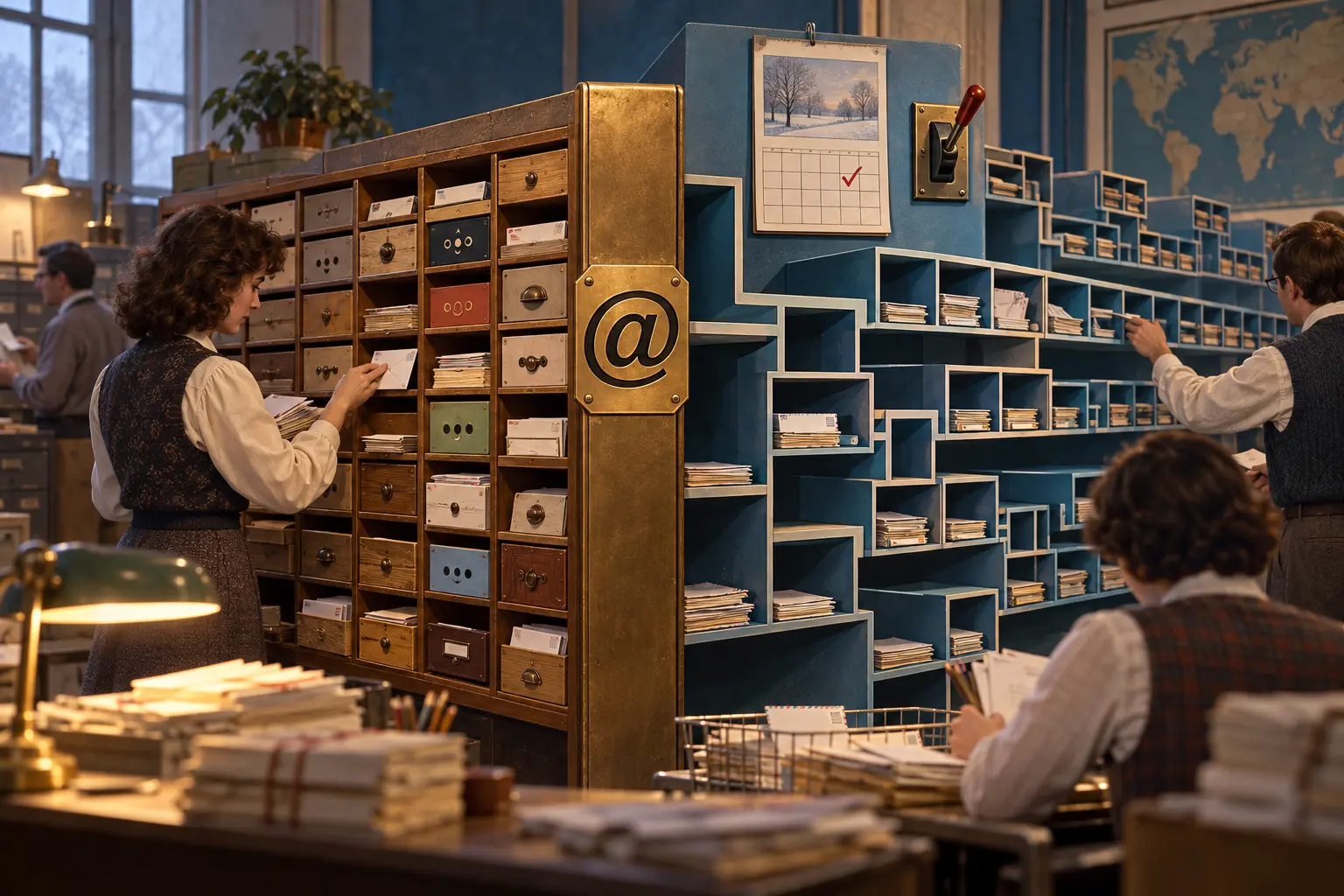
The resulting system made a useful bargain visible. An operator could hand over a page quickly, and the network could carry it when capacity allowed. Somewhere between the two desks, “accepted” ceased to mean “printed.” The fax no longer hung up on the Internet, but the sender now had to trust a queue whose last act happened out of sight.
Member Briefing
Deeper Profile Context
Sign in with the right membership level to unlock the full briefing and source notes.
Only for Strategic Circle
Strategic Circle
Open to all readers. Unlock profile briefings after joining and signing in.
Join Strategic CircleOnly for Leadership Alliance
Leadership Alliance
For qualified IP-asset owners and management; sign in to unlock alliance briefings.
Join Leadership Alliance