
Topic
Software Lifecycle and Lock-in
Within the Topic facet, Software Lifecycle and Lock-in topic intelligence connects articles that share a specific subject, signal focus, or monitoring theme. The page gives readers a richer path through related reporting, source evidence, market actors, and infrastructure implications, with enough context to understand why the topic matters across company movements, governance decisions, regional exposure, and operational risk. Readers can compare recurring signals, affected organisations, public evidence, market context, service continuity, procurement, competition, compliance, and strategic planning questions behind the subject instead of stopping at a thin list of matching articles. It explains what the topic covers, which infrastructure actors or policies are involved, what evidence supports the coverage, and why the subject may matter for operators, customers, investors, and policy readers.

History
The Chain That Made a Public Key Believable: PEM Certificate Management
A public key does not identify its owner by itself. RFC 1422 addressed that gap for Privacy Enhanced Mail by specifying certificates, certification authorities, validation paths, and revocation information—the institutional machinery needed before a relying party could treat a…

History
The Pointer That Was Never Out of Band: TCP Urgent Data
TCP urgent data is a small control surface with a long history. The URG flag makes a 16-bit urgent pointer meaningful, but RFC 793 described the boundary it marks in two contradictory ways. That ambiguity crossed from the specification into implementations and application APIs.

Global Cloud Services Trends
A Root Certificate Removal Is a Fleet Migration Before It Is a Browser Update
A root programme can withdraw trust in one release while many applications keep making decisions from older, private or embedded stores. The security change is complete only when the verifiers that matter can prove the intended rejection.
IETF
The Bitmap Says a UDP Option Appeared—not What It Did: RFC 9870
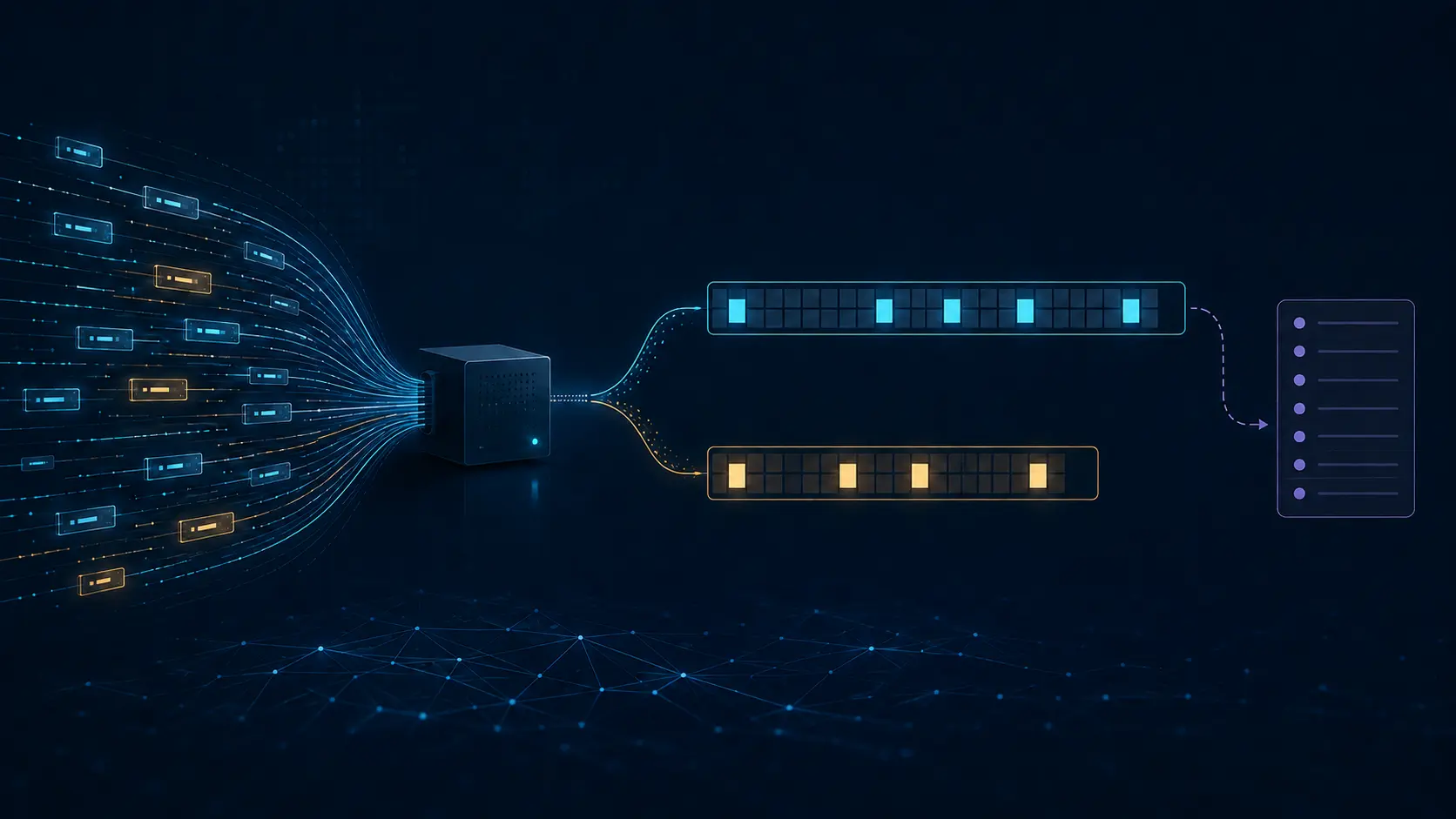
RFC 9870 gives IPFIX exporters a compact way to report which UDP Option kinds appeared in a Flow. Its bitmaps are useful precisely because their claim is narrow: they preserve observed presence, not a packet history, a receiver’s processing decision or an application outcome.

CASE FILE
At Python, an Accepted PEP Is Neither a Release Commitment Nor an Implementation Receipt
Python’s public process deliberately separates the decision on a proposal from the work of making it real. A PEP may be discussed by contributors, resolved by the Steering Council or an approved PEP-Delegate, implemented in CPython, merged to a particular branch and eventually…

History
Six Bytes Became an Address Only After the Domain Was Known: RFC 1449
An archive can preserve every octet and still lose the fact. Imagine finding six bytes in an old SNMP configuration: four could be an IPv4 address and two could be a UDP port. That reading is valid only if another field says the value belongs to the UDP transport domain. Without…

History
The Database Said One Address. The Reply Followed the Packet Back: RFC 1445
The address book and the live packet disagreed. For a new request, the 1993 SNMPv2 administrative model used the address recorded for the destination. For the reply, it ordered something else: use the transport domain and address from which this request actually arrived, even if…

CASE FILE
At Apache, a Release Vote Is Neither a Code Veto Nor a Board Technical Decision
At the Apache Software Foundation, a person can commit code, a qualified voter can stop a code change, a PMC can issue a formal release, and the Board can oversee the Foundation. Those acts sit in one institution, but they do not carry the same authority. Treating them as one…

Story
RIPE's Flip Chart Experiment and the Work After the Introduction
A paper board helped researchers and network operators find one another. RIPE NCC's new account points to a useful next test: whether a promising introduction becomes a question both sides can afford to pursue, without silently committing either to data access or production…

History
The Clock Went Back. The Key Had to Change: RFC 1446
After a power failure, an SNMP agent wakes with yesterday’s shared secret and a clock that thinks yesterday has not happened yet. A captured request, previously too old to accept, can become “recent” again. Its digest never changed. The receiver’s boundary of acceptable time did.…

History
The Key Changed Before the Reply Arrived. The Manager Had to Remember Both: RFC 1446
The agent had already installed the new secret. Its reply was built with that new value. The manager, still waiting for the reply before changing its own database, continued to trust the old one. RFC 1446 made this awkward interval explicit: a secure command could succeed at its…

CASE FILE
The Name Stayed the Same. The Module Did Not: RFC 9890
RFC 9890 makes a small registry correction with a large evidentiary consequence: a YANG module keeps its name and XML namespace across revisions, so identity alone can never tell an operator which definitions a system actually uses.

History
The Module Kept Its Name. The Device Did Not Prove Its Version: RFC 1442
A monitoring console can display a MIB module's latest revision date with complete confidence and still know almost nothing about the code answering from a particular device. RFC 1442 gave SNMP information modules a stable identity and a disciplined memory of change. It also drew…

History
The Same Application Crossed Two Versions. The Proxy Changed the Operation: RFC 1452
The application asked for a bulk retrieval. The old agent never saw one. Between them, a bilingual manager consulted a local database, selected SNMPv1, zeroed two fields and changed the PDU into a single next-step request. RFC 1452 called the result transparent to the…

Creators
Stefan Savage and measuring cybercrime as a system
Stefan Savage’s research repeatedly replaced isolated attack stories with measurements of traffic, supply chains, incentives and failure paths. From DDoS and network worms to spam, payment networks, cloud infrastructure and connected vehicles, the method is consistent: identify…

CASE FILE
The Slice Identifier Reached the Transport Edge. The Guarantee Still Had to Be Built: RFC 9889
RFC 9889 turns 5G network slicing into a chain of accountable translations: the mobile domain can name a slice, but the transport domain must still classify traffic, allocate resources, install state and prove the resulting service.

Creators
Stefan Savage and the measurement of cybercrime as a system
Stefan Savage’s research repeatedly replaced stories about attacks with measurements of traffic, supply chains, incentives and failure paths. From denial-of-service and worms to spam, payment networks, cloud infrastructure and connected vehicles, the recurring method is to…

Story
APNIC’s Automation Workshop Has a Second Job: Teaching Its Successors
The Mumbai course is meant to prepare engineers to teach and rebuild their own training labs. That makes it part of a practical handoff before network automation leaves APNIC’s instructor-led curriculum at the end of 2026.

Leaders
Abdiel Marin and the Workflow Architecture Behind Specialty Eye Care Software
Abdiel Marin built EyeMD EMR around a practical premise: ophthalmology software has to follow the clinic's real work, not force clinicians into a generic record system. His operating decisions connected specialty imaging, interoperability standards, edge computing and patient…
History
The Version Number Survived. The Security Framework Did Not: RFC 1441
In one of SNMP's durable historical jokes, the integer `1` in a message wrapper can mean community-based SNMP version 2. The arithmetic is harmless. The assumption it invites is not. A version field tells a receiver how to process a message; it does not, by itself, reveal which…