
Topic
Software Lifecycle and Lock-in
Within the Topic facet, Software Lifecycle and Lock-in topic intelligence connects articles that share a specific subject, signal focus, or monitoring theme. The page gives readers a richer path through related reporting, source evidence, market actors, and infrastructure implications, with enough context to understand why the topic matters across company movements, governance decisions, regional exposure, and operational risk. Readers can compare recurring signals, affected organisations, public evidence, market context, service continuity, procurement, competition, compliance, and strategic planning questions behind the subject instead of stopping at a thin list of matching articles. It explains what the topic covers, which infrastructure actors or policies are involved, what evidence supports the coverage, and why the subject may matter for operators, customers, investors, and policy readers.

CASE FILE
The Check Moved. The Requirement Did Not.
RFC 9682 allows a CDDL source file to contain no rules. The completed model still needs an entry point. Between those two statements lies a consequential question for anyone buying, assembling or approving modular systems.
History
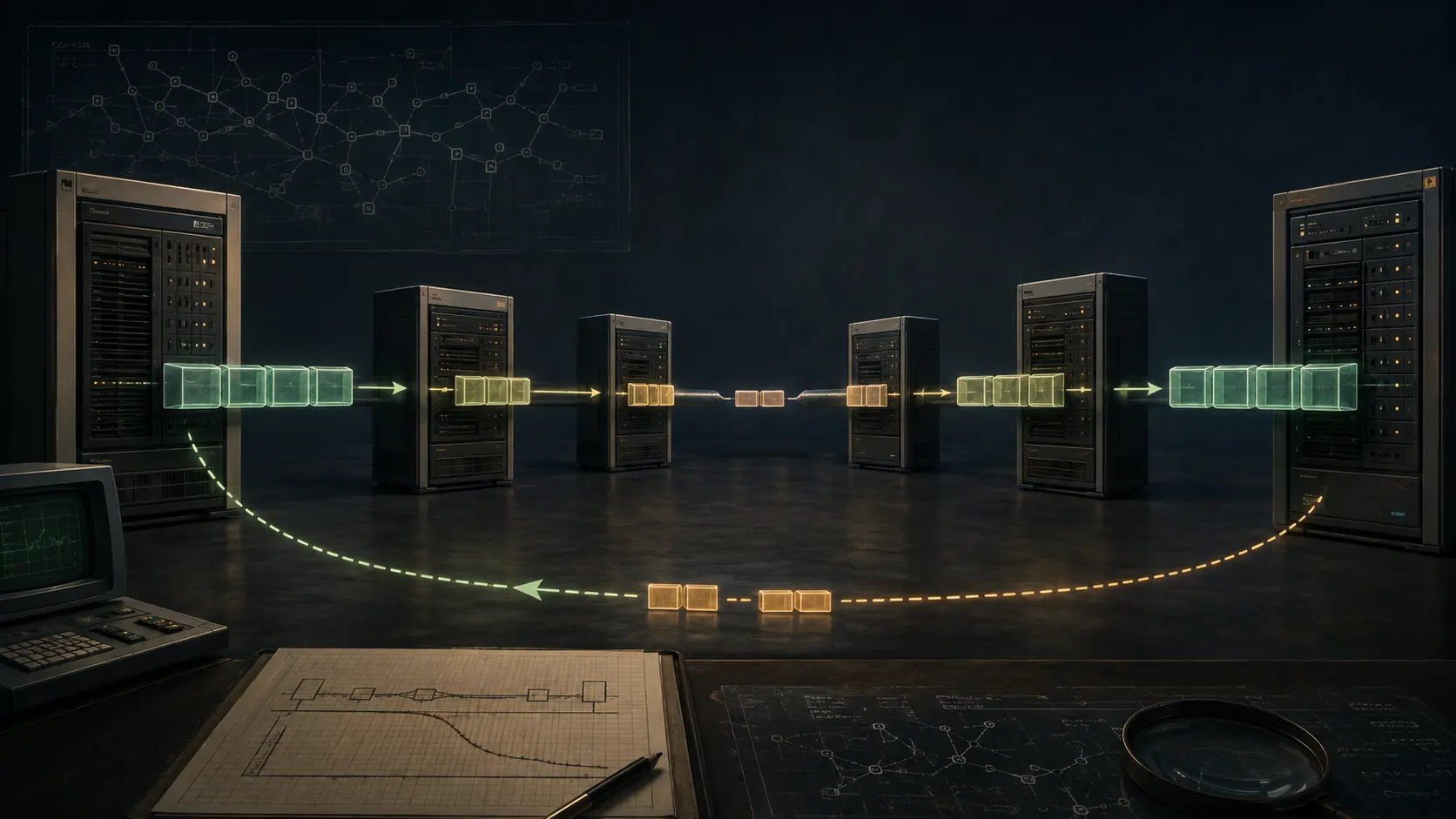
The Four Bytes That Asked Every Router for Its Narrowest Link
Before Path MTU Discovery learned from failure, an IPv4 packet could carry a tiny writable question. Each router was asked to compare two links and leave behind only the smallest number it had seen.

CASE FILE
The Verification That Will Not Come Again
A JMAP subscription can be accepted just as its authentication assumptions expire. RFC 9749 puts recovery on the client—and a reported error in its optional warning path makes that hand-off worth examining closely.

CASE FILE
The Failure Event Was Signed. Its Second Arrival Was Still a Replay.
A vendor outage alert enters an agent session, passes signature verification and triggers a fallback. The receiver loses its acknowledgement, so the same alert arrives again. Every cryptographic check can still be green while the second delivery repeats a real-world response.…

IETF
CFRG’s Curve Rewrite Leaves Three Acceptance Decisions to Calling Protocols
A byte string can pass every mathematical check and still be unacceptable to the protocol that received it. Revision 14 of CFRG’s pairing-friendly-curves draft makes that boundary unusually visible: the common document says how to recover valid points and scalars, while the…

CASE FILE
Who Keeps the Original Mail?
A legacy inbox can show a readable substitute while losing the address, context or verification that made the original useful. RFC 9755 turns compatibility into a question of custody.

CASE FILE
The Agent Timed Out. That Does Not Mean Its Budget Came Back.
A procurement agent sends a bounded order to a supplier. The call disappears into a timeout. No confirmation returns, but the supplier may already have accepted the order. At that moment, refunding the agent’s authority is not customer service; it is permission to spend twice. A…

CASE FILE
Who Pays to Retire an Experimental Number?
A successful network trial leaves more than working software. It leaves a dictionary of errors, tools that read it and people who depend on it. RFC 9756 makes the route to a permanent assignment clearer; someone still has to pay for the move.

History
The Security Label That Needed Its Own Specification
One IPv4 option could appear more than once in the same datagram, yet no occurrence was self-explanatory. Its one-byte format code pointed outward to another specification that defined what the remaining bytes meant and whether a system should accept them.

Academics
Colin Perkins: How Real-Time Media Learned to Share the Internet
Colin Perkins did not invent RTP, WebRTC or Internet congestion control. His more defensible contribution is also more revealing: over three decades, he helped develop the repair, feedback, signalling, safety and governance mechanisms that allow voice and video to remain useful…

CASE FILE
An AI Safety Sidecar Is Not a Boundary If the Old Credential Still Works
The fastest way to test an AI control plane is to ignore its architecture diagram and try the connection it was meant to replace. If the old credential still completes the same join or send, the new sidecar is advice—not authority.

History
The Label the Packet Had to Carry
RFC 1108 imagined a network in which a datagram did not merely carry data and an address. It also carried a compact declaration of the protection rules that had to follow it through the route.

History
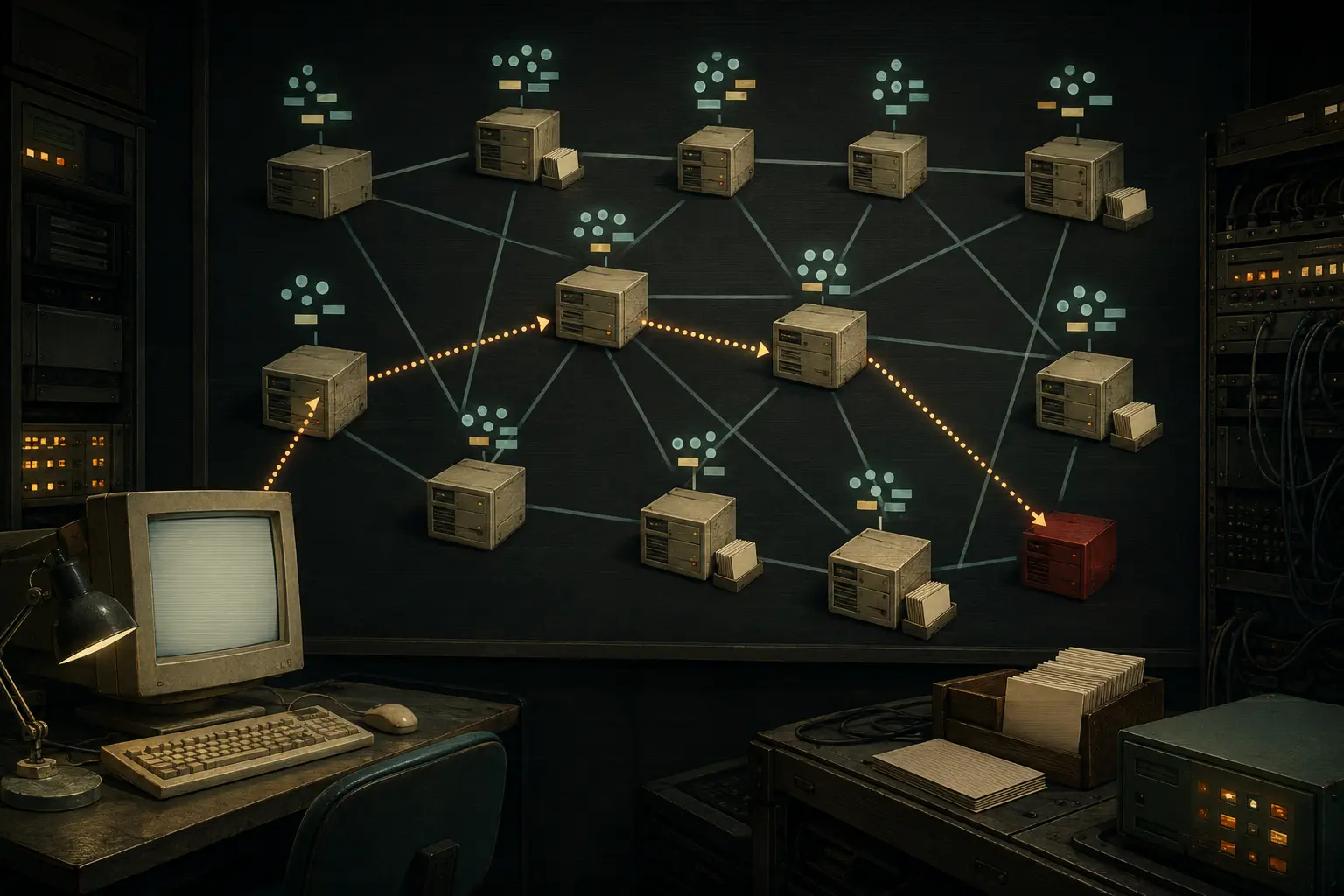
The Mesh Had No Root. The Client Paid for Completeness: RFC 1914
Two clients could ask the same question and return with different directories. One stopped after a nearby server answered; the other followed referrals through a larger graph. RFC 1914 made that divergence legible: completeness was not a property printed on the first reply. It…
History
The Index Knew the Word Existed. It Still Did Not Know the Answer.
Put three directory records through a Whois++ centroid and something peculiar happens. The word “Smith” survives, but the two people who carried it disappear. So do frequency, co-occurrence, order and the path by which either record was maintained. In 1996, that deliberate loss…

Global Cloud Services
Kentik and the data engine that turns network flows into evidence
Kentik’s network-intelligence platform depends on a proprietary analytical engine designed to retain large volumes of telemetry, add routing and business context, and return historical answers quickly enough to guide operations. Kentik Data Engine gives network teams a searchable…

History
The Traceroute That Asked Every Hop to Write Back
Conventional traceroute makes the sender knock on the network’s doors one distance at a time. RFC 1393 proposed a more ambitious bargain: send one marked packet, and ask every router it crosses to mail back a report.

CASE FILE
A Key Transparency Tombstone Does Not Retire the Old Log
The migration model in the KEYTRANS architecture gives an old log a precise job: point each label toward its newer home without letting an outage revive stale data. That marker solves lookup order. It does not prove that offline clients have finished monitoring the old history…

History
The Packet That Asked Every Router to Stop and Look: IPv4 Router Alert
A packet can cross a router without being addressed to it. IPv4 Router Alert gave that passing packet a way to ask for exceptional attention—and thereby turned attention itself into a resource that networks had to defend.

History
The Four Bytes That Outlived Their Network: IPv4’s Stream Identifier
One IPv4 option was exactly four bytes long and carried a name from a network concept already slipping into history. Stream Identifier shows how a protocol field can stop doing useful work long before standards formally retire it.

History
The Mailbox Accepted the Voice. It Could Still Forget the Message: RFC 1911
A voice mailbox could accept an Internet message, store its sound and still forget part of what made it an Internet message. RFC 1911 did not hide that cost. Its minimum profile joined telephone-keypad systems to MIME and ESMTP while exposing the distance between accepted bytes…