
Topic
Software Lifecycle and Lock-in
Within the Topic facet, Software Lifecycle and Lock-in topic intelligence connects articles that share a specific subject, signal focus, or monitoring theme. The page gives readers a richer path through related reporting, source evidence, market actors, and infrastructure implications, with enough context to understand why the topic matters across company movements, governance decisions, regional exposure, and operational risk. Readers can compare recurring signals, affected organisations, public evidence, market context, service continuity, procurement, competition, compliance, and strategic planning questions behind the subject instead of stopping at a thin list of matching articles. It explains what the topic covers, which infrastructure actors or policies are involved, what evidence supports the coverage, and why the subject may matter for operators, customers, investors, and policy readers.

History
The Four Bytes That Outlived Their Network: IPv4’s Stream Identifier
One IPv4 option was exactly four bytes long and carried a name from a network concept already slipping into history. Stream Identifier shows how a protocol field can stop doing useful work long before standards formally retire it.

History
The Mailbox Accepted the Voice. It Could Still Forget the Message: RFC 1911
A voice mailbox could accept an Internet message, store its sound and still forget part of what made it an Internet message. RFC 1911 did not hide that cost. Its minimum profile joined telephone-keypad systems to MIME and ESMTP while exposing the distance between accepted bytes…
History
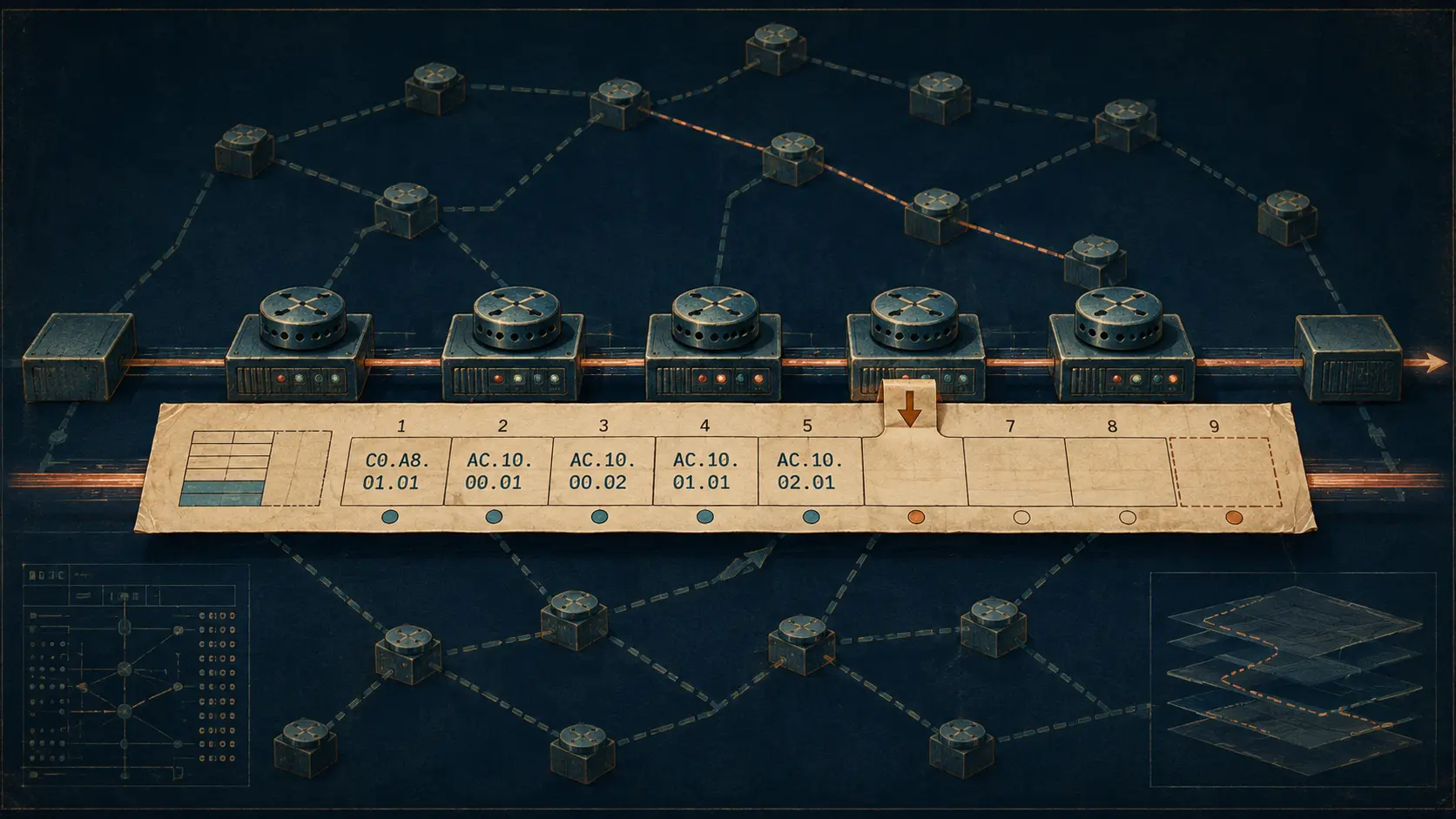
The Address Book a Packet Filled Along the Way: IPv4’s Record Route Option
IPv4 once let a packet carry an empty address book. Routers could add their own addresses as it passed, turning forwarding into a voluntary act of testimony. The bytes were exact; the resulting story of the path was not.

Global Cloud Services Trends
Domo’s US$410.8m RPO Cannot Be Netted Against Its Debt Clock
Domo entered July’s quarter-end with two large numbers that should never be placed in the same liquidity column. The cloud-software company reported US$410.8 million of remaining performance obligations, yet it held US$25.1 million of cash against US$138.3 million of loan…

History
The Clock a Packet Asked Routers to Sign: IPv4’s Internet Timestamp Option
IPv4 once gave a datagram a small ledger and asked machines along its path to write down the time. The Internet Timestamp option was precise about the writing procedure, but far less powerful as evidence than its name suggested. Its history shows how a cooperative diagnostic…

History
The Address Changed. The References Did Not: RFC 1900 and the Hidden Cost of Renumbering
In 1996, the Internet Architecture Board described a task that sounded almost clerical: replace one set of IP addresses with another. Then RFC 1900 followed the old numbers out of the router and into configuration files, applications, licences and human-maintained lists. The…

CASE FILE
The Draft Was New. Its Dependency Had Expired Six Years Earlier
Revision 09 gave an L2VPN snooping draft a fresh date without changing its mechanism. The document can still be useful, but its own import graph shows why leaders must demand an executable dependency receipt before treating standards activity as implementation readiness.

History
The Old Address Fit Inside IPv6. Its Routing Model Did Not: RFC 1888
A twenty-octet address can be placed beside a sixteen-octet one, sliced, tagged and reconstructed. That arithmetic says nothing about whether the route hierarchy survives the move. RFC 1888 recorded this distinction in 1996: its encodings could preserve address bits, while the…
History
The Test Address Came With Its Eviction Notice: RFC 1897 and the 6bone
In 1996, an IPv6 address could be useful, globally coordinated and routable across an experimental backbone while still carrying no promise of permanence. RFC 1897 made that distinction explicit: its addresses were for prototype testing, would be reclaimed and required their…

CASE FILE
A Celestial Name Is Not a Network Address: The Authority Split TIPTOP Has to Preserve
One entity can be discovered under a temporary tag, receive several provisional designations, gain a permanent number and acquire a name years later. A route cannot afford to mistake any one of those labels for proof of where a packet should go.

History
The Route the Sender Tried to Choose: How IPv4 Source Routing Lost Its Default Trust
IPv4 once carried a small, mutable itinerary inside the packet itself. The history of source routing is the history of how that sender-supplied path changed from a protocol feature into an explicitly configured exception.

History
The Peer Returned a DNS Address. It Had Not Proved Names Would Resolve: RFC 1877
The useful answer in a 1995 dial-up exchange could begin with a deliberately useless address. A PPP client placed zero in an IPCP name-server option precisely so the remote peer would reject the value and suggest another. That suggestion could become negotiated configuration only…

IETF
JOSE Sends Two Algorithms Toward Deprecation Without a Clock for Local Exceptions
The JOSE Working Group has asked the IESG to publish a draft that would deprecate `none` and `RSA1_5`. The document draws a sensible line between a safer common default and narrowly retained local choice. The unresolved operating question is how a permitted exception stops…

CASE FILE
A Deprecation Date Is Not a Client Migration Plan
The response is still `200 OK`, but it now carries a date after which the resource will be deprecated. That date can warn a client. It cannot identify who owns the client, whether a replacement preserves its assumptions, or what must be true before the old endpoint can be…

History
The Address That Meant Everyone: How IPv4 Broadcasts Chose Ones Over Zeroes
IPv4 did not gain broadcasting through a new flag. It gained it by teaching hosts and gateways that some destination values did not name one machine at all. A field of ones came to mean everyone within a scope, while receivers carried an awkward obligation to understand the…

CASE FILE
The IAB Gave Post-Quantum Authentication Evidence Another Week. It Still Needs a Chain of Custody
The extended deadline invites one more week of operational evidence. The harder task begins after a paper arrives: keeping measurements, disclosure choices, workshop synthesis and eventual standards work from collapsing into one unsupported claim.

History
The Bit That Made Routers Report Their Limits: IPv4 DF and Path MTU Discovery
One IPv4 flag began as a prohibition: do not split this datagram. Path MTU Discovery turned that refusal into a measurement loop. An oversized packet would be discarded, a router would report the narrow link, and the source would learn what the path could carry—provided the error…

History
Readable Without a Parser Did Not Mean Safe to Parse: RFC 1874
In 1995, one MIME label tried to preserve two truths about the same structured document. A person without SGML software might still read its general meaning; a machine with SGML software might interpret far more than the visible lines. RFC 1874 called the first case `text/sgml`…

CASE FILE
A security.txt File Needs a Live Disclosure-Channel Receipt
The `Expires` line says the coordinates are still publishable. It cannot tell a researcher whether anybody is listening. That gap between a fresh file and a working response operation is where a small disclosure-channel receipt becomes useful.

CASE FILE
The Message Was Encrypted. Its Headers Still Needed Their Own Receipts: RFC 9788
An encrypted-mail badge compresses a complicated evidence chain into one reassuring symbol. RFC 9788 shows why the symbol cannot answer which header was hidden, which sender identity was authenticated, what an intermediary changed, or where a reply may safely go.