
Topic
RPKI and Route Security
Within the Topic facet, RPKI and Route Security topic intelligence connects articles that share a specific subject, signal focus, or monitoring theme. The page gives readers a richer path through related reporting, source evidence, market actors, and infrastructure implications, with enough context to understand why the topic matters across company movements, governance decisions, regional exposure, and operational risk. Readers can compare recurring signals, affected organisations, public evidence, market context, service continuity, procurement, competition, compliance, and strategic planning questions behind the subject instead of stopping at a thin list of matching articles. It explains what the topic covers, which infrastructure actors or policies are involved, what evidence supports the coverage, and why the subject may matter for operators, customers, investors, and policy readers.

Global Cloud Services
Cloudflare's route-leak response made verifiable repair more important than reassurance
Cloudflare's June 2019 route-leak outage was a reminder that a company can run resilient edge infrastructure and still depend on the routing discipline of networks it does not control. The public accountability lesson is not simply that Verizon and a smaller network propagated…

Global Cloud Services
Cloudflare, the June 2019 route leak, and accountability beyond the network edge
For a little more than two hours, routes intended to improve traffic inside one regional network escaped into the global routing system and pulled part of Cloudflare's anycast traffic toward links that could not carry it. The incident shows why network resilience cannot stop at…

Global National Telecom
Pakistan Telecom and the YouTube route hijack that escaped a national filter
The 2008 YouTube route hijack began as a national blocking instruction and became a global routing failure because the internet's control plane accepted a more specific announcement from the wrong origin. Pakistan Telecom originated a route for part of YouTube's address space.…

Europe and Middle East Institutional
NLnet Labs sells no boxes but anchors the DNS software economy
NLnet Labs is not a hardware vendor, access provider, cloud platform or registry. Its market weight comes from something less visible and more structural: a small Dutch public-benefit foundation maintains open-source DNS and routing-security software that operators, registries…

Story
ARIN and the economics of ROA revocation risk
RPKI made route-origin authority easier for machines to verify, but it also made registry decisions part of the operating risk around scarce IPv4 capital. In the ARIN region, the danger is not that Route Origin Authorizations exist; they are among the more useful safety…

Story
ARIN and the economics of RPKI governance risk
RPKI makes routing safer by letting resource holders publish cryptographic route-origin authority, but the same trust chain can make ARIN account control, agreement status, hosted-service dependence, transfer timing and revocation rules part of IPv4 continuity risk unless…

Story
AFRINIC ROA revocation and the need for notice, cure and appeal
A small routing-security record can become a large economic event when the registry behind it is under institutional stress. AFRINIC is a test case for how route-origin assurance can protect networks, and how the same assurance layer can become an operational shock if notice…

Story
The governance risk inside AFRINIC's RPKI layer
AFRINIC is examined through RPKI governance risk as a registry-governance and institutional-economics problem for the Africa region.
Asia-Pacific Regional ISP
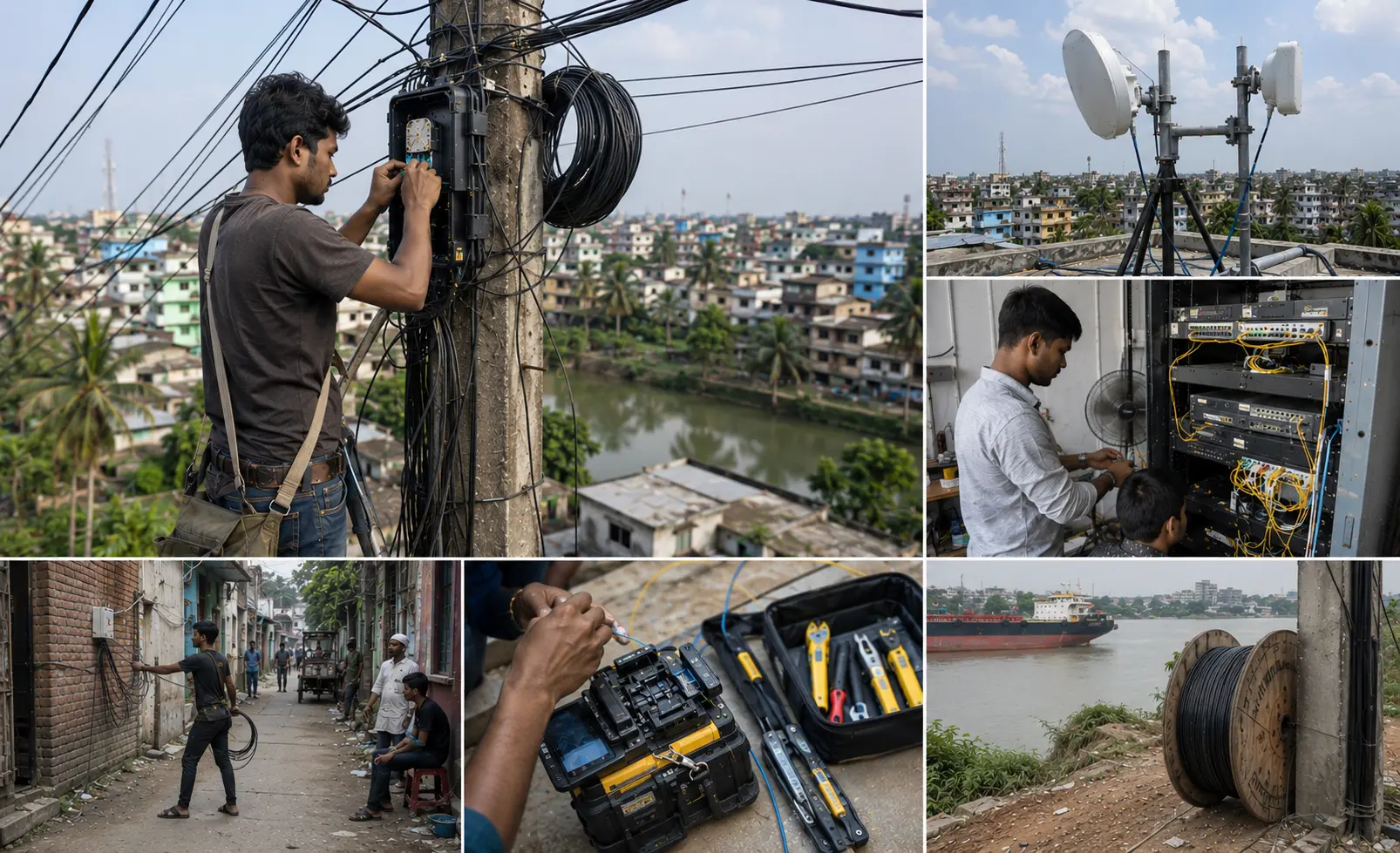
The ISP visible in the faint corporate shadow: FNB Network, routing economics and legal opacity in the Dhaka last-mile broadband market
The ISP visible in the faint corporate shadow: FNB Network, routing economics and legal opacity in the Dhaka last-mile broadband market intelligence summary explains the development, the public evidence available to readers, the organisations involved, the regional context…

People
Why ISPs should manage IPv4 as a governed right, not real estate
Scarcity gives IPv4 addresses economic value, but registry policy, contracts and routing controls make them unlike land. Operators need an evidence-led inventory, not a property-price story.