
Topic
Network-resource Evidence
Within the Topic facet, Network-resource Evidence topic intelligence connects articles that share a specific subject, signal focus, or monitoring theme. The page gives readers a richer path through related reporting, source evidence, market actors, and infrastructure implications, with enough context to understand why the topic matters across company movements, governance decisions, regional exposure, and operational risk. Readers can compare recurring signals, affected organisations, public evidence, market context, service continuity, procurement, competition, compliance, and strategic planning questions behind the subject instead of stopping at a thin list of matching articles. It explains what the topic covers, which infrastructure actors or policies are involved, what evidence supports the coverage, and why the subject may matter for operators, customers, investors, and policy readers.

Global Regional ISP Trends
IPv6 Extension Headers Are Becoming a Path-Compatibility Tax
The address answers. Ping works. Then the transport header moves 64 bytes deeper into an otherwise valid IPv6 packet, and the path goes quiet. Basic reachability survived; optional capability met the smallest parser on the route. It is a compact demonstration of how a protocol…
CASE FILE
The Public Path Looked Cleaner. Its History Had Been Rewritten: BGP Private-AS Removal and the Authority to Erase a Hop
The customer route arrived with three private autonomous systems in its path. At one public exit they vanished. At another, one survived. At a third, all three returned wearing the provider's number. Each operator had configured something called private-AS removal. The public…
History
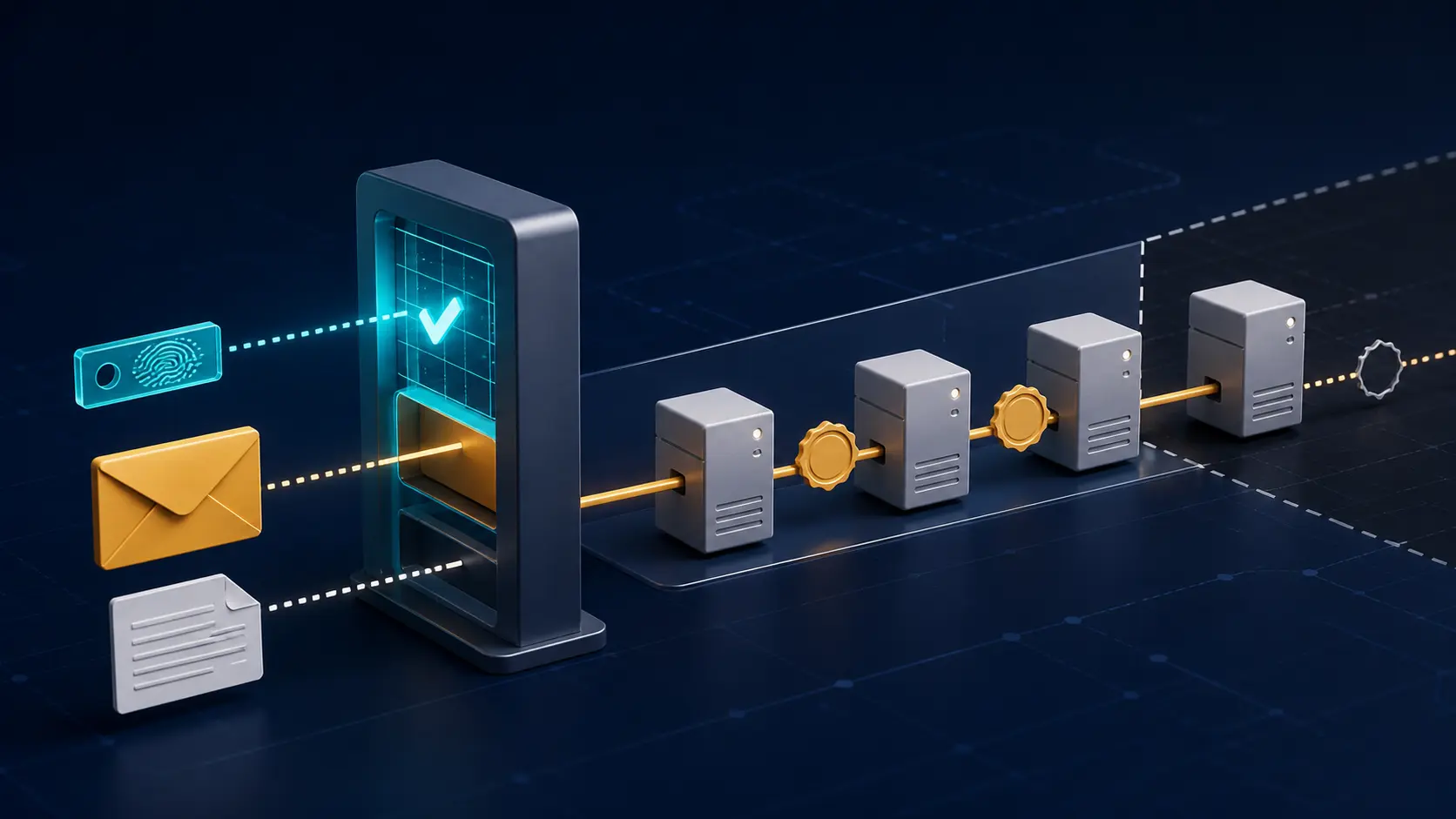
The Credential That Could Not Sign the Message: How SMTP AUTH Bounded Submission Identity
A password could open a mail submission gate. It could not sign the letter that passed through it. SMTP AUTH became useful precisely because the protocol kept those propositions apart: this client authenticated here; this account may act in certain ways; this message claims a…

Academics
Laurent Vanbever and the network that must be tested while it changes
Laurent Vanbever’s work treats network configuration as executable software whose failures can emerge before, during or after deployment. From safe routing migrations and configuration synthesis to runtime BGP detection and energy-aware operations, his research at ETH Zurich asks…

History
The Address That Could Not Be Downgraded: How SMTPUTF8 Made the Route Part of the Name
An accented display name could cross old email systems because it was decoration around an ASCII address. A non-ASCII mailbox name was different: it was the destination itself. SMTPUTF8 made every relay prove that it could carry that identity without inventing another one.
Academics
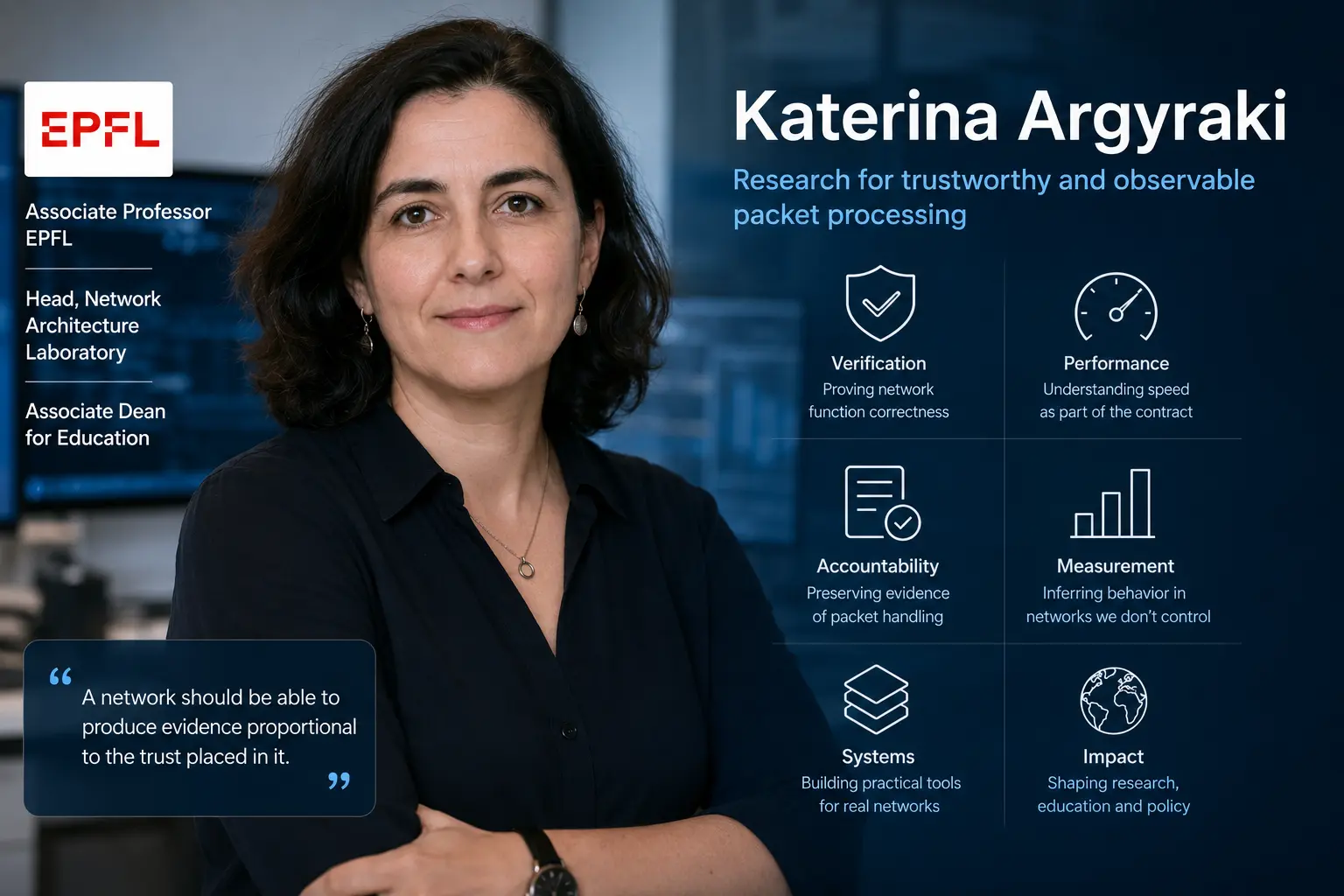
Katerina Argyraki and the search for proof in packet forwarding
Katerina Argyraki’s research follows a problem that becomes harder as networks become more programmable: a packet-processing system may be fast and flexible, yet operators and users often have little evidence that it behaved correctly. Her work at EPFL connects software-router…

Global National Telecom Trends
Meta files for Aurora US-Denmark subsea cable
Meta’s 7,268km Aurora cable would link New Jersey and Denmark with 24 fibre pairs, while launch capacity remains undecided.

Creators
Dave Maltz and the operating stack behind Azure networking
Dave Maltz’s role at Microsoft is best understood through the breadth of the organisation he leads. Azure Networking spans customer-facing services, DNS, security, distributed control, host offload, switch software, data-centre fabrics, wide-area links and optical systems. That…

History
The Receipt That Could Not Promise Delivery
SMTP DSN turned the bounce into structured evidence while preserving a crucial limit: a sender could request a report, but no receipt could promise more than the reporting system had observed.
CASE FILE
The Tag Fit. The Authority Did Not: BGP Large Communities and the Namespace That Executes Policy
The route carried exactly the value the interconnection handbook prescribed. One provider acted on it, another erased it, and a third would have accepted the same instruction from a party that had never been authorized to give it. Twelve octets solved the numbering problem. They…

Global Institutional
BIRD and the routing policy engine behind internet exchanges
The BIRD Internet Routing Daemon grew from a Czech university project into a control-plane system used in demanding routing environments, including internet exchanges where policy is concentrated and operational mistakes can spread quickly. Its history shows how open routing…
CASE FILE
The Route That Knew Nothing and Reached Everything: BGP Default Origination and the Authority of Last Resort
A customer still had an Established BGP session, a selected `0.0.0.0/0` and several successful probes. Most of the Internet had nevertheless become unreachable. The route with the widest scope had survived the loss of the service it was supposed to summarize.

History
The Eighth Bit Needed Permission at Every Hop: How 8BITMIME Changed SMTP
Email could describe an accented character long before every relay could carry its bytes unchanged. 8BITMIME made that mismatch visible: a server had to promise capability on this hop, and acceptance created a duty to keep every bit.
CASE FILE
The Path Was Shorter Because the Evidence Was Gone: BGP ATOMIC_AGGREGATE and the Authority to Compress
The `/22` remained visible, its origin stayed valid and every external session was green. One of the four `/24`s beneath it had nevertheless disappeared. The public path looked cleaner at precisely the moment when the network knew less about the destinations it claimed to reach.

History
The Commands Sent Before Their Answers Arrived: How SMTP PIPELINING Changed the Wait
Early SMTP made a sender pause after nearly every command. On a distant link, the message could spend more time waiting for permission to continue than moving. PIPELINING shortened that silence, but only by making order—not wording—the ledger of unfinished work.
CASE FILE
The Internet Saw One AS. Operations Had Twelve: BGP Confederations and the Authority of a Hidden Topology
The public route never changed. External peers still saw AS 64500, the sessions remained Established and the prefix stayed visible in collectors. Inside the network, however, one router had crossed from Member-AS 65021 to 65031 while its neighbor still believed the old boundary.…

History
The Method That Refused to Be Misunderstood: Why HTTP 510 Existed
RFC 2774 tried to stop servers returning success after ignoring mandatory HTTP extensions. The fate of 510 shows the cost of verifiable semantics.
CASE FILE
The Router Could Not Read the Attribute, So It Forwarded It: BGP's Partial Bit and the Authority of Ignorance
This technical explainer opens with a constructed operating scenario, not a reported incident. The transit router does exactly what the protocol asks: it receives a route carrying an optional transitive attribute it does not understand, preserves the opaque bytes, sets Partial…

History
The Message Measured Before It Moved: How SMTP SIZE Made Refusal Early
Early SMTP could carry a large message all the way to a server before learning that the server would never keep it. The SIZE extension did something narrower than guaranteeing delivery: it let two relays compare a declared load with local capacity before paying the full transfer…
CASE FILE
The Prefix Was IPv4; the Way There Was IPv6: RFC 8950 and the Authority of a Cross-Family Next Hop
In an illustrative migration scenario, the maintenance report says the IPv6-underlay change succeeded. Every BGP session is Established, capability 5 appears in both OPEN messages, and the IPv4 prefixes remain visible. Yet one rack cannot reach an IPv4 customer. The route exists…