
Topic
Network-resource Evidence
Within the Topic facet, Network-resource Evidence topic intelligence connects articles that share a specific subject, signal focus, or monitoring theme. The page gives readers a richer path through related reporting, source evidence, market actors, and infrastructure implications, with enough context to understand why the topic matters across company movements, governance decisions, regional exposure, and operational risk. Readers can compare recurring signals, affected organisations, public evidence, market context, service continuity, procurement, competition, compliance, and strategic planning questions behind the subject instead of stopping at a thin list of matching articles. It explains what the topic covers, which infrastructure actors or policies are involved, what evidence supports the coverage, and why the subject may matter for operators, customers, investors, and policy readers.

Story
The Check Before the Allocation: What AFRINIC Resolution 201411.214 Did—and Did Not—Authorise
On 25 November 2014, AFRINIC's Board recorded a unanimous decision giving its chief executive discretion to use available methods to authenticate resource-allocation applications. Yet the institution left two materially different public traces of that act. Its Board register…

Europe and Middle East Cloud Services Trends
PerfGrid and the Infrastructure Evidence Behind Hosting
Hosting is often sold as a single service, but it is delivered through several control layers: company responsibility, server operation, address and routing records, name service, caching, suppliers, facilities, monitoring and recovery. PerfGrid’s public record offers a useful…

Asia-Pacific Regional ISP Trends
PXNET’s two ASNs need two evidence lines
PXNET’s two ASNs need two evidence lines intelligence summary explains the development, the public evidence available to readers, the organisations involved, the regional context, market exposure, and the infrastructure consequences that may follow. The Asia-Pacific Regional ISP…

Europe and Middle East Regional ISP Trends
INTERBIT’s ASN does not prove hosting control
INTERBIT’s ASN does not prove hosting control intelligence summary explains the development, the public evidence available to readers, the organisations involved, the regional context, market exposure, and the infrastructure consequences that may follow. The Europe and Middle…

Africa Institutional
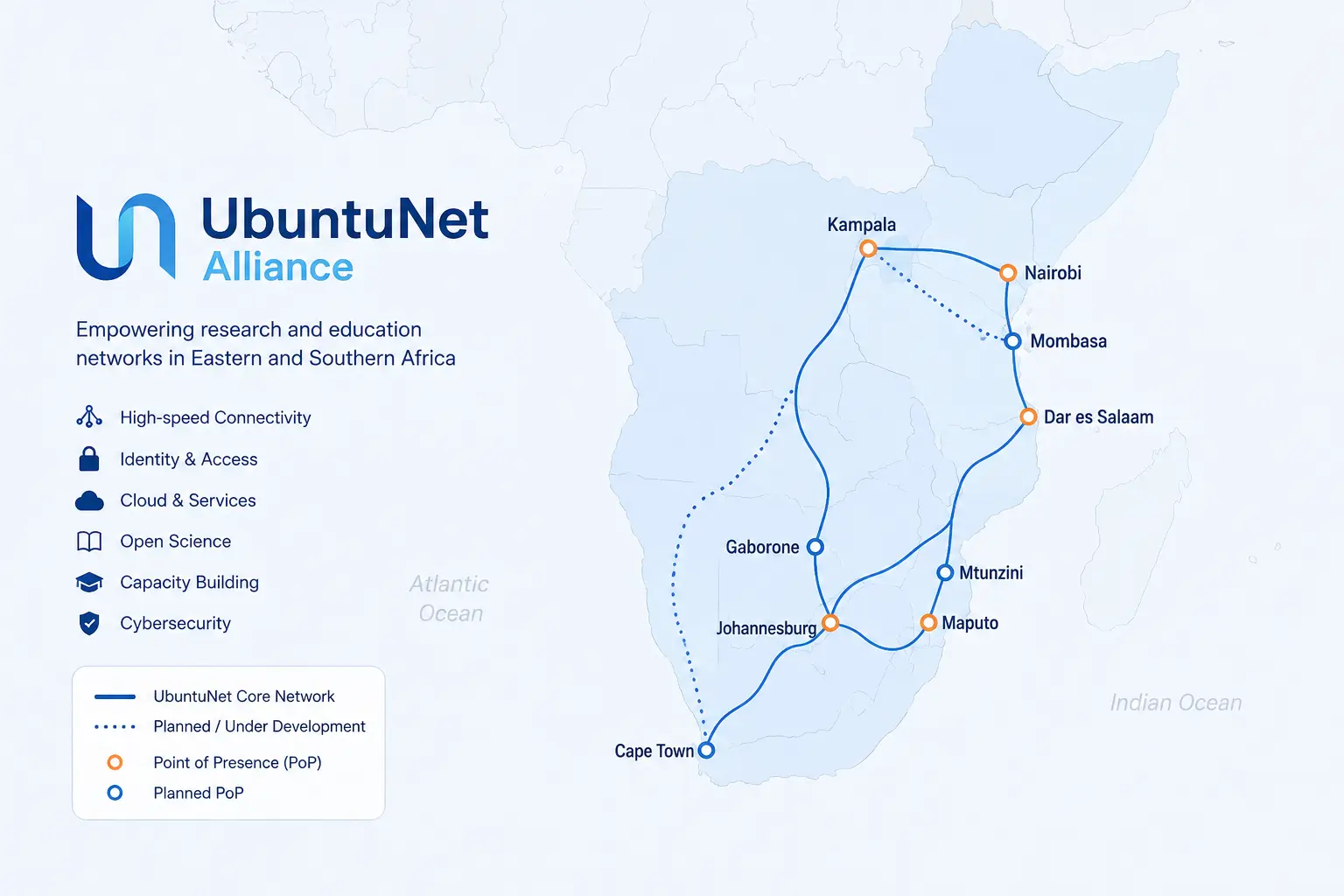
UbuntuNet’s 10 Gbps Core Network Constrained by Campus Endpoints
UbuntuNet’s 2023 report says core links were upgraded from around 2.5 Gbps to 10 Gbps, and new points of presence plus peering were added. Translating this regional upgrade into research capacity, however, depends on national research networks, campus systems, commercial…
Africa Institutional
UbuntuNet’s 10 Gbps core still depends on the campus edge
UbuntuNet’s 2023 report described core links upgraded from about 2.5 to 10 Gbps, along with new points of presence and peering. This regional gain only reaches researchers when national networks, campus systems, operators and recurrent funding can sustain it after each…

Asia-Pacific Regional ISP Trends
PXNET and the Records Behind Network Operations
PXNET appears in public records through more than one network identifier and through several evidence systems that answer different operational questions. Read carefully, those records show how registry entries, operator-maintained directories, observed routing and origin…

Academics
Every network metric needs a failure model
Nick Feamster’s work made configuration, broadband and censorship measurable. A metric becomes operational evidence only when it states how it can be wrong.

Africa Institutional
The campus edge is UbuntuNet’s service floor
A 10 Gbps regional core cannot improve research sessions that terminate behind a constrained campus circuit, firewall, Wi-Fi network or power supply.
Africa Institutional
Backbone capacity needs an adoption ledger
UbuntuNet’s move from roughly 2.5 to 10 Gbps is a regional input. Its value depends on which universities can actually use the added capacity and keep paying for it.

Africa Institutional
Campus capacity needs a renewal clock
UbuntuNet’s 10 Gbit/s core can outlive campus routers, optics, firewalls, batteries and support contracts. Capacity erodes when replacement dates remain implicit.
Africa Institutional
Regional support needs an incident-authority map
UbuntuNet can observe and coordinate a regional path, but a campus, national network or carrier may hold the change right needed to restore it.

Number Resource Society
Two ASNs require two evidence lines
Two ASNs require two evidence lines intelligence summary explains the development, the public evidence available to readers, the organisations involved, the regional context, market exposure, and the infrastructure consequences that may follow. The Number Resource Society…

Europe and Middle East Regional ISP Trends
INTERBIT and the Boundaries of Network Identity
A company name can appear to offer a simple answer to a network question. In practice, the identity behind an Internet service is distributed across legal records, number-resource registries, declared routing policy, observed routes, service descriptions and the equipment that…
North America Institutional
A school-district ASN needs a narrow reading
A school-district ASN needs a narrow reading intelligence summary explains the development, the public evidence available to readers, the organisations involved, the regional context, market exposure, and the infrastructure consequences that may follow. The North America…
North America Regional ISP
Regional connectivity needs an operating chain
Plateau Telecommunications shows why coverage depends on paths, power, staff, equipment and visible regulatory milestones working together.

Global National Telecom
Arelion needs a renewal scorecard
Tier-1 independence is durable only when capacity, suppliers, security and investment renew together.
Global Regional ISP Trends
PacketExchange records need a current clock
Legal, registry and interconnection records can identify PacketExchange without showing what its network does now.
Academics
Network observation is not causation
Nick Feamster’s tools made hidden faults visible across routing, spam, broadband and censorship. Measurement still needs a causal boundary.
Academics
Network tools need reproducible limits
A useful checker can reveal hidden configuration faults. Its result remains trustworthy only when others can reproduce its scope and misses.