
Topic
Cloud Service Dependency
Within the Topic facet, Cloud Service Dependency topic intelligence connects articles that share a specific subject, signal focus, or monitoring theme. The page gives readers a richer path through related reporting, source evidence, market actors, and infrastructure implications, with enough context to understand why the topic matters across company movements, governance decisions, regional exposure, and operational risk. Readers can compare recurring signals, affected organisations, public evidence, market context, service continuity, procurement, competition, compliance, and strategic planning questions behind the subject instead of stopping at a thin list of matching articles. It explains what the topic covers, which infrastructure actors or policies are involved, what evidence supports the coverage, and why the subject may matter for operators, customers, investors, and policy readers.

Global Regional ISP
INCOMPLAST SERVICE LLC and the support economics behind regional connectivity
INCOMPLAST SERVICE LLC has the public signs of a real Ukrainian regional connectivity operator, but its margin test is not whether it can announce routes; it is whether each paid account covers the people, suppliers, repairs, power resilience and replacement capital that make…

Europe and Middle East Regional ISP
AREAL. REGIONAL CENTER LIMITED LIABILITY COMPANY and the cash-flow test behind local network reliability
One paying account is enough to show the economic problem: the fee attached to a regional service center must carry supplier bills, support labor, resource governance, security controls, compliance work and the renewal capital needed to keep distant industrial sites reachable.
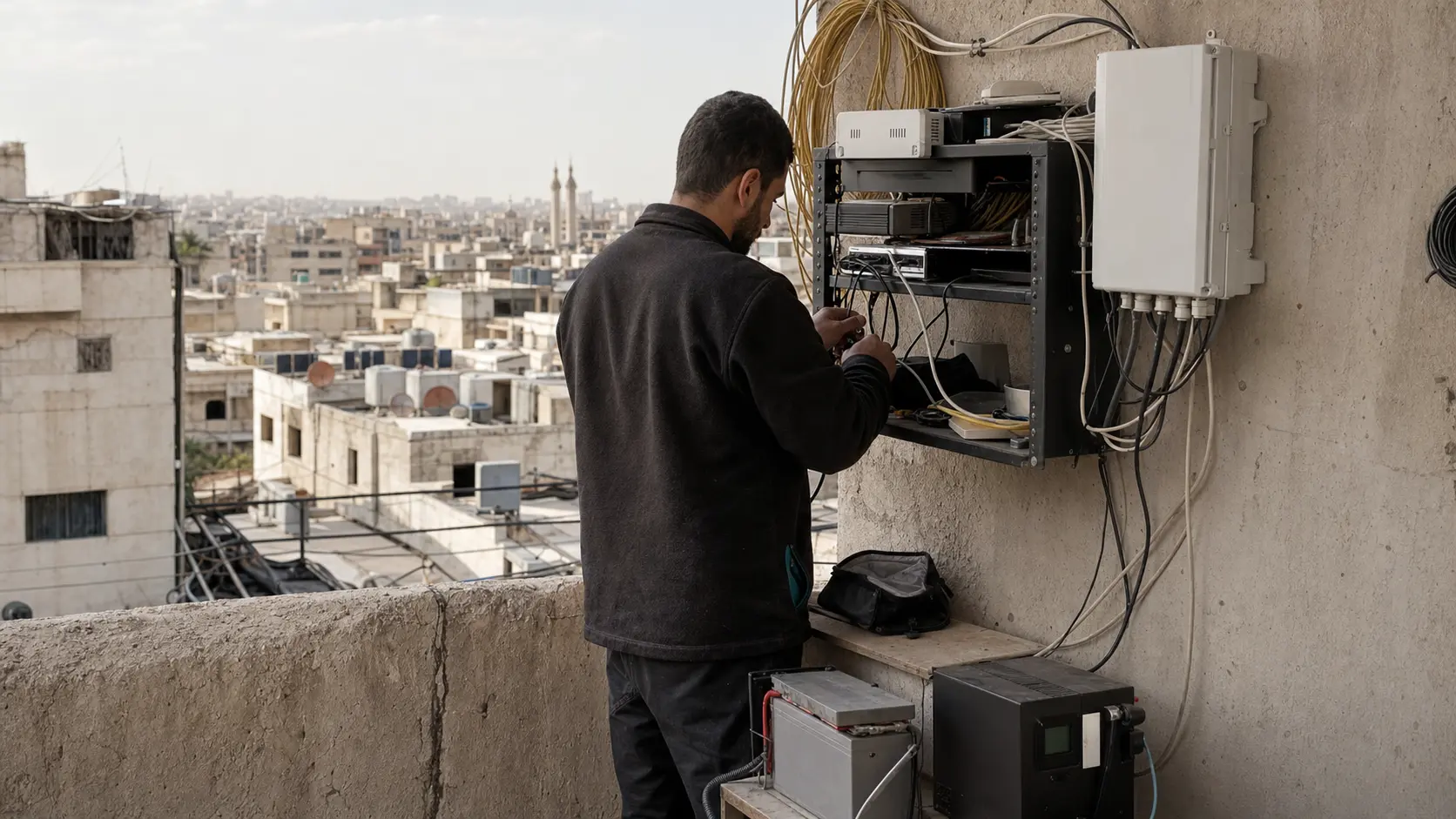
Europe and Middle East Regional ISP
Arnouk and Lady Partner Company Microsolutions and the cash-flow test behind local network reliability
A small Syrian number-resource holder can look technical at first glance, but the real question is commercial: whether enough paying accounts can fund wholesale connectivity, support labor, resource governance, compliance, and renewal capital without turning reliability into an…

Global Regional ISP
ARS-INFORM LLC and the cash-flow test behind local network reliability
One monthly subscriber fee in Tashkent has to carry more than bandwidth: it has to fund upstream capacity, field repair, customer support, network rights, compliance, equipment renewal and the risk that a larger provider can cut the same bill below a smaller operator's comfort…

Europe and Middle East Regional ISP
ArtPlanet LLC and the cash-flow test behind local network reliability
ArtPlanet LLC is a small Saint Petersburg hosting and network-services company whose economics depend on a simple but unforgiving bargain: customers pay a recurring fee because downtime, slow repair, abuse handling, server migration and Russian data-location constraints cost more…

Global Regional ISP
Ascania Group LLC and the cash-flow test behind local network reliability
A Ukrainian operating group that keeps payment terminals, warehouses, energy accounts, distribution offices and management systems online is buying more than a line item called internet access; it is buying continuity under supplier pressure, power disruption, regulatory friction…

Global Regional ISP
ASTOR TRADING LLC and the cash-flow test behind local network reliability
ASTOR TRADING LLC sits in the part of the Ukrainian connectivity market where reliability is less a slogan than a margin test: can a small resource-holding company make customers pay enough for reachable support, local repair, abuse handling and continuity to cover the hard costs…

Global Regional ISP
Astra-Lviv LLC and the cash-flow test behind local network reliability
Astra-Lviv LLC looks less like a speculative network story than a practical operating question in Lviv: whether a local provider can charge enough for speed, service reachability, backup power, field repair and abuse handling to keep reliability from becoming an unfunded promise.

Europe and Middle East Regional ISP
AVK-computer ltd and the cash-flow test behind local network reliability
AVK-computer ltd looks small beside Russia's national carriers, but its public footprint raises a harder commercial question than scale alone: whether a local operator can turn reachable support, nearby repair, number-resource control and Moscow Oblast access into enough…

Europe and Middle East Regional ISP
AvtoGERMES-Zapad, LLC and the cash-flow test behind local network reliability
AvtoGERMES-Zapad, LLC sits in an uncomfortable but useful category for telecom economics: it has the public number-resource footprint of a small network holder, while its visible commercial identity is an automotive retail and service business. That makes the strategic question…

Europe and Middle East Regional ISP
Axiomatika LLC and the cash-flow test behind local network reliability
Axiomatika LLC sits at an awkward but useful point in the telecom-economics map: the public number-resource record points to a Russian local Internet registry footprint, while the company’s own public selling motion is concentrated in decisioning, borrower-data integration and…

Europe and Middle East Regional ISP
Azimut-R Ltd. and the cash-flow test behind local network reliability
Azimut-R Ltd. is best understood as a local reliability business, not as a scale technology story: its value depends on whether households and small firms in and around Pushkino will pay enough for reachable support, repair work and local continuity to cover the hard costs of…

Europe and Middle East Regional ISP
BANQ TECH BILGI VE ILETISIM TEKNOLOJILERI LIMITED SIRKETI and the cash-flow test behind local network reliability
BANQ TECH BILGI VE ILETISIM TEKNOLOJILERI LIMITED SIRKETI is visible in public network-resource records, but the harder commercial question is not whether it can hold numbers. It is whether a small Turkish operator can convert scarce addresses, routing know-how and reachable…

Europe and Middle East Regional ISP
BATI EGE BILISIM VE ILETISIM HIZMETLERI SANAYI VE TICARET LTD.STI. and the cash-flow test behind local network reliability
BATI EGE BILISIM VE ILETISIM HIZMETLERI SANAYI VE TICARET LTD.STI. sits in the awkward middle of Turkey's access market: it has the regulatory and number-resource footprint of an independent operator, a retail brand that sells household connectivity on familiar national…

Global Regional ISP
Bellnet Limited and the cash-flow test behind local network reliability
Bellnet Limited is easiest to misread as a small network name attached to a larger Maltese technology group, but the commercial question is sharper than the label: whether local reliability, reachable support and controlled network resources can be sold at prices that cover…

Global Regional ISP
"BILHORODNET" Limited Liability Company and the cash-flow test behind local network reliability
Local broadband reliability is sold as a simple household promise: the line works, support answers, and someone can repair the drop when weather, power cuts or damaged infrastructure interrupt service. For "BILHORODNET" Limited Liability Company, the commercial question is…

Europe and Middle East Regional ISP
Bilintel Bilisim Ticaret Limited Sirketi and the cash-flow test behind local network reliability
Bilintel Bilisim Ticaret Limited Sirketi sits in the narrow commercial space where local trust, Turkish hosting demand, number-resource stewardship and support responsiveness have to become cash, not just brand language. The company’s public footprint points to a practical…

Europe and Middle East Regional ISP
BILLING SOLUTION Ltd. and the cash-flow test behind local network reliability
BILLING SOLUTION Ltd. sits in the least forgiving part of connectivity economics: customers want the network to feel local, reachable and resilient, while the operator must pay for upstream capacity, satellite or backhaul dependence, field work, regulatory compliance and the…

Europe and Middle East Regional ISP
Bitakat Company LTD and the cash-flow test behind local network reliability
Bitakat Company LTD is easiest to overread if the analysis starts with address space, and easiest to underrate if the analysis ignores what local customers actually buy when a connection fails. The strategic question is not whether a Syrian company can be found in registry…

Europe and Middle East Regional ISP
Biterika Group LLC and the cash-flow test behind local network reliability
Biterika Group LLC sells a practical promise: low-cost Russian cloud servers, hosting, domains and reachable support for customers that would rather rent local infrastructure than build it. The economic question is whether that promise can cover transit, backhaul, field work…