
Time Horizon
Multi-year
Within the Time Horizon facet, Multi-year time-horizon intelligence organises articles by the period over which a signal is expected to matter. The page helps readers distinguish immediate operational changes from longer-cycle governance, investment, standards, and infrastructure shifts that may unfold across quarters or years. It connects timing assumptions with public evidence, related actors, market context, customer exposure, policy pressure, and infrastructure planning so readers can judge whether a development is urgent, strategic, or still waiting on confirming evidence. The page also explains how time horizon changes the meaning of a signal, which organisations may be exposed, and which infrastructure decisions require short-term action or long-cycle monitoring.
IETF
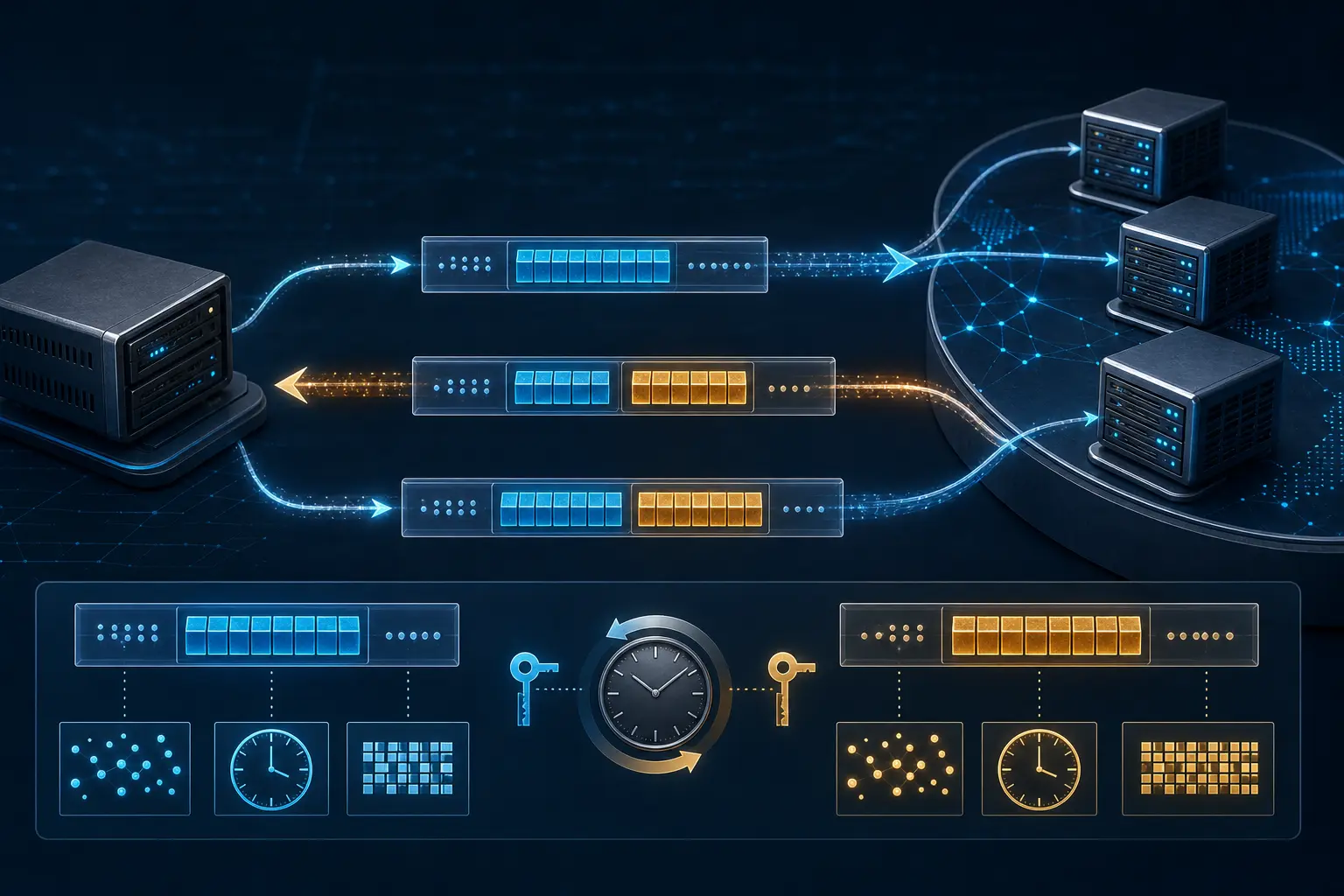
A DNS Cookie Supplies Return-Path Evidence, Not Client Identity
A valid DNS Server Cookie can show that a requester at a source address is returning a value issued in an earlier exchange. That is useful evidence against off-path forgery. It is not a login, a durable device identifier or permission to attach a person’s name to the query.

History
The Same Application Crossed Two Versions. The Proxy Changed the Operation: RFC 1452
The application asked for a bulk retrieval. The old agent never saw one. Between them, a bilingual manager consulted a local database, selected SNMPv1, zeroed two fields and changed the PDU into a single next-step request. RFC 1452 called the result transparent to the…
CASE FILE
The Slice Identifier Reached the Transport Edge. The Guarantee Still Had to Be Built: RFC 9889
RFC 9889 turns 5G network slicing into a chain of accountable translations: the mobile domain can name a slice, but the transport domain must still classify traffic, allocate resources, install state and prove the resulting service.

Leaders
Abdiel Marin and the Workflow Architecture Behind Specialty Eye Care Software
Abdiel Marin built EyeMD EMR around a practical premise: ophthalmology software has to follow the clinic's real work, not force clinicians into a generic record system. His operating decisions connected specialty imaging, interoperability standards, edge computing and patient…
CASE FILE
The Token Arrived Before the Call. Verification Still Had to Wait: RFC 9888
The signed identity token reached the destination service first. The telephone call was still crossing a path that could not carry that token with it. RFC 9888 makes this split useful for legacy networks, but it also leaves an operational obligation: two arrivals on two channels…
History
The Version Number Survived. The Security Framework Did Not: RFC 1441
In one of SNMP's durable historical jokes, the integer `1` in a message wrapper can mean community-based SNMP version 2. The arithmetic is harmless. The assumption it invites is not. A version field tells a receiver how to process a message; it does not, by itself, reveal which…

History
The Alarm Survived. Its Route to the Other Manager Had Expired: RFC 1451
The monitoring station was still sampling. The threshold still meant what its operator had configured. The event definition was still present. Yet the row that told the station how to notify another manager could count itself down to destruction. RFC 1451 made operational…

History
The Username Looked Like a Person. The Namespace Only Promised a Slot: RFC 1439
In 1993, a tidy rule for turning names into email accounts met a problem that no directory card could hide: two people could produce the same string, and a successful delivery could still reach the wrong human. RFC 1439 treated the collision not as clerical untidiness but as a…
CASE FILE
The Secure Channel Failed. The Client Was Not Allowed to Fall Back: RFC 9887
RFC 9887 turns a secure-transport upgrade into a rule about authority: when the protected TACACS+ path fails, reachability of the older path does not authorize the client to use it.

History
The File Arrived. The Recipient Had Not Accepted It: RFC 1440
In 1993, an experimental Internet protocol tried to deliver a file the way a network might deliver a parcel: the sender pushed it without logging into the destination, the receiving host put it aside, and the named recipient decided what to do later. That convenience depended on…

History
The WAN Session Was Up. The End Stations Still Had Two Links: RFC 1434
In an early-1990s network, a terminal could believe it was talking to a distant peer while every acknowledgement it saw came from a router in the same room. RFC 1434 made that split deliberate: keep fragile local link timing local, build another circuit between switches, and…
CASE FILE
The Tag Resolved. The Aircraft Was Not Located: RFC 9886
The reverse-DNS answer arrived in milliseconds: a public key, a registration certificate and a static Remote ID record. The airspace display was still empty. RFC 9886 explains why both screens can be correct — it makes an aircraft-related identifier resolvable without turning…

Leaders
Aaron Moreck and the Network-Service Decisions Behind NaaS and SD-WAN
Aaron Moreck’s public record sits at the operating edge of a regional technology company: network services, customer connectivity, managed firewalls and SD-WAN. The evidence supports a profile of a technical decision surface, not a claim that one director owns every customer…

History
The Route Named a Next Hop. The Link Still Had to Agree: RFC 1433
Two machines could occupy the same data-network service and still be unable to exchange a frame. RFC 1433 began from that uncomfortable fact: routing could identify a shorter next hop, while address resolution and link filters retained the power to make the route usable—or turn…
CASE FILE
The Capability Was Advertised. The Protocol Was Not Authorized: RFC 9885
A zero-length IS-IS capability can be visible on every change-board screen and still be limited public evidence to authorize one configuration command. RFC 9885 makes that limit explicit: the advertisement is management information, not a protocol trigger, while safe MP-TLV…

Leaders
Amit Thapa Chhetri and the Long Build Behind Nepal's Cable Internet
Subisu's origin was not a clean founder myth. The public record instead shows a team testing an idea against a regulatory system that was not yet ready for it, then carrying the operating work forward until the venture became an institution. Amit Thapa Chhetri's role is useful…

Global Cloud Services Trends
GitLab's Supervotes Ended in August. Two Board Seats Run to 2029
Equal votes do not produce a new board overnight. GitLab's conversion to one outstanding class of common stock removed a voting multiplier, while leaving director mandates, meeting access and amendment procedures on different timetables. The distinction matters for anyone…
History
The Interim Fix Bought Time. It Could Spend the Future: RFC 1380
The Internet of 1992 had more than one deadline. Router tables and Class B allocations were under immediate pressure; a larger address space and a richer Internet layer demanded slower architectural work. RFC 1380 refused to hide that mismatch inside one programme. It recommended…

History
The Network Found the Book. It Could Not Keep the Shelf Current: RFC 1432
In March 1993, a bibliography about the Internet carried an unusually revealing provenance: much of its detail had arrived through the Internet itself. The network could help a reader discover a book, yet RFC 1432 also preserved the reasons discovery could never certify the…
CASE FILE
The Path Label Reached the Egress. The Transit Route Stayed Unseen: RFC 9884
One green LSP Ping result can answer a narrow and valuable question: the egress processed a Path Segment Identifier in the control-plane context named by the probe. It cannot reveal the transit route that delivered it. RFC 9884 makes that boundary operationally useful—provided…