
Profile
Research
Research profile intelligence connects person, company, institution, and other entity coverage for readers comparing the subjects behind BTW.MEDIA reporting. The page helps compare public profiles, related events, evidence packs, role changes, operating footprints, governance exposure, organisational links, and market relevance while keeping organisation and people records distinct from ordinary news chronology. Readers can understand the subject behind the headline, the evidence supporting that profile, and the infrastructure or market relationships that make the profile relevant. They can see who or what the profile represents, which public sources support it, how it connects to companies, markets, governance bodies, or events, and what changes may deserve continued attention as the subject evolves.

Asia-Pacific National Telecom Trends
Australia’s $25m test divides carrier levy proof
The 31 October TELLER deadline does not simply sort large carriers from small ones. Australia’s new revenue test sends licensed operators down different evidence routes, and the group perimeter determines who enters the levy pool.

Leaders
Markus Kummer and the IGF Renewal Before Reform
The United Nations renewed the Internet Governance Forum’s mandate in 2010 while a separate review was still gathering proposals for improvement. Markus Kummer’s years coordinating the Forum show why keeping a dialogue open and deciding what it may change are different jobs.

History
64 Terminals Had Not Been Tested Together: ARPANET’s 1972 Public Demonstration
In July, the plan for the October conference still had open questions about terminal capacity, applications, installation, documentation and human help. The public encounter with ARPANET began as an integration job.

History
The Network Was Free. The Internet Had to Pay Its Way: Zambia’s ZAMNET, 1991–95
A university email network reached hundreds through scheduled calls before Zambia had a direct Internet circuit. Turning that shared system into a public service demanded a company, outside financing and a way to pay recurring costs.

Africa National Telecom Trends
Egypt’s smart-city certificate needs a public baseline
Egypt and the ITU have described a national framework and digital platform for assessing smart-city projects. The next test is whether a reader can inspect how a named city was measured, what evidence supported its result and how that result changes over time.

History
IMDb Was Searchable Before It Was a Website: The Usenet Movie Database, 1989–93
The searchable movie database grew out of Usenet lists before it had a website. Its early architecture joined scripts, volunteer maintainers, FTP copies, email queries and, later, a Cardiff web interface.

History
BIND Put DNS Inside 4.3BSD
A distributed name service became a practical part of Unix administration when Berkeley’s BIND arrived as software that operators could configure, run and maintain with the rest of their system.

History
Malawi’s Fidonet Network Turned Call Logs into a Cost per Kilobyte, 1993–94
A university email network in Malawi kept more than messages: its node recorded calls, traffic and telephone bills. Those records let its operator ask what each international kilobyte cost—and what the local phone link could actually deliver.

History
The Union Dissolved. .su Stayed in the DNS Root
When the Soviet Union disappeared, its country-code domain did not vanish with it. The history of .su is a record of several clocks running at once: a root-zone delegation, a new Russian namespace, local registration rules, and the names that organizations still needed to…
Leaders
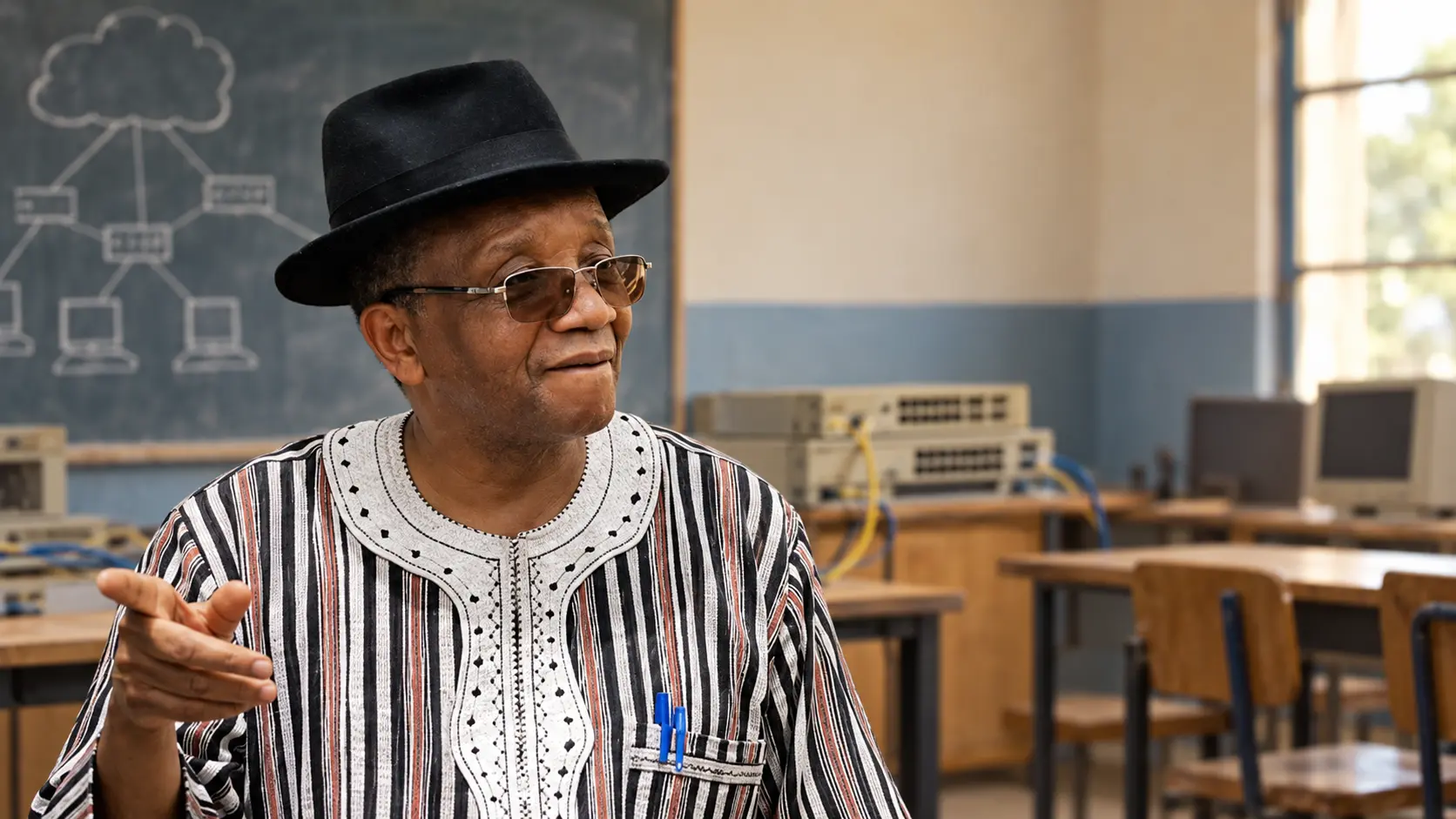
Pierre Ouédraogo and the Training Behind African Internet Governance
A ten-day AFNOG workshop in Lomé brought 53 network engineers from 23 countries into a practical training room. Its design shows how language access and technical instruction can widen participation without turning expertise into a mandate to speak for a continent.

History
The Flag Day Took Two Years: ARPANET’s NCP-to-TCP Transition, 1981–83
The switch from NCP to TCP/IP is often remembered as a midnight deadline. The plan behind it began two years earlier, and its most useful lesson arrived later: the protocol cutover could be declared complete while the services around it were still catching up.

Europe and Middle East Institutional Trends
The Cyber Bill Sets No Fixed Start for Its First Annual Report
The UK’s proposed cyber-resilience regime promises an annual account of how regulators follow national priorities. Yet the bill makes the first year begin only after a minister publishes a statement that the same minister is permitted, but not required, to designate. The report…
History
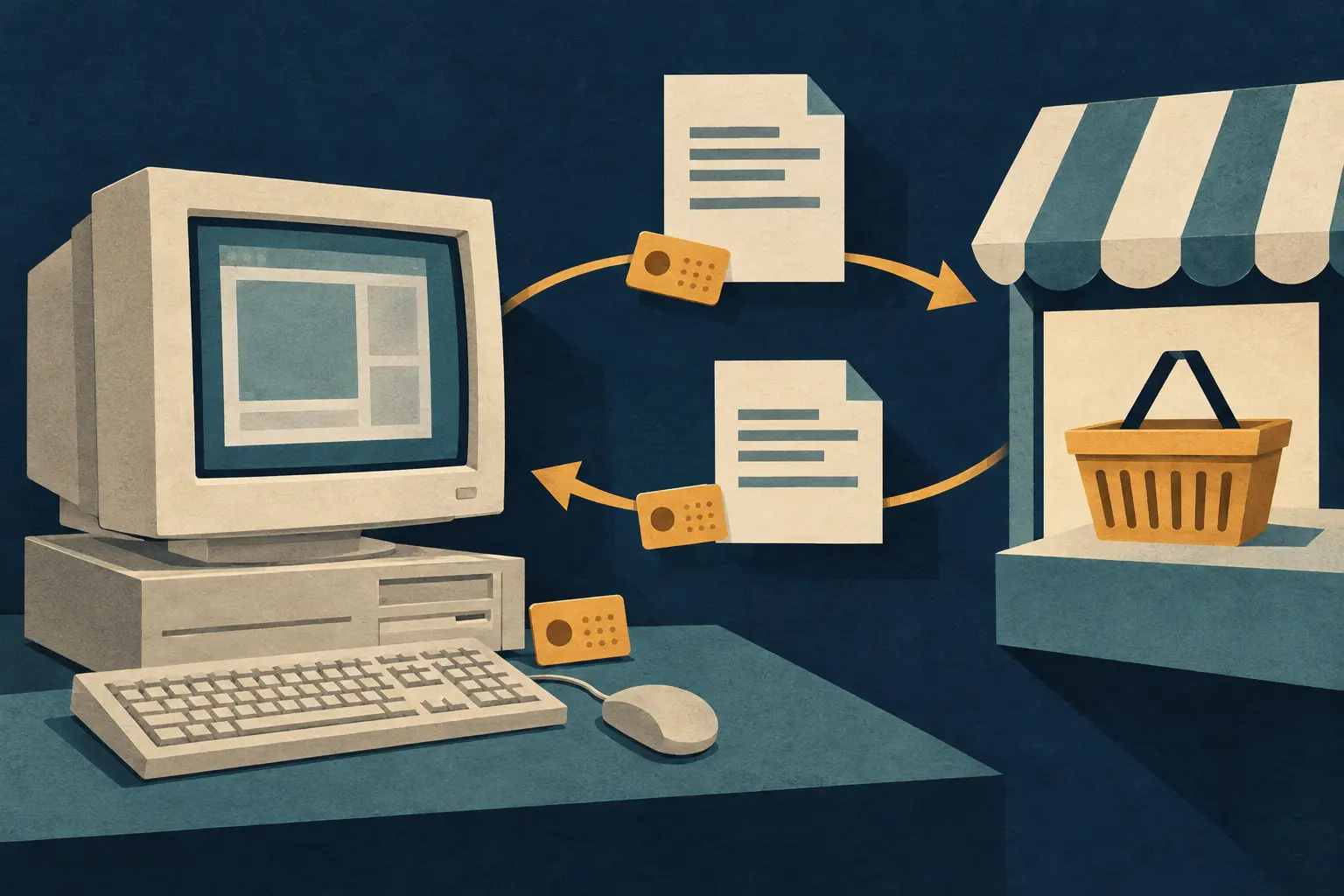
The Shopping Cart That Put Web State in the Browser
Before a Web shop could keep a basket between requests, someone had to decide where its memory would live. In 1994, a project for MCI pushed Netscape toward a small answer stored on the customer’s computer, then turned that customer’s requirement into a general browser mechanism.

History
The Route Disappeared. Some Egyptian Packets Still Got Out.
In January 2011, Egypt’s Internet became globally difficult to reach in a sequence visible to routing monitors. A network telescope still saw packets sourced from Egyptian addresses. That residue records a surviving path for some traffic; it does not show that the public retained…
History
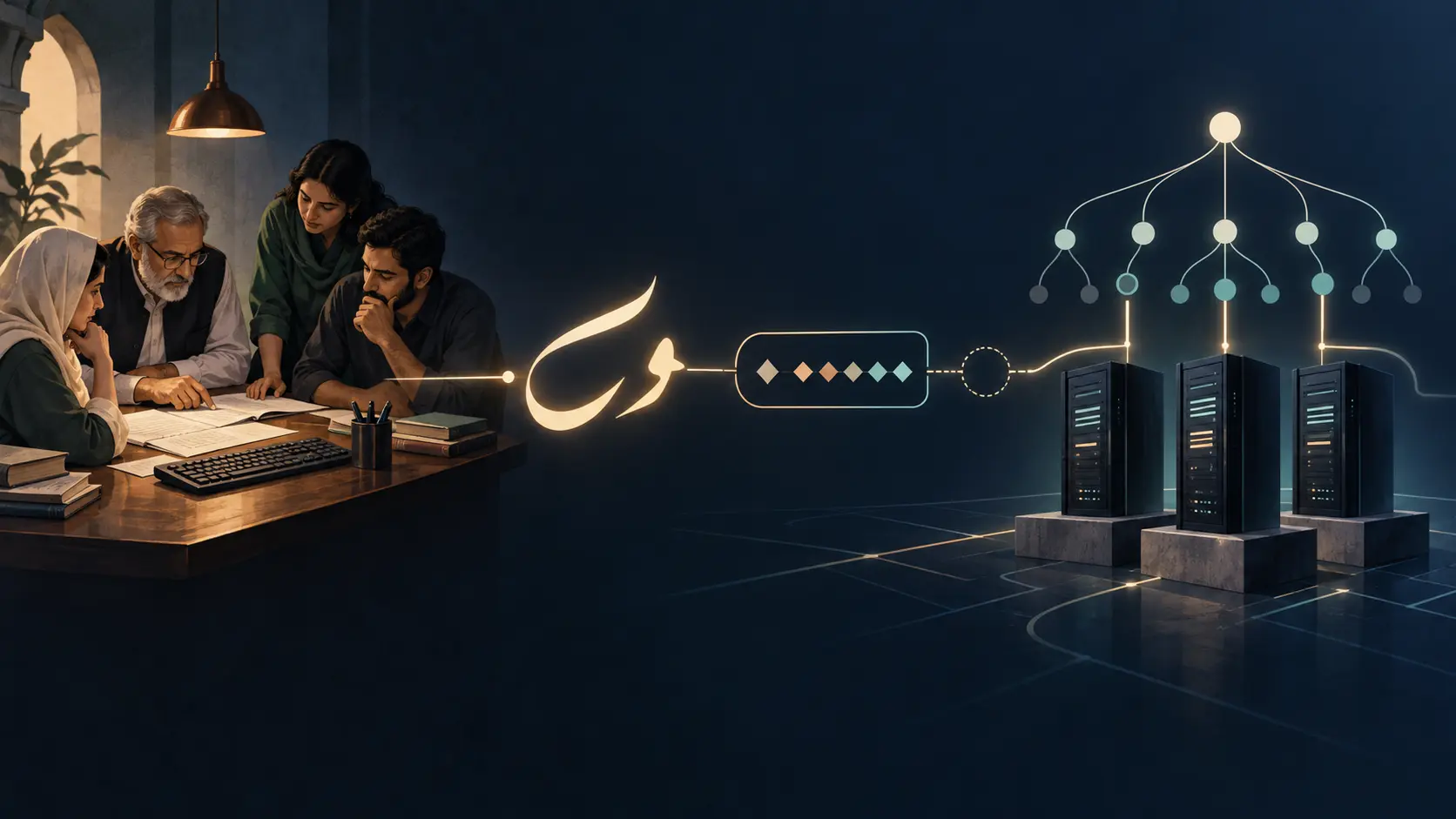
The Urdu Name Passed in 2011. .پاکستان Reached the Root in 2017
Pakistan’s Urdu-language name entered the DNS root through two distinct stages: review of the script label, then delegation of a manager able to operate it. The record makes clear why “approved” and “delegated” were not the same milestone.

Story
APNIC’s US$3bn cable-repair forecast leaves the funding model open
An APNIC-hosted essay cites a 2040 estimate of US$3 billion to replace 15 submarine-cable repair vessels and add five more. The ITU’s evidence points to the financing question behind that total: who will commit the long-term revenue needed to build and maintain the ships?

Leaders
The Pledge Is Not the Connection: Doreen Bogdan-Martin’s Next Test
Partner2Connect has turned a global call for digital inclusion into a visible ledger of commitments. The harder measure for ITU Secretary-General Doreen Bogdan-Martin is what that ledger can prove about delivery, usable access and the people who benefit.

History
The First Ping Was Only One Route: Mauritius’s Internet, 1993–96
In Mauritius, a 1996 traceroute showed that one named host could be reached from the United Kingdom. It did not show who could use the service, how widely it was available, or when the island first joined the Internet. The record becomes clearer when email relays, a route, a…

History
The Joke Marker Needed No Software Release: CMU, 1982
Three keyboard characters offered a way to mark a sentence as a joke without changing the bulletin-board program. The idea came out of a real dispute about a fake elevator warning, and the surviving thread shows a convention being negotiated before it became a familiar face.

History
A Network Budget Before ARPANET: ARPA Order 471, 1963
In April 1963, ARPA funded two California universities to study remote computer use, interconnection and time-sharing. The plans make an early network more concrete—and show why a funded research program should not be mistaken for the network that later emerged.