
Profile
Briefing
Briefing profile intelligence connects person, company, institution, and other entity coverage for readers comparing the subjects behind BTW.MEDIA reporting. The page helps compare public profiles, related events, evidence packs, role changes, operating footprints, governance exposure, organisational links, and market relevance while keeping organisation and people records distinct from ordinary news chronology. Readers can understand the subject behind the headline, the evidence supporting that profile, and the infrastructure or market relationships that make the profile relevant. They can see who or what the profile represents, which public sources support it, how it connects to companies, markets, governance bodies, or events, and what changes may deserve continued attention as the subject evolves.

History
The First Valid DATA Chose the Boot Server: RFC 906’s ROM Client
Before a diskless workstation could load its operating system, a small program in ROM had to reach the network and ask for code. RFC 906 proposed a common IP/TFTP path through the different boot methods that manufacturers had built, then left the most consequential local choice…

Asia-Pacific National Telecom Trends
TRAI’s property rating makes indoor connectivity visible—but not representative
TRAI’s new public platform turns a building’s digital infrastructure into something a tenant or buyer can inspect before signing. Because the rating is voluntary—and property managers can audit and improve a building before seeking a public score—the resulting list says something…

CASE FILE
EU enlargement plan speeds talks, keeps final entry unanimous
The European Commission wants the Council to use qualified-majority voting for opening negotiation clusters and other intermediate accession decisions. Its 6 October package leaves the final membership decision unanimous, with parliamentary consent and national ratification still…

CASE FILE
UK’s first telecoms security review tests only part of the Act
The government’s evidence call closes on 12 October, ahead of the first five-year report required by the Telecommunications (Security) Act 2021. Section 14 covers sections 1–13; designated-vendor directions begin later in the statute.

North America Cloud Services Trends
Gorilla's U.S. 100 MW target starts with a 6 MW site
Gorilla Technology Group Inc.'s October 9 announcement links a proposed U.S. data-centre acquisition to an ambition above 100 MW. The first facility is under a non-binding letter of intent: it has about 6 MW of current utility capacity, while a further 30 MW remains on an…

Latin America and Caribbean National Telecom Trends
Chile’s new industrial channels sit behind a Release 17 gate
Chile has enlarged the 2.3 GHz range available to industrial networks, but the added channels are not a general spectrum grant. Access depends on a newer radio standard, a limited-service permit and a site-specific interference review.
History
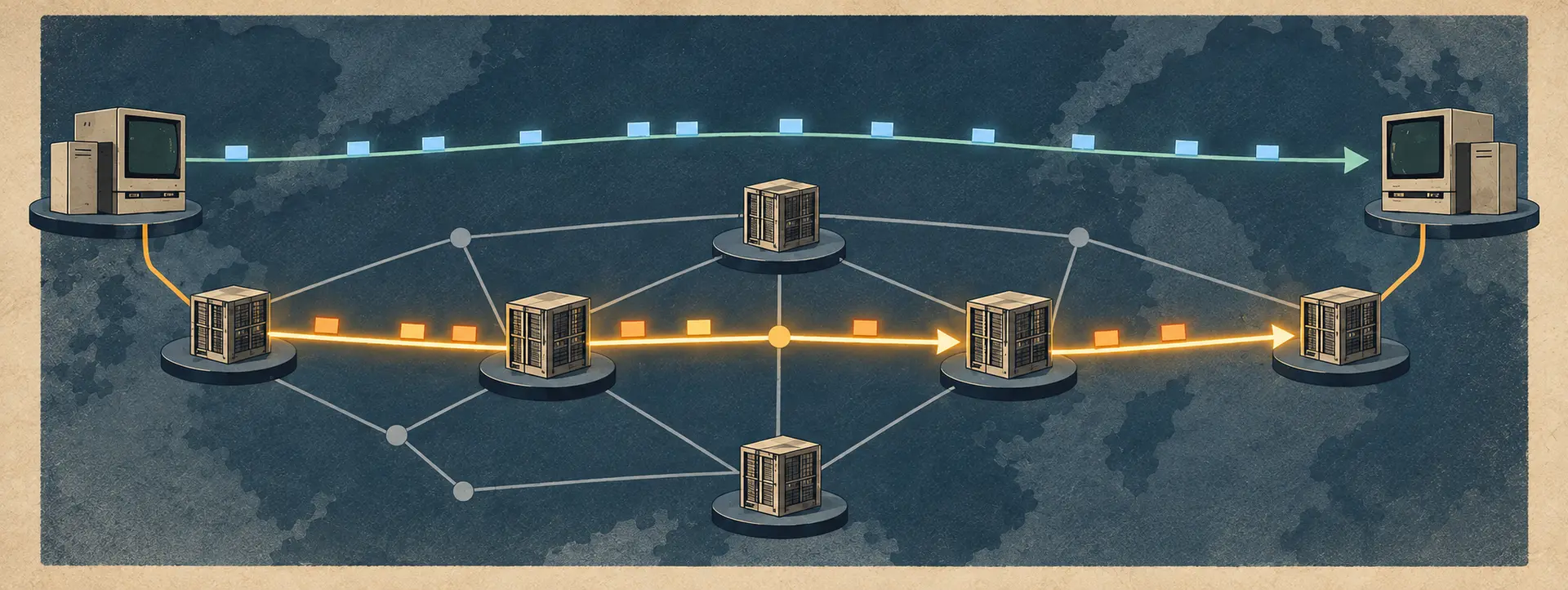
The X.25 Call Was Not the TCP Conversation: RFC 877
A public X.25 circuit could carry IP datagrams without becoming the TCP conversation above them. RFC 877 made that separation explicit, and let the network’s own cost and capacity shape how long a circuit stayed open.

CASE FILE
UK CAA puts SWIM governance design out for consultation
A proposed four-tier structure would allocate aviation data decisions across strategy, technical standards, service onboarding and compliance disputes. The UK Civil Aviation Authority is asking the industry what role it should have before that model is finalized.
History
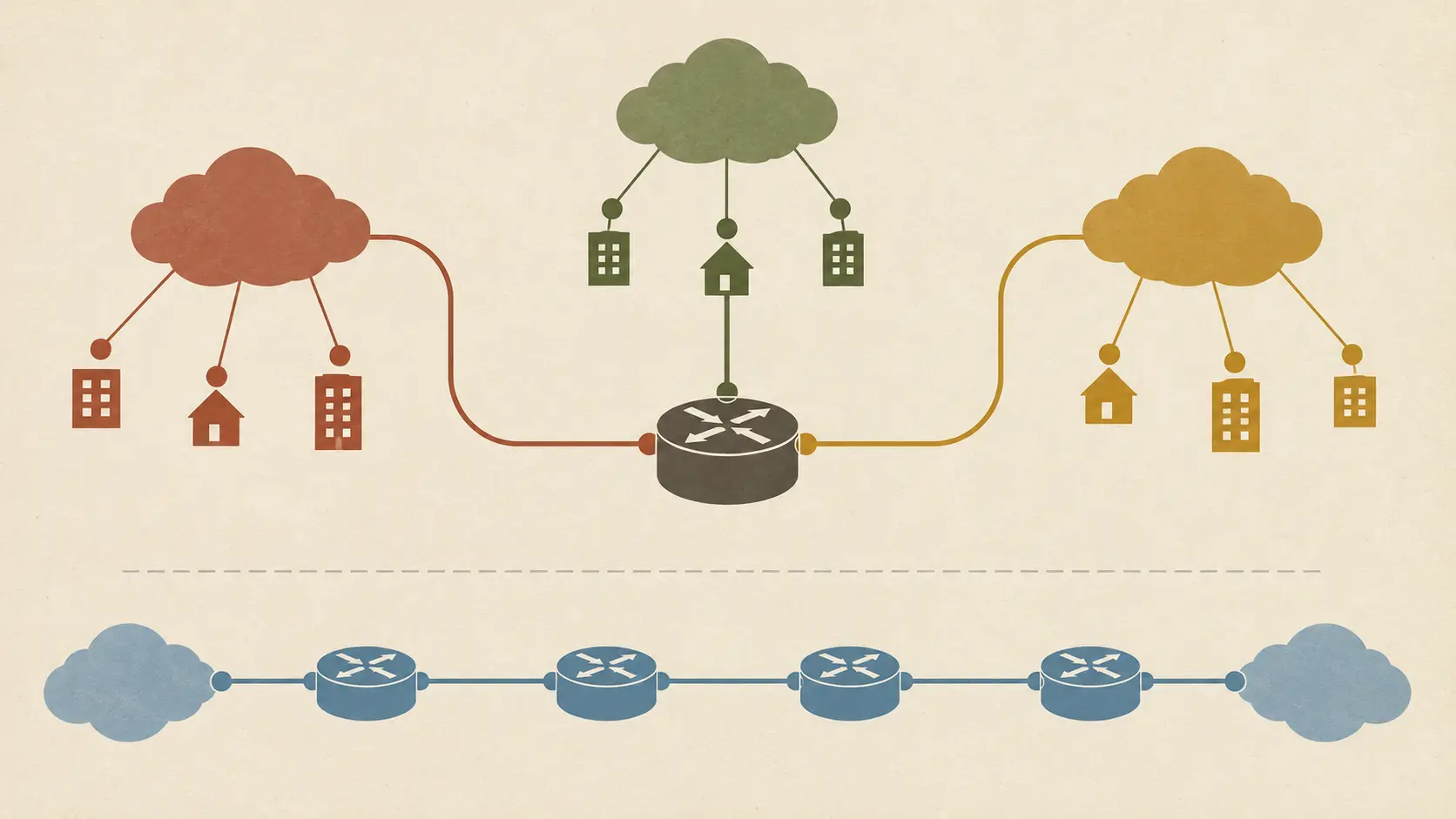
The Agreement That Connected Three Commercial Networks: CIX, 1991
On 25 March 1991, PSINet, UUNET’s AlterNet and CERFnet announced an agreement for customers on their separate networks to exchange traffic directly. CIX mattered because it specified who could exchange what, under which cost rule, and over which path; it did not confer universal…

North America National Telecom Trends
Canada’s mobile map gets a challenge lane, not an automatic correction
Canada’s telecom regulator has standardized how wireless carriers report outdoor coverage and set out a public route for challenging map entries. The change makes evidence easier to compare and question; it does not upgrade service, independently measure every disputed location…

North America National Telecom Trends
FCC Authorizes Separate SpaceX D2D Constellation of 15,000 Satellites, Distinct From January’s Gen2 Approval
The FCC’s October 6, 2026 authorization establishes a separate direct-to-device satellite system rather than expanding the Gen2 Starlink broadband constellation approved in January. Although both systems have authorization ceilings of 15,000 satellites, the new D2D grant carries…

History
The Message Had a Standard. Mail Still Rode on FTP: RFC 733
In 1977, RFC 733 gave ARPANET text messages a common syntax while mail delivery still used FTP’s MAIL and MLFL commands. The standard drew a careful boundary: make messages legible between hosts without prescribing one mail program, user interface or fully adopted transfer…

History
RFC 4714 Put Copyediting Under Change Control
An RFC could have passed technical approval and still face another consequential review. A copyeditor might be correcting grammar, but after approval even a small rewrite crossed a boundary: the published sentence had to remain answerable to the process that had agreed it.

Europe and Middle East National Telecom Trends
Europe’s telecom value verdict comes with a 2022 date
BEREC’s October report describes European telecom services as good value, but the cross-country price comparison is built mainly on 2019–2022 tariffs while network-quality trends extend to 2024. That is a useful comparison with a clear time boundary, not a live 2026 score or a…

CASE FILE
UK GovS 005 puts AI inside the government accountability chain
Version 2.2 widens the digital standard’s frame to government digital and data, then threads AI risk through existing leadership, data, technology and assurance duties.

History
When RFC 6410 Removed Draft Standard, It Left Old Labels in Place
RFC 6410 removed the Draft Standard rung from the IETF’s maturity ladder in 2011. Its transition clause did not move the documents already there: their old classification could remain until someone took explicit action.

CASE FILE
MAS keeps financial institutions accountable for third-party AI
Singapore’s regulator has made the institution’s own use case—not the vendor’s boundary—the centre of AI oversight. The timetable gives firms a year to identify and govern use, then another for full lifecycle controls, while leaving high-risk work on an immediate track.

Europe and Middle East National Telecom Trends
A Wholesale Clause Cannot Make Subsidised Fibre Competitive
BEREC’s new draft on state-funded fibre shows how little of Europe’s post-build record is visible to regulators: 22 national authorities described required access products, but only nine reported actual-use data. The missing test is whether a funded line becomes a service…

History
RFC 2860 Draws a Boundary Around IANA’s Technical Work
The sentence that gives RFC 2860 its sharpest edge is also the one most easily overread: policy issues in domain-name and IP-block assignments sit outside this memorandum, while named technical assignments remain inside it. The distinction matters because the document is a…

History
The Great Renaming Gave Usenet Operators a Better Feed Filter
In 1986–87, Usenet did more than replace old group names with a tidier vocabulary. Topic hierarchies gave site administrators a clearer way to choose which discussions their machines would carry. The surviving debate also draws a line between people consulted about a change and…