
Profile
Analysis
Analysis profile intelligence connects person, company, institution, and other entity coverage for readers comparing the subjects behind BTW.MEDIA reporting. The page helps compare public profiles, related events, evidence packs, role changes, operating footprints, governance exposure, organisational links, and market relevance while keeping organisation and people records distinct from ordinary news chronology. Readers can understand the subject behind the headline, the evidence supporting that profile, and the infrastructure or market relationships that make the profile relevant. They can see who or what the profile represents, which public sources support it, how it connects to companies, markets, governance bodies, or events, and what changes may deserve continued attention as the subject evolves.

North America Institutional
El Faro made hurricane routing and delegated vessel inspection a maritime-safety accountability test
El Faro became an accountability test because avoiding Hurricane Joaquin depended on more than one captain reading one forecast. Current weather had to reach the bridge in a usable form; officers had to challenge a deteriorating plan; TOTE Services had to monitor a…

Global Institutional
JPMorgan's London Whale trades made risk limits and valuation control a bank-governance accountability test
The London Whale episode became a bank-governance accountability test because a portfolio presented as protection against credit stress grew into a concentrated and difficult-to-exit trading position while model changes reduced its reported risk, repeated limit breaches failed to…

Europe and Middle East Institutional
Carillion made contract accounting and public-service continuity an outsourcing accountability test
Carillion's liquidation exposed a control problem larger than one failed contractor: estimates made inside long-term contracts shaped reported profit, cash pressure was distributed through debt and suppliers, warning information did not consistently reach those able to act, and…

North America Institutional
Exxon Valdez made tanker navigation and spill preparedness an environmental-accountability test
The Exxon Valdez grounding became an environmental-accountability test because control was distributed long before oil reached the shore. Exxon Shipping Company controlled master fitness, manning, watchkeeping expectations and the vessel's bridge; public authorities controlled…

North America Institutional
Alaska Airlines 261 made jackscrew lubrication and inspection a maintenance-accountability test
Alaska Airlines flight 261 was not a story of a crew simply losing control of a serviceable airplane. It was the terminal result of progressive wear in a flight-critical trim assembly, limited public evidence lubrication, inspection intervals that removed opportunities to find…

Europe and Middle East Institutional
Swissair 111 made in-flight fire isolation and material certification an aviation-safety accountability test
Swissair Flight 111 became an aviation-safety accountability test because a hidden fire crossed boundaries that the aircraft, its supplemental systems, its material standards, its circuit protection, its procedures and its certification structure had treated separately. The…

Europe and Middle East Institutional
Chernobyl made reactor design, operating discipline and emergency disclosure a nuclear-accountability test
The destruction of Unit 4 at the Chernobyl Nuclear Power Plant was not only a failed turbine rundown test or a sequence of operator errors. It was the exposure of an assurance system that allowed hazardous reactor characteristics to remain poorly disclosed, made compliance…

North America Institutional
Enron made mark-to-market accounting and related-party controls a corporate-governance accountability test
Enron's collapse was not proof that fair-value measurement or special-purpose entities are inherently corrupt. It was a test of whether valuation judgments, entity boundaries, conflicts, cash-flow presentation, debt exposure and executive claims could be challenged before…
North America Institutional
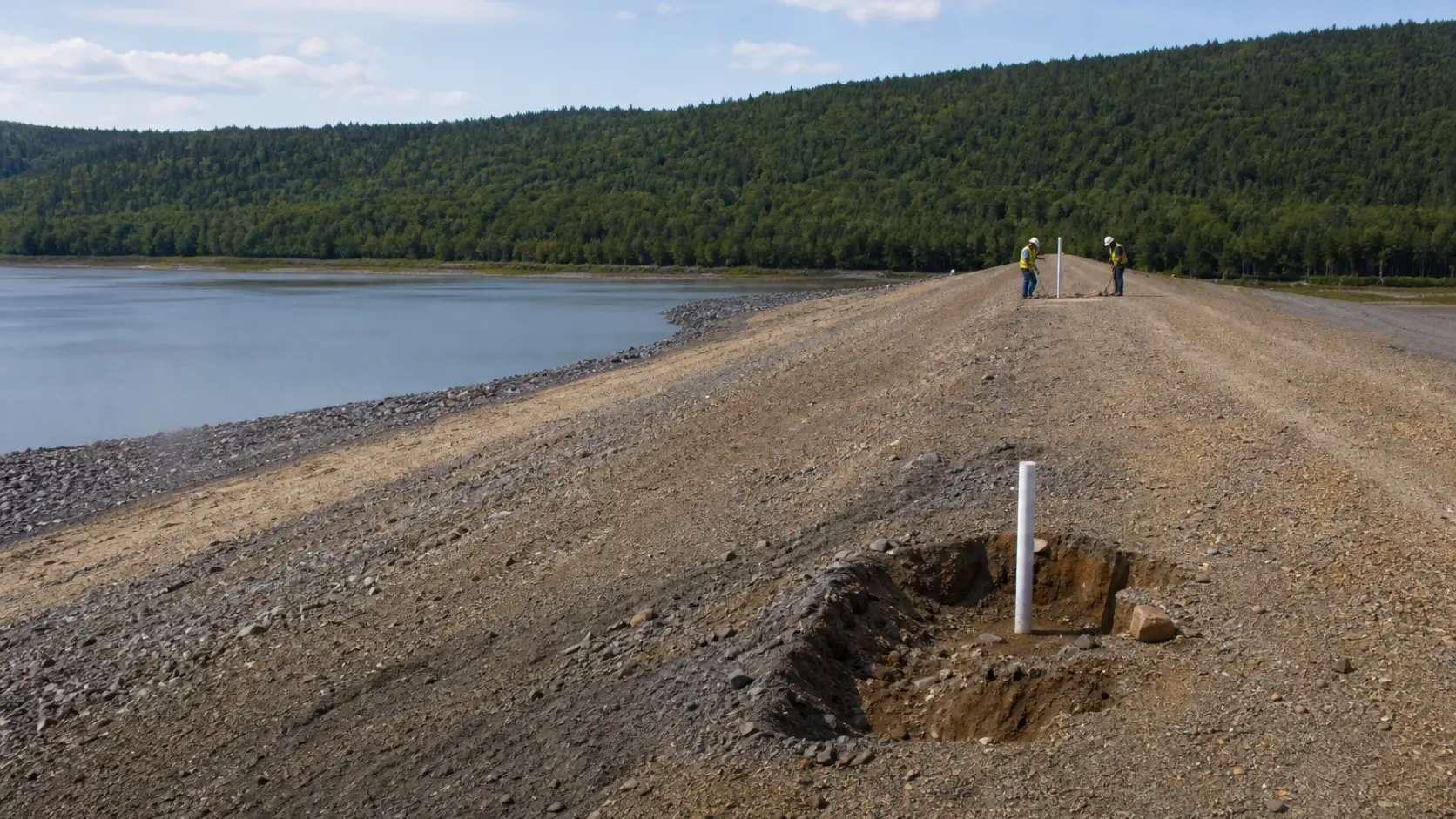
Mount Polley made tailings storage design and independent review a mining-accountability test
The Mount Polley tailings-storage-facility breach was not a mystery that can be reduced to one missed reading, one rainy season, or one regulator who failed to spot an obvious crack. The independent engineering panel traced the initiating failure to a weak glaciolacustrine…

Europe and Middle East Institutional
The UK infected blood scandal made treatment safety and state disclosure a public-health accountability test
The infected blood scandal became a public-health accountability test because preventable treatment hazards were allowed to travel through donor selection, pooled-product manufacture, procurement, clinical choice and transfusion practice; because patients were too often denied…

Europe and Middle East Institutional
Manchester Arena made venue security and emergency coordination a public-safety accountability test
The Manchester Arena attack became an accountability test not because every terrorist act can be predicted or prevented, but because the public depended on several organisations to recognise a shared space, translate a known national threat into local controls, act on a specific…

North America Institutional
WorldCom made line-cost capitalization and audit challenge a financial-reporting accountability test
WorldCom's accounting failure was not caused by an obscure rule that nobody could apply. It became an accountability test because recurring network-access costs were moved away from current expense, reserve and revenue entries were used to protect predetermined results, large…

North America Institutional
Purdue Pharma made opioid marketing and bankruptcy release a public-health accountability test
On May 1, 2026, Purdue Pharma stopped operating. That sentence sounds final in a way the underlying accountability story is not. The medicines, manufacturing assets and regulatory obligations did not disappear. They moved into Knoa Pharma, a new public-benefit company owned by an…

Story
Quantum Migration and the Governance of Registry Keys
The prospect of cryptographically relevant quantum computing creates a real planning problem for the Resource Public Key Infrastructure. RPKI relies on digital signatures to bind a public key to Internet number resources and to validate signed routing entities. Its deployed…

Story
The Next Registry Failure May Be a Cyber Event, Not a Lawsuit
Internet number registry continuity has recently been discussed through the language of governance crisis: disputed boards, court orders, financial distress, loss of recognition and the possible need for a temporary operator. Those are serious risks. They are not the only risks…

Story
Sovereign Internet Plans Meet Non-Territorial Number Resources
Sovereign Internet Plans Meet Non-Territorial Number Resources intelligence summary explains the development, the public evidence available to readers, the organisations involved, the regional context, market exposure, and the infrastructure consequences that may follow. The…

Story
Sanctions Fragmentation and the Case for Service-Layer Separation
Sanctions are written against people, companies, governments, sectors, transactions and forms of support. Internet number-resource institutions, by contrast, operate shared systems whose effects travel far beyond one contract. When a bank rejects a payment, a registry cannot…

Story
AI Data Centres and the Return of Address Demand
Artificial intelligence has returned infrastructure demand to the centre of technology strategy. Power reservations, accelerator supply, fibre routes, cooling systems and construction schedules now appear in board papers that once treated computing as an elastic cloud expense.…

Story
IPv6 Growth Did Not Repeal IPv4 Institutions
IPv6 has achieved what sceptics once said it could not. It carries a large and growing share of global Internet use, supports national-scale mobile networks, reaches mainstream content and has become ordinary engineering rather than an experiment. That success should be stated…

Story
CGNAT Logging Mandates and the Governance of Scarcity Costs
Carrier-grade network address translation is usually described as a conservation technique. An Internet service provider lets many subscribers share a smaller pool of public IPv4 addresses by translating each connection to a public address and port. That description is…