
Primary Domain
Technology
Within the Primary Domain facet, Technology intelligence groups reporting by primary domain so readers can follow a focused area of internet infrastructure, governance, connectivity markets, or digital capital. The page brings together related articles, public evidence, institutions, companies, people, regional exposure, operating dependencies, and market context that may otherwise sit across separate category pages. It explains the domain, the likely actor class, the market or governance context, and the source material readers should use when comparing signals. Operators, analysts, and governance readers can see how the same domain appears across events, profiles, market shifts, public-source evidence, regional dependencies, and longer-cycle infrastructure decisions over time.

History
The Link Was Open. Each Name Still Needed Admission: RFC 2097
PPP could bring a remote machine to the edge of a NetBIOS Frames network, but RFC 2097 did not treat link-up as reachability. Before NBF traffic flowed, NBFCP let the remote side ask a peer to project particular sixteen-octet names, return a result for every name, identify its…

History
Frances E. Allen Taught Compilers to Prove Less—and Mean It
A compiler can prove that a definition may reach an instruction, that a value remains live, or that moving an operation preserves a specified semantics. Frances E. Allen’s work made such reasoning systematic. It did not turn optimisation into a certificate that the program will…

History
The Counter Passed One Receiver’s Window. It Did Not Name the Sender: RFC 2085
RFC 2085 placed a 64-bit replay counter inside one HMAC-MD5 Authentication Header transform, but only when the Security Association selected it. A receiver could admit unseen packets within its own reordering window and reject a repeated value. That was useful freshness evidence…
History
Jean E. Sammet Made Algebra Executable; FORMAC Did Not Prove the Mathematics
FORMAC let a computer differentiate, expand and rearrange an algebraic expression before handing generated code to an ordinary FORTRAN chain. Its achievement becomes clearer, not smaller, when each handoff is kept within its own evidentiary boundary.

History
The Fourth Letter Decided What the Editor Could Keep: RFC 2083
An editor can change every pixel in a PNG and still face a question that no preview answers: what should happen to a chunk it does not understand? RFC 2083 put part of that decision into the capitalization of four bytes. The last letter governed copying after edits, while the…

History
The Directory Stored Two Links. It Could Not Tell You What Either Meant: RFC 2079
A directory entry could carry two impeccable-looking links: one labelled “official record,” another “current service.” RFC 2079 made both values easy to store and split into URI and label. It did not tell a client whether the links described two resources, two locations for one…

History
LAP6 Made Code Editable; It Did Not Make It Correct
Mary Allen Wilkes gave a 2,048-word LINC a visible, responsive path from manuscript to tape file to binary program. The value of LAP6 lies as much in the boundaries between those stages as in their extraordinary integration.

History
The Header Existed. Its Jurisdiction Did Not Follow: RFC 2076
A mail parser could prove that a line named `Apparently-To` was present. It could not prove that the field was a standard Internet-mail instruction, that it was safe to expose, or that any receiver should act on it. RFC 2076 made that gap visible by cataloguing familiar message…

History
One Master Picture, Many Instances: Sketchpad’s Shared Definition Boundary
Ivan Sutherland’s 1963 system made a complex drawing reusable without pretending that every appearance was a new entity. Its master-picture mechanism remains a precise lesson in dependency: change can propagate through a hierarchy, while placement, scale, physical realization and…

History
Lynn Conway’s Lambda Rules Made Layout Portable, Not Certain
Replacing micrometres with a single unit called λ changed who could design chips and how a fabrication process could receive their work. It did not turn a clean layout into a working chip. Lynn Conway’s scalable rules matter because they created a powerful interface—and because…

History
Dorothy Denning and What the Lattice Actually Permits
A security lattice can prove that a modeled dependency obeys a chosen flow policy. It cannot prove that the policy deserves trust. Dorothy E. Denning’s early work remains valuable precisely because it makes both the assurance and its boundary unusually clear.

History
Nancy Lynch and the Execution That Never Has to Decide
The FLP result does not say that distributed systems cannot agree. It identifies the exact place where a deterministic protocol loses a universal progress guarantee: a fully asynchronous model, reliable but unbounded message delay, and permission for one process to crash.

History
Leslie Lamport and the Order a Timestamp Cannot Prove
A Lamport timestamp can preserve a known causal path through processes and messages. It cannot turn every lower number into a cause, every incomparable event into physical simultaneity, or one convenient total order into the history that really happened.

History
Jim Gray and the Vote That Could Not Decide a Two-Phase Commit
In two-phase commit, a entity that writes a durable prepare record and votes yes has proved that it can obey either final outcome. It has not committed, and a missing coordinator does not give it permission to guess.

History
Barbara Liskov and the Argus Commit That Stopped at the Guardian Boundary
Argus made failure a language-level concern: guardians owned recoverable entities, handlers crossed machine boundaries, and actions could commit or abort a distributed change. Its strongest lesson is also its limit. A committed action settled the participating Argus state; it did…

History
Anita Borg and the Systers List: Admission to a Governed Room, Not Proof of Equality
A message could enter Systers because a member, an address and the list's routing rules admitted it to a private professional room. That delivery made scattered women in computing less isolated; it did not verify every identity claim, guarantee a career opportunity, erase…

History
Andrew S. Tanenbaum and the Amoeba Capability That Authorized an Object, Not a Person
Amoeba compressed a service address, an entity name, an operations mask and an anti-forgery check into 128 bits. The resulting capability could travel with user code and carry authority without a central list of holders—but a valid token still said nothing by itself about the…
Leaders
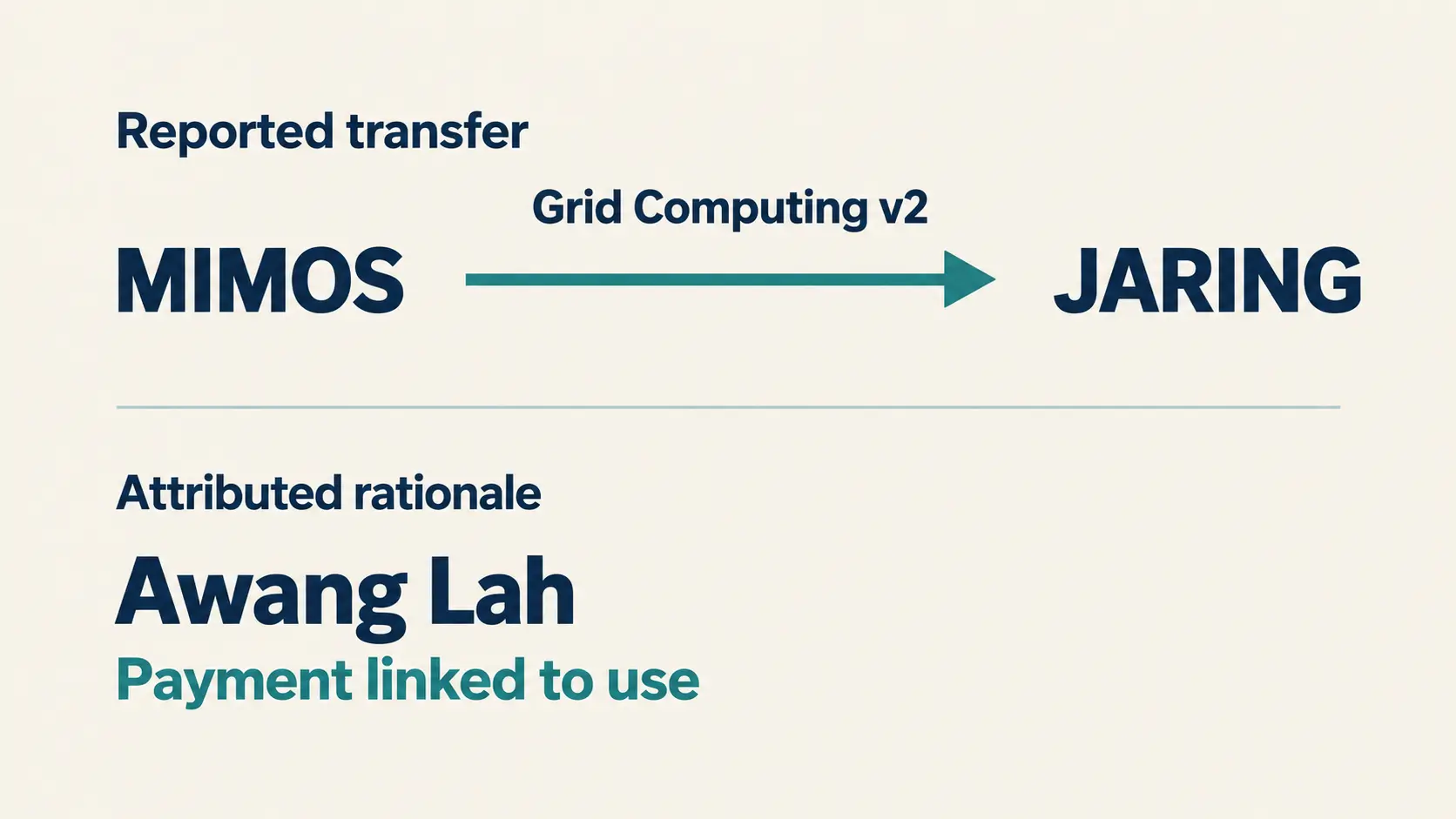
Mohamed Awang Lah and JARING’s pay-for-use proposition
The relevant leadership question is what an executive argued a technology would do for customers—and what would establish that the benefit reached them.

Global Cloud Services
Cloudflare R2’s zero-egress price is not a zero-cost exit
Cloudflare lists no charge for outbound transfer from R2 and documents a way to copy entities out. The remaining economic question is what customers must spend—and successfully operate—to turn that export into a working replacement.

Global Institutional
RANCID and the enduring value of a one-line network diff
RANCID has endured successive generations of network management because it performs one narrow task: it logs into devices, collects selected configuration text, removes expected noise and commits the result to version control. It does not model intent, approve changes or…