
Primary Domain
Internet Infrastructure
Within the Primary Domain facet, Internet Infrastructure intelligence groups reporting by primary domain so readers can follow a focused area of internet infrastructure, governance, connectivity markets, or digital capital. The page brings together related articles, public evidence, institutions, companies, people, regional exposure, operating dependencies, and market context that may otherwise sit across separate category pages. It explains the domain, the likely actor class, the market or governance context, and the source material readers should use when comparing signals. Operators, analysts, and governance readers can see how the same domain appears across events, profiles, market shifts, public-source evidence, regional dependencies, and longer-cycle infrastructure decisions over time.

History
One Poll, Different Reports: What RFC 869 Left to Each Host
In the early Internet, a monitoring center needed one way to ask distant machines for evidence. HMP supplied that shared exchange, while gateways and other hosts kept their own meanings for the measurements and controls inside it.

History
The Hosts Had to Agree Before Speech Could Cross the ARPANET: RFC 741
RFC 741 described a voice protocol already reported in use since 1973. Before speech parcels moved, NVP assigned control and data roles in both directions, negotiated how unlike machines would encode voice, and waited for a human-ready signal.

Global Institutional Trends
IGF’s 2027 MAG rotation tests who gets a seat—and whose views reach the agenda
The Internet Governance Forum now has a permanent place in the United Nations system. Its 2027 advisory-group renewal will show whether a more durable forum can make its route from nominations to meeting priorities easier to follow. Thirteen experienced members are due to rotate…

Asia-Pacific National Telecom Trends
New Zealand’s RANCo review tests who controls mobile-network investment
2degrees and One NZ say a shared radio network can release money for better coverage and service while leaving the two operators to compete. New Zealand’s Commerce Commission is now asking where that separation holds in practice: at the shopfront, or also in the decisions that…

History
Ten Accounts, One Principal: How RFC 1507 Tried to Make Identity Travel
A person with accounts on ten computers could look like ten unrelated users to the services they needed. RFC 1507 proposed a global name, certificates and delegated credentials that could follow work across machines—but its naming tree also carried the power to certify and revoke…

Europe and Middle East National Telecom Trends
BEREC Draft Separates Network Access from AI Content Selection
A consultation report puts AI’s power to select, summarise and act on online content above the Open Internet Regulation’s network remit. The distinction matters as AI gateways become a new place where users encounter the web.

History
Mosaic’s Two Commercial Paths: Spyglass Licensing and Netscape’s Separate Products
In 1994, the University of Illinois routed future commercial licensing of NCSA Mosaic through Spyglass while former NCSA developers built a separate browser company. A year-end agreement separated rights and brands without deciding a claim about copied code.

History
RFC 1413’s Port Pair: How Ident Read One Connection from the Server’s Side
Ident did not ask a host who was online. It asked one endpoint to name the local user string attached to a specific TCP connection. The two ports in its query had to be read from that host’s point of view—a small reversal that also defined the limit of the answer.

History
The Image Was Not the Link: Mosaic’s IMG Proposal
Marc Andreessen’s February 1993 proposal gave an image its own place in HTML and its own source address. A separate anchor could still decide where a click went. The small distinction opened a debate about browser support, media formats and what a document should promise when its…

History
The First Valid DATA Chose the Boot Server: RFC 906’s ROM Client
Before a diskless workstation could load its operating system, a small program in ROM had to reach the network and ask for code. RFC 906 proposed a common IP/TFTP path through the different boot methods that manufacturers had built, then left the most consequential local choice…
History
The X.25 Call Was Not the TCP Conversation: RFC 877
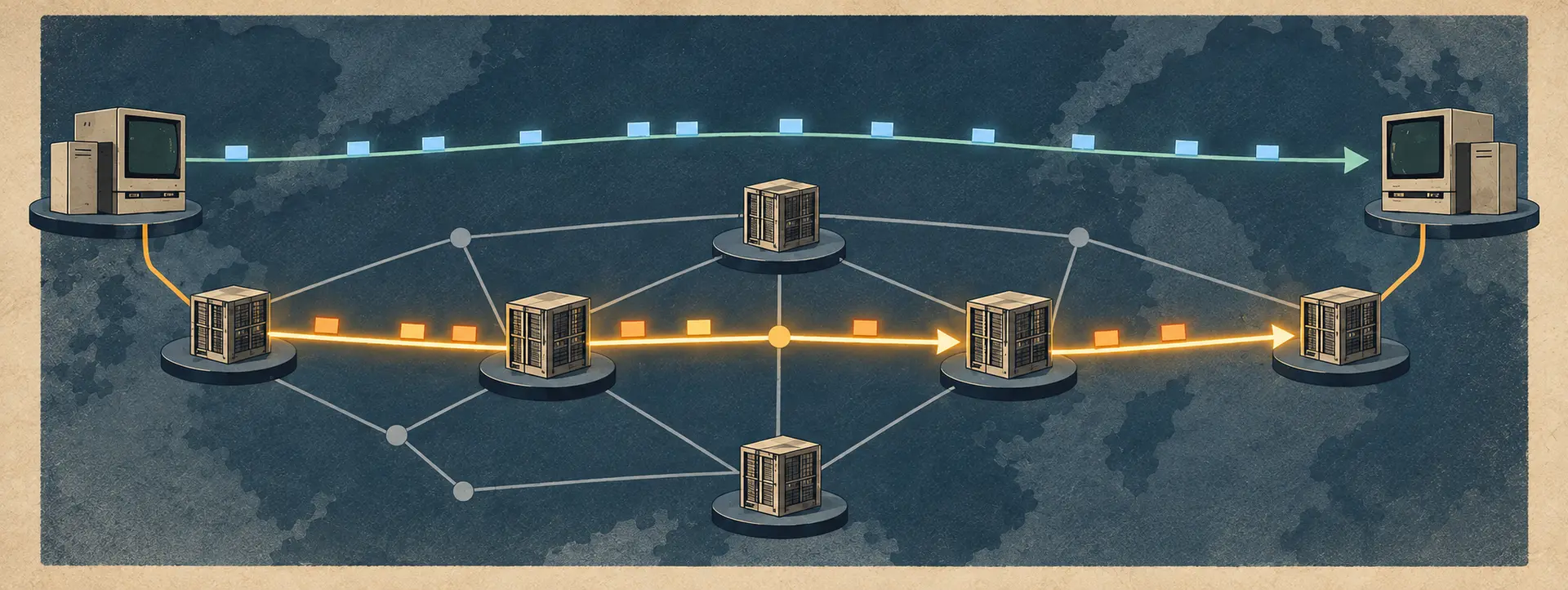
A public X.25 circuit could carry IP datagrams without becoming the TCP conversation above them. RFC 877 made that separation explicit, and let the network’s own cost and capacity shape how long a circuit stayed open.
History
The Agreement That Connected Three Commercial Networks: CIX, 1991
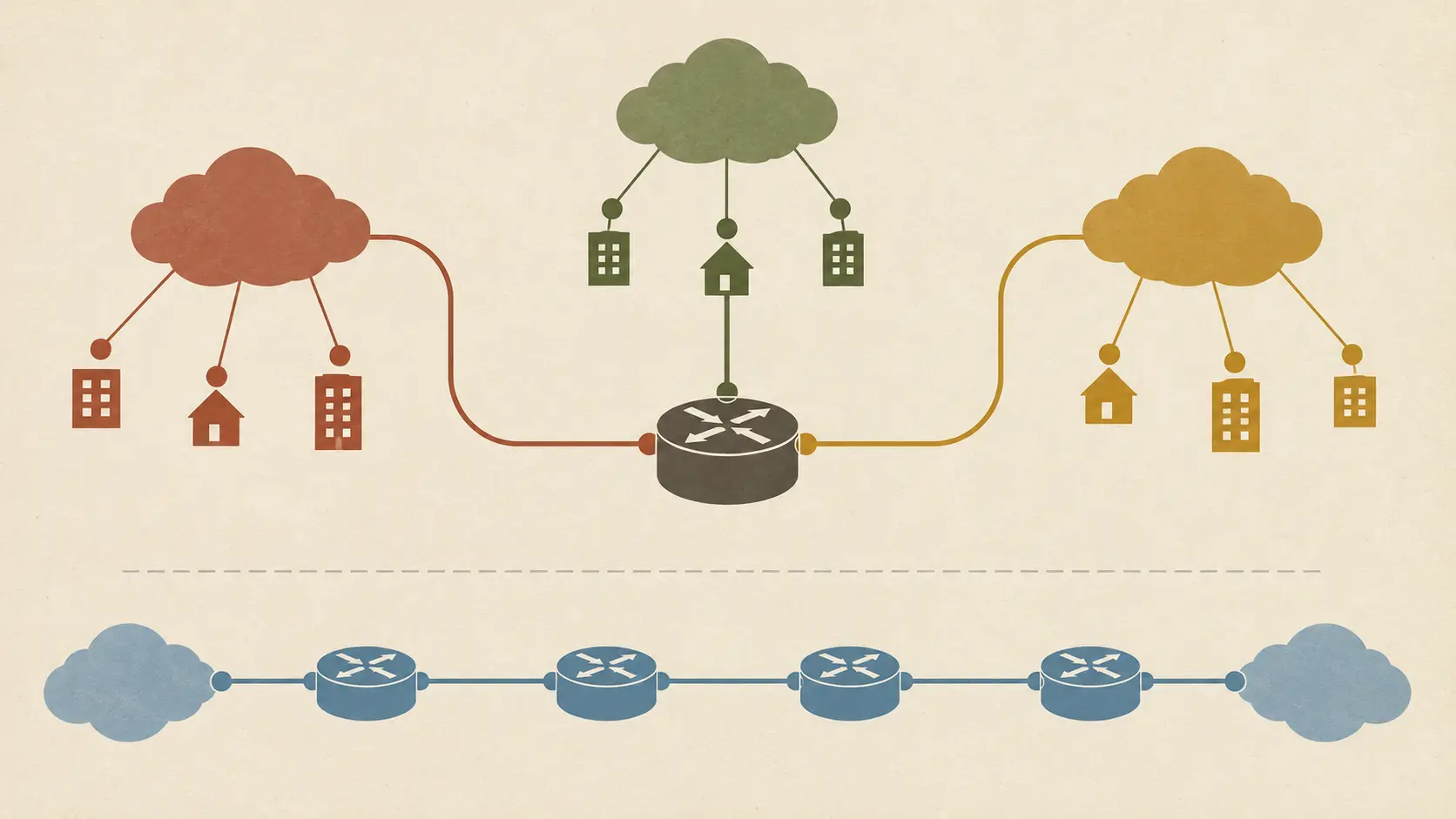
On 25 March 1991, PSINet, UUNET’s AlterNet and CERFnet announced an agreement for customers on their separate networks to exchange traffic directly. CIX mattered because it specified who could exchange what, under which cost rule, and over which path; it did not confer universal…

History
The Message Had a Standard. Mail Still Rode on FTP: RFC 733
In 1977, RFC 733 gave ARPANET text messages a common syntax while mail delivery still used FTP’s MAIL and MLFL commands. The standard drew a careful boundary: make messages legible between hosts without prescribing one mail program, user interface or fully adopted transfer…

Europe and Middle East National Telecom Trends
Europe’s telecom value verdict comes with a 2022 date
BEREC’s October report describes European telecom services as good value, but the cross-country price comparison is built mainly on 2019–2022 tariffs while network-quality trends extend to 2024. That is a useful comparison with a clear time boundary, not a live 2026 score or a…

Europe and Middle East National Telecom Trends
A Wholesale Clause Cannot Make Subsidised Fibre Competitive
BEREC’s new draft on state-funded fibre shows how little of Europe’s post-build record is visible to regulators: 22 national authorities described required access products, but only nine reported actual-use data. The missing test is whether a funded line becomes a service…

Story
RIPE NCC’s August IPv4 rows barely changed as address volume fell 74%
September’s 1,253,632 matches the POLICY subtotal in four public tables; another 285,184 addresses are labelled MERGER_OR_ACQUISITION.

History
RFC 2860 Draws a Boundary Around IANA’s Technical Work
The sentence that gives RFC 2860 its sharpest edge is also the one most easily overread: policy issues in domain-name and IP-block assignments sit outside this memorandum, while named technical assignments remain inside it. The distinction matters because the document is a…

History
NORSAR Kept 2.4 kbit/s for Seismic Data as ARPANET Arrived
When NORSAR’s voice-grade line was upgraded for ARPANET, the seismic stream did not disappear into a larger network. The year-end 1973 operating report says 2.4 kbit/s remained assigned to seismic data; NORSAR and the University of London Institute of Computer Science shared the…

Asia-Pacific National Telecom
Telkom Says InfraNexia Has 90% of Its Network Assets. What Customers Need Next
Telkom said its 30 September deed had consolidated more than 90% of its network infrastructure assets at PT Telkom Infrastruktur Indonesia (TIF), which operates as InfraNexia. Its August plan defines a separate legal effective date and says customer contracts in scope move with…

Story
APNIC’s Two Root-Key Signals Count Different Things
On 11 October, the DNS root is scheduled to begin using KSK-2024 to sign the zone. APNIC’s latest measurements put two percentages beside that date, but one follows key-tag signals from resolvers while the other tests end systems behind validating resolvers. Their denominators…