
Primary Domain
Internet Infrastructure
Within the Primary Domain facet, Internet Infrastructure intelligence groups reporting by primary domain so readers can follow a focused area of internet infrastructure, governance, connectivity markets, or digital capital. The page brings together related articles, public evidence, institutions, companies, people, regional exposure, operating dependencies, and market context that may otherwise sit across separate category pages. It explains the domain, the likely actor class, the market or governance context, and the source material readers should use when comparing signals. Operators, analysts, and governance readers can see how the same domain appears across events, profiles, market shifts, public-source evidence, regional dependencies, and longer-cycle infrastructure decisions over time.
Creators
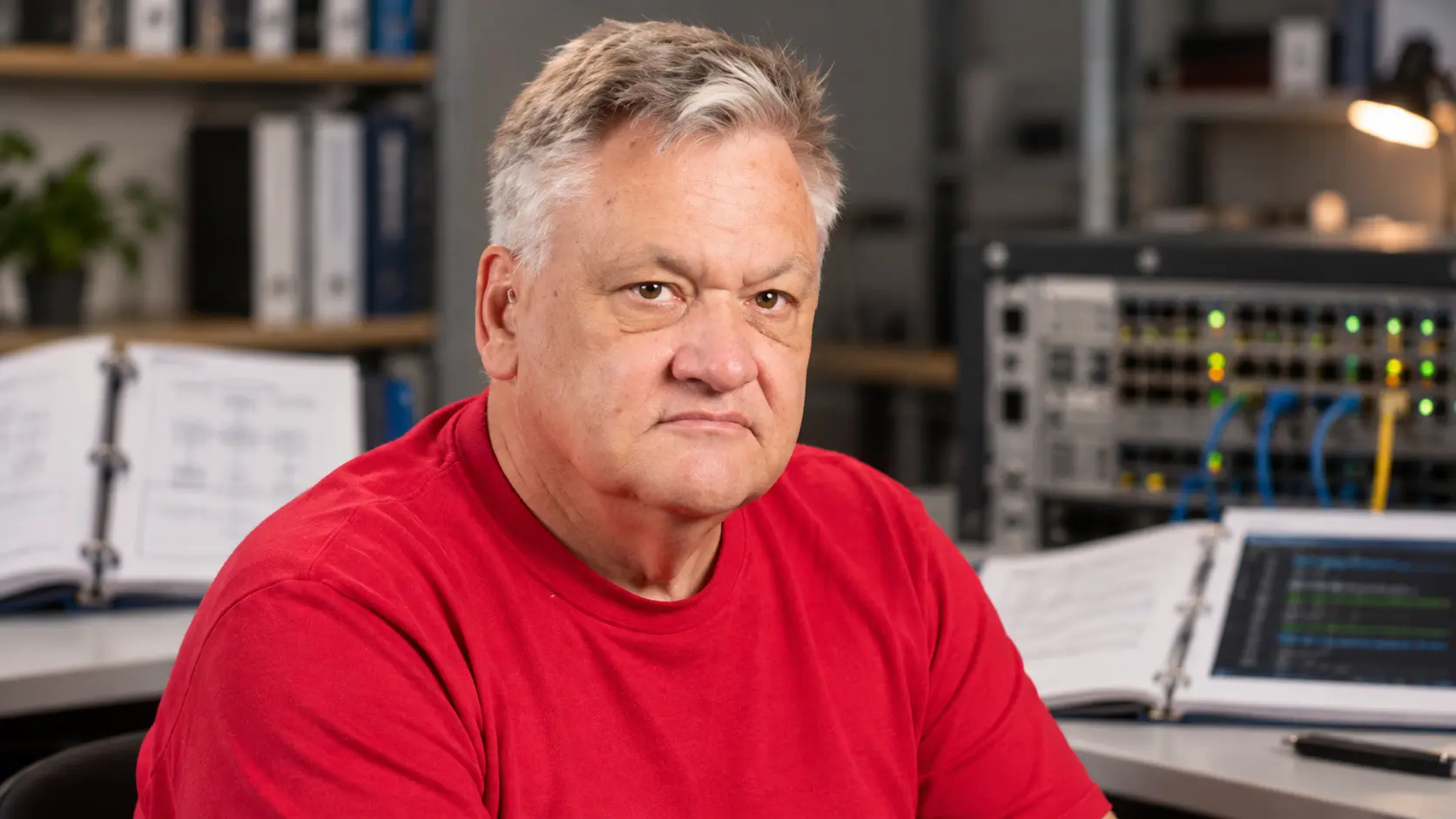
Fred Baker and the Router Standard That Was More Than a Checklist
RFC 1812 was asked to help buyers specify routers and engineers implement them. Its own warning is what makes that assignment useful: no single list can contain the whole requirement set, and no standard can certify what a particular running network does.

History
The Gateway Came Before the Market: Laos’s Internet, 1998–99
Laos’s first permanent international Internet link and the arrival of commercial dial-up were separate events. The gap between them reveals how authorization, gateways and ordinary telephone lines shaped access.
History
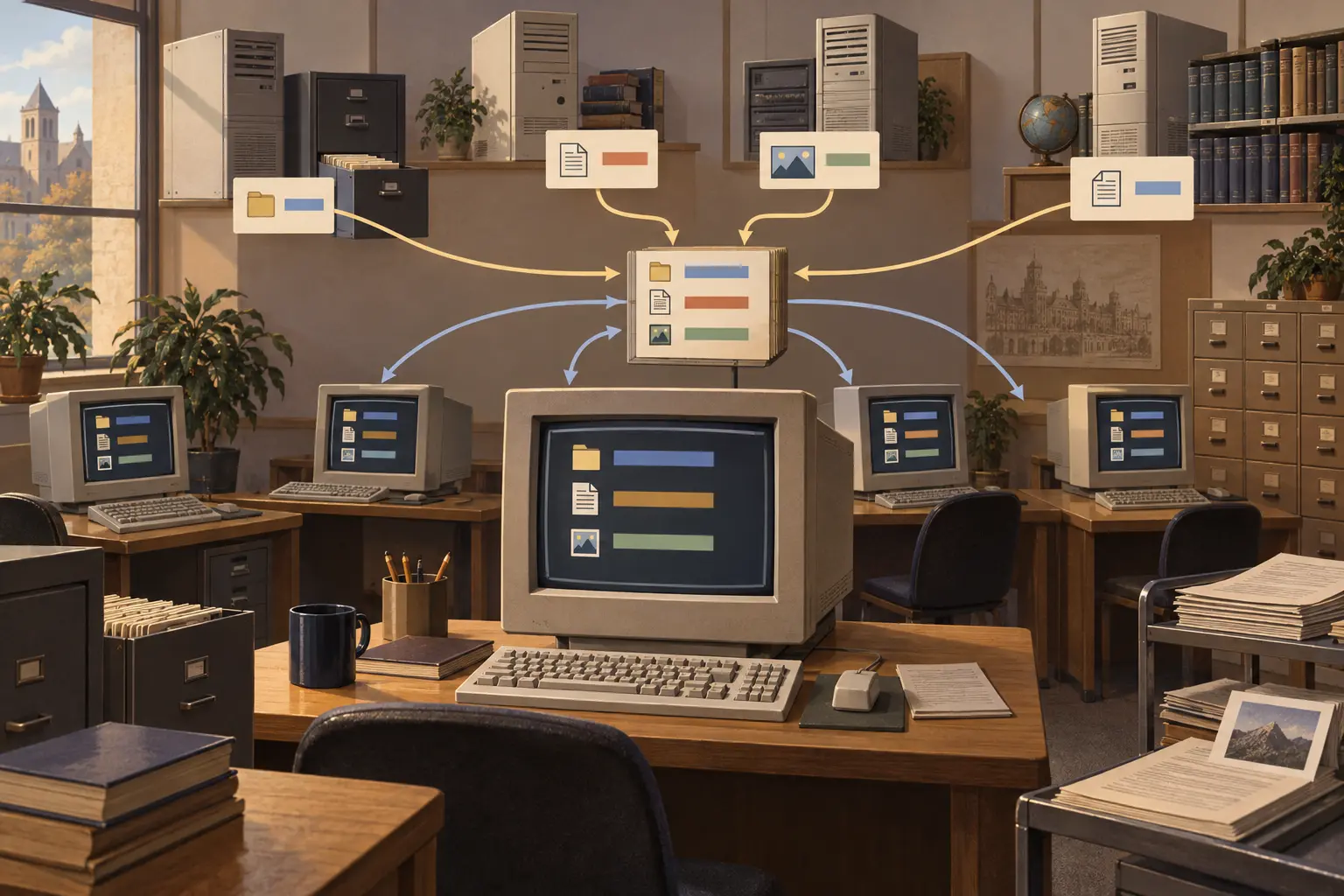
Veronica Could Find a Title, Not the File: Gopher Search, 1992–95
Veronica made a growing Gopher universe searchable by collecting the words people had already put in its menus. Its scale came from a modest promise: find the label, return the live route, and leave the document where its publisher kept it.

North America National Telecom Trends
The FCC removes a filing clock, not the work of keeping 911 connected
From 15 October, incumbent local exchange carriers can stop filing certain network-change notices with the FCC. The agency will no longer publish those notices or run the associated provider objection process. Public disclosure and direct notice to 911 network entities remain…

History
One Cable Company, Many Local Gatekeepers: FLAG, 1997
FLAG’s Europe–Asia cable was financed and run as a cross-border wholesale system, yet the equipment at its national landings still depended on local telephone companies. Its history shows where private capital changed the cable business—and where it stopped.

History
Ariadne Built Greece’s Research Network Before IP Became Its Default
Ariadne linked Greek universities and research institutes through a multiprotocol service before its successor network made TCP/IP the common direction. The 1993 record shows how access, international gateways, protocol conversion and user support fit together—and where the IP…

Asia-Pacific Institutional
HyderabadIX: A non-profit exchange point that the public record identifies but cannot yet account for
A non-profit internet exchange point is registered to Hyderabad, India, and appears across public registry, routing and lookup sources. What those same sources will not tell you — and what every operator, investor and regulator in the city should notice — is whether it is still…

History
Amsterdam’s Digital City Had Citizens, Not a City Council
De Digitale Stad made the unfamiliar Internet feel like a place a resident could enter. The civic vocabulary opened a door; it did not give account holders the authority of a municipality.

Europe and Middle East National Telecom Trends
Prysmian’s Xtera acquisition puts a systems business behind EXA Meridian
The deal joins repeater engineering to cable manufacturing, but the transatlantic project remains EXA Infrastructure’s to lead and deliver. That distinction is where the integration thesis can be tested.

History
The Infrastructure Names Stayed in .int for 20 Years After .arpa Took Over
A namespace can have a new home long before its old records disappear. The history of .int’s infrastructure names shows why those are separate jobs.

History
The Café Was Public; Its Users Were Accounted For: Tunisia’s PubliNet Rules
Tunisia tried to widen Internet access through small public centres. The record also shows how a café became a managed access point, where the operator’s duties shaped what “public” meant.

History
Online Was Not Permission: MIT’s Zephyr Made Presence a Network Service
MIT built Zephyr for a campus filling with networked workstations, where a broadcast could not follow a user across buildings and ordinary mail was too slow for a printer failure or a class announcement. Its answer joined authenticated identities, location records, subscriptions…

History
Cambodia’s 1997 Full-Time Link Needed a Public Bargain
Cambodia’s first full-time Internet connection was a small, expensive international circuit. Making it useful beyond a ministry office required a second design: a public-purpose partnership that could subsidize schools and nonprofits while commercial operators built a market…

Creators
Robert Moskowitz and the Host Identity Behind an IP Address
An IP address tells a network where to send a packet, but applications and security controls often ask it to answer a different question: which host is at the other end? Robert Moskowitz’s work on the Host Identity Protocol separated those jobs. The distinction can preserve a…

History
The Network Could Ask a Node Its Name—and It Could Refuse: IPv6 Node Information Queries
When IPv6 made local addresses easier to create than to remember, debugging still needed a way to ask a machine what it knew about itself. RFC 4620 proposed one: a direct ICMPv6 question with a bounded scope, a reply the node could decline, and no claim to replace DNS.

History
MAE-East Was a Room, Not a Policy: The Early Internet’s Shared Exchange
A shared Ethernet made it easier for early providers to meet in northern Virginia. It did not make them exchange routes. MAE-East shows why a common physical point and a common network policy are different things.
History
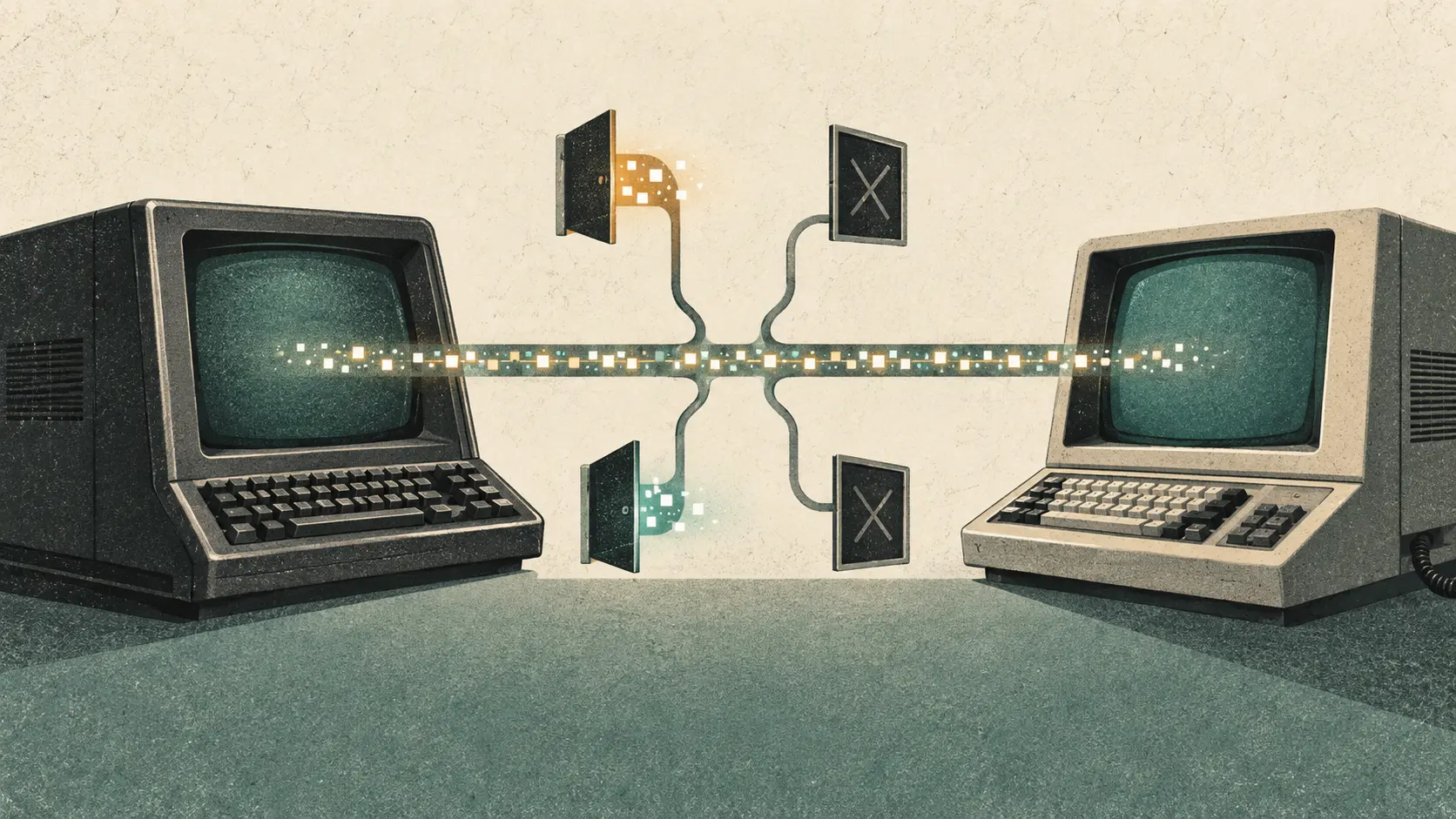
A Terminal Could Say No: TELNET’s 1983 Option Negotiation
Two machines did not need identical terminals to share a remote session. TELNET’s 1983 specification began with a modest common model, then let each end ask for particular changes and refuse what it could not support.

History
The Web Learned to Ask: How HTML Forms Turned Pages into Requests
By 1995, HTML could describe controls, collect a user’s chosen values, and direct a browser to submit them to a service. The page named an action and method; the service still decided what the data meant and what to do with it.

History
1,752 Adults, 14 Cabinas: Who Shared Peru’s Internet in 2000?
A 2000 study counted users at fourteen public Internet rooms, not households across Peru. Its figures show how a paid shared session lowered the cost of getting online—and how much the survey could not say about people the rooms never reached.

History
How CERN’s Line-Mode Browser Took the Web Beyond the NeXT
The first Web clients did not share one kind of screen. CERN’s NeXT browser/editor offered a graphical workspace; Nicola Pellow’s line-mode browser made the same linked Web readable from terminals that had no windows. Its reach came from a small interface plus the work of…