
Primary Domain
Internet Infrastructure
Within the Primary Domain facet, Internet Infrastructure intelligence groups reporting by primary domain so readers can follow a focused area of internet infrastructure, governance, connectivity markets, or digital capital. The page brings together related articles, public evidence, institutions, companies, people, regional exposure, operating dependencies, and market context that may otherwise sit across separate category pages. It explains the domain, the likely actor class, the market or governance context, and the source material readers should use when comparing signals. Operators, analysts, and governance readers can see how the same domain appears across events, profiles, market shifts, public-source evidence, regional dependencies, and longer-cycle infrastructure decisions over time.

Europe and Middle East Institutional
SIDN Labs and the research platform behind a national domain registry
SIDN Labs occupies an unusual position between academic inquiry and the live operation of the Netherlands’ `.nl` domain ecosystem. Its importance comes from converting registry, DNS, routing and time-service visibility into measurements, prototypes and standards work, while its…

Leaders
Keyur Patel and the BGP Model Work Behind Routing Operations
The Internet depends on routing systems that decide how networks exchange reachability, or the information that says which network can carry traffic to which destination. Keyur Patel's public record connects that operating layer to two kinds of evidence: standards work on Border…

Asia-Pacific Datacenter Trends
Ishikari City and 11 companies launch data-centre consortium
The new group will coordinate power, communications, disaster planning, and workforce development across Ishikari’s growing data-centre cluster.

Europe and Middle East Datacenter Trends
Start Campus targets 2027 opening for 200MW SIN02
Start Campus plans to open its 200MW SIN02 data centre in 2027, alongside Nscale’s planned deployment of more than 66,000 Rubin GPUs.
North America National Telecom Trends
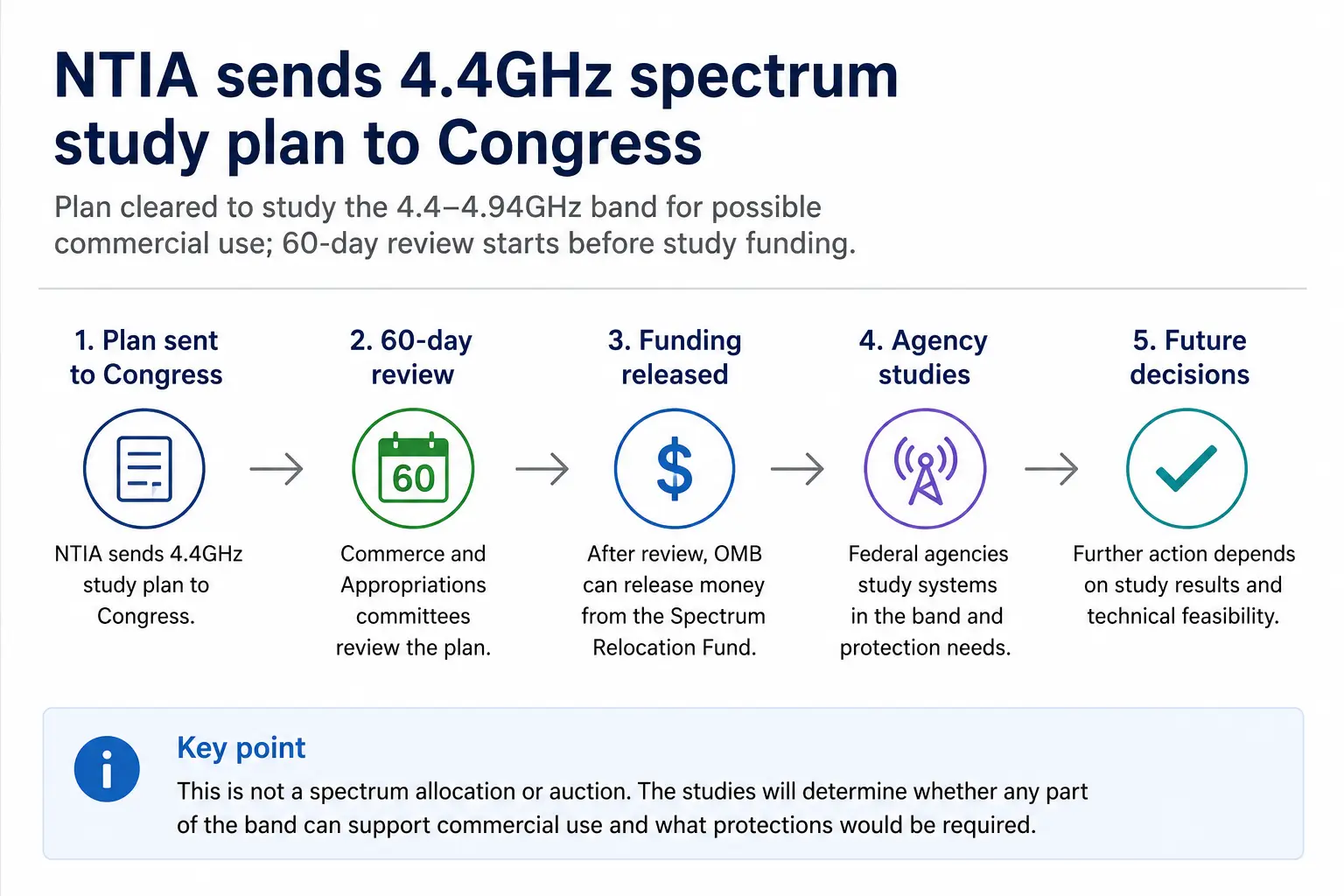
NTIA sends 4.4GHz spectrum study plan to Congress
NTIA has sent the 4.4GHz study plan to Congress, starting a 60-day review before agencies can receive funding for engineering work.

Asia-Pacific Datacenter
Sunway Construction wins RM1.02bn Johor data-centre fit-out
Sunway Construction will deliver a RM1.02 billion MEP fit-out for an unnamed US technology company’s data centre in Johor.

North America Datacenter Trends
Dozens protest Meta’s planned Alberta data centre
Local opposition has emerged after Meta secured key permits for its 1GW Alberta data centre, focusing attention on grid use, water and project oversight.

Asia-Pacific National Telecom Trends
NTT DOCOMO starts Ericsson RAN Compute rollout
NTT DOCOMO is adding Ericsson baseband hardware to expand centralised RAN capacity while preparing for 5G Advanced services.

North America National Telecom Trends
TELUS cuts dividend 55% as digital unit loses value
TELUS is retaining more cash for debt reduction as it focuses resources on connectivity and reviews assets outside its core telecom business.

Europe and Middle East National Telecom Trends
Sparkle, University of Genoa launch submarine cable course
Sparkle, the University of Genoa and the SubOptic Foundation have launched a postgraduate programme dedicated to submarine cable infrastructure.

Leaders
Jan Kayser and the Operational Trade-Offs Behind LINX's Route-Server Observability Migration
Internet exchanges are places where networks connect directly, a practice called peering; transit is paid upstream connectivity. Route servers help operators share reachability information efficiently, while a looking glass lets engineers inspect that routing view without…

Leaders
Kyle Spencer and the Route-Server Continuity Decisions Behind UIXP's Multi-Site Growth
Kyle Spencer's signed operating reports for the Uganda Internet eXchange Point show how an exchange can turn routing constraints, site diversity, and content-service disruption into bounded continuity decisions rather than broad claims of resilience.

Leaders
Chris Caputo and the Route-Server Decisions Behind Strict RPKI Filtering at SeattleIX
Chris Caputo's public Seattle Internet Exchange record shows how route security becomes operational: acceptance rules are ordered, evidence sources have different weight, measured withdrawals are allowed to stand, and continuity changes are sequenced around observable traffic…

Leaders
Kotikalapudi Sriram and the Operational Boundaries of AS_SET Deprecation and BGPsec
Across three collaboratively produced RFCs, Kotikalapudi Sriram's public standards record traces a move from discouraging ambiguous AS path sets to prohibiting them, while BGPsec shows what explicit path authorization still requires: negotiated capabilities, accurately bound…

Leaders
Jeff Tantsura and the Operational Limits Made Visible by Maximum SID Depth Signaling
Jeff Tantsura's co-authored standards work on Maximum SID Depth shows why path computation needs an accurate record of what a running node can actually impose, carried with enough type and scope to remain useful from the IGP to BGP-LS and PCEP.

Leaders
John Moy and the Operational Record Behind OSPF State and Graceful Restart
John Moy's documented OSPF work offers a restrained account of routing reliability: topology state has to be explicit and synchronized, protocol cost has to be measured, standardization has to rest on implementation experience, and forwarding continuity during restart has to end…

Leaders
Linda Dunbar and the Operational Boundaries of Secure Network Connectivity
Linda Dunbar's public IETF record connects data-center neighbor discovery, interfaces to network security functions, BGP-based SD-WAN edge discovery, and directorate scrutiny of failure visibility, showing why secure connectivity depends on explicit operational boundaries rather…

Leaders
Ross Callon and the Operational Transition from Dual Routing to MPLS Labels
Ross Callon's dated standards record shows that network transitions endure when capabilities, compatibility, and forwarding identity are made explicit, first for IP and OSI coexistence and later for traffic classes bound to locally meaningful MPLS labels.

Leaders
Dave Oran and the Operational Boundaries from IS-IS to IP Anycast
Dave Oran’s shared technical record shows how dependable forwarding begins with a clear account of identity: which routing domain, service instance, name, or piece of state a system is actually using, and where continuity can break when that identity changes.

Leaders
Peter Psenak and the Link-State Decisions Behind Segment Routing and Flexible Algorithms
Peter Psenak's attributed IETF record offers a practical way to examine how routing policy becomes operational state. The relevant standards do not promise an automatically optimal network. They define identities, constraints, participation rules, forwarding bindings, and failure…