
Primary Domain
Infrastructure
Within the Primary Domain facet, Infrastructure intelligence groups reporting by primary domain so readers can follow a focused area of internet infrastructure, governance, connectivity markets, or digital capital. The page brings together related articles, public evidence, institutions, companies, people, regional exposure, operating dependencies, and market context that may otherwise sit across separate category pages. It explains the domain, the likely actor class, the market or governance context, and the source material readers should use when comparing signals. Operators, analysts, and governance readers can see how the same domain appears across events, profiles, market shifts, public-source evidence, regional dependencies, and longer-cycle infrastructure decisions over time.
Europe and Middle East Regional ISP
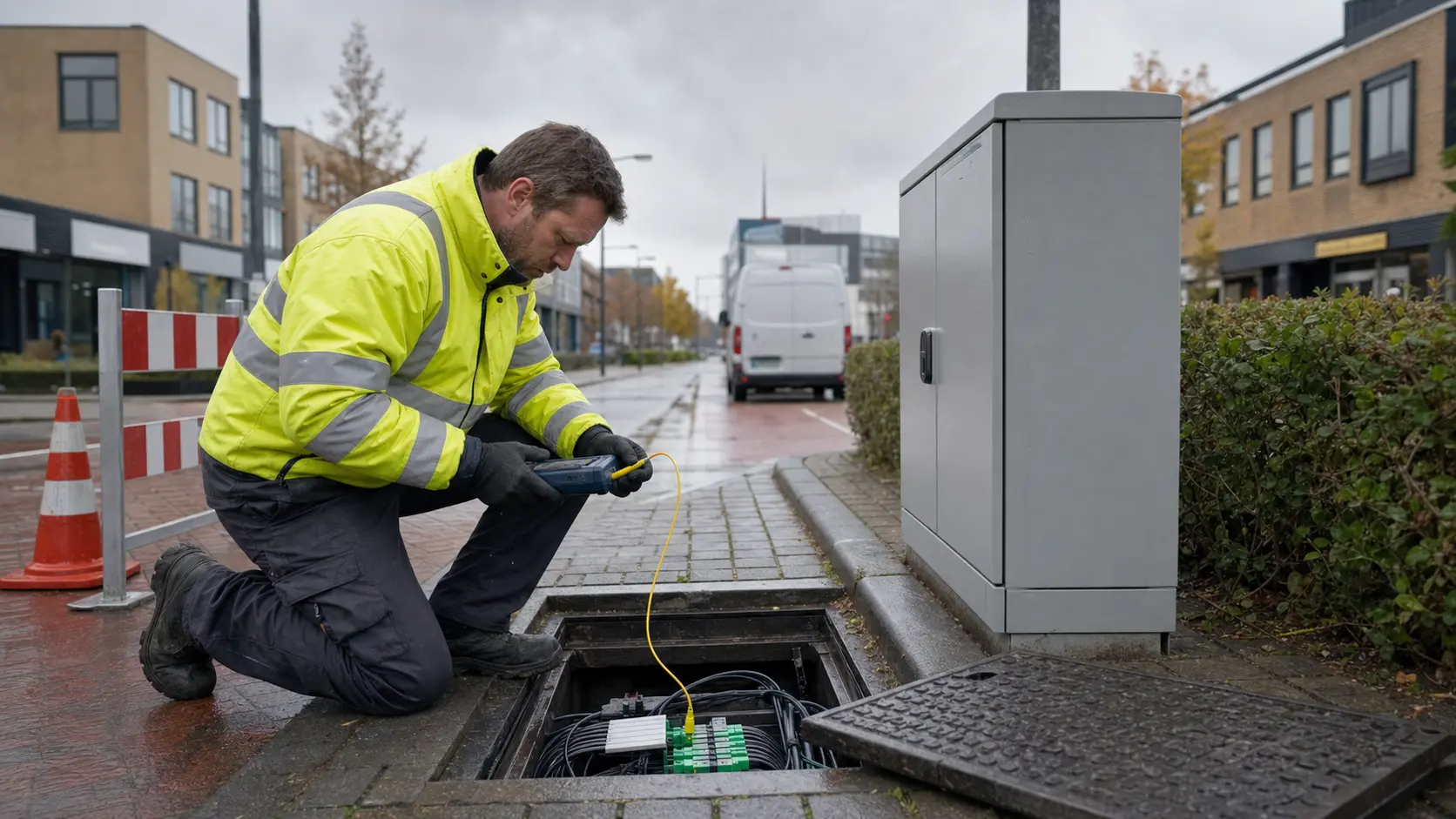
At DataFiber, the Fault Line Runs Between the Zoetermeer Ring and the Repair Crew
At DataFiber, the Fault Line Runs Between the Zoetermeer Ring and the Repair Crew intelligence summary explains the development, the public evidence available to readers, the organisations involved, the regional context, market exposure, and the infrastructure consequences that…

Europe and Middle East Institutional
AS24989’s Fourteen Prefixes Do Not Map Equinix Germany’s Facility Footprint
AS24989’s Fourteen Prefixes Do Not Map Equinix Germany’s Facility Footprint intelligence summary explains the development, the public evidence available to readers, the organisations involved, the regional context, market exposure, and the infrastructure consequences that may…

North America Regional ISP
LymeFiber’s 57-Mile Build Meets Its Real Test at the Pole
In Lyme and along a limited set of Orford roads, symmetrical fibre is a modern service carried by very physical infrastructure: shared utility poles, splice closures, customer drops, powered electronics and a cross-river connection whose present-day diversity is not publicly…

North America Institutional
Inside TahoeIX’s Reno Fabric: The Two-Site Test for Keeping Sierra Traffic Local
TahoeIX has genuine network-resource and participation signals, but its value during a Sierra emergency turns on a harder question: whether the paths into its two Reno sites fail independently.
North America Institutional
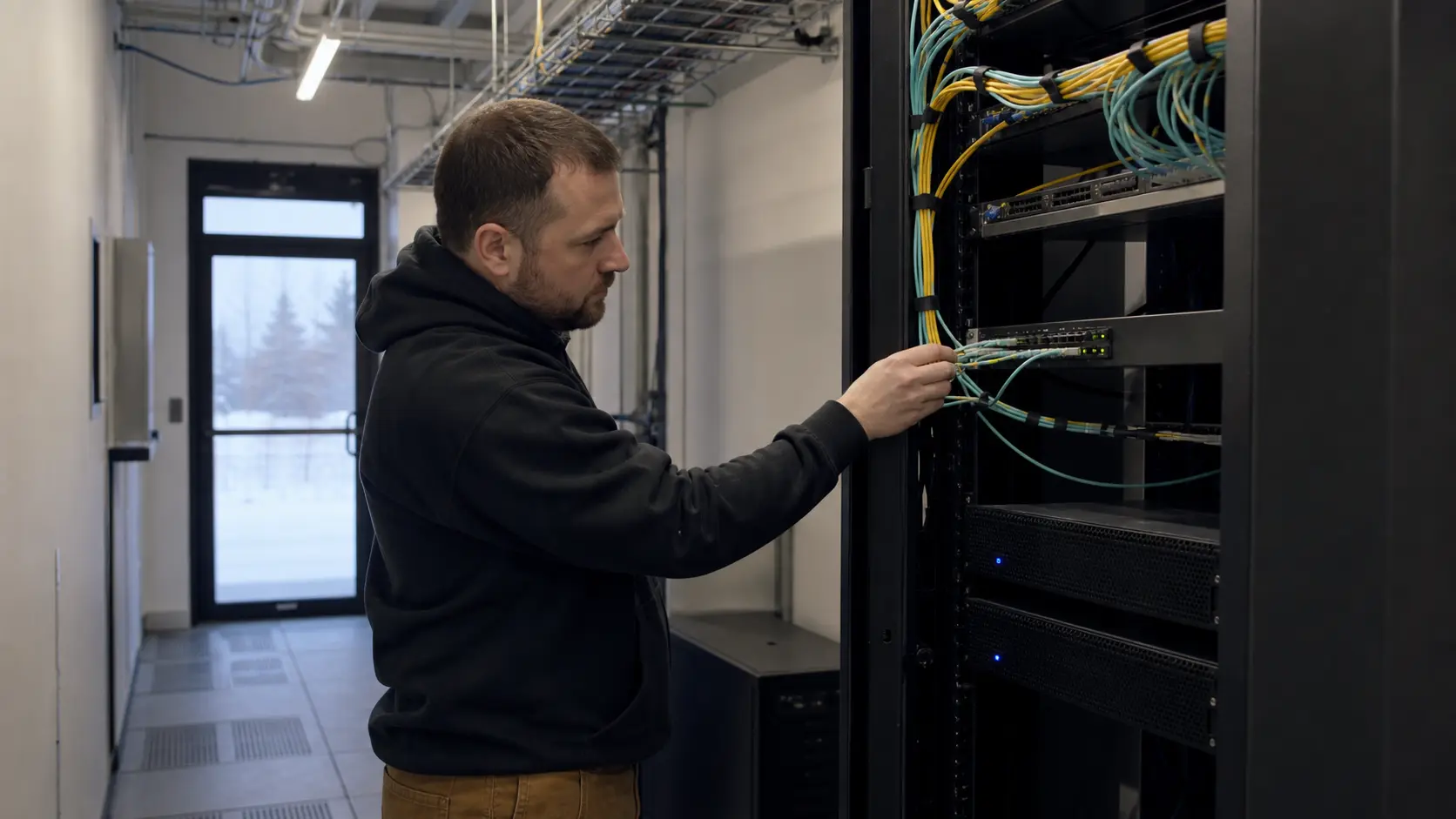
YEGIX Has Two Route Servers but Only One Publicly Listed Edmonton Site
Edmonton has an exchange built to keep nearby traffic nearby. The harder question is whether each participating network can reach that shared switch without following the same fibre, facility and human path as everyone else.

North America Institutional
Puerto Rico IX’s Hurricane Test Starts With a Five-Day Fuel Clock
PR-IX has built a visible island-local peering surface across metropolitan San Juan, but its value during the next major storm will be determined by a less visible chain of powered racks, intact member circuits, reachable fuel and operators who can keep the whole system—not just…

Europe and Middle East Cloud Services
Inside SuperHosting.BG’s Sofia Hosting Chain: Equinix, Telepoint, Two Upstreams and the Restore Clock
A Bulgarian business buys a control panel, a support promise and a monthly allocation of compute. What keeps its site alive, however, is a much less visible chain of rooms, power systems, server parts, network paths, backup copies and people able to act when one of those layers…

Europe and Middle East Cloud Services
AS50149 Is Silent, but the Platform Is Not: Inside Servercore and Selectel’s Continuity Boundary
Choosing “Moscow,” “Almaty” or “Tashkent” from a cloud menu looks like a geographic decision. For a continuity-sensitive customer, it is only the beginning: the choice has to be followed down to the company signing the contract, the building holding the rack, the network carrying…

North America Cloud Services
A Failed Drive in Singapore Tests Servers.com’s Global Bare-Metal Promise
Servers.com sells a consistent global infrastructure experience, but the decisive moment happens in one aisle: whether a person can reach the right rack, find the right part and return a customer’s machine to service before a local fault becomes a business-wide outage.

Global Cloud Services
Domain Tech’s AS18994 Trail Leads to Labcorp, Not a Cloud Hosting Fleet
A name that looks like a hosting business turns out to be something narrower and more consequential: a role contact attached to Labcorp’s public internet resources. The distinction changes what can be claimed about capacity, geography, redundancy and the people exposed when the…
Global Cloud Services
Cloud LLC’s Dormant AS199067 Exposes the Physical Risk Beneath Startpack’s Software Shelf
A Kazan company that helps businesses choose and access cloud applications once had a visible /24 of its own. The route vanished from public tables in 2016, but the services kept evolving—a useful warning that the customer-facing cloud and the network carrying it are not the same…

Global Cloud Services
What G SERVER-G Group’s 100G exchange labels do—and do not—measure
Four 100-gigabit exchange entries make a vivid network card. They do not reveal how much compute is powered, where customer data sits, or how quickly a student-led operator can recover a failed server. For G SERVER-G Group, the distance between routing visibility and…

Global Cloud Services
TEAMFELNULL’s 25 Gbps Tokyo testbed is visible; its hosted capacity is not
TEAMFELNULL SERVER-G Group has a live, measurable edge at a community internet exchange and a public trail through four Tokyo data-centre listings. What it does not have in public is the evidence that turns network reach into dependable hosted capacity: named server pools…

Leaders
Abhisak Chulya and the Hard Economics of Building a Thai Cloud
Abhisak Chulya's consequential decision was not simply to start a technology company, but to keep changing what that company was prepared to own: first a Thai-language route into the internet, then advertising services, and eventually the software, servers, networks and support…

History
Geoff Huston and the Transfer of Australia's University Internet
From building AARNet in 1989 to the migration of AUNIC in 2001, the documented roles of Geoff Huston reveal how capacity, commercial demand, and public legitimacy divided the overlapping responsibilities of a small technical community among universities, operators, registries…

Latin America and Caribbean Regional ISP
ORELTELECOM's new AS274252 has one visible IPv4 upstream, while its Cotopaxi recovery routes remain unproven
ORELTELECOM has given the long-running AJnet retail operation a new legal and routing identity, but the public evidence still stops short of proving that customers across Cotopaxi would retain an independent path when a landslide closes the road beside the access cable.
Latin America and Caribbean Regional ISP
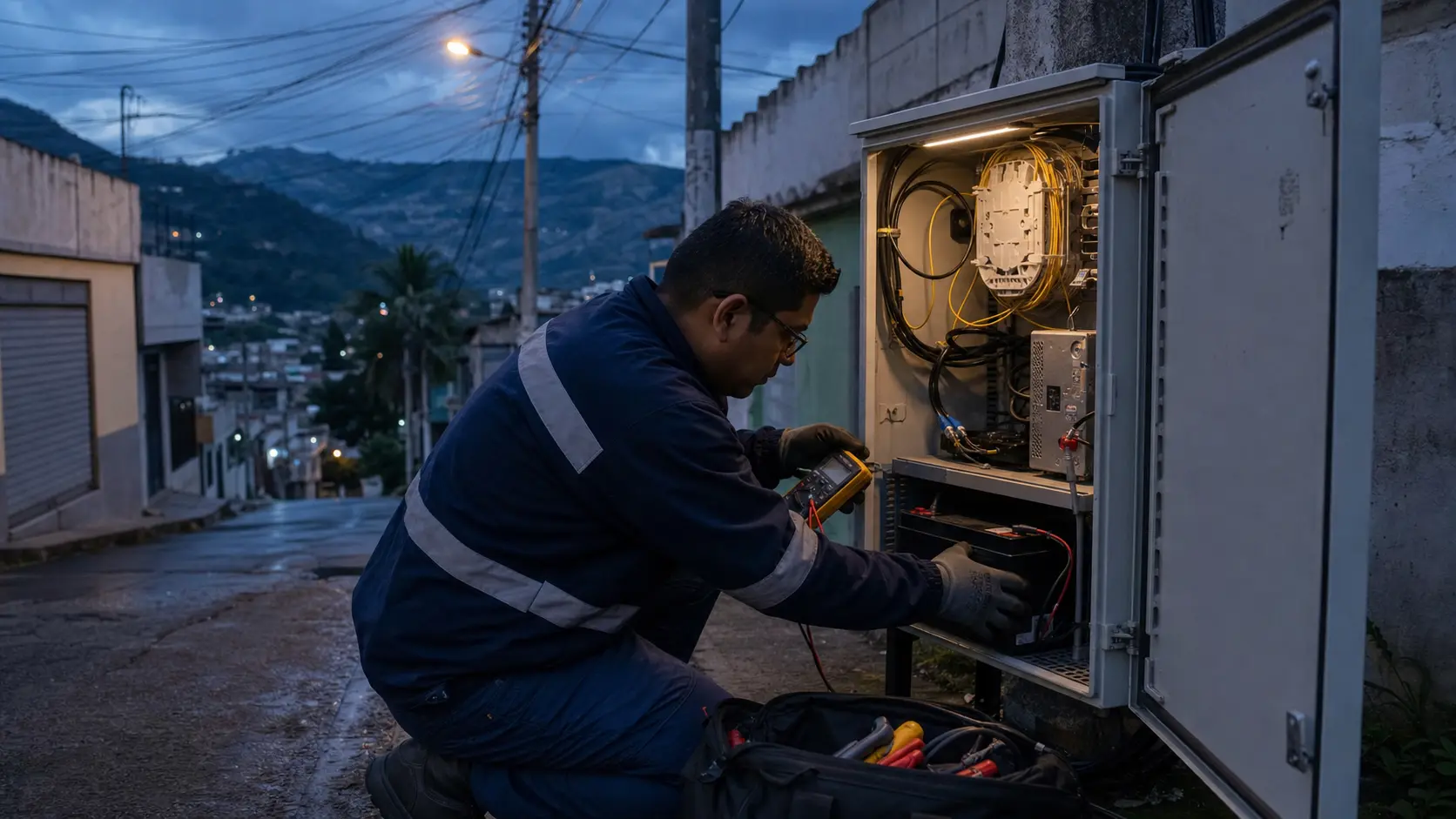
TELECOMNET promises 99% monthly availability in six El Oro towns, but leaves street-POP battery runtime undisclosed
TELECOMNET promises 99% monthly availability in six El Oro towns, but leaves street-POP battery runtime undisclosed intelligence summary explains the development, the public evidence available to readers, the organisations involved, the regional context, market exposure, and the…

Latin America and Caribbean Regional ISP
TELECOM3000 lists a 10Gbps NAP.EC port while UFINET precedes it in 99.7% of a July route snapshot
South Quito retailer Surnet now offers fibre plans as fast as 1Gbps, a striking distance from the proposed 100Mbps external link recorded in TELECOM3000’s 2021 licence. The gap tells a story of commercial expansion, but the public record still does not show whether the access…

Latin America and Caribbean Regional ISP
FIBERNET advertises 150/150 in Huehuetenango, but all three visible IPv4 routes converge on UFINET
FIBERNET advertises 150/150 in Huehuetenango, but all three visible IPv4 routes converge on UFINET intelligence summary explains the development, the public evidence available to readers, the organisations involved, the regional context, market exposure, and the infrastructure…

Latin America and Caribbean Regional ISP
AS27738 still says Ecuadortelecom, but CONECEL sells the circuit—and no public record proves where two enterprise paths first meet
Ecuadortelecom S.A. remains visible in Ecuador’s internet-routing layer, while current fixed-service contracts, maintenance notices and capacity reports identify CONECEL S.A. as the operating counterparty behind Claro. That split makes an enterprise resilience claim harder to…