
Content Type
Analysis
Within the Content Type facet, Analysis intelligence gathers BTW.MEDIA articles that share the same editorial format, helping readers compare briefings, profiles, risk notes, market analysis, and event coverage without mixing different kinds of evidence. The page explains how this content type frames internet infrastructure events, company movements, governance decisions, operational signals, and public evidence across the site. Readers can compare which actors or infrastructure systems appear most often, how source quality changes interpretation, and whether the material is a durable profile, a time-sensitive event, a strategic market signal, or a governance development. The result is a useful search page for operators, investors, customers, analysts, and policy stakeholders who need to understand the consequence, timing, and evidence behind similar article formats.

History
The Mail Address That Outlived Its Server: How MX Records Separated Identity from Delivery
An email address looks like a destination. In the early Internet, it often was: a mailer could take the domain after `@`, open SMTP to the machine with that name and hope the mailbox lived there. In January 1986, RFC 974 described why that assumption had stopped scaling—and how…

History
The Clock Built from Disagreement: How NTP Made Internet Time Without Trusting One Server
In 1989, an Internet-wide experiment found clocks wrong by minutes, hours and, in a few cases, weeks. The problem was not a shortage of machines willing to state the time. It was deciding which statements deserved to move a local clock when packets, oscillators and operators…

History
The Map Made from Expired Packets: How Traceroute Turned Failure into Internet Evidence
In December 1988, Van Jacobson was not trying to draw the Internet. He was trying to find out where his packets had gone. The tool he assembled at Lawrence Berkeley Laboratory made the network answer indirectly: send a packet designed to expire, listen for the complaint, then let…

History
The Day the Old Protocol Lost Its Network: The 1983 TCP/IP Cutover and the Limits of Technical Authority
On 1 January 1983, an ARPANET host that still depended on NCP faced a new fact: the network beneath it could stop servicing the old protocol. The famous cutover mattered not because a memo became universal law, but because a disclosed rule reached an execution boundary whose…
History
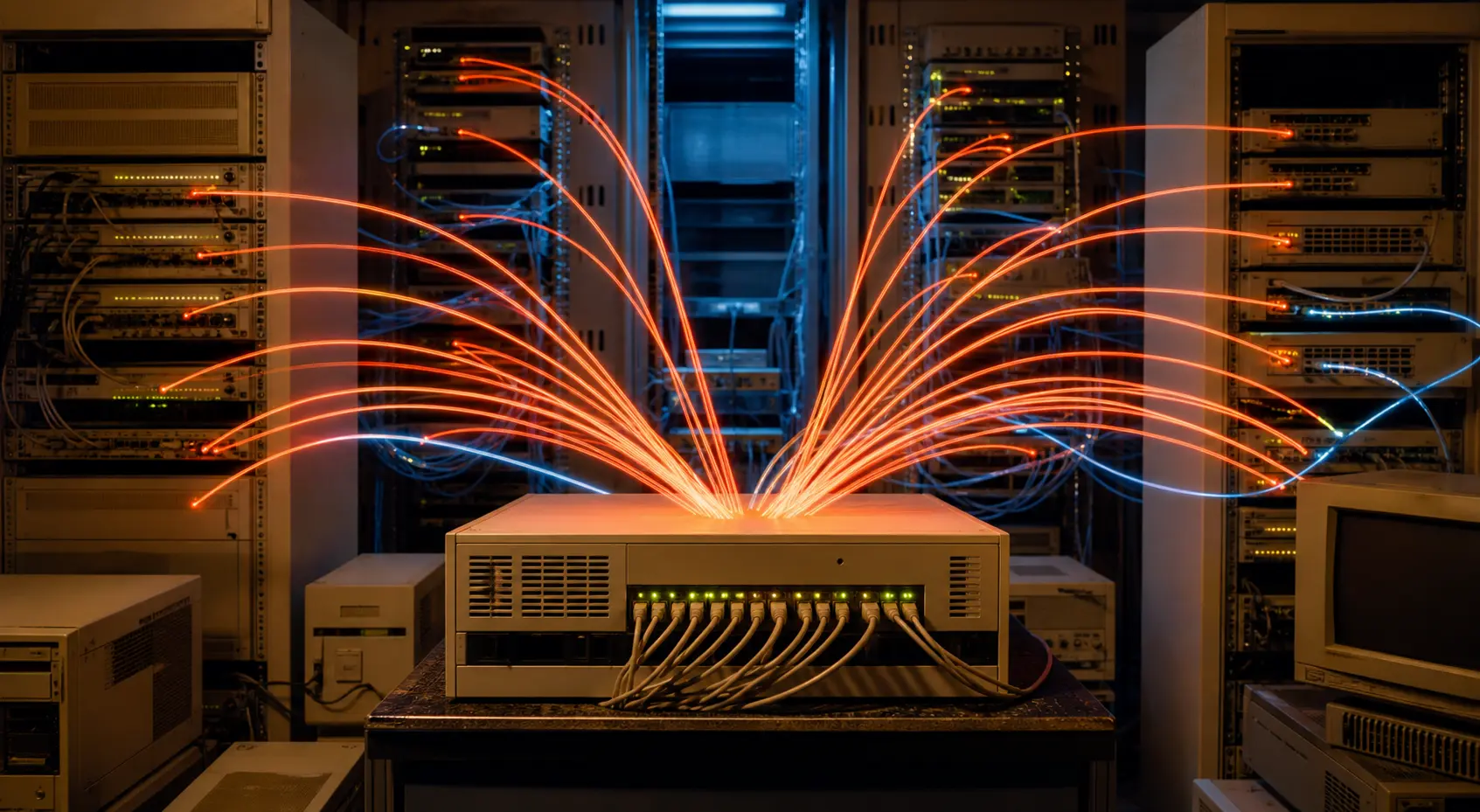
When One Router Announced Everyone’s Network: AS7007 and the Failure of Unchecked Trust
When One Router Announced Everyone’s Network: AS7007 and the Failure of Unchecked Trust intelligence summary explains the development, the public evidence available to readers, the organisations involved, the regional context, market exposure, and the infrastructure consequences…

History
When the First Network Became Replaceable: ARPANET’s Retirement and the Internet That Continued
ARPANET did not take the Internet with it when it was retired in 1990. That was not because the pioneering network had become unimportant. It was because its most important function—making unlike networks communicate—had already escaped the machinery and institution that first…

History
The Window That Learned Restraint: How TCP Stopped Congestion Collapse Without a Traffic Authority
The Internet's answer to its first congestion crisis was not a controller above the network. It was a new discipline inside every sender: learn the path from acknowledgements and loss, increase carefully, and retreat before retransmissions turn shared capacity into useless…

History
The Worm That Needed a Switchboard: How the 1988 Internet Built CERT Without Giving It Command
When the Internet’s first great emergency arrived, its most effective institutional answer was neither a central operator nor a security sovereign. It was a small, trusted point of contact built to make independent operators faster and better informed while leaving their…
Global Institutional
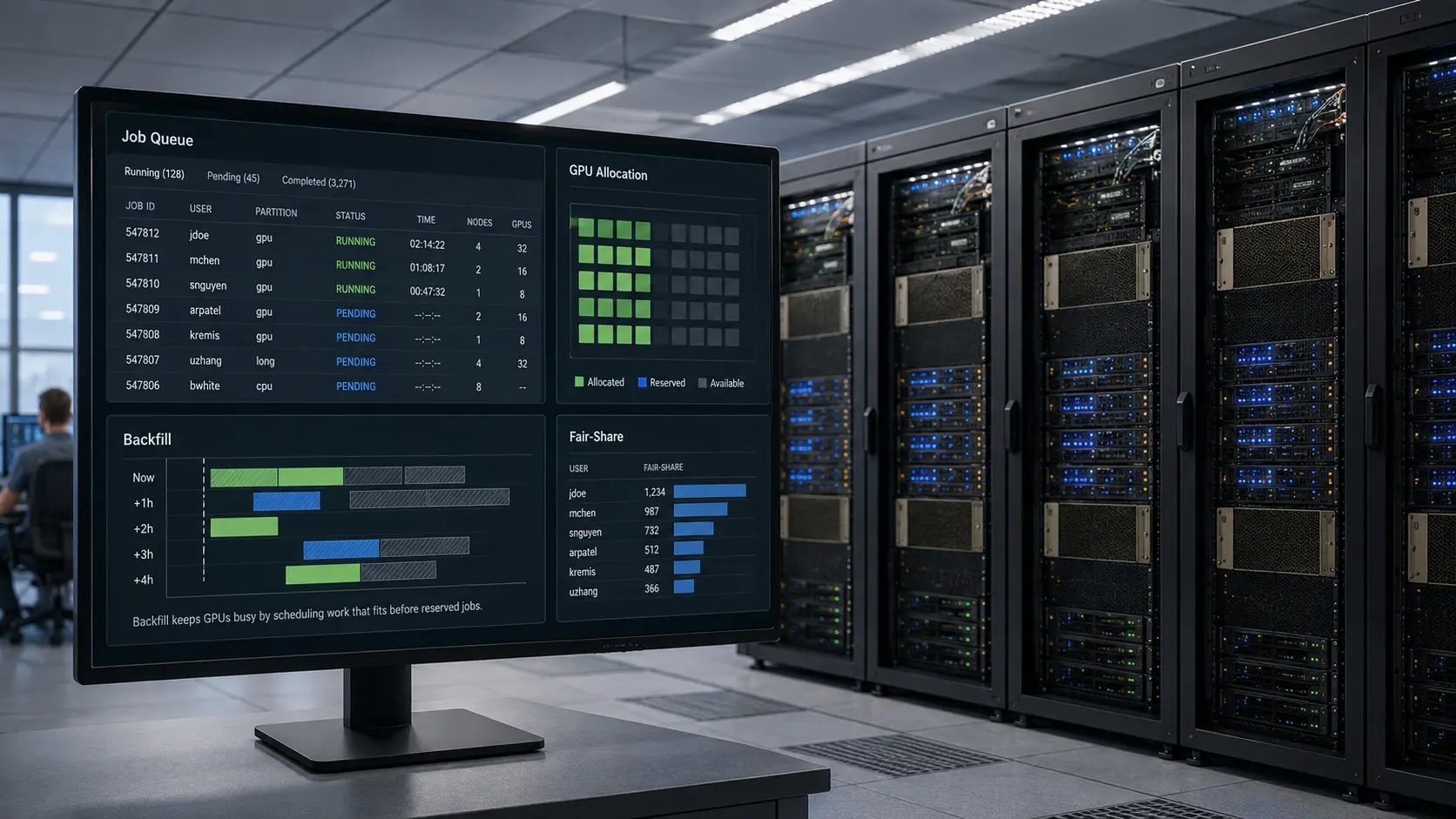
Slurm: The Scheduler That Decides Who Gets the GPU
Slurm allocates scarce compute across HPC and AI clusters, turning queue policy into a practical decision about who gets GPUs and when. NVIDIA’s 2025 acquisition of SchedMD gave the project more resources while making vendor-neutral stewardship a question that now has to be…
Creators
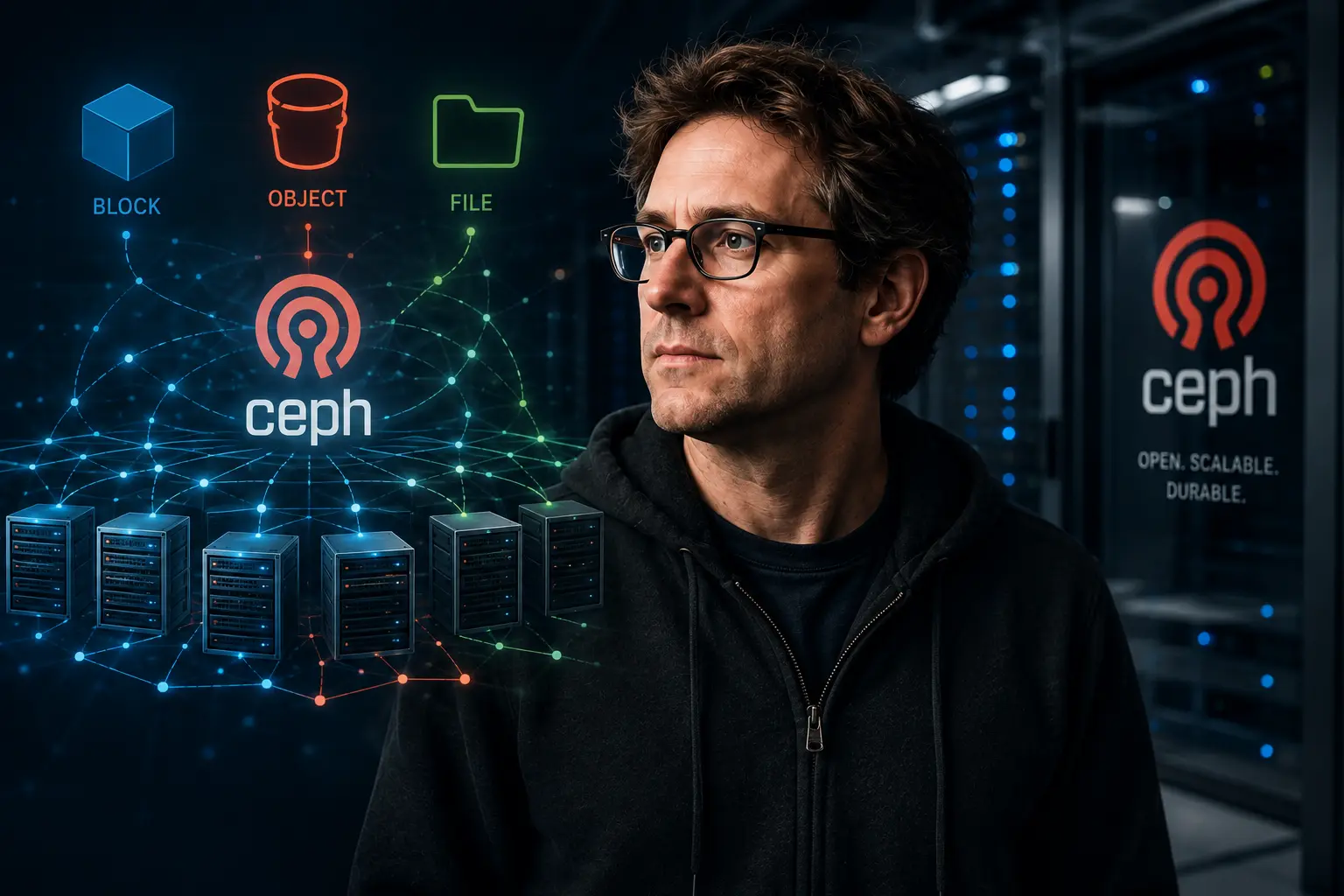
Sage Weil: The Architect Who Made Distributed Storage Calculable
Sage Weil’s most durable contribution to internet infrastructure was not a storage appliance but an architecture. Ceph used CRUSH to calculate where data belongs and RADOS to spread storage, repair and movement across a cluster. The design helped commodity machines behave like…

Global Institutional
NVM Express: how storage became a network protocol
NVMe began as a more efficient way to talk to the flash memory installed in a server. It has become a family of protocols capable of carrying the same command queues and namespaces over PCIe, TCP or RDMA. That continuity has made storage composable, while moving part of its…

Global Institutional
NVM Express: how storage became a network protocol
NVMe began as a more efficient way to communicate with flash memory installed inside a server. It became a family of protocols capable of carrying the same queue, controller and namespace model over PCIe, TCP or RDMA. That continuity enabled capacity to be disaggregated, but…

Global Institutional
NVM Express: How storage became a network protocol
NVMe began as a more efficient protocol for accessing flash inside servers and developed into a family of standards that carries consistent queue, controller and namespace semantics over PCIe, TCP and RDMA. It makes storage easier to pool and compose while shifting complexity…

Global Institutional
UCIe's chiplet promise depends on engineering and accountability beyond the link
UCIe has pushed the die-to-die interface to 64 GT/s and added 3D packaging, raw data transport and whole-package management. The real test is whether these rules can support multi-vendor products when power delivery, thermals, yield, software, security and accountability still…

Global Institutional
UCIe’s chiplet promise extends beyond the link
UCIe has defined a die-to-die interface capable of 64 GT/s, 3D stacking, raw traffic and package-wide management. The decisive test is whether those rules enable multi-vendor products while power, thermal design, manufacturing yield, software, security and contractual…

Global Institutional
The promise of UCIe depends on what happens beyond the link
UCIe has defined an inter-chip interface that reaches 64 GT/s and already covers 3D packaging, raw traffic and whole-package management. The decisive test will be whether those rules can sustain multi-vendor products when power, thermals, manufacturing yield, software, security…

Global Institutional
UCIe’s chiplet promise depends on what happens beyond the link
UCIe has defined a die-to-die interface that reaches 64 GT/s and now covers 3D packaging, raw traffic and package-wide management. The consortium’s real test is whether those rules can support multi-vendor products when power, thermal design, yield, software, security and…

Global Institutional
PCI-SIG: The common rules inside AI servers
An AI server may combine processors, accelerators, network cards, storage controllers, switches, retimers and security devices from competing vendors. PCI-SIG maintains a common interface that lets these components be discovered, negotiate capabilities and exchange data, while…

Global Institutional
PCI-SIG: the internal rulebook of the AI server
An AI server can bring together processors, accelerators, network cards, storage controllers, switches, retimers and security devices from competing companies. PCI-SIG maintains the common interface that lets these components discover one another and exchange data, then organises…

Global Institutional
PCI-SIG and the internal rules of the AI server
An AI server can bring together processors, accelerators, network adapters, storage controllers, switches, retimers and security devices from companies that compete with one another. PCI-SIG maintains the common interface that lets these components discover one another and…