Summary
- EFF’s June 1998 instructions used a remotely hosted image to switch participating websites’ blue ribbons into an alert graphic.
- Sites above 30,000 hits a day were asked to host their own copy, distributing traffic and the job of keeping the image current.
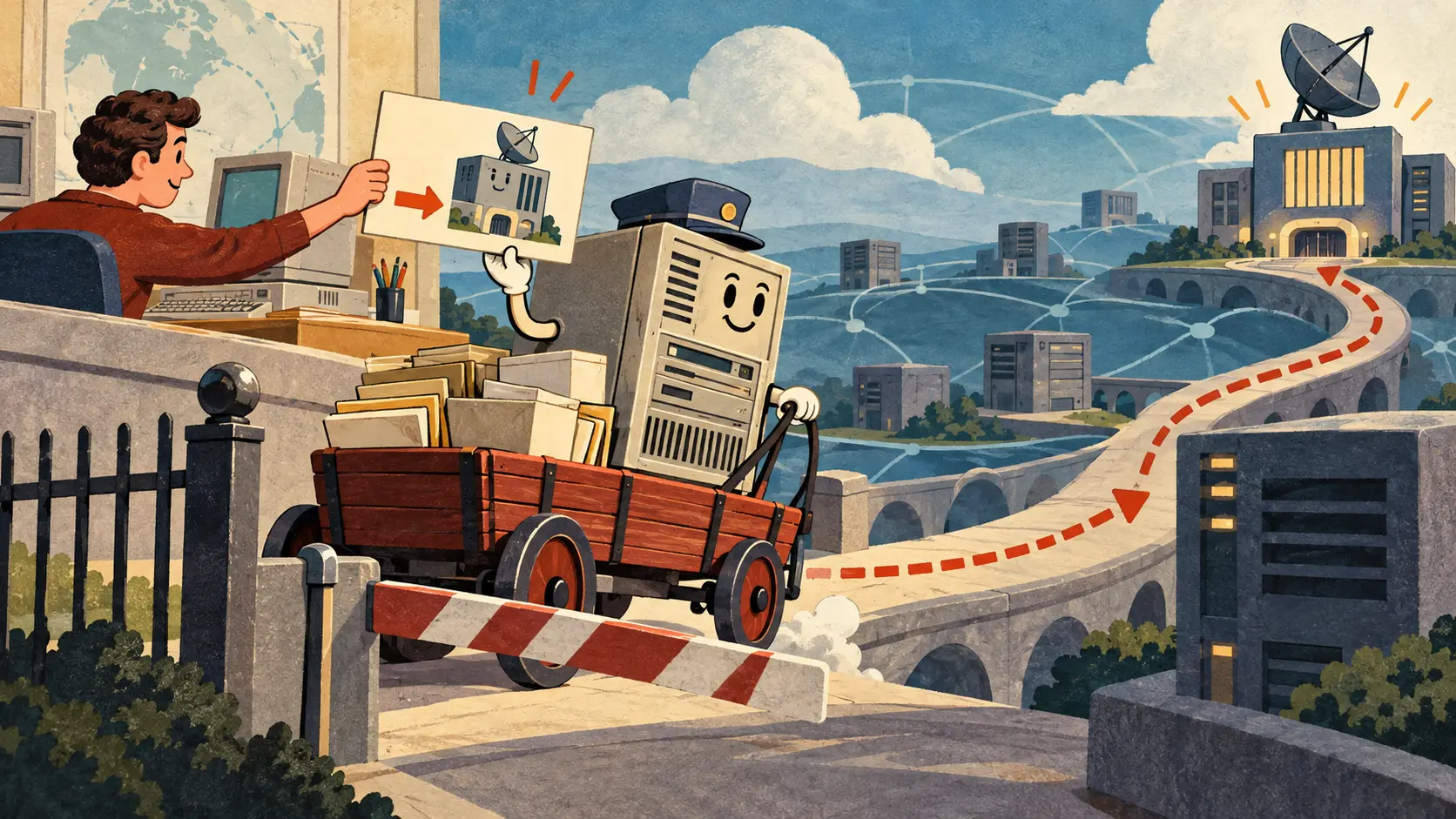
The blue ribbon came with a small favour for popular websites: could they please stop borrowing EFF’s copy of the picture? In its 15 June 1998 relaunch announcement, the Electronic Frontier Foundation asked sites exceeding 30,000 hits a day to put the icon on their own servers. Free expression had acquired a hosting problem.
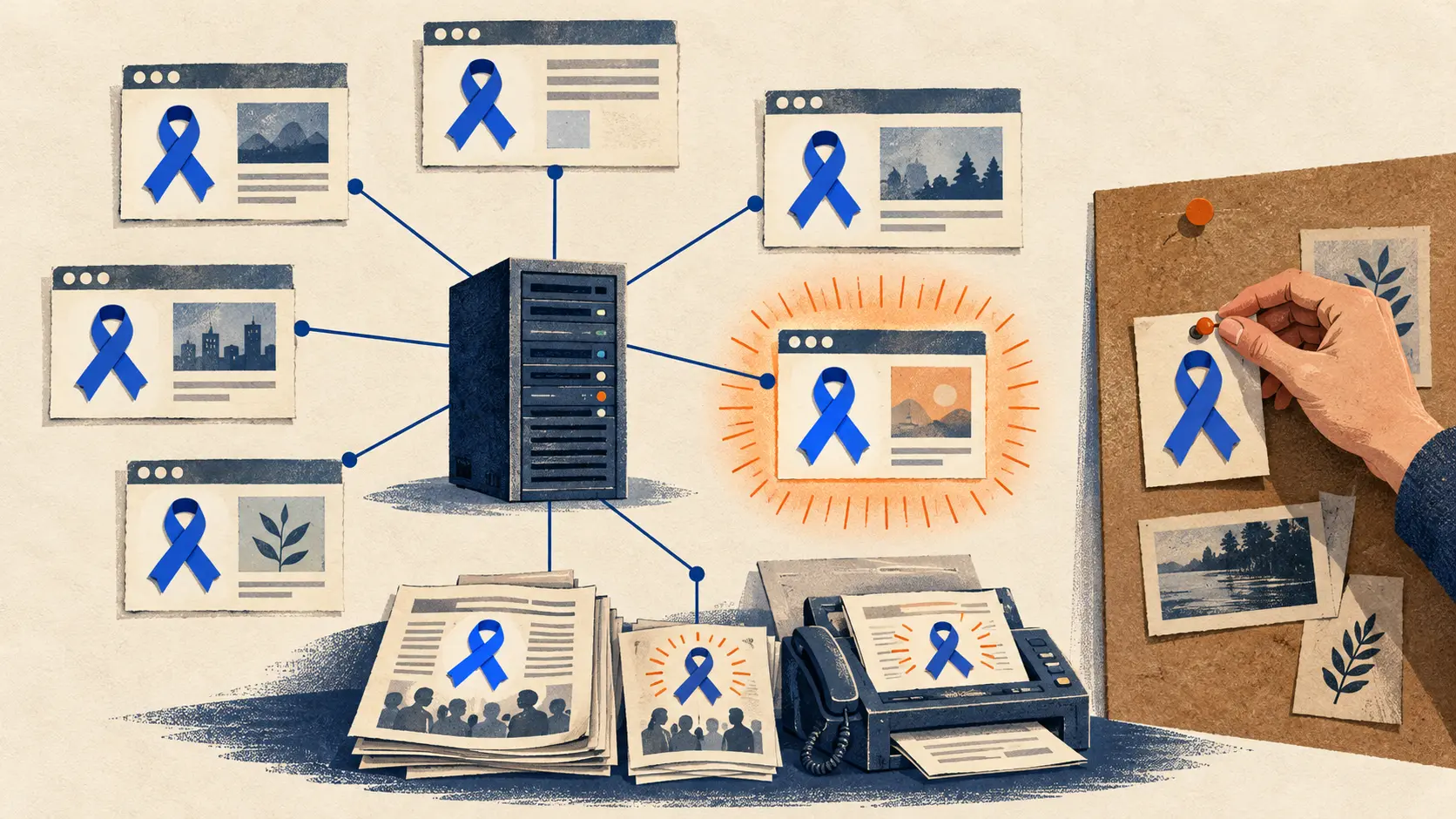
For everyone else, borrowing the picture was part of the point. The supplied HTML made the ribbon a link to a campaign page, while fetching the image from a separate EFF address. The little rectangle was 112 pixels wide and 76 high. EFF could replace the image with an alert version; participating pages could show the change when browsers fetched the updated file. A webmaster had lent the campaign a patch of screen.
The same picture, a different job
The ribbon’s ordinary appearance declared support. Its changed appearance could summon attention to a new fight. The webmaster chose to include the image, and could remove it; EFF supplied the changing signal inside it. That was a useful division of editorial labour for a campaign hoping to outlast one news cycle.
The idea already had a history of overworked servers. A notice released in February 1996 described the ribbon as the longer-lived successor to a two-day protest in which websites darkened their pages after the Communications Decency Act was signed. It offered graphics, links and campaign updates, then asked for help serving them.
The same newsletter reported four machines behind EFF’s web service: three in-house and one remote. Mirroring was still imperfect. Readers having trouble could try the master server directly, but were asked to avoid bookmarking its temporary address. Even the workaround needed instructions about its eventual retirement.
A copy solved one problem and created a chore
The 1998 traffic threshold split participants into two arrangements. A smaller site could use the shared image and receive EFF’s changes. A busy site could serve a local copy and spare EFF the image requests. That copy would keep its saved appearance until somebody refreshed it.
The hit threshold assigned the serving load. The campaign wanted more visible ribbons and fewer demands on the same machines. Both wishes were reasonable. They pulled image hosting in different directions.
The destination behind the ribbon mattered too. The June announcement directed people towards a Congressional action site sponsored by EFF, ACLU and EPIC, with fax and email options. An autumn alert reproduced in the October newsletter pointed to a free web-to-fax action and asked participants to keep their ribbons up beyond that particular legislative contest.
It also asked people outside the United States to maintain local campaign pages. The distributed text had its own expiry instruction: stop circulating that alert after January 1999 and consult newer information. A picture could be switched at its source; copied advice still needed someone to stop passing around yesterday’s urgency.
The ribbon therefore carried more than a position. It connected a publisher’s page, an organiser’s signal, a server operator’s workload and a route to action. The smallest object in the arrangement was the picture. The maintenance instructions were considerably larger.
Member Briefing
Deeper Profile Context
Sign in with the right membership level to unlock the full briefing and source notes.
Only for Strategic Circle
Strategic Circle
Open to all readers. Unlock profile briefings after joining and signing in.
Join Strategic CircleOnly for Leadership Alliance
Leadership Alliance
For qualified IP-asset owners and management; sign in to unlock alliance briefings.
Join Leadership Alliance