Summary
- Digital Himalaya combined web access with portable viewing copies; Sara Shneiderman carried a DVD player and an extra battery to Lubra in December 2002.
- Viewers identified scenes from Dolpo and recalled a dance arranged for filming. Continued access to the footage still depended on equipment and power.
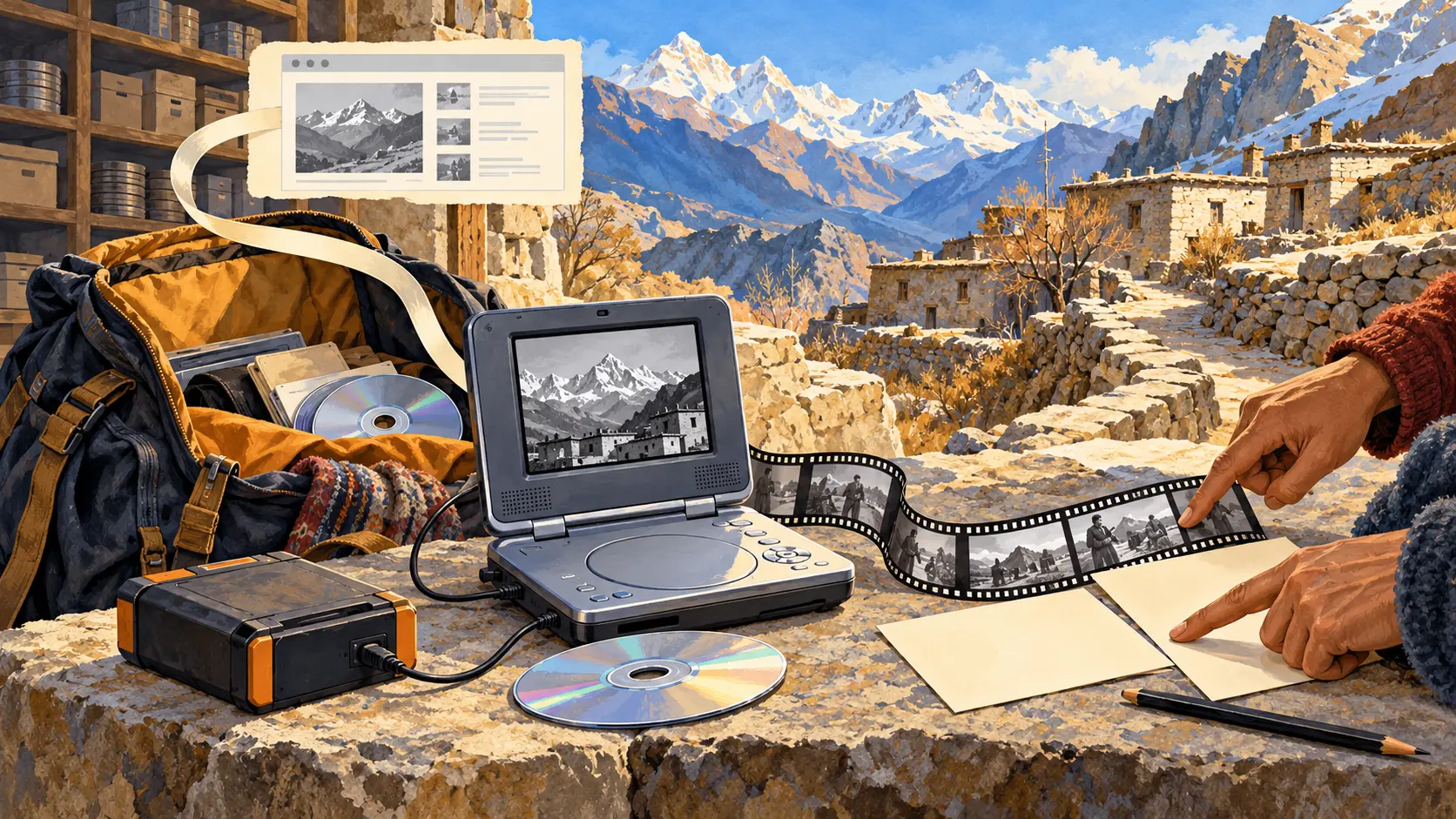
For part of Digital Himalaya's audience, distribution came with shoulder straps. In December 2002, Sara Shneiderman walked from Jomsom towards Lubra with a portable DVD player and an extra battery described as lasting twelve hours. In her backpack was a way to watch film made forty years earlier.
Her first-person account of the visit records a practical experiment: bring digitised footage back to people who could recognise its places and participants. The film was shot on 16mm by Christoph von Fürer-Haimendorf in 1962. At the time of her visit, she reported that Lubra had neither electricity nor phone access.
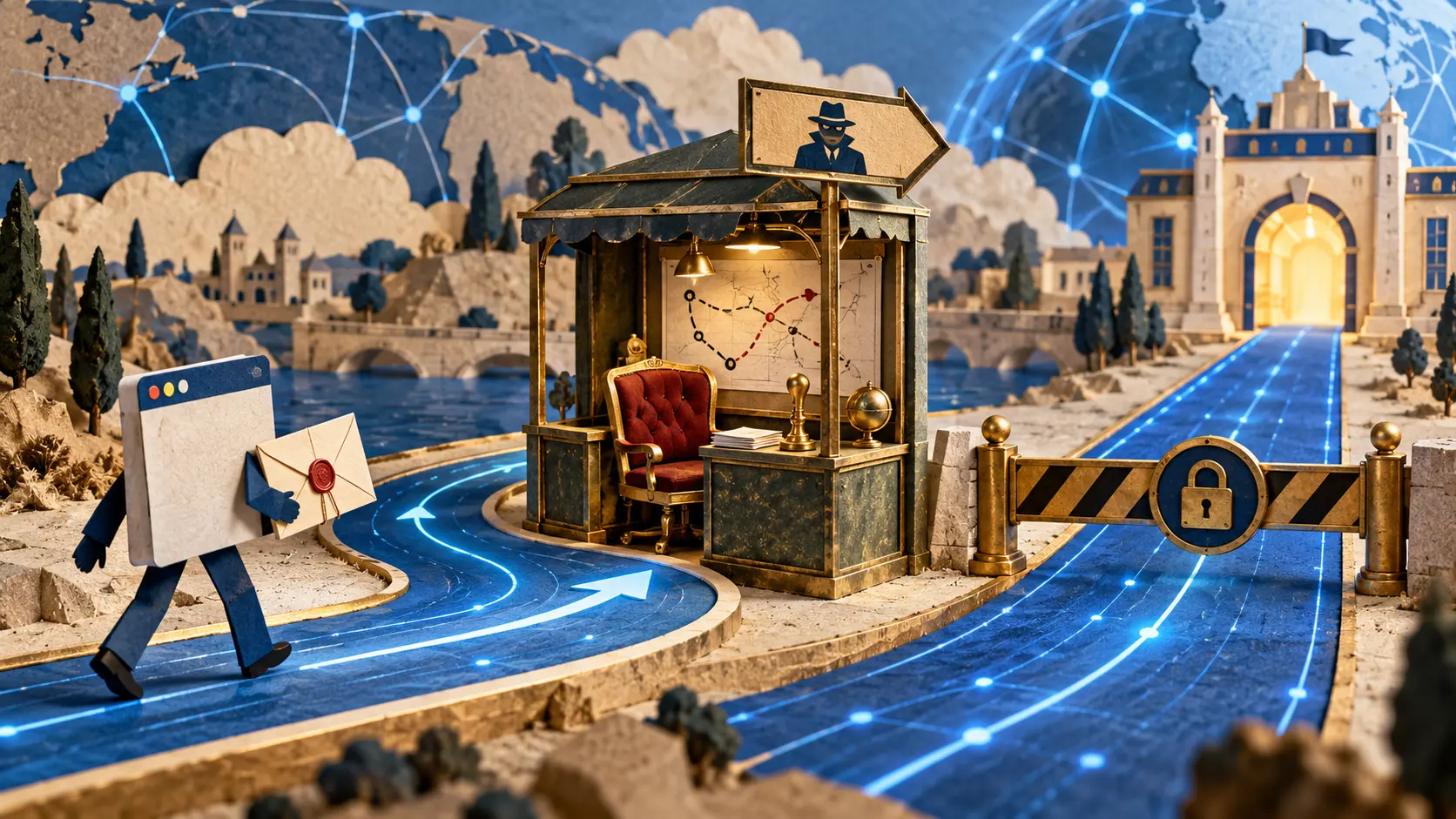
The archive had two delivery routes
Digital Himalaya had begun in December 2000. Its official overview sets out a plan to preserve deteriorating ethnographic materials, put resources within reach of researchers over broadband, and provide DVDs to descendants of the people represented.
There was a website to go with the ambition. A project technology history updated in 2010 recalls its 2000 beginnings in simple HTML, with compressed QuickTime files embedded in pages. The web offered a distribution route; a disc and a player offered another.
In their March 2003 report, Mark Turin and Shneiderman explained why both mattered. Bandwidth, familiarity with computers and the language of a search interface could all stand between people and images of their own communities. A portable DVD player could bring a viewing copy into a room without an internet connection.
The audience knew the missing details
In Lubra, Shneiderman arranged a showing in the village gompa. She introduced the project and the film's year, then left further explanation aside so viewers could comment. The five-minute clip was watched repeatedly, with pauses to discuss people and scenes.
Those discussions changed the account of what was on screen. The project reports say viewers identified several early scenes as coming from Dolpo, rather than Lubra. The authors concluded that footage from different places had apparently been joined without a note of the change.
Four villagers who remembered the filmmaker's visit also supplied a different explanation for a women's dance. They recalled the filmmaker asking women to dress up and dance for the camera. What could look like an unfolding wedding ritual had, in their recollection, been arranged for filming.
The viewers were doing descriptive work. Recognising a relative could lead to identifying an event; remembering the visit could change how a sequence was understood. A playable copy let that knowledge meet the surviving images.
The battery kept the last appointment
People wanted further showings. In Shneiderman's account, a request to leave the disc and player ran into the remaining battery life: only a few hours. The joint report says the team left with a promise to investigate a local viewing station.
Her first-person account closes with a resident carrying a petition to the district authorities to reconsider bringing electricity to the village. That was the next practical task in the story she recorded.
Digital Himalaya had taken a digital file far enough for its audience to answer back. The trip produced identifications and recollections that the film alone could not supply. Keeping it available for another afternoon required a way to power the player.
Member Briefing
Deeper Profile Context
Sign in with the right membership level to unlock the full briefing and source notes.
Only for Strategic Circle
Strategic Circle
Open to all readers. Unlock profile briefings after joining and signing in.
Join Strategic CircleOnly for Leadership Alliance
Leadership Alliance
For qualified IP-asset owners and management; sign in to unlock alliance briefings.
Join Leadership Alliance