Summary
- The available evidence identifies DFINFRA’s association with AS210860 as an investigative registry signal, but does not verify ownership, operation, an outage, a route withdrawal, a recovery timestamp, a failover path or a service-level effect.
- A defensible continuity claim requires a timed chain connecting registry attribution, observed routing, independent reachability, an identifiable recovery decision-maker and documented customer or contractual consequence.
The most important finding in the DFINFRA–AS210860 investigation is not a failure or a success. It is the boundary between what the current evidence can observe and what it cannot.
Public records place DFINFRA and autonomous system AS210860 on the same investigative path. That is useful. It provides a name, a resource identifier and a set of technical surfaces to examine. It does not, by itself, establish who operates routers, authorizes route announcements, controls upstream relationships, restores service or captures economic value.
The same distinction applies to continuity. A registry entry may remain present while a network is unreachable. A route may remain visible while applications fail. A route may disappear while customers continue to reach a service through another path. A route may return without proving who detected the incident, who authorized the response or whether the underlying service was restored.
This review therefore reaches a bounded conclusion: the captured evidence does not verify an AS210860 outage, withdrawal, recovery timestamp, failover path, probe interruption or service-level impact. It also does not prove uninterrupted continuity. The dynamic observations needed to distinguish those conditions were not captured in this run.
That is not an empty result. It defines the test that a continuity claim must pass.
The first signal is administrative, not operational
The public association between DFINFRA and AS210860 is a starting point for attribution research. The RIPE Database aut-num record can expose the registered name association, organization references, maintainers and declared routing policy. RIPE route and route6 searches can identify route objects, their maintainers and relevant modification records. Those records are useful because they describe administrative relationships and declared authorization surfaces.
They answer a limited question: which identity or maintainer appears in the relevant resource records?
They do not answer the operational question: which actor could detect a disturbance, change configuration, coordinate an upstream, activate an alternate path or declare restoration?
The distinction matters because a maintainer handle, organization reference or route object can be shared, delegated, stale or separated from the people and systems that execute an incident response. A registry record can guide the next inquiry without becoming evidence of hands-on control.
The same caution applies to PeeringDB. A public record, if present, may identify a network name, facilities, exchange participation, contacts or a stated peering policy. Multiple listed connections might describe a resilience design. They would not prove that those connections were active during a particular interruption, that traffic used them, or that the listed organization controlled recovery. PeeringDB is a valuable attribution and topology surface, not an incident log.
Sources: RIPE Database aut-num object, RIPE route and route6 search, and PeeringDB network record.
Five evidence layers that must not be collapsed
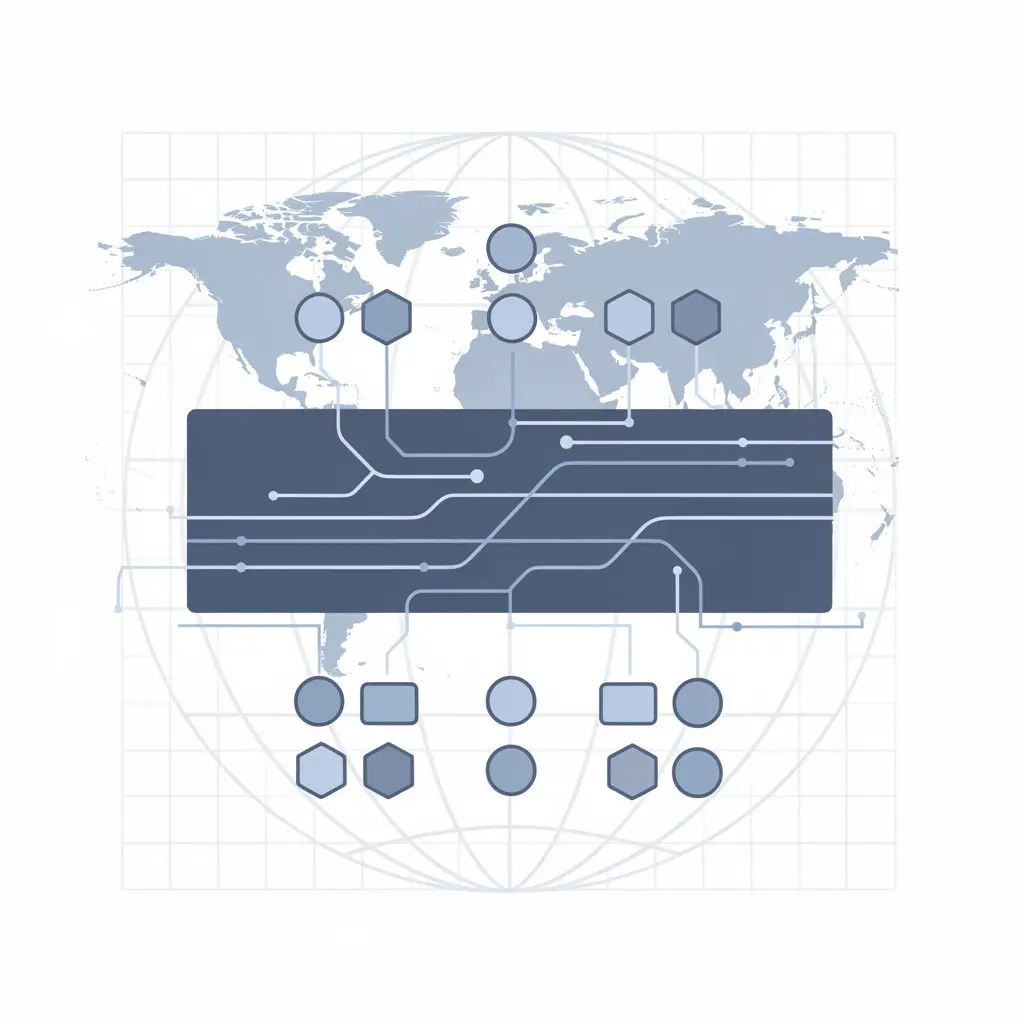
A useful investigation separates five layers. Each layer supports a different kind of claim.
1. Registry identity. This layer establishes an administrative association between a name, an autonomous system or an address-resource record. It can support wording such as “public records associate DFINFRA with AS210860.” It cannot support “DFINFRA operates the network” without additional evidence.
2. Routing visibility. RIPE RIS routing history, BGP-update data, announced-prefix data and other collector views can show when prefixes originated by AS210860 were visible, withdrawn or reannounced to particular observers. That evidence concerns the control plane. It does not automatically describe end-user reachability, the reason for a change or the identity of the operator who caused it.
3. Independent reachability. RIPE Atlas probes, IODA signals and other active or passive measurements can test whether a target remained reachable from specified vantage points. This is a data-plane or availability signal, subject to probe coverage, target selection and local failure modes. A probe interruption does not prove that the whole autonomous system failed. A continuing route does not prove that an application remained usable.
4. Operational recovery control. Logs, configuration changes, incident records, maintenance notices, postmortems or other contemporaneous evidence can connect an identifiable actor to detection, authorization, rerouting, reannouncement, restoration and validation. This is the layer required to attribute recovery capability. Registry and routing records alone do not establish it.
5. Commercial consequence. Customer tickets, service monitoring, contractual commitments, SLA calculations, service credits, pricing changes or other dated business records can show whether a technical event produced an economic effect. Route visibility and reachability are not substitutes for evidence of customer dependency, revenue exposure or contractual harm.
The evidentiary error to avoid is silent promotion. A registry association must not become a claim of ownership. A BGP event must not become a claim of a service outage. Probe loss must not become a claim of an autonomous-system-wide failure. A restored route must not become a claim that an identifiable operator repaired the service. And none of those signals, standing alone, proves commercial consequence.
What the current materials do—and do not—show
The research assembled candidate sources for each layer: RIPEstat routing history, RIPEstat BGP updates, IODA ASN signals, RIPEstat announced prefixes, RIPEstat ASN neighbours, RIPE Atlas IPv4 probes, RIPE Atlas IPv6 probes, the RIPE Database aut-num record, RIPE route-object search, bgp.tools, CAIDA AS Rank and Hurricane Electric’s BGP Toolkit.
Those sources define a reproducible investigation path. The dynamic responses themselves were not captured in this run. As a result, the present material does not establish an exact prefix inventory, a normalized observation window, a synchronized withdrawal and reannouncement sequence, a probe interruption, a changed upstream path or a restoration event.
The correct interpretation is a bounded non-finding. No qualifying event was verified in the captured evidence. That is different from saying that no event occurred. It is also different from saying that AS210860 demonstrated continuity throughout the relevant period.
This distinction is especially important for small or lightly observed networks. Collector coverage may be incomplete. A routing-history gap may reflect observation limits, filtering, a collector-specific change or a real withdrawal. A BGP announcement can restore control-plane visibility before a service is usable. An IODA signal may lack enough coverage for a particular ASN. A RIPE Atlas probe may lose local connectivity without showing an autonomous-system-wide outage. Each measurement must be interpreted with its vantage point and failure modes attached.
Continuity is a control loop, not a surviving record
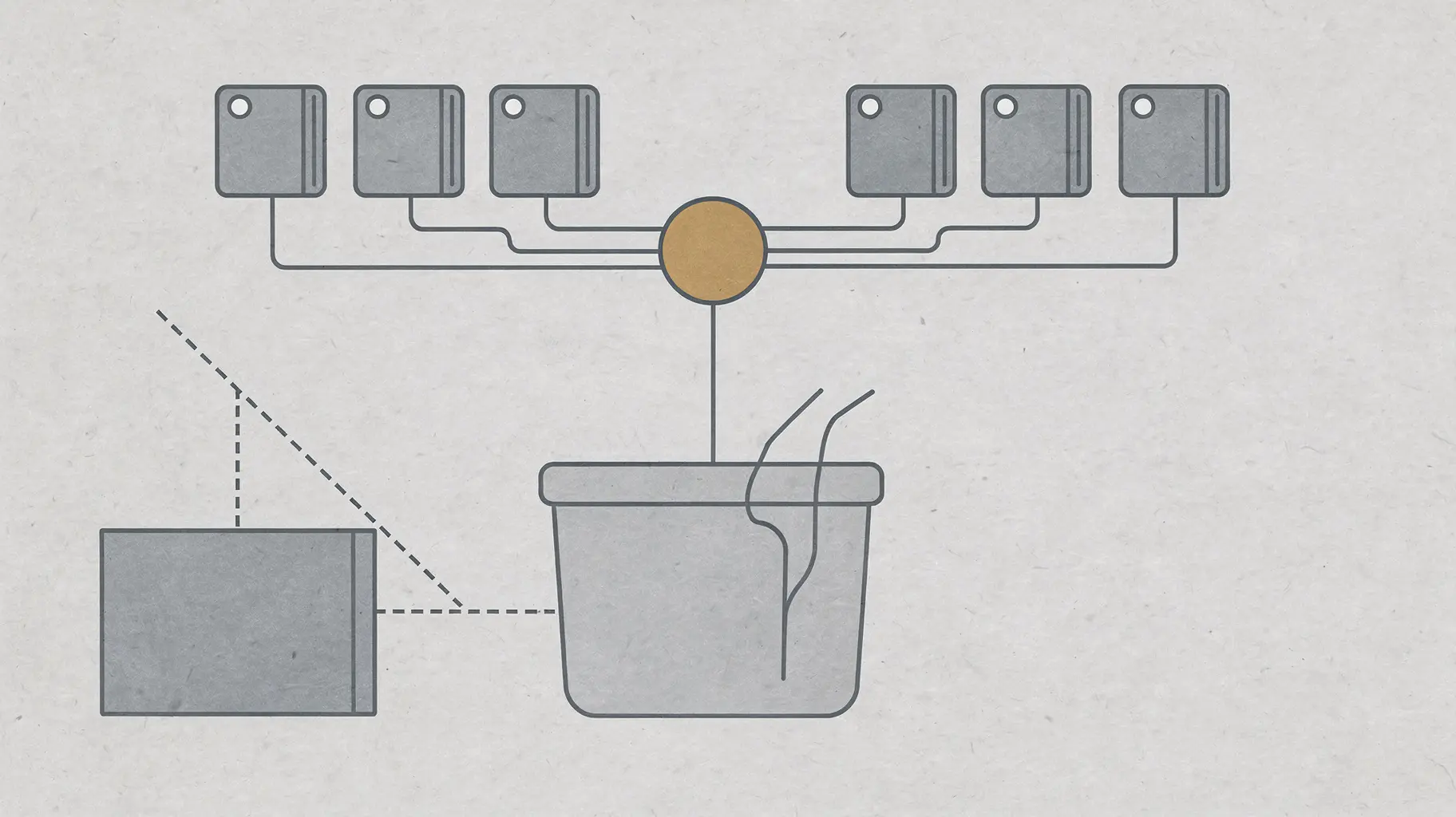
A more useful continuity model is a control loop:
- Detect a disturbance through routing, reachability, service or customer telemetry.
- Identify the affected prefix, path, site, service or dependency.
- Authorize a response through a known operational decision-maker.
- Execute a reroute, failover, configuration change, reannouncement or restoration.
- Validate routing and independent reachability from appropriate vantage points.
- Document the outcome, timing, residual impact and customer consequence.
The loop is complete only when the technical state and the evidence of control meet. A registry entry satisfies none of those steps by itself. It can help identify the administrative surface, but continuity depends on the ability to sense and change a running system.
This framing shifts the key question from “whose name appears beside AS210860?” to “which actor can make the network change state, and can that capability be observed when recovery is needed?” The supplied materials do not identify that actor. They therefore cannot support a conclusion about DFINFRA’s operational control or recovery performance.
The distinction also protects against two symmetrical errors. One is overclaiming resilience because no outage was found. The other is overclaiming fragility because dynamic data was unavailable. The absence of a verified failure is an observability boundary, not affirmative evidence of either condition.
The next test should be prospective and synchronized
The strongest next step is not another general search for the name DFINFRA. It is a time-bounded, prefix-specific and synchronized observation plan.
First, establish the exact AS210860 prefix inventory for the test window. Use announced-prefix data and compare it with relevant route and route6 objects. Record the retrieval time and address family. Do not assume that an IRR-authorized prefix was actually announced or that every observed announcement has a matching current route object.
Second, define a baseline. Record route visibility, observed origins, AS paths, neighbour relationships and reachability from identified probes before any disturbance or authorized maintenance test. A baseline makes it possible to distinguish a real change from ordinary collector disagreement.
Third, correlate independent clocks. A qualifying sequence would ideally include a timestamped withdrawal or path change in more than one collector view; a corresponding reachability change from identified probes or another independent measurement system; an alternate path, failover or reannouncement; and subsequent reachability recovery. RIPEstat BGP updates can support the control-plane timeline, while IODA and RIPE Atlas or RIPE Atlas IPv6 measurements can test whether an independent availability signal moved with it.
Fourth, obtain operational attribution. The investigation should seek a change record, incident ticket, maintenance notice, postmortem, configuration diff or other record that identifies who detected the problem, who authorized the response, what changed and when restoration was declared. A route reappearing is not enough to assign control.
Fifth, test commercial consequence separately. If customers, contracts or SLAs were affected, preserve dated tickets, monitoring records, service credits, commitments or other business evidence. If no such material exists, the article should not infer revenue, customer dependency or market power from routing data alone.
This design also allows competing explanations to remain visible. A route withdrawal with stable probes may indicate a control-plane event rather than a service outage. Probe loss with a visible route may indicate a data-plane, local, upstream or application-layer problem. A return through a different neighbour may support a failover hypothesis, but only after the path change and timing are independently established. A registry change with stable routing may concern attribution metadata rather than continuity.
What would change the conclusion?
The current conclusion is deliberately conditional. Several future observations could strengthen or revise it.
If multiple collectors recorded a coordinated withdrawal affecting the relevant prefix set, independent probes lost reachability in the same interval, an alternate path or reannouncement followed, probes recovered, and an incident record connected the sequence to a named operator, the evidence could support a documented disruption-and-recovery account.
If routes disappeared but probes remained reachable, the evidence would support a control-plane event or an observation discrepancy, not a broad service outage. If probes failed while routes remained visible, the investigation would need to examine data-plane, service, upstream or localized causes. If customers reported an interruption without a broad routing event, the commercial consequence could still be real at a service-specific layer.
If no disturbance appeared during a defined observation window, that would support a statement about the measured interval and its coverage. It would not prove indefinite continuity. And if registry, IRR or PeeringDB records changed while routing and reachability remained stable, the result would concern identity or attribution metadata rather than operational recovery.
The practical standard is therefore not a single authoritative record. It is a corroborated chain whose layers remain distinct: identity, routing, reachability, recovery control and customer outcome.
Conclusion: continuity must be observable
The public association between DFINFRA and AS210860 remains a legitimate investigative signal. It does not, on the evidence captured here, establish ownership, operation, routing control, recovery authority or commercial consequence. Nor does the absence of a verified event establish uninterrupted service.
What can be said with confidence is narrower and more useful: the continuity question is testable, but the test has not yet been completed. It requires a defined prefix set, a time-bounded baseline, independent routing observations, reachability measurements, operational records and—if an impact is claimed—customer or contractual evidence.
For operators, this is a concrete standard for making continuity credible. For customers and investigators, it is a way to compare claims without treating registry labels or institutional descriptions as substitutes for operating evidence. The decisive capability belongs to the actor who can detect a disturbance, authorize a change, activate a viable path, validate restoration and document the result.
In the DFINFRA/AS210860 case, that actor is not identified by the current evidence. The missing link is not another name in a registry. It is the timed continuity loop.
Sources for the investigation include RIPEstat routing history, RIPEstat BGP updates, IODA, RIPEstat announced prefixes, RIPEstat ASN neighbours, RIPE Atlas IPv4, RIPE Atlas IPv6, PeeringDB, RIPE’s aut-num record, RIPE route search, bgp.tools, CAIDA AS Rank and Hurricane Electric’s BGP Toolkit.
Member Briefing
Deeper Profile Context
Sign in with the right membership level to unlock the full briefing and source notes.
Only for Strategic Circle
Strategic Circle
Open to all readers. Unlock profile briefings after joining and signing in.
Join Strategic CircleOnly for Leadership Alliance
Leadership Alliance
For qualified IP-asset owners and management; sign in to unlock alliance briefings.
Join Leadership Alliance