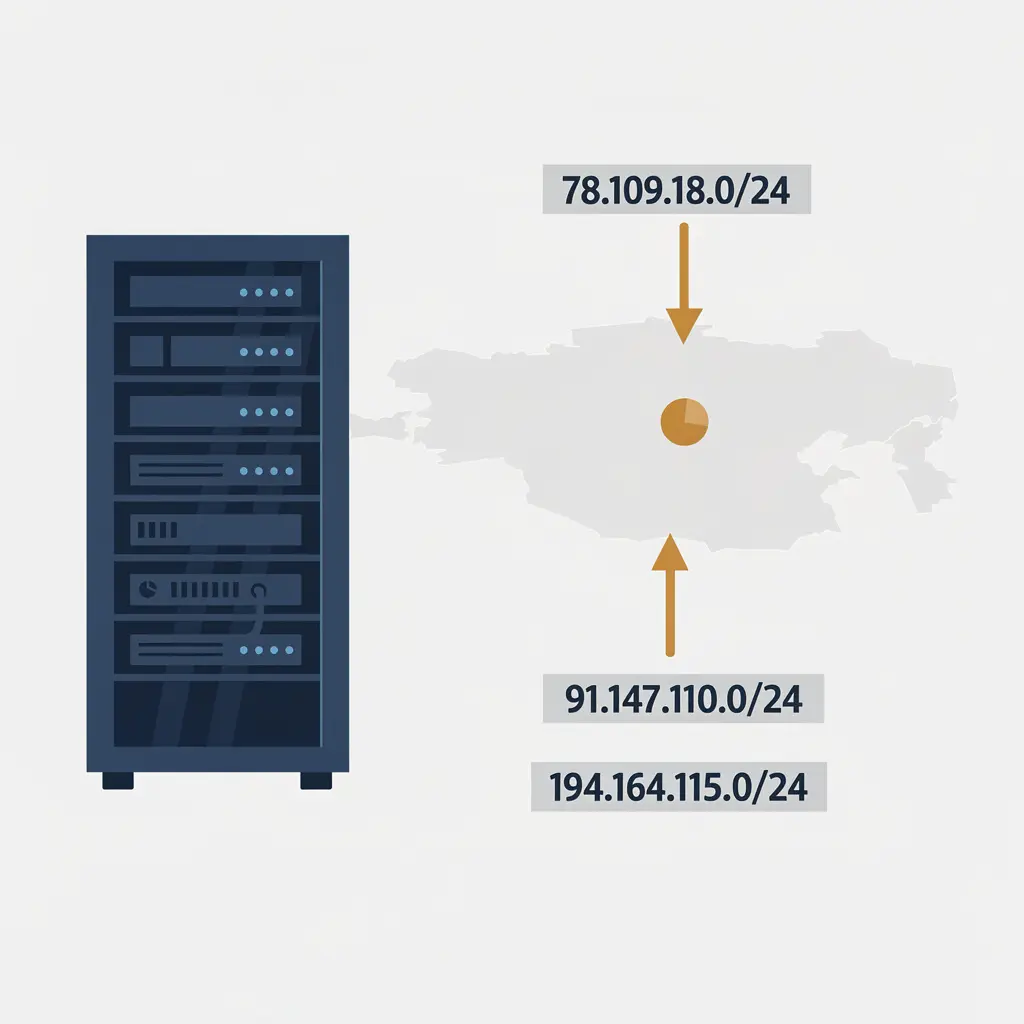
Summary
- What it says: The best interpretation of the evidence is that **Data Centre 3 Pty Ltd** is no longer the operational core of an autonomous and active data centre platform in Hobart.
- Main topic: Data centre investment
- Context: Internet infrastructure / Company research / Asia-Pacific
Data Centre 3 Pty Ltd and the Separation of Assets, Services, and Legal Personality in Tasmania
Executive Thesis and Commercial Judgment
The best reading of the evidence is thatData Centre 3 Pty Ltd is no longer the operational core of an autonomous and active data centre platform in Hobart. It is more relevant to consider it as aformer operating and asset vehicle whose commercial substance has been split into multiple successor structures. The economics of the Dowsing Point site were first transferred toDXNvia an asset and revenue acquisition in 2020. The customer communications, managed infrastructure, wireless, fibre, private cloud and government contracts activities remained within or aroundTasmaNet, passed toField Solutions Holdingsupon the acquisition of TasmaNet in 2021, then transferred again in 2025 toComms Groupvia a renamed entitySyntel Pty Ltdwhich now bears the name TasmaNet. Furthermore, the APNIC transfer log shows thatData Centre 3 Pty Ltdis the source counterparty of a 2023 transfer ofASN 133029and103.251.172.0/22toField Solutions Group Pty Ltd. This pattern is far more consistent with a legal shell and a resource transfer counterparty than with a currently sovereign operational platform.
This conclusion is important because the company is at the centre of a common but poorly documented infrastructure problem:asset titles, customer contracts, legal entities, Internet numbering resources and brand identity have all decoupled over time. If a buyer, creditor, procurement team or counterparty were to consult only a surviving registry entry, or only the TasmaNet DC3 marketing page, they could easily mistake a residual vehicle for the current commercial operator. The public record instead shows a chain of partial transfers: first a sale of operational data centre assets to DXN; then a sale of a service platform when Field Solutions bought TasmaNet; then a distressed sale of the Field Solutions business to Comms Group; and throughout, a visible persistence of TasmaNet-oriented service pages and live network operations under TasmaNet-branded ASNs.
The central commercial judgment is thus hybrid but fairly clear.Data Centre 3 Pty Ltd was once close to the operational asset layer, later became an asset and Internet resource transfer perimeter, and now appears primarily as a residual legal and insolvency artefact rather than as the active commercial platform.The active facility appears to beDXN TAS01at Dowsing Point; the live customer and managed services business appears to be thecurrent TasmaNet activity within Comms Group, implemented via the renamed Syntel vehicle; and the numbering resource history shows that Data Centre 3 Pty Ltd remained useful as an administrative counterparty even after the facility itself ceased to be its economic centre of gravity.
There is an important caveat. Australian public registries do not neatly reconcile these changes in real time. TheABN record of Data Centre 3 Pty Ltd remains active, withGST currently not registered, while insolvency notices in 2025 place the company within a formally distressed perimeter of Field Solutions asadministrators appointedand subsequentlyin liquidation. This inconsistency does not rescue the active operator thesis. It rather suggests a habitual registry lag or a post-appointment administrative tail where tax and corporate records persist when the commercial activity has already migrated elsewhere. This point is an inference, but it is solidly grounded given the surrounding transaction history.
A serious due diligence conclusion would therefore be the following.Data Centre 3 Pty Ltd should be treated neither as a pure going concern operator nor as a meaningless dead paper.It is relevant because it appears in resource transfers, insolvency groupings and legacy transaction definitions. But the weight of evidence indicates that the current operational substance lies outside it. In practice, a counterparty asking "who runs the Hobart site?" should first look toDXNfor the facility economics and physical site operations, and toTasmaNet under Comms Groupfor the customer-facing managed services and network stack. A counterparty asking "who held legacy resources or was within the distressed perimeter of Field Solutions?" should continue to pay attention toData Centre 3 Pty Ltd.
Canonical Identity and Registry Continuity
What the Registries Show
The clearest canonical identifier for the target is theABN 36 159 635 122, which the Australian business register currently lists asDATA CENTRE 3 PTY. LTD., anAustralian private company,ABN active since 1 April 2014,GST currently not registered, with its principal place of business inTAS 7010. This postcode is important because it corresponds to the Dowsing Point/Hobart operational footprint that recurs in TasmaNet and DXN documents. From a registry perspective, Data Centre 3 Pty Ltd therefore still exists in the tax and commercial system as a Tasmanian corporate shell.
But the same public record immediately begins to blur as soon as one follows the surrounding entities. The TasmaNet service pages currently identify an active operational activity at40-50 Innovation Drive, Dowsing Point, TAS 7010, selling from this address Internet, network, voice, cloud, IoT and data centre services. However, thecurrent ABN of "TASMANET PTY LTD" is 25 164 311 175, active since17 June 2013, withGST registered since 14 May 2025, principal place of businessNSW 2000, and business names includingTasmanetsince17 June 2025. Comms Group's FY25 annual report explains the reason: the acquisition of the TasmaNet business was carried out viaSyntel Pty Ltd, a dormant entity of Comms that wasrenamed TasmaNet Pty Ltdshortly after completion.
At the same time, the historic former corporate body of TasmaNet has not cleanly disappeared from the public surface. The ABR still shows theABN 61 111 240 978asA.C.N. 111 240 978 PTY LTD, active since5 October 2004, principal place of businessTAS 7010, and still bearing the historic business nameTasmanet Pty Ltd. This means that by mid-2026, the public record simultaneously supports three layers of identity around the same commercial story:Data Centre 3 Pty Ltdas the surviving shell linked to Dowsing Point;the old TasmaNet ACN 111 240 978still present in ABR history; andthe new TasmaNet ACN 164 311 175, which is in fact the renamed Syntel vehicle within Comms Group. This is not ordinary clarity. It is exactly the kind of name overlap that can mislead due diligence if entity names are treated as self-explanatory.
The DXN 2020 prospectus adds another layer of identity evidence. In the glossary, it explicitly defines"Data Centre 3 Pty Ltd" as ACN 159 635 122. Elsewhere in the same document, DXN indicates that the funds raised would be used for theacquisition of the assets and revenues of Data Centre 3 Pty Ltd in Hobart from TasmaNet Pty Ltd. The document does not present Data Centre 3 as a broad corporate franchise with a national platform. It presents it as the subject of anasset and revenue transactionlinked to a data centre footprint in Hobart. This is very informative because it anchors the legal identity to a particular asset perimeter rather than to a durable, full-stack operational group.
Insolvency Notices and Group Perimeter
The insolvency record points in the same direction. The McGrathNicol creditors' page indicates thatField Solutions Groupenteredreceivershipon19 February 2025, with a concurrent voluntary administration process led byCor Cordis. Comms Group's acquisition documents describe the same event in commercial terms: Field Solutions was placed involuntary administration with receivers appointed by secured creditorson that date, and TasmaNet — acquired by FSG in 2021 — was a separate, profitable division whose cash flows supported other group activities.
Crucially, the insolvency notice extracts captured in the published ASIC notices placeData Centre 3 Pty Ltdexplicitly inside this distressed perimeter. A June 2025 notice concerningTASMANET PTY LTD (Administrators Appointed) (Receivers and Managers Appointed)listsDATA CENTRE 3 PTY LTD (Administrators Appointed), ACN 159 635 122. A later June 2025 notice concerningFIELD SOLUTIONS HOLDINGS LTD (Receivers and Managers Appointed) (In Liquidation)listsDATA CENTRE 3 PTY LTD (In Liquidation), ACN 159 635 122. These extracts do not prove what assets remained inside Data Centre 3 at the time of appointment. But they prove that the company was not simply forgotten; it remained sufficiently relevant to be named in the external administration perimeter.
The Federal Court trail points in the same direction. A March 2025 case summary forJuratowitch (liquidator), in the matter of Field Solutions Holdings Limited (Administrators Appointed) (Receivers and Managers Appointed)listsDATA CENTRE 3 PTY LTD (Administrators Appointed)among the grouped entities and notes that theconvening period was extended. This is not a definitive operational record. It is however a strong corroboration that Data Centre 3 was treated as part of the corporate clean-up and restructuring field around Field Solutions rather than as a standalone, separate, healthy platform.
Name Ambiguity and What It Means Commercially
Name ambiguity is therefore not cosmetic. It is commercially decisive. A procurement team seeing "TasmaNet" in service pages, "DXN TAS01" in facility directories, "Data Centre 3 Pty Ltd" in older transaction documents, and "TASMANET PTY LTD" in more recent ABN records could easily assume that all of this corresponds to a single stable corporate identity. That is not the case. The evidence rather shows thatbrand continuity has masked legal discontinuity. TasmaNet continues to exist as a customer-facing brand. The old TasmaNet ACN continues to haunt the registry surface. The new legal body of TasmaNet is in fact the ex-Syntel. And Data Centre 3 sits even further back as a historical asset/resource vehicle whose registry life has outlasted its visible commercial primacy.
This leaves the most defensible identity judgment as follows.Data Centre 3 Pty Ltd is canonically identifiable, but canonically misleading if read alone.The ACN/ABN is clear; the commercial role is not. The best interpretation of the surviving records is that it has become aresidual legal shell with legacy relevanceafter the economics of the active facility and the live customer/network business have both migrated elsewhere. The public registries do not disprove this conclusion; they help expose exactly why confusion persists.
Operational Perimeter and Service Continuity
The Dowsing Point Site
The site-level evidence is exceptionally clear even if the corporate history is not. TasmaNet's current contact page locates its head office at40-50 Innovation Drive, Dowsing Point, TAS 7010, and its current DC3 page markets the"DC3 Data Centre"from that same location. TasmaNet describes DC3 as"the only private Tier 2+ data centre in Tasmania", indicates that the Tasmanian facility is highly secure and constantly growing, and offers both colocation and access to TasmaNet's "Core" services. This is live customer-facing commercial material, not a dead archive.
Yet the same address is also today the address ofDXN-TAS01. DXN's site identifies40-50 Innovation Dr, Dowsing Point, TAS 7010as its Tasmania location, and describes DXN as operating a data centre operations business thatowns and manages data centres in Darwin and Hobart. The DatacenterMap listing for Hobart forDXN – Tasmania Onegives this exact address, identifies the site code asTAS01, and lists service capabilities typical of an actively operated colocation site: up to7 kW per rack, redundant generators, redundant UPS, hot/cold aisle separation, 24/7 HVAC controls, secure access, VESDA and inert gas fire suppression. The same listing also records a chronological event:"In February 2020, DXN purchased the Data Centre 3 from TasmaNet."
This coexistence is not contradictory once the 2020 transaction is correctly read. TasmaNet's February 2020 announcement said it had signed a binding term sheet tosell the assets of the DC3 data centre in Hobart to DXN, whilecontinuing to offer data centre, cloud and backup services to customers using DC3, withDXN becoming a wholesale data centre provider for TasmaNet. The same release stated thatthe management of the DC3 data centre would continue to be provided by TasmaNet on behalf of DXN. In other words, the transaction itself was designed to preservecustomer-facing continuity under the TasmaNet banner even while the underlying asset layer was transferred. This mechanism explains almost all the purportedly messy site evidence.
TasmaNet's description of the transaction also reveals the site economics at the time of the sale. DC3 was described asmodular,Tier II+, with30 racksand anexpansion capacity of up to 100, and as agovernment-accreditedfacility with a strong customer base including key sovereign clients. DXN's later annual report shows HobartTAS01as a35-rackdata centre during the FY25 financial year. The implication is that the site remained small to medium on a national scale and valuable not because of its raw capacity, but because it inserted itself into a sticky regional government and enterprise services stack.
The Network and Services Layer Remained TasmaNet-Oriented
The operational perimeter becomes even clearer when looking beyond floor space and towards customer-facing commercial continuity. TasmaNet's homepage still sells Internet, network, voice, security and cloud services nationwide while emphasising its regional Tasmanian base. Its "About" page indicates that it has been operating since2004, has built and operates a wireless data network covering85% of the Tasmanian population, and supports enterprise and government customers with local offices and a 100% Australian service centre. Its government vertical page indicates that customers speak directly to the people who built and manage"our network, our data centre and our private cloud platform."These are the words of an active MSP/telco/platform business, not a dissolved residual shell.
TasmaNet's current support and status surfaces reinforce this reading. The support page provides live service desk contact and stated hours. The status page shows contemporary security notices, including 2026 monitoring commentary around Fortinet credential exposure reports, and describes TasmaNet's security controls for managed Fortinet services. None of this proves who holds title to the Dowsing Point building. It does prove that theservice organisation associated with the TasmaNet brand remains active and operationally engaged.
The government and education customer material points to the same operational perimeter. TasmaNet markets itself as a long-term partner forlocal, state and federal governments, with security-cleared staff and ISO certification, and as a provider of theNetworking Tasmaniaservice environment designed to secure government assets and information flows. Case study pages show that the company still uses DC3 as part of its broader portfolio, while customer examples such asCatholic Education Tasmaniaillustrate the model of selling connectivity, cloud and managed outcomes rather than simple rack space. This is exactly the bundle that makes sense for a regional operator that has outsourced or sold off some of the physical facility capital while retaining the service relationship and technical integration layer.
Third-Party Infrastructure Traces
Independent infrastructure references also show that the site is not a historical ghost. PeeringDB listsTasmaNet Hobart DC3as a facility atDowsing Point, linked to the TasmaNet organisation entry at40-50 Innovation Drive. The same organisation entry includes "Also Known As" values such asIP Transit Pty Ltd,Ordnance Networks Pty Ltd,Internomic Pty Ltd, andFSG, which strongly suggests that the record has absorbed the company's successive corporate wrappers and network aliases rather than representing a snapshot of a single entity. PeeringDB also shows TasmaNet's active ASNs connecting through the facility.
At the exchange level, PeeringDB shows thatIX Australia Hobart (TAS-IX)is physically located atTasmaNet Hobart DC3and lists peers there, includingCloudflare,the IX Australia route servers,Launtel, andTasmaNet AS64098. Cloudflare's network interconnection locations list separately includes"HBA: Hobart Tasmanet Hobart DC3."These traces do not tell us whether the site is marketed as DXN-TAS01, TasmaNet DC3, or both in every contractual context. They show that, whatever the branding complexity, Dowsing Point remains a recognised and technically meaningful interconnection point in Tasmania.
The weak and informal traces point exactly in the same direction. A Reddit operator discussion on routing presence in Tasmania notes thatLauntel and Superloop have a presence at TasmaNet Hobart DC3. A forum comment should not be treated as decisive. But as weak evidence, it is directionally useful because it matches the stronger peering and exchange data: the facility is not simply a marketing relic; it is a living local interconnection node.
The practical conclusion of the operational perimeter is therefore clear.The Dowsing Point asset is a real and still-used technical site; the customer-facing DC3 brand still exists; but the physical facility and the commercial stack should not be assumed to reside in the same legal box.The record is most consistent with a wholesale/managed services relationship in which DXN sits underneath the physical site economics and TasmaNet sits on top of the customer relationship, with the former Data Centre 3 entity largely displaced from both roles.
Numbering Resource Record and Technical Observability
The APNIC Transfer Event
The most revealing technical clue about Data Centre 3 Pty Ltd is not a routing table; it is theAPNIC transfer log. In the current APNIC transfers file, a transfer dated12 December 2023recordsDATA CENTRE 3 PTY LTDas thesource organisationandField Solutions Group Pty Ltdas therecipient organisationfor the resource set comprisingASN 133029and the IPv4 block103.251.172.0/22. This single record is extremely important because it proves that, years after the sale of the facility to DXN, Data Centre 3 Pty Ltd was still in the administrative title chain for significant Internet numbering resources.
This transfer event sharply reduces the plausible interpretations of the company. If Data Centre 3 Pty Ltd were merely a discarded name with no continuing relevance, it would be very unusual to see it appear as a formal source in a 2023 APNIC transaction. The transfer instead suggests that the company retained someownership or legacy resource custodial roleeven after the facility asset perimeter was transferred. This does not prove that Data Centre 3 retained active network operations. In fact, the rest of the evidence suggests the opposite. But it does show that Data Centre 3 was still embedded in the Internet resource architecture of the Tasmanian business long after the operational centre of gravity had shifted.
What Is Routed Today
The current routing picture points away from Data Centre 3 as the active originating operator and towards the TasmaNet/Syntel stack. BGP.he shows that103.251.172.0/22is currentlyannounced by AS45158 TASMANET. The APNIC-derived route entity on the same page lists the description as"Field Solutions Group Pty Ltd Tech 1, 40-50 Innovation Drive"and the maintainer asMAINT-SYNTELPTYLTD1-AU, last modified inAugust 2025. This single route entity captures the layering almost perfectly: the block that APNIC says was transferred from Data Centre 3 to Field Solutions is today routed inside a TasmaNet-branded ASN, while its route maintenance has already been moved to a Syntel/TasmaNet administrative identity after the Comms transaction.
The reverse DNS and host evidence on the same prefix is commercially revealing. BGP.he lists hostnames undertasmanet.com.auand a mix of customer domains, including mail and service hosts for external organisations. This is what one expects from a provider-quality block used for operational services and customer workloads. It does not look like a speculative storage block. In other words, the resource set associated with the former Data Centre 3 entity has been integrated into a live service environment, but not under Data Centre 3's own operational identity.
RIPEstat adds a useful temporal clue. For103.251.174.0/23, a more specific slice of the transferred /22, RIPEstat reports that the prefix was first seen announced byAS45158on24 March 2022and was100% visibleto full-feed RIS peers in April 2026. This matters because it suggests that the live routing of at least part of this address space under the TasmaNet AS45158 environment predated the formal 2023 APNIC transfer registration. The cautious interpretation is that operational use and legal/resource-title housekeeping did not occur simultaneously, which is common in group reorganisations and distressed clean-ups.
The ASN Story Is Even Clearer
The most powerful evidence disproving Data Centre 3 as a current network operator is the status ofAS133029itself. IPinfo currently classifiesAS133029 TASMANETasinactive, with0 IPv4 addresses,0 IPv6 addresses, and no prefixes found. Cloudflare Radar, for its part, still recognisesAS133029as part of theSYNTELPTYLTD-AUorganisational family. The combined meaning is simple: the ASN still exists in the registry and organisational graph, but it is not the main active production ASN carrying visible address space today. This fits the thesis ofresource clean-up and organisational consolidation, not the thesis of a still-separate operational platform.
By contrast, the active TasmaNet ASNs are well and truly alive. BGP.he reports thatAS45158currently emits12 prefixes, announces32, has10 observed IPv4 peers, and showsno RPKI-invalid emitted routes. Cloudflare Radar identifies AS45158 asSYNTELPTYLTD-AU, aliasTasmaNet AS45158, with sister ASNs includingAS64098,AS133736,AS56133,AS63926,AS132836,AS133029,AS133407,AS134720, andAS135888. This is the footprint of a functioning and somewhat layered network platform, not a dead single-site artefact.
AS64098 shows the same. BGP.tools classifiesAS64098 TASMANETasactive, with12 IPv4and4 IPv6prefixes emitted, upstreams includingVocusandLeaptel, and visible interconnection presence atEdgeIX HobartandIX Australia Hobartamong several national exchanges. PeeringDB separately shows AS64098 atTasmaNet Hobart DC3and in multiple mainland facilities, including Equinix and NEXTDC sites. Commercially, this means that the surviving TasmaNet network is not just a Tasmanian island. It has an ISP/mainland network edge that would greatly matter to the value of a managed services and customer business.
What the Technical Record Implies
Taken together, the numbering resource record says four things. First,Data Centre 3 Pty Ltd remained a significant administrative holder of legacy Internet resources until late 2023. Second,the active routing and service use of those resources reside inside TasmaNet-branded ASNs, not inside a visible Data Centre 3 operational identity. Third,the post-2025 administrative maintainer trail points to the Syntel-renamed-new-TasmaNet structure, which is precisely what Comms Group says it used to acquire the TasmaNet business. Fourth,AS133029 looks more like a dormant registry asset than a current production network. This combination is exactly what one would expect when legal shells, resource titles and operational entities have been separated by successive transactions.
Ownership, Transaction History and What Each Deal Transferred
The DXN Transaction Transferred the Facility Economics
The first major separation took place in 2020. On12 February 2020, DXN announced it had entered into an agreement to purchase theassets and revenues of DC3, a data centre in Hobart, and TasmaNet simultaneously announced it had signed a binding term sheet to sell theassets of the DC3 data centreto DXN. DXN's April 2020 prospectus is explicit that the funds were to be used for theacquisition of the assets and revenues of Data Centre 3 Pty Ltd in Hobart from TasmaNet Pty Ltd, with the remaining purchase price stated asA$2.43 million, associated acquisition costs, and a retained amount linked to a planning permit for an expansion to at least90 racks. Nothing in these documents suggests that DXN was buying the whole of TasmaNet or the whole of the Data Centre 3 corporate franchise. It was buying asite-level asset and contract perimeter.
DXN's audited accounts confirm the mechanism. Its FY20 and FY21 annual reports state that on18 May 2020, DXN acquired theassets and revenues of Data Centre 3 Pty Ltd from TasmaNet Pty Ltd through a newly incorporated wholly-owned subsidiary, Tas01 Pty Ltd. The fair value allocation is revealing: approximatelyA$1.33 millioninproperty, plant and equipment,A$1.34 millionincustomer contracts, and only aboutA$25,500ingoodwill. This is the accounting profile of a targeted asset purchase, not the absorption of a broad operating company with deep intangible barriers. Commercially, DXN bought a small but strategic edge facility and its near-term revenue base.
The TasmaNet side of the story shows what it retained. The company stated it would continue to offer data centre, cloud and backup services using DC3, with DXN as the wholesale provider and TasmaNet continuing site management on DXN's behalf. In substance, this means TasmaNet monetised the physical site capital while preserving the higher-valueservice relationship,cloud integration,network attachment, andcustomer trustaround the site. For a regional operator with sovereign and government customers, this is a rational move: sell the heavy balance-sheet plant, keep the sticky managed services bundle.
Field Solutions Bought the Wider TasmaNet Platform
The second major transfer occurred inOctober 2021, whenField Solutions Holdingsannounced it had entered into a binding share sale agreement to purchaseTasmaNet Pty Ltd. The terms are revealing. FSG indicated that TasmaNet offeredannualised revenues of over A$19 million, aforecast transaction EBITDA of A$1.25 millionbefore synergies, and up toover A$2.5 million including synergies. It stated that the deal broughtthe largest fixed wireless network in Tasmania, software-automated cloud and managed services capability, and substantial government and enterprise revenues across Tasmania and southern Queensland. This is materially broader than a 30-rack room in Hobart. It is the purchase of aregional communications and managed infrastructure franchise.
This 2021 transaction is critical to the thesis because it shows where value had migrated after the DXN deal. If the key asset had remained the Dowsing Point facility itself, FSG would not have described the acquisition in terms of fixed wireless, cloud automation, managed services and government/enterprise reach. The FSG announcement rather implies that by 2021, the real prize in the TasmaNet orbit was thecustomer and network platform, not the facility shell. FSG's later reporting, which referred to the amortisation ofTasmaNet customer contracts, points in the same direction.
Distress Forced a Third Separation
The third separation followed distress. McGrathNicol reports that Field Solutions entered receivership on19 February 2025, with a concurrent voluntary administration. Comms Group's May 2025 acquisition presentation states that FSG had pursued a capital-intensive tower strategy, that the group was placed into voluntary administration with receivers appointed by secured creditors, and thatTasmaNet was a separate, profitable division of FSG, its cash flows supporting other group activities. This is a central fact. It implies that the profitable TasmaNet platform was supporting weaker or more capital-intensive parts of the Field Solutions group, making it the obvious candidate for sale in distress.
Comms Group then acquiredthe business and assets of TasmaNet and certain assets of the wider Field Solutions group. The FY25 annual report states that the acquisition was completed on16 June 2025forA$9.43 million, using an existing dormant entity —Syntel Pty Ltd— which was subsequently renamedTasmaNet Pty Ltd. The same report states that the deal brought29 foundational Tasmanian government customers, over500 enterprise customers, key network assets, afixed wireless broadband network covering Tasmania,high-capacity fibre across Hobartwith network facilities in Hobart and Launceston, adistributed private cloudstack across Tasmania and mainland cities, and the novation of theexisting NBN Co wholesale broadband agreement. This was abusiness and assetpurchase, not the rehabilitation of the old legal body.
What Was Not Transferred to Comms
What isnotshown as having been transferred to Comms is just as important as what was. Comms' documents do not describe purchasing the full ownership of Dowsing Point or taking over a DXN-owned facility. Instead, DXN's FY25 report states that after the FSG collapse, it had to negotiate with the receivers and then sign a new master agreement withCommsGroup Limitedto secure the revenue ofDXN's TAS01 data centre in Tasmania. This is near-conclusive proof that, by July 2025, DXN was still on the facility side and Comms/TasmaNet on the customer side. If Comms had bought the facility itself, DXN would not describe Comms as the necessary counterparty to secure TAS01 revenue.
The sequence therefore resolves cleanly.DXN bought the facility asset and near-term revenue layer in 2020. FSG bought the wider TasmaNet services/network/cloud platform in 2021. When FSG failed in 2025, Comms bought the TasmaNet operating business and certain FSG assets via a renamed Syntel vehicle.The living operational platform was transferred. The old shells did not necessarily disappear at the same speed. That is why Data Centre 3 Pty Ltd can still appear in insolvency and APNIC records even though the market-facing business is now elsewhere.
Where Data Centre 3 Pty Ltd Sits in This Chain
The remaining role of Data Centre 3 Pty Ltd in this chain appears to be residual but not trivial. It is embedded in DXN's historical documentation as the legal subject whose assets and revenues were purchased. It reappears in the 2023 APNIC transfer log as the source holder of a legacy ASN and IPv4 block. It then reappears again in the 2025 insolvency notices as part of the Field Solutions administrative perimeter. This pattern is more consistent with alegacy carrying vehicle/SPV/resource vehiclethan with a currently standalone operational enterprise. The company has become a legal residue of successive asset separations rather than the enduring centre of the commercial stack.
Data Centre Economics, Competitive Field, Market Rumours and Risk
The Economics of a Small Regional Edge Site
Economically, the Dowsing Point asset is not best understood as a scale data centre platform. TasmaNet's 2020 sale announcement described DC3 as a modular facility of30 racksofTier II+with a capacity to reach100 racks; DXN's FY25 report later described HobartTAS01as a35-racksite. The DatacenterMap technical listing shows a per-rack power envelope ofup to 7 kW, with redundant power, UPS, HVAC, security and carrier-neutral connectivity. These are respectable specifications for a regional sovereign/enterprise site, but they are profoundly different from hyperscale economics. The central economic challenge is therefore not the utilisation of a megawatt campus; it is thehigh-value monetisation of a small number of racks through attached connectivity, cloud, security and managed services.
This is why the key transactions repeatedly emphasise not the room itself but the customer mix around it. TasmaNet's 2020 announcement highlightedsovereign customersand government accreditation. FSG's 2021 acquisition rationale stressed fixed wireless, cloud and managed services. Comms' 2025 documents highlighted29 foundational Tasmanian government customersand hundreds of enterprise accounts, plus the private cloud and network stack. A small Hobart site can generate attractive economics if it anchors a wider services relationship. It can be mediocre if sold as raw colocation alone. The transaction history strongly suggests that the market-facing entities understood this distinction.
A second economic feature is thecost of switching. TasmaNet's current offer is not just rack space. It bundles private network, enterprise Internet, cloud backup, Microsoft 365 backup, firewall as a service, private cloud, public cloud connectivity, government-grade network and local support. For government customers and mid-market enterprises, the real switching pain is often not the physical relocation of servers; it is the reengineering ofnetwork topology, security policy, managed services processes, procurement approvals and operational trust. This is especially true in Tasmania, where local knowledge and government relationships recur throughout TasmaNet's marketing and Comms' acquisition rationale.
A third feature is the cost base. Tasmania offers a structurally attractive energy and cooling story for this type of asset. DXN's Tasmania page states that TAS01 is powered byrenewable energyand promotes the state's cool climate as reducing cooling demand; the Tasmanian government has also publicly described the state as having100% self-sufficiency in renewable electricity generation. For a small regional site, this does not create a hyperscale-type arbitrage, but it does support a differentiated sovereign and sustainability proposition and can modestly reduce operational intensity compared with warmer mainland locations.
Even so, the transaction history shows why the physical asset could be sold out of the services platform. DXN's prospectus needed to raise capital to fund the 2020 acquisition and tied part of the purchase economics to a later planning approval for expansion. Comms' 2025 report, meanwhile, indicates that the TasmaNet business had typical customer credit terms of15 to 30 daysand that the acquisition was funded by an equity raise and extension of credit facilities. These are classic signs of an asset class where working capital is manageable, but capacity expansion and acquisition financing still matter. A small regional facility can generate solid cash if full and contractually tied, while still being too capital-intensive for a services-focused operator that would prefer to keep balance-sheet flexibility.
The Competitive Field in Tasmania and Beyond
In Tasmania, the competitive field is real.42-24markets purpose-built, concurrently maintainable data centre space atDerwent ParkandCambridge, with carrier-neutral access, government-approved facilities, and power configurations ranging from3 kW to 21 kWper rack, backed by diesel generation and 2N-type resilience language.Vocusalso has a data centre presence in Hobart via the formerPIPE Networks Hobartlocation. Cloudscene's Hobart market overview indicates that the city hassix colocation data centres,twenty cloud service providers, and a developed connectivity ecosystem. This means Dowsing Point is important, but it is not a monopoly box on an empty market.
What distinguishes the Dowsing Point/TasmaNet orbit is not the mere existence of a room. It is the combination ofintimacy with the Tasmanian government, local network ownership, exchange presence, private cloud, managed services and a long-standing regional brand. Comms explicitly bought TasmaNet for its access to government and enterprise customers; TasmaNet explicitly markets itself as a long-term government partner with security-cleared staff; and PeeringDB as well as Cloudflare's interconnection listings show the facility remains embedded in local interconnection. Competing rooms can match redundancy and security. They do not automatically match therelationship capitalor theservice integration.
Beyond Tasmania, the stronger competitive pressure comes from mainland clouds and national carriers rather than from more racks in Hobart. TasmaNet itself sells national enterprise Ethernet and nationwide services over its own and partner networks. This means the company has long positioned itself as a regional trust point plugged into broader national infrastructure. The risk is that for less sensitive workloads, enterprises may prefer mainland cloud regions or national MSPs and use Tasmania only as a connectivity edge. The defensive answer is sovereignty, local latency, accreditation and bundled support.
The persistence of the government focus in TasmaNet's and Comms' documents suggests management sees the same defence.
A more recent variable isFirmusand the significant AI-oriented development in northern Tasmania. An ABC report in 2026 indicates that Firmus plans multiple data centre projects in northern Tasmania with a combined power requirement of up to400 megawatts, well beyond the Dowsing Point/Hobart facility class. These are not direct substitutes for a 35-rack southern enterprise edge site. But they matter strategically because they may alter the state's political economy of energy, transport and public attention. A small sovereign enterprise site benefits from Tasmania's renewable brand; it may also be eclipsed in the policy conversation when AI campuses dominate the energy debate.
Market Rumours and Weak Traces
The weak traces are exceptionally consistent. PeeringDB shows the Hobart IX at TasmaNet DC3 with Cloudflare and local peers. Cloudflare's interconnection list recognises DC3 as a Hobart interconnection location. A Reddit thread says Launtel and Superloop have a presence there. TasmaNet's live support and status pages show an active operational support organisation. Even an old TasmaNet cyber assessment PDF sample contains a hostname pattern consistent with security tooling associated with DC3. None of these items alone would settle a due diligence question.
Together, they make it very hard to defend the idea that DC3 is a purely archival label with no living operational relevance.
The commercial meaning of these rumours is twofold. First, the asset still matters asinfrastructure, even if the original company no longer matters as anoperator. Second, the TasmaNet label still carries enough operational weight that market-facing entities continue to use it when referring to the Dowsing Point site, even after economic ownership has separated. This persistent name stickiness can be commercially valuable — it preserves customer trust — but it is also a due diligence danger because it obscures who owns, who operates and who contracts.
Risk and Exposure
The risk profile flows directly from this divided structure. The most obvious risk iscounterparty ambiguity. A buyer or customer can easily speak to the wrong legal entity if they rely on brand familiarity rather than current corporate records. The second iscustomer concentration. DXN's FY25 report effectively says that the collapse of TasmaNet's parent, FSG, threatened TAS01 revenue to the point that management had to negotiate a new master agreement with Comms Group. This is unusually concrete evidence that at least one major Hobart revenue stream was tied to a single upstream customer relationship.
A third risk isgovernment dependency. Comms' acquisition rationale placed approximately40% of TasmaNet's revenuewith29 foundational Tasmanian government customers. This can be attractive and defensive, but it also ties performance to procurement cycles, contract novation and political continuity. In distressed transfer situations, government consents and novations can delay value realisation; Comms itself warned in 2025 of completion risk and contractual counterparty consents when acquiring TasmaNet out of receivership.
A fourth risk isregistry and insolvency clean-up risk. By mid-2026, the public records still show an active ABN for Data Centre 3 Pty Ltd, an old TasmaNet ACN still present in ABR history, a new TasmaNet that is in fact the ex-Syntel, and 2025 insolvency notices naming Data Centre 3 in both administration and liquidation contexts. This mess can affect procurement checks, abuse reporting chains, asset title analysis and lender due diligence. It does not necessarily threaten service continuity. But it undeniably increases transaction friction.
Alternative Hypotheses, Evidence Ledger and Watchpoints
Alternative Hypotheses and Disproving Evidence
Several hypotheses can be tested against the record.
The first hypothesis is thatData Centre 3 Pty Ltd is today an operational, going-concern data centre platform. This is the weakest fit. The disproving evidence is substantial: DXN says it bought the assets and revenues of Data Centre 3 in 2020; TasmaNet stated that DXN would become the wholesale data centre provider; DXN still describes Hobart TAS01 as its site; and after the FSG collapse, DXN had to sign a new revenue agreement with Comms Group, not with Data Centre 3 Pty Ltd. If Data Centre 3 were the going-concern operator, this chain would look very different.
The second hypothesis is thatData Centre 3 Pty Ltd is merely a former facility owner or SPV whose relevance ended in 2020. This is closer, but still incomplete. It does not explain why APNIC recorded Data Centre 3 as the source organisation in a2023transfer of ASN 133029 and 103.251.172.0/22 to Field Solutions, and why the 2025 insolvency notices still named the company. The evidence suggests a longer administrative afterlife than a pure 2020 divestment story would imply.
The third hypothesis is thatData Centre 3 Pty Ltd is a dormant shell. This is broadly correct as a present-tense commercial description, but it needs nuance. The company does not appear to be the active services operator or the active BGP originating platform. Yet it was still significant enough to appear in later resource transfer and insolvency documents. So "dormant shell" is only useful if one meansdormant in frontline operations but still relevant in legal and administrative clean-up.
The fourth hypothesis is thatthe substance of the company migrated into TasmaNet, then FSG, then Comms, while the facility migrated to DXN. This is the most complete and best-supported reading. It accounts for the 2020 DXN transaction, the 2021 FSG acquisition of the wider TasmaNet business, the 2025 FSG collapse, the 2025 Comms acquisition via a renamed Syntel entity, the continuing TasmaNet brand, the active AS45158/AS64098 platform, and DXN's ongoing ownership/operation role around TAS01. It also explains why Data Centre 3 survives mainly as a shell, a source counterparty and an insolvency artefact.
The fifth hypothesis isregistry lag. This is not a standalone thesis but a partial explanation. It likely explains why the ABR continues to show active records for earlier shells and names after the commercial substance has migrated. But registry lag alone does not explain the transaction sequence, the new TasmaNet-via-Syntel structure, or the technical evidence of active TasmaNet AS operations. It explains the surface mess, not the underlying economics.
My final probability ranking is therefore simple. The most likely reading isformer operating/asset vehicle now functioning as a residual legal shell and resource transfer counterparty, with thefacility now at DXNand theoperational services/network business now at TasmaNet under Comms Group. The "current standalone going-concern operator" hypothesis is materially disproved by the record.
Evidence Ledger
Australian business registry sourcesestablish the formal identity problem. The ABR entry forData Centre 3 Pty Ltdproves the active ABN/ACN shell in Tasmania. The ABR entry forTasmaNet Pty Ltd (ABN 25 164 311 175)proves the new Syntel-renamed identity within Comms Group. The ABR entry forACN 111 240 978 Pty Ltdproves that the old TasmaNet shell is still visible in registry history. These sources prove identity continuity and ambiguity; they do not, by themselves, prove current operational control.
The DXN 2020 announcement, 2020 prospectus and subsequent annual reportsprove that DXN acquired theassets and revenuesof Data Centre 3 Pty Ltd from TasmaNet, that the acquisition was effected throughTas01 Pty Ltd, and that the purchase accounting was largely customer contracts plus property, plant and equipment. These sources prove that the economic asset/facility layer migrated to DXN; they do not say that DXN bought the whole TasmaNet operating business.
TasmaNet's February 2020 sale announcement and current DC3/contact/support/status pagesprove the service-continuity design of the DXN transaction and show that the TasmaNet brand has continued to market services associated with DC3 from Dowsing Point. These sources prove current customer-facing continuity and service activity; they do not resolve which legal entity a specific contract sits in without further due diligence.
Field Solutions' October 2021 TasmaNet acquisition announcementproves that by 2021, TasmaNet was valued as a broader managed services, wireless, cloud and government/enterprise platform with significant EBITDA and revenue, not simply as a room in Hobart. It proves where value had migrated after the DXN asset sale.
McGrathNicol, the ASIC notice extracts and the Federal Court case trailprove that Data Centre 3 Pty Ltd remained in the external administration perimeter associated with Field Solutions in 2025. These sources prove legal and insolvency relevance; they do not specify what assets, if any, remained in the company at that time.
The Comms Group FY25 investor presentation and annual reportprove that the 2025 buyer purchased thebusiness and assets of TasmaNetviaSyntel Pty Ltd renamed TasmaNet Pty Ltd, and that the package included government customers, enterprise customers, staff, fixed wireless, fibre and private cloud. These sources prove that Comms acquired the going-concern operational franchise; they do not indicate ownership of the DXN data centre asset in Hobart.
DXN's FY25 quarterly and annual reportsprove the opposite side of this boundary: DXN still regarded TAS01 asitsTasmanian data centre and needed a new master agreement withCommsGroupto secure site revenue after the FSG collapse. This is one of the strongest public proofs separating site economics from services platform ownership.
The APNIC transfer logproves that Data Centre 3 Pty Ltd acted as the source organisation in a 2023 resource transfer to Field Solutions forAS133029and103.251.172.0/22. This is the key source for the "resource transfer counterparty" part of the thesis.
BGP.he, RIPEstat, Cloudflare Radar, BGP.tools and PeeringDBprove that the active routing and peering stack now sits in TasmaNet-branded and Syntel-associated ASNs such asAS45158andAS64098, thatAS133029appears inactive, that the 103.251.172/22 block is currently routed viaAS45158, and that Dowsing Point remains an active exchange/interconnection point. These sources prove technical observability and current operational footprint; they cannot independently prove every legal title detail.
Data centre directories and market referencessuch as DatacenterMap, Cloudscene and Cloudflare's location list are secondary sources. They are useful because they align remarkably well with the primary sources on address, DXN/TasmaNet overlap, and the live technical relevance of the Hobart facility. They should be treated as suggestive corroboration, not as primary title evidence.
Watchpoints for the Next 12 to 36 Months
The first watchpoint isregistry clean-up. If Data Centre 3 Pty Ltd is deregistered or the ABN status changes, that would strengthen the residual shell thesis. If instead it remains active and starts to show fresh GST or business activity updates, due diligence should re-examine whether a non-obvious asset or claim has survived the restructurings.
The second watchpoint isnumbering resource normalisation. If the APNIC/RPKI/route maintainer chain moves fully away from Field Solutions-era and Syntel labels into a cleaner Comms/TasmaNet identity, that will signal that the current owners are completing administrative integration. IfAS133029reactivates, that would be a notable deviation from the current dormancy thesis.
The third watchpoint isDXN's Tasmanian revenue concentration. DXN has already disclosed that it had to secure TAS01 revenue through a new master agreement with Comms Group. The renewal, expansion or impairment of this relationship will say more about the true economic importance of the Dowsing Point asset than any registry filing.
The fourth watchpoint isbrand convergence. If TasmaNet gradually stops marketing DC3 as a distinct service label, or if DXN and TasmaNet standardise how they refer to the Dowsing Point site, counterparty ambiguity will decrease. If the current dual branding persists, due diligence friction and procurement confusion will continue.
The fifth watchpoint isTasmanian energy policy. Firmus-scale AI developments in the north do not directly substitute for this site, but they may alter pricing expectations, political attention and the value of Tasmania's renewable energy narrative. Small sovereign enterprise facilities may benefit from that narrative or be eclipsed by it.
The sixth watchpoint isgovernment contract continuity under Comms. The strongest moat in the whole story is the government and enterprise customer set. If Comms retains and expands these contracts, the services platform thesis is confirmed. If major government accounts turn elsewhere, then the strategic premium paid for TasmaNet in 2025 will look more fragile, and the remaining value may rest more heavily on the network assets and local reputation than on contract durability.
The final judgment remains the same after examining the twelve analytical angles requested by the brief:Data Centre 3 Pty Ltd is today better classified as a legacy legal shell and a historical resource-transfer/insolvency counterparty, and not as the current integrated operator of the Hobart/Tasmania platform.The operational activity has survived. The original vehicle has not survived as the centre of that activity.