Summary
- Telecom Decision CRTC 2026-307 finds that Bell, Rogers and TELUS breached sections 24 and 27.04 of the Telecommunications Act with fees its rules already forbade: C$40 to handle a device, C$40 to set one up, C$15 to provision a SIM or eSIM. Every wireless service provider must stop by 27 December 2026.
- No administrative monetary penalty. No order to reimburse anyone. The C$10 million that travelled with the coverage belongs to a separate file, 2026-308, about Bell and locked phones.
Forty dollars to hand over a phone. Forty dollars to set it up. Fifteen dollars to slide in a SIM. Canadian carriers bill all three as services; on 27 November 2026 the CRTC ruled that its own rules already forbade them, and gave every wireless service provider until 27 December 2026 to stop (Telecom Decision CRTC 2026-307).
That is the short version. The longer one is about what a fee is for, and how far a regulator's authority reaches after the money has already moved.
What the ruling bans — and what it carefully does not
The three charges are small, compulsory, and attached to the exact moment a customer becomes a customer. Rogers' setup charge was prohibited where it was imposed on people buying a device and activating service, whether or not they requested or received anything extra (2026-307). That sentence is the whole case. The offence was never the amount. It was the compulsion: a charge levied on the act of signing up, dressed as a service.
The boundary is drawn with equal care. Rogers' shipping charges survive. Services a customer explicitly chose survive. SIM replacement unrelated to activation or modification survives, for Rogers and TELUS (2026-307). So the category the CRTC killed is narrower and more useful than "junk fees": a mandatory side-payment for the transaction itself. Rogers disputes the finding; TELUS says its SIM charge reflected the cost of the product (The Epoch Times).
The C$10 million that belongs to another file
Most of the coverage arrived with a number attached. The number is real, and it is not this case. The CRTC's announcement ties a possible penalty of up to C$10 million to a provider locking phones for up to 60 days, and presents it as a matter for further consideration (CRTC announcement). That file is 2026-308, which finds Bell contravened section 24 by failing to adhere to paragraph F.1.i of the Wireless Code as required by Telecom Regulatory Policy 2017-200, records a single violation under section 72.001, and sets interventions for 15 January 2027 with Bell's reply due 22 January 2027 (2026-308; see also iPolitics, MSN, MSN).
In 2026-307 — the fee decision — there is no penalty at all. And, on the reporting, no order to reimburse anyone who already paid (The Epoch Times). Two files, one press release, and a C$10 million figure that walked straight out of the wrong one.
The arithmetic, and the number nobody counted
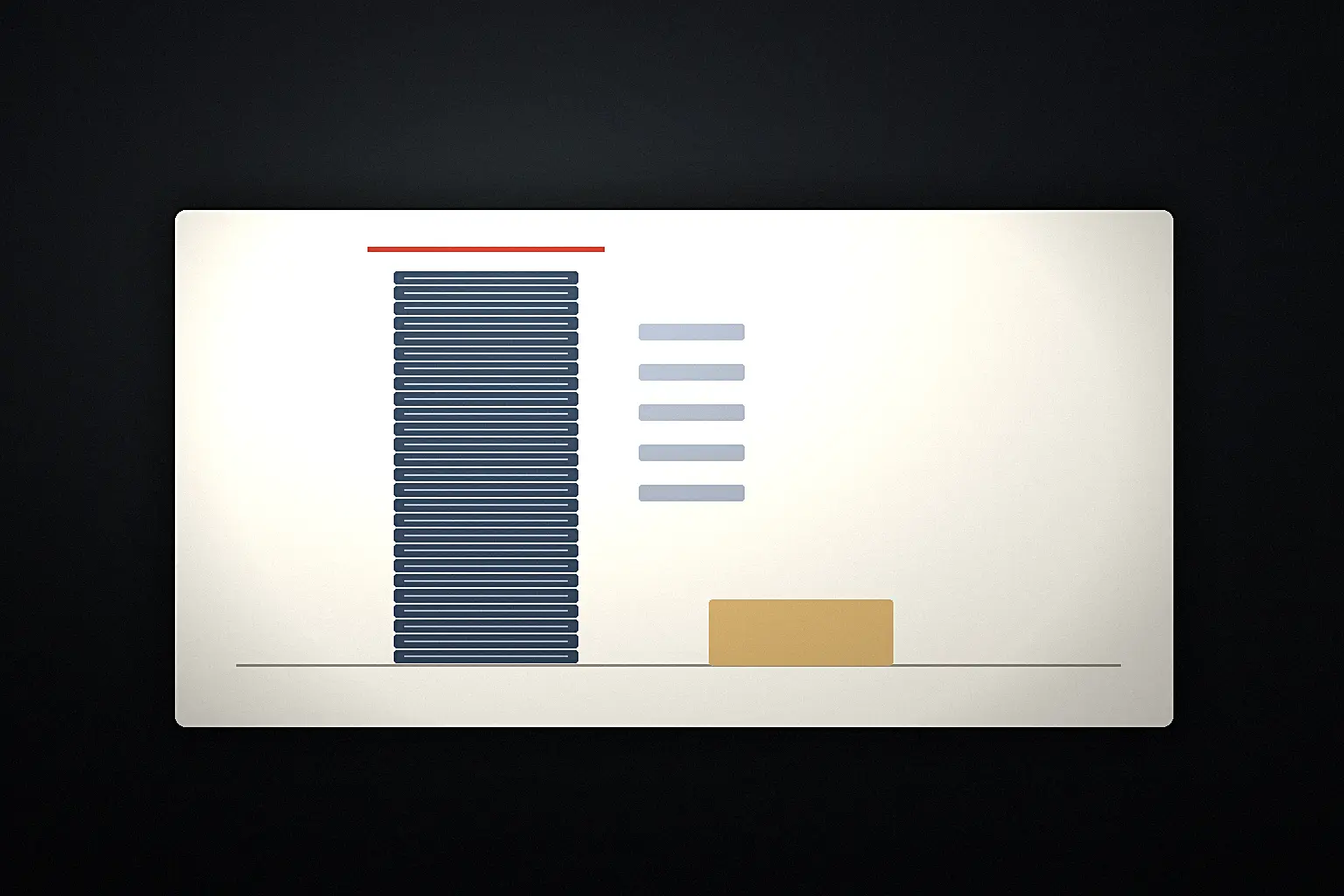
Divide the ceiling by the charge: C$10,000,000 buys 250,000 transactions at C$40, or roughly 666,667 at TELUS' C$15. That is not an allegation about volume; it is a measure of scale. The largest penalty figure anywhere in this cluster of decisions is small in the currency the charges were collected in.
What nobody counted is the number that would turn a ban into a remedy: how many subscribers paid, and what it added up to. No aggregate. No refund class. No credit line. Thirty days of grace remain — a carrier that keeps charging until 26 December bills another month of conduct a regulator has already called unlawful — and then the ledger simply stops.
That a regulator rather than a trade body is doing the enforcing is the unglamorous good news: rules that carry consequences are supposed to belong to sovereign authority — courts, regulators, governments — and here, for once, they do. The gap is not authority. The gap is restitution.
Which leaves the question the decision cannot answer. A fee small enough to be called junk is precisely a fee too small for anyone to contest: too small to justify a complaint, a lawyer, an afternoon on hold. That is where the poverty penalty hides — not in the size of the charge, but in the cost stack around it: the hour on hold, the complaint nobody files, the refund nobody claims. The people least able to absorb the fee are the least able to dispute it. The CRTC has told three carriers to stop. It has not told anyone to give the money back. By 28 December the bills will look cleaner.
The record will still not say who paid.
Member Briefing
Read the full trend briefing
Members read the full briefing with the source notes behind every finding.
Strategic Circle
A daily briefing in your language, built from changes we have verified.
Join for USD 20/monthCancel anytime.
Members also get the full research library, a daily briefing on the networks they follow and the private forum.