
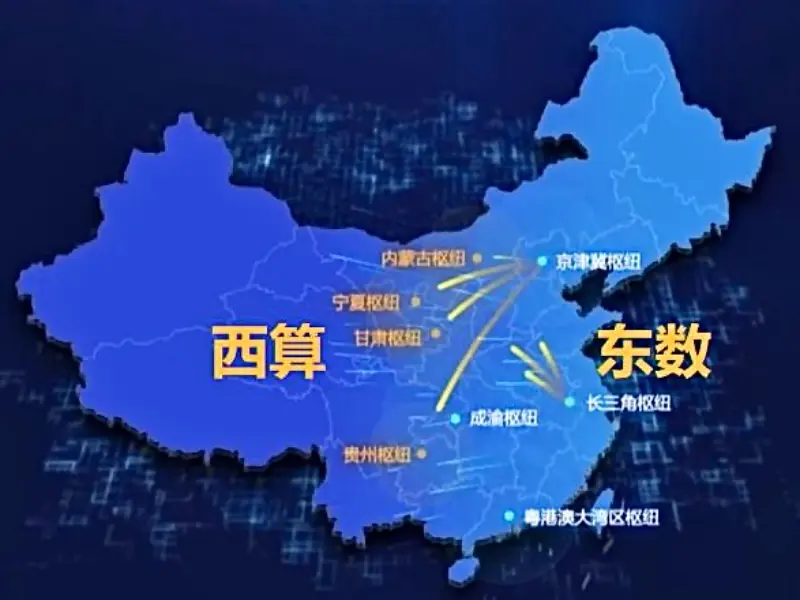
- China’s development plans indicate that it believes computing power has become a core production of the country.
- Beijing has put computing power front and center in its efforts to close the technology gap with the United States.
- China’s total computing capacity is second only to that of the United States, and it will invest in the construction of large-scale projects “Eastern data and Western computing” at home.
OUR TAKE
China plans to focus on developing a national planning network. Projects developed on this basis may be able to address the regional imbalance in digital resources between China’s more prosperous east and energy-rich west, as well as enhance the country’s core competitiveness by boosting computing capacity. But security challenges remain, and while efforts are being made to develop national computing networks, they must also guard against the risks posed by regional network failures, power outages, and extreme situations.
— Tuna Tu, BTW Reporter
Computing power and technology competition
China needs a fully integrated national computing network if it is to take the lead in the global high-tech race and restructure its economy to foster innovation, according to the head of the country’s new data regulator. Liu Liehong, head of the National Data Administration, said in a weekend article in Qiushi, a Communist Party journal, that computing power had become “the main arena for scientific and technological competition” among major countries to seise the lead in future industries. “Computing power has become the core productivity of a country,” Liu said.
Also read:Telin and Zenlayer team up to deliver edge computing solutions
Bridging the gap between technologies
advanced technologies and future industries, represented by new materials, biopharmaceuticals, gene technology, deep sea and space exploration, have created unprecedented demands on computing infrastructure. “The unified computing system will optimise resources and reduce costs, helping the country make breakthroughs in advanced technologies such as quantum information.” Beijing has put computing power front and center in its efforts to close the gap with the United States in technology, especially artificial intelligence.
To that end, it set up the NDA in October last year to act both as an enabler of the digital economy and as a regulator of the booming data management industry.
Also read:7 cloud computing trends that will define 2024
China’s computing capacity expansion plan to 2025
China’s total computing capacity is second only to that of the United States, and it plans to expand it by half by 2025.China plans to push forward the “Eastern Data and Western Computing” project, a large-scale project that will complete the construction of eight national computing centers and 10 national data center clusters, and is expected to drive investment of about 400 billion yuan per year. It aims to unite computing centers across the country to create a pool of general-purpose, intelligent and supercomputing power, and will be operational next year.
The project will also narrow the economic gap between regions and attract more professionals to inland areas, Liu says.