Summary
- BTW's record of the Bahrain Internet Exchange is a single RIPE NCC member-directory footprint, last updated 18 June 2026, carrying one resource of class "virtual" — a membership right, not an autonomous system number and not a block of addresses.
- The card's two evidence entries resolve to the same RIPE NCC URL under two different labels. Two labels, one document: the apparent two-source support is one page counted twice.
- The record is typed "operator" and named "exchange", while its own text declines to assert any service role. For anyone deciding whether to connect, buy transit or invest, that distinction is the entire story.
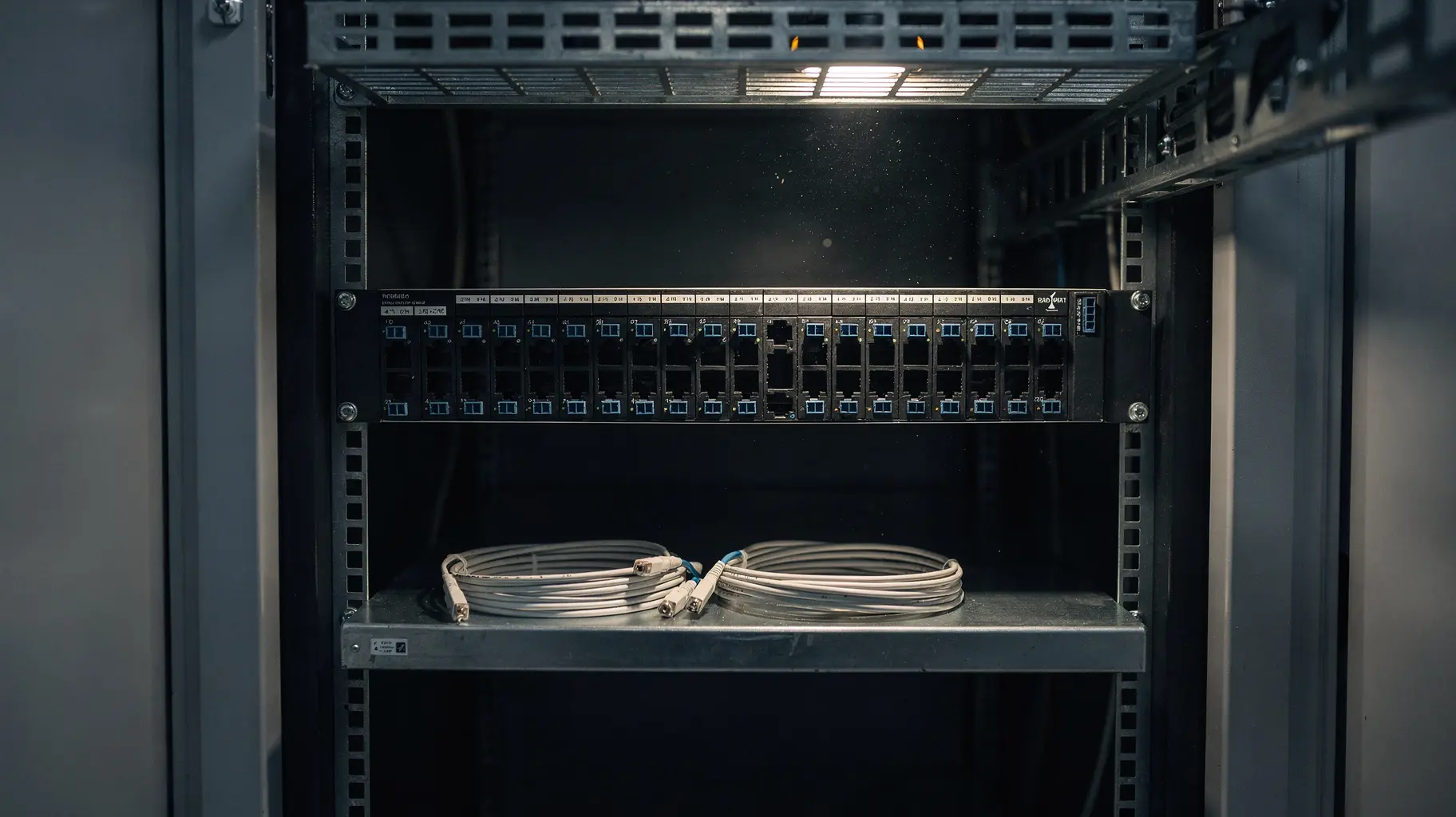
An internet exchange is a physical proposition. It is a switch in a building, a set of ports, a route server, a list of networks that show up and a graph of bits crossing between them. You can argue about how well an exchange is run, but you cannot argue about whether it has a fabric: either traffic crosses there or it does not, and either somebody can name the networks on it or nobody can.
BTW's directory entry for Bahrain Internet Exchange Only for Strategic Circle does not contain any of that. What it contains is a membership.
The card, created and last updated on 18 June 2026, places the entity in the RIPE NCC public member directory as a member registered or based in Bahrain, with official service-area context in Bahrain. Its legal profile gives a legal name, a legal type of private company, a headquarters country of Bahrain and a registration jurisdiction of BH. Its single resource facet is a RIPE NCC membership, recorded with the status "observed" and the roles "resource_holder" and "rir_member". The importer that produced the row is named rir-member-directory-import, which is exactly what it sounds like: a pipeline that reads a registry's member list and writes what it finds.
That is the whole of it. The counts are worth reading slowly, because they are the most informative numbers in the file. Named networks: zero. Relationships: zero. Traffic figures: zero. Leadership contacts: zero. Resource facets: one. Evidence entries: two. Distinct evidence URLs: one.
A membership right is not a network
The single resource is classed "virtual". That word is doing real work. A virtual resource is a right, not an allocation: it is the thing that makes an organisation a member, not the thing that makes it reachable. There is no autonomous system number in this record. There is no delegated address block. There is no prefix, no route object, no peering session, no port speed, no site address.
This matters because the object is typed "operator" and named "exchange", and a reader skimming a directory will supply the missing half of that phrase from their own expectations. An exchange operator, in the ordinary sense, runs a switching fabric and sells or gives away ports on it. Nothing in this card says that. The card says a Bahraini private company appears on a RIPE NCC member list.
BTW's own summary text is unusually blunt about the gap, and it is worth quoting rather than paraphrasing: the record is "not proof that the entity sells ISP, IP transit, cloud, registry, or managed-network services." The card then goes further and writes its own instructions for what would be needed to close the distance — verify the legal registration record, public website and leadership contacts from official or company-registry sources; map ASN and IP resources from RDAP, WHOIS, IRR, BGP or RIR delegation data before making any routing-footprint claim beyond membership; and do not classify the entity as an ISP, transit provider, cloud provider, registry or managed-network operator unless a current public source explicitly supports that service.
Those are not hedges bolted on by a cautious editor. They are the record telling you what it is not.
Two labels, one page
The evidence section is where the file becomes genuinely interesting. It lists two entries. The first is labelled "RIPE NCC member directory record" and typed as an RIR member directory. The second is labelled "RIPE NCC member detail page" and typed as an RIR member directory detail. Both point at the same address: the RIPE NCC member listing for Bahrain (RIPE NCC member directory).
Two entries, one URL. A reader counting sources would count two. A reader following the links would arrive at the same page twice. The card's apparent corroboration is a single document wearing two hats — a directory listing and the detail view of that same listing, which is a distinction in navigation, not in evidence.
This is not a scandal. It is a bookkeeping artefact, and it is the kind that propagates. Confidence scores, source counts and evidence tallies are the numbers downstream systems use to decide how much weight a record deserves. A tally that counts one page twice inflates the apparent depth of a file that has exactly one document behind it.
What the record can and cannot tell you
Here is the test I would apply, and it is not the test most readers apply. The question is not whether an internet exchange called Bahrain Internet Exchange exists in the world. It may well; exchanges are unglamorous and frequently under-documented, and a thin public footprint is not the same thing as an absent facility. The question is whether this record establishes a fabric. On the retained text, it does not. It establishes a membership.
That distinction has practical weight. A peering coordinator evaluating a new market wants to know which networks are present, what port speeds are offered, whether a route server exists and who to email. A procurement team wants to know whether a local exchange can shorten a path to a domestic audience. An investor wants to know whether the thing has revenue. A regulator wants to know who is licensed to do what. The card answers none of these, and it is honest enough to say so.
What it does answer is narrower and still useful: a Bahraini private company called Bahrain Internet Exchange is a RIPE NCC member, and that fact was current as of 18 June 2026. If you need to know that a particular organisation has a relationship with a particular regional internet registry, this is the document. If you need to know whether traffic crosses between Bahraini networks at a common switch, this is not.
One boundary belongs beside the claim rather than at the end of the article. This piece works from the retained directory card dated 18 June 2026, not from a fresh reading of the RIPE NCC page itself. The card is the basis for every registry fact here, and it is a record of a membership rather than an operating measurement. Where the card is silent, this article is silent too — and silence in a directory row is not a census of the world.
The uncomfortable general lesson
Directory rows are cheap to produce and expensive to disprove. A pipeline reads a member list, writes a row, assigns a confidence score and moves on. Nobody is harmed by the row's existence. But the row then travels: into research files, into market maps, into the background paragraphs of due-diligence memos, into the mental model of someone who has never had reason to ask what "virtual" means in a resource facet.
The Bahrain Internet Exchange file is a clean specimen of the species. It is not wrong. It is not misleading in any sentence it actually writes. It is simply much smaller than the name on the front of it, and the gap between the name and the contents is where bad decisions get made.
Member Briefing
Deeper Profile Context
Sign in with the right membership level to unlock the full briefing and source notes.
Only for Strategic Circle
Strategic Circle
Open to all readers. Unlock profile briefings after joining and signing in.
Join Strategic CircleOnly for Leadership Alliance
Leadership Alliance
For qualified IP-asset owners and management; sign in to unlock alliance briefings.
Join Leadership Alliance