
Summary
A later International Telecommunication Union resilience assessment records that damage to a fibre line in Georgia in 2011 caused about 90 percent of Armenia's Internet capacity to go down.[1] That is an approximate capacity figure, not proof that every user, service or packet was offline.
Incident-day Armenian reporting said the country's three wholesale providers were operating on reserve channels after failures on two cables carrying wholesale Internet from Georgia.[14] The report is evidence that backup paths existed. It is also evidence that nominal provider plurality did not prevent a country-scale correlated loss.
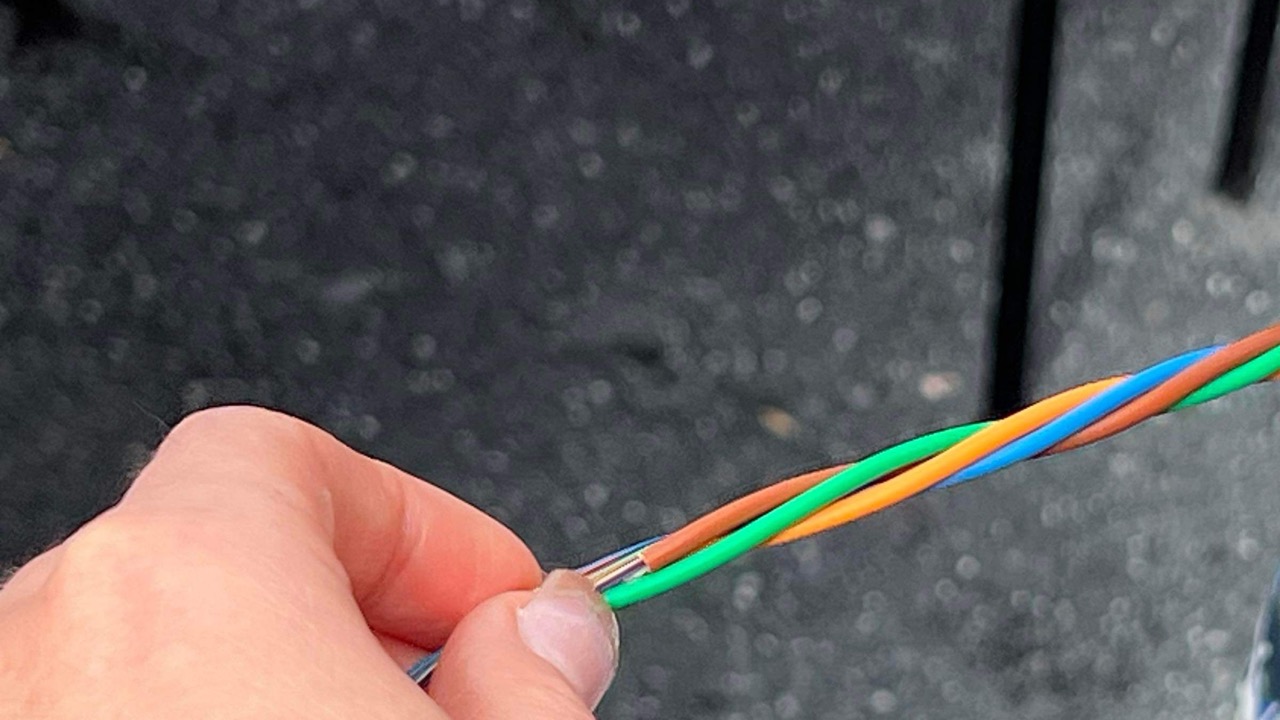
The later ITU assessment records that a person searching for scrap copper dug up a fibre line to Georgia.[1] That physical act is the reported trigger. It does not, by itself, explain why the effect propagated so widely.
The accountability thesis concerns cross-border terrestrial infrastructure: right-of-way protection, route ownership, physical separation, international gateway concentration, reserve-channel capacity, upstream handoffs, traffic exchange, incident communication and verifiable restoration.
Multiple retail or wholesale providers do not establish route diversity. Two services can have separate contracts, routers and brands while converging on one railway corridor, duct, border crossing, carrier, landing system or repair organisation.
Public evidence does not reveal the complete 2011 physical or logical topology. It does not justify claiming that one cable was Armenia's only connection, that all traffic stopped, or that today's network has the same failure domain.
ArmIX, Armenia's Internet exchange, can keep eligible local traffic between participating networks inside the country. It cannot substitute for lost international reachability to remote content, cloud services, upstream transit and external dependencies.[7]-[9]
Later operator, regulator, ITU and government records show changed or additional controls: fibre through both Georgia and Iran, railway-route investment, IXP development, interruption and restoration standards, and emergency satellite terminals.[2][6][7][8][9][11][12][19] These records demonstrate activity, not the tested elimination of the 2011 failure class.
The Heng.lu reality layer is direct. Route inventories, contracts, maps, gateway lists and outage notices are accountability ledgers. They matter because they identify responsibility. Running paths, physically distinct rights-of-way, available capacity, functioning handoffs and repair execution determine whether service continues.
A credible remediation record should prove shared-risk-group diversity, retained capacity after each route loss, alarm and escalation timing, customer-visible effects, repair access, restoration acceptance criteria and repeated failover tests.
The story is infrastructure, not folklore
The 2011 incident is often retold as a technological fable: an elderly person looking for copper struck a cable and disconnected an entire country. That framing is memorable because it places an extraordinary outcome next to an ordinary action. It is also analytically weak.
A shovel does not design a transit market. It does not choose which providers buy capacity from which upstreams. It does not determine whether two circuits share a railway right-of-way. It does not set reserve-channel capacity, border-crossing policy, repair access, alarm thresholds or customer-notification rules. The reported excavation explains an immediate physical trigger. The network architecture and operating controls explain why the trigger had the reach that it did.
The distinction matters for accountability. If analysis stops at the person who damaged the cable, every actor with the power to reduce correlated failure disappears from view. The route owner becomes a passive victim. Wholesale and retail providers become mere messengers. Regulators become spectators. Contracts labelled "backup" escape testing. Customers are left with a colourful story instead of evidence about the infrastructure on which they depend.
The available record supports a more disciplined reconstruction.
The ITU's Armenia Digital Data Resilience and Policy Assessment says that in 2011 a person searching for scrap copper dug up a fibre line to Georgia and caused about 90 percent of Armenia's Internet capacity to go down.[1] A contemporaneous Armenian report said all three wholesale providers were using reserve channels after an accident on two cables through which wholesale Internet arrived from Georgia.[14] Another report said Georgian repairs restored connectivity.[13] Other contemporaneous coverage repeated a reported physical-damage account, but the blocked pages are not used here as sole support for location, ownership or legal
conclusions.[15][17]
These accounts establish a severe cross-border capacity event. They do not establish one perfectly consistent number for duration, customers, routes or service loss. Some reports describe almost complete disconnection; others emphasise reserve operation. The correct synthesis is that most available capacity was lost, reserve paths carried at least some traffic, and public sources do not show the exact experience of every user.
That bounded conclusion is sufficient. A loss of most international capacity is a serious network-control test even if some services survive. Indeed, survival makes the case more useful: it allows the performance of reserve controls to be examined rather than treating the episode as a binary blackout.
A chronology with separate clocks
Incident analysis becomes unreliable when every event is compressed into one outage duration. At least five clocks matter here.
The physical-failure clock begins when the relevant fibre routes are damaged. The public packet does not contain cable-test timestamps, excavation records or a primary Georgian engineering report. It therefore cannot state the exact second of failure.
The network-detection clock begins when operators observe optical loss, interface alarms, route changes or capacity collapse. Public reports show that providers knew of failures on the Georgian side and moved onto reserve channels.[14] They do not publish the first alarm time, the sequence in which circuits failed or the monitoring systems that detected them.
The customer-impact clock begins when users or dependent systems lose reachability or suffer unacceptable performance. A 90 percent capacity loss does not mechanically translate into 90 percent of users being entirely offline. Traffic engineering, local caches, domestic exchange, application behaviour, congestion and provider-specific backup capacity can produce different effects.
The response clock covers confirmation, escalation, traffic shift, customer communication and cross-border repair coordination. The incident-day report said providers were using reserve channels and expected Georgian specialists to need at least hours to restore the links.[14] A later report said repairs had been completed.[13] The frozen sources do not provide a complete command log.
The resilience-recovery clock ends only when normal capacity, route options and operational margin return. A customer may regain basic browsing before the network regains spare capacity. A fibre splice may restore light before routing and application tests pass. "Internet restored" can therefore describe several different states.
An accountable post-incident report would preserve each clock. It would record first optical alarm, route withdrawal, retained traffic, reserve utilisation, peak congestion, customer notice, repair access, splice completion, optical acceptance, route restoration, application checks and the return of reserve margin. Without those distinctions, a short restoration claim can conceal a long period of elevated risk.
The public evidence is not detailed enough to fill that ledger. The absence should remain visible rather than being replaced by invented precision.
Provider plurality is not failure-domain diversity
The incident-day report named ArmenTel, FiberNet Communication and GNC-Alfa as wholesale providers affected by the Georgian failure and operating through reserve channels.[14] That appears, at first glance, to describe a diversified market. Three providers should mean three independent paths.
It does not necessarily mean that.
Commercial diversity can exist at one layer while physical concentration persists at another. Providers may own separate Armenian backbones but buy international capacity through the same Georgian operator. They may use separate fibres in the same cable, separate cables in the same trench, or separate contracts whose routes converge at one border crossing. They may enter Georgia through distinct handoffs and then share a railway corridor toward Tbilisi or Poti. They may reach different routers but depend on the same power, landing station, submarine system or repair access.
The World Bank's Armenia broadband project material described network providers with international connectivity via Georgia.[4] Caucasus Online's own history describes fibre along Georgian railway infrastructure, onward connections to Armenia and a Black Sea cable path toward Europe.[10] That history also describes the acquisition of Georgian Railway Telecom and access to railway-route fibre. These later and corporate descriptions do not provide a complete incident-day diagram. They do establish why the shared-upstream question is legitimate.
The appropriate test is not "How many providers did the customer buy?" It is "Which shared risk groups remain after tracing every path to its upstream destination?"
A shared risk link group is a set of circuits that can fail together because of one physical or operational event. The common element may be obvious, such as two fibres in one cable. It may be hidden, such as separate carrier circuits that share a bridge, tunnel, railway easement, border facility, optical amplifier site or maintenance contractor.
An operator selling a diverse service should be able to state the level at which diversity is guaranteed. It may guarantee different ports but not different buildings. Different buildings but not different ducts. Different terrestrial routes but not different Black Sea systems. Different upstream networks but not different border crossings. Each distinction changes the failures against which the service protects.
Customers cannot usually inspect this topology. They rely on supplier representations and contractual terms. That information asymmetry creates a specific accountability duty: providers should not describe circuits as diverse without maintaining evidence of physical and operational separation at the level material to continuity.
The 2011 event does not prove that any named provider made a false contractual representation. The contracts are not public. It proves that provider count alone was an inadequate proxy for independent international capacity.
Trigger, root conditions and contributing conditions
Forensic language is valuable because it prevents the first visible event from absorbing every cause.
The reported trigger was physical damage to fibre in Georgia. The accessible ITU assessment describes a person searching for scrap copper digging up a fibre line to Georgia.[1] Contemporaneous reports provide additional background, but blocked pages are not used to establish a precise location, asset owner or legal conclusion.[15][17] The article does not possess a court record, engineering report or primary investigation file sufficient to decide every factual or legal detail.
Potential root conditions are the durable system properties without which the trigger would not have produced such a wide effect. They may include concentrated international gateway capacity, physical convergence of nominally separate routes, and a market structure in which several Armenian providers depended on Georgian infrastructure. The public sources support those issues as analytical candidates. They do not reveal enough topology to allocate a final root-cause ranking.
Potential contributing conditions include right-of-way protection, cable marking, excavation controls, reserve-channel capacity, dependency mapping, shared-risk disclosure, cross-border repair access and incomplete visibility between operators. Again, these are questions for the evidence, not automatic findings of failure.
Detection concerns what alarms, measurements and customer reports showed. Public reporting establishes awareness of failures and reserve operation. It does not show whether operators detected the event before customers, how quickly the route owner isolated the break or whether a central coordination process existed.
Response concerns traffic shift, escalation, communication and repair mobilisation. Reserve channels were reportedly used.[14] That is an operating control and should receive credit. Its capacity and service performance remain undocumented in the public packet.
Recovery concerns the restoration of usable connectivity and then full capacity. Georgian repairs were reported complete by the following day.[13] The exact acceptance criteria are not public.
Remediation concerns changes intended to prevent recurrence or reduce impact. Later fibre investment, connections through Georgia and Iran, ArmIX development, service-quality regulation and emergency satellite capacity are relevant.[6]-[12][19] They are not interchangeable and do not prove that the same route-loss scenario has been repeatedly tested.
This framework avoids two common errors. The first is blaming only the immediate actor. The second is treating every later infrastructure improvement as proof that the incident has been solved.
Physical protection is a cross-border control
The damaged infrastructure was reported outside Armenia. That geographic fact complicates responsibility but does not eliminate it.
The relevant route owner controlled, or contracted for, parts of right-of-way protection, cable placement, marking, inspection, repair and local coordination. Georgian authorities controlled law, public safety and investigation. Armenian providers did not control excavation activity in Georgia, but they controlled which upstream services they purchased, what diversity they required, how they verified shared risk and what reserve capacity they maintained.
Cross-border dependence therefore creates two control records.
The first is the asset-protection record: where the route runs, who can access the corridor, what excavation controls apply, how the cable is marked, how intrusion is detected, how faults are located, who authorises repairs and how quickly crews can reach the site.
The second is the service-continuity record: which traffic depends on the route, what physically distinct alternatives exist, how much capacity remains after each loss, how routing changes, which applications are tested, how customers are told and when full margin returns.
No single actor owns the whole record. The route owner may know the physical path but not the Armenian application impact. The Armenian provider may know customer effects but not every detail of the Georgian corridor. The regulator may receive outage reports but not live routing telemetry. Accountability requires those partial records to be joined without disclosing security-sensitive route detail to the public.
This is not an argument that every country must own every international cable on its territory. International connectivity necessarily crosses jurisdictions and relies on commercial partners. It is an argument that dependency outside the jurisdiction should be treated as an operating fact, not as an excuse for unmeasured continuity.
Reserve channels were real, but their performance matters
The report that providers were operating on reserve channels is one of the most important facts in the record.[14] It shows that continuity planning was not entirely absent. Some alternative capacity existed and could be used.
A binary assessment would stop there: backup succeeded or backup failed. A useful assessment asks four additional questions.
First, how much capacity remained? If approximately 90 percent of national Internet capacity went down, the reserve environment was operating under a radically different constraint.[1] It may have supported essential traffic, a subset of customers or severely congested access. Public reports do not quantify the retained capacity by provider.
Second, which destinations remained reachable? Domestic routes, cached content and local services may survive differently from remote cloud systems, international voice or external authentication. Reachability should be measured by service, not inferred from one successful ping.
Third, how quickly did traffic shift? A reserve circuit that requires manual activation may leave a measurable gap. A route that is always active may accept traffic immediately but saturate. The public packet does not reveal the transition sequence.
Fourth, what was the next failure margin? A network that has restored minimal service over one reserve path may remain one equipment fault, power event or routing error away from complete loss. Recovery of customer access is not the same as recovery of resilience.
These questions should be answered through telemetry. Operators can retain interface utilisation, optical state, BGP updates, packet loss, latency, queue depth, DNS success, voice completion and application checks. They can publish aggregated findings without exposing vulnerable route coordinates.
The accountability standard is not unlimited reserve capacity. Redundancy has costs. The standard is an explicit service objective and evidence showing whether the reserve design met it.
The role and limit of local traffic exchange
Armenia's exchange infrastructure belongs in the analysis because international failure does not affect every packet in the same way.
ArmIX was established in 2010 and developed as a neutral environment in which participating Armenian networks could exchange traffic.[7][8] Current ArmIX material lists providers, content resources and regional expansion. The Internet Society's tracker records current membership and capacity.[9] Those current figures should not be projected backward into March 2011.
The control principle is stable: an IXP can allow eligible local traffic to stay local. If two participating Armenian networks exchange routes at ArmIX, traffic between their customers need not leave the country merely to return. Locally hosted content and caches can also remain reachable when international paths degrade.
An IXP cannot manufacture an external route. If an application is hosted abroad, depends on a foreign cloud region, retrieves identity from an external provider or uses an upstream not available through surviving paths, local exchange does not solve the problem. The same is true for software updates, international communications and remote operational tools.
The correct resilience plan maps these dependencies. Which critical services can operate locally? Which DNS authorities, authentication systems, status pages and monitoring tools require international reachability? Which content is cached? Which networks peer locally? Which emergency communications depend on external platforms?
The plan should also avoid treating one IXP as an infallible object. Exchange switches, facilities, power and backhaul create their own failure domains. The ITU assessment notes Armenia's single IXP and considers it probably sufficient for the country's size while identifying broader data-resilience questions.[1][2] The ITU DataHub provides current country indicators, but those current measurements are not incident-day topology evidence.[3] The assessment is context, not a guarantee.
Local exchange is therefore one layer of continuity. It reduces unnecessary external dependency for eligible traffic. Cross-border route diversity remains necessary for the Internet's external reach.
Detection should expose the failure domain
When a circuit fails, monitoring often reports the immediate symptom: an interface goes down, optical power disappears or routes are withdrawn. That tells the operator what stopped. It may not reveal why several services stopped together.
A better monitoring design attaches each circuit to a current failure-domain inventory. The inventory includes cable, duct, right-of-way, border crossing, carrier, facility, power, equipment and repair arrangement. When two circuits alarm at once, the incident system can identify their shared dependencies.
The 2011 record suggests the value of this approach because two cables were reportedly involved while several providers were affected.[14] If each provider saw only its own commercial circuit, the common Georgian event could require manual coordination to discover. A cross-operator view would shorten diagnosis and make customer communication more accurate.
Monitoring should also distinguish loss from saturation. A reserve path may remain up while queues grow and applications fail. The operational view should therefore combine physical alarms with traffic and service measurements.
Useful detection evidence includes:
- the first optical or interface alarm for each circuit;
- the time each relevant route was withdrawn or de-preferred;
- retained and lost capacity by international gateway;
- reserve-path utilisation and congestion;
- reachability from independent external vantage points;
- application-level checks for DNS, web, voice, messaging and critical government services;
- the first operator acknowledgement and cross-border escalation;
- the first customer notice and each material update.
The public packet contains only fragments of that record. It should not be treated as if the fragments prove poor internal monitoring. They define what an external reviewer cannot verify.
Communication is part of the control
During a severe capacity loss, customers need more than the phrase "technical problem." They need a bounded description of what remains available, what is degraded and what actions reduce risk.
The incident-day Armenian report conveyed several useful facts: the problem was on the Georgian side, two cables were affected, all three wholesale providers were using reserve channels, and repair timing was uncertain.[14] That is more informative than a generic outage notice.
A stronger notice would also state the measurement boundary. It could say that international capacity had fallen by a specified range, domestic exchange remained available, some providers or applications were degraded, reserve paths were active, and restoration teams were working at a named stage. It could avoid claiming full restoration until capacity and route diversity returned.
Cross-border incidents create a temptation to shift responsibility entirely to the foreign operator. Attribution of the physical location is legitimate. Operational accountability still requires the local provider to explain its own retained service, failover and customer protection.
Communication should not expose precise infrastructure vulnerabilities. It can report capacity, affected service classes, geographic scope, restoration stage and next update without publishing route coordinates or security-sensitive diagrams.
The regulator can reinforce this practice by defining interruption and restoration evidence. Armenia's electronic communications law supplies the broader statutory framework, while later service-quality rules address service degradation, interruption, restoration periods, complaint response and compensation.[5][6] Those records are context. They do not establish the duties or compliance outcome in March 2011.
Recovery is not the same as remediation
The reported repair restored connectivity.[13] That closes the immediate operational incident. It does not answer whether the same class of failure became less likely or less damaging.
Remediation can occur at several layers.
At the physical layer, operators can use genuinely separate rights-of-way, border crossings and upstream corridors. Where full separation is impossible, they can improve marking, access control, surveillance, inspection and repair readiness.
At the capacity layer, reserve paths can be provisioned and tested against defined essential-service objectives. Capacity should be usable under the routing and security policies that will apply during a real event.
At the interconnection layer, providers can maintain multiple upstream relationships, local peering and external route options while documenting hidden convergence.
At the application layer, critical services can reduce unnecessary foreign dependencies, operate degraded local modes and test alternate communications.
At the governance layer, regulators can require outage evidence, restoration milestones and truthful diversity descriptions while protecting sensitive infrastructure data.
Later sources show developments relevant to these layers. GNC-Alfa described investment in fibre along Armenian railway routes and interconnection with at least two Georgian fibre systems.[12] OVIO now describes external connections through both Georgia and Iran.[11] ArmIX records show an established domestic exchange environment.[7]-[9] The ITU assessment records broad proximity to fibre but also notes uncertainty about the number of Internet exit points.[1][2] In 2026, Armenia's High-Tech Ministry described emergency satellite terminals intended for situations in which traditional infrastructure is limited, overloaded or disrupted.[19]
Each measure has a boundary. Two Georgian systems may still share a corridor. A route through Iran may have different capacity, policy or reachability constraints. An IXP preserves eligible local traffic, not all international dependencies. Satellite terminals can support emergency responders without replacing national fixed-network capacity.
The existence of these controls should be recorded. Their effectiveness must be tested under realistic removal of the original failure domain.
The Heng.lu reality layer
Network governance often treats records as if they were the network. A contract says two circuits are diverse. An inventory lists multiple gateways. A diagram shows backup arrows. A regulator records licensed providers. Those records are necessary, but packets do not move because a document labels a path resilient.
The reality layer asks what running infrastructure does.
Which fibre carries light? Which router accepts the route? Which upstream has capacity? Which applications complete? Which repair crew can access the break? Which backup remains after the first backup saturates? Which timestamp proves that resilience returned?
This is consistent with a restrained Heng.lu doctrine: the recordkeeper is a ledger, not a sovereign over operating reality. Accurate route and operator records create accountability because they identify assets, handoffs and obligations. They do not enforce continuity by themselves. Running-code and running-infrastructure evidence decides whether the claimed service exists.
For this incident, the relevant Heng.lu surfaces are telecom continuity, peering and transit, and operator continuity. The doctrine does not require forcing a personal citation into the public article. It supplies a test for the evidence:
- Is the route inventory accurate?
- Does it record shared physical risk?
- Can a provider transfer traffic to a truly distinct path?
- Does the alternate path have usable capacity?
- Do routing, DNS and applications function there?
- Can repair and restoration be verified?
The article would collapse without these network controls. That is why the Armenia event fits Risk and accountability on network infrastructure rather than generic operational risk.
What the evidence does not prove
Strong accountability reporting is as explicit about unknowns as it is about findings.
The sources do not provide a complete map of the two cables reported failed on 28 March. They do not show whether the cables were in one trench, one right-of-way or separate routes affected by related work. They do not disclose every upstream, border crossing or Black Sea path used by each Armenian provider. A follow-up report described another Georgian channel failure days later, but it does not establish that the same asset, route or cause was involved.[16]
The sources do not establish one exact outage duration for every customer. Some describe hours, while restoration and customer experience can differ by provider. The article should not select the most dramatic duration and generalise it.
The sources do not prove that the person accused of damaging the cable understood its function, acted intentionally against telecommunications or bears responsibility for the architectural concentration. Legal guilt and infrastructure accountability are separate questions.
The sources do not quantify economic loss, emergency-service impact or harm to specific institutions. Those claims require incident-specific records.
The sources do not prove that current Armenian connectivity remains as concentrated as it was in 2011. Later records show additional routes, fibre, exchange capacity and emergency measures. A later Freedom House assessment still described limited international connections as a continuity challenge, but it does not supply current route-level proof.[18] The public record leaves some topology and exit-point questions unresolved.
The sources do not prove that any provider or regulator breached a legal duty. The article analyses control and evidence, not liability.
These limits do not weaken the central finding. They prevent a valid infrastructure lesson from becoming an unsupported accusation.
A control map by actor
Accountability should follow control.
The Georgian route owner controlled or contracted for route records, physical protection, fault location, repair access and restoration of the damaged asset. Its evidence should include as-built route data, maintenance history, incident location, repair timestamps and post-repair tests.
Other Georgian and international carriers controlled upstream capacity, handoffs and alternate routes in their own systems. Their evidence should show what capacity remained and whether supposedly separate services converged.
Armenian wholesale providers controlled procurement, dependency mapping, contracted diversity, reserve capacity, traffic engineering and cross-border escalation. Their evidence should show the routes they believed were diverse and how each performed.
Armenian retail providers controlled customer communication, access-network operations, application monitoring and, where possible, multiple wholesale relationships. They should not imply physical diversity based only on supplier count.
ArmIX and participating networks controlled local exchange configuration and the availability of locally exchanged routes. Their role is important but bounded to eligible local traffic.
The Armenian regulator controlled licensing, quality rules, reporting expectations and oversight. It could require evidence that marketed resilience corresponded to distinct failure domains without publishing sensitive route details.
Government and emergency organisations controlled continuity planning for critical public services and alternate communications. Later satellite-terminal deployment is relevant to emergency resilience, but not a substitute for wholesale Internet capacity.[19]
Customers controlled application-level fallback only where alternatives were available. They did not control the cross-border physical route and generally could not audit hidden common infrastructure.
This allocation avoids blaming the actor with the least systemic control while excusing actors with the most.
The counterargument: rare events and economic constraints
An operator might reasonably argue that fully independent international paths are expensive, geographically constrained and impossible to guarantee against every hazard. A small or landlocked market cannot duplicate every corridor indefinitely. Reserve capacity that sits unused also has a cost.
That counterargument is valid. It changes the standard from perfection to explicit risk acceptance.
If two circuits must share a corridor, the record should say so. If reserve capacity can protect only critical traffic, the service objective should define that scope. If a second international direction has policy or capacity limits, those limits should be tested. If full diversity is uneconomic, regulators and customers should know what level of correlated loss remains.
Accountability does not demand an unlimited network. It demands that resilience claims match tested capability.
The 2011 event provides empirical evidence for that decision. It shows the scale of loss possible under one cross-border physical incident. Operators can compare the cost of additional separation, reserve capacity and protection with the observed operational consequence. The decision becomes a documented tradeoff rather than an assumption hidden behind multiple provider names.
A verifiable remediation programme
A serious remediation programme for this failure class would include at least ten controls.
Current route inventory. Maintain as-built physical and logical records for every international service, including carrier, border crossing, right-of-way, facility, power, equipment and repair arrangement.
Shared-risk classification. Assign circuits to shared risk groups and prohibit an unqualified "diverse" label when two paths converge at a material point.
Independent evidence. Obtain route attestations, audits or contractual evidence sufficient to test supplier claims. Protect exact sensitive coordinates while preserving accountability.
Capacity objectives. Define how much traffic and which essential services must survive each route loss. Record normal, emergency and peak capacity.
Automatic and manual failover tests. Withdraw paths in controlled exercises, inspect routing state and measure application performance from internal and external vantage points.
Second-failure testing. Test the network while already operating on reserve capacity. The period before full repair is when margin is lowest.
Local-dependency mapping. Identify which critical services can remain local through ArmIX and which rely on external DNS, identity, cloud, monitoring or software systems.
Cross-border incident protocol. Predefine contacts, authority, evidence exchange, repair access, update intervals and acceptance criteria across operators and jurisdictions.
Public evidence standard. Report capacity loss, retained service, affected classes, restoration stage and return of resilience without exposing exploitable route detail.
Post-repair acceptance. Require optical, routing, capacity and application tests before declaring the incident closed. Preserve the evidence with timestamps.
The programme should produce artefacts, not slogans. A route matrix, a failover report, a capacity graph, an application test, a repair timeline and an exception register are auditable. "We have redundancy" is not.
Conclusion: test the corridor behind the contract
The 2011 Armenia outage was not significant because the reported trigger was unusual. Fibre is damaged by excavation in many countries. It was significant because a local physical act in Georgia removed most Internet capacity available to a neighbouring state.
The record shows both vulnerability and continuity. Severe capacity was lost. Reserve channels existed. Providers continued some service. Repairs restored connectivity. Those facts should be examined together.
The durable accountability question is whether the actors who controlled routes, contracts, capacity, handoffs, regulation and repair could demonstrate that commercial diversity corresponded to physical and operational diversity. A market can contain several providers and still have one hidden corridor. A backup circuit can exist and still lack enough capacity. An IXP can protect local exchange and still leave external dependencies unreachable. A repaired cable can restore service without proving permanent resilience.
Records matter. Route maps, contracts, gateway lists, outage notices and regulatory filings identify who controlled what. They are the ledger. The operating network is the reality: light on fibre, routes in tables, capacity on interfaces, applications completing and repair tests passing.
Armenia's 2011 cutoff should therefore be remembered as a cross-border control test, not as folklore about a shovel. The lesson is practical. Trace every service through its physical failure domains. Measure the capacity that remains. Test the handoffs. Preserve the clocks. Publish bounded evidence. Then call the result resilient only when the running network proves it.
Sources
- https://www.itu.int/en/ITU-D/Documents/connect2recover/Reports/Armenia-Digital-Data-Resilience-and-Policy-Assessment.pdf
- https://www.itu.int/itu-d/sites/connect2recover/wp-content/uploads/sites/31/2023/05/RDI-02052023-Nakhli.pdf
- https://datahub.itu.int/data/?Affordability=Broadband+services+pricing&Connectivity=International+connectivity&Governance=Regulatory+mandates&Markets=Traffic+management&Sustainability=Economy&Trust=Applications+and+Services&e=ARM
- https://documents1.worldbank.org/curated/en/433151468209062683/pdf/E25380v10revis1IC10ECA1EA1P115647v1.pdf
- https://www.arlis.am/en/acts/117043
- https://www.psrc.am/contents/page/posts/telecom-new-rules
- https://www.armix.am/eng/index.php
- https://armix.am/eng/aboutus.php
- https://pulse.internetsociety.org/en/ixp-tracker/ixp/348/
- https://www.co.ge/en/441/
- https://www.ovio.am/en/about-us
- https://arkatelecom.am/en/news/internet/4917/
- https://arka.am/en/news/technology/24871/
- https://newsarmenia.am/news/incidents/incidents-20110328-42422533/
- https://news.am/en/news/54136
- https://news.am/eng/news/54498.html
- https://www.theguardian.com/world/2011/apr/06/georgian-woman-cuts-web-access
- https://freedomhouse.org/country/armenia/freedom-net/2017
- https://hightech.gov.am/en/articles/news/starlink-donates-56-more-terminals-to-armenia-to-strengthen-internet-connectivity-resilience-in-emergencies
Member Briefing
Deeper Profile Context
Sign in with the right membership level to unlock the full briefing and source notes.
Only for Strategic Circle
Strategic Circle
Open to all readers. Unlock profile briefings after joining and signing in.
Join Strategic CircleOnly for Leadership Alliance
Leadership Alliance
For qualified IP-asset owners and management; sign in to unlock alliance briefings.
Join Leadership Alliance