
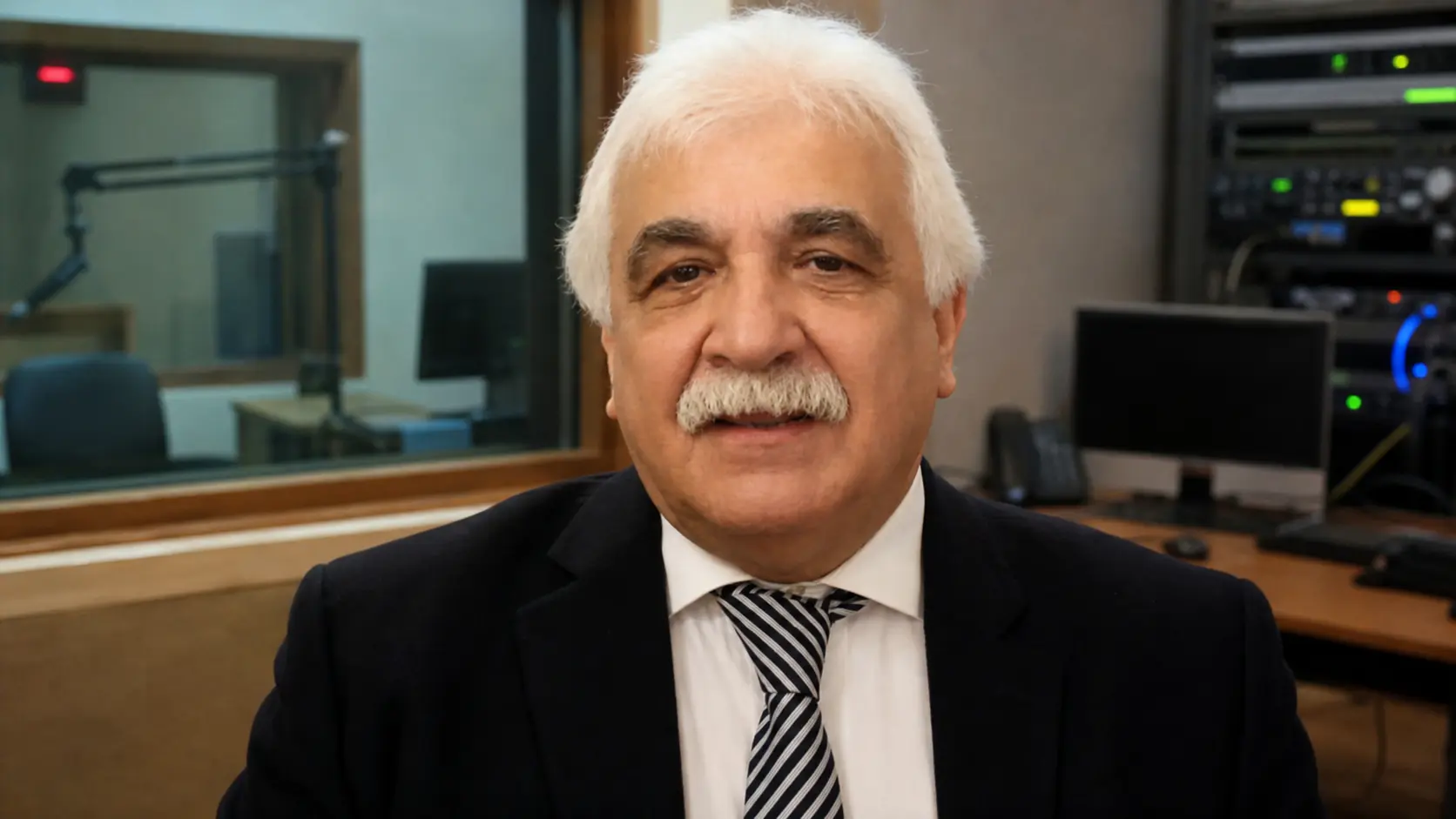
Summary
- Armando Ametrano matters because the public record places him across several layers of local communications infrastructure in Argentina: Radio Las Flores AM1210, Canal 3 de Las Flores, the Asociacion Bonaerense de Television, ARPA, and A. DOS S.R.L.'s number-resource footprint.
- The strongest claims are bounded. Public records support his station and association roles, the May 1998 acquisition of Radio Las Flores by Armando Ametrano (h), his 2025 identification as director, and his LACNIC contact role for AS266800 and 45.234.120.0/22. They do not support claims about subscriber counts, revenue, traffic volume, network quality, or national market power.
- His significance lies in the operating surface rather than personal mythology: a local media business had to navigate taxes, aerial-space fees, support-point contracts, triple play, broadband extension, pay-per-view, internet service, and regulatory change while also remaining visible in association governance.
- The unresolved risks are real. One source uses the generation qualifier "Armando Ametrano (h)," another public page is undated, and the network evidence is registry evidence. A careful profile must preserve those limits instead of turning contact records into a larger story than the documents can bear.
A local record with more than one layer
The available record on Armando Ametrano begins in a place that is easy to underestimate: Las Flores, Argentina, where local media is not only a cultural service but also a practical communications layer. Radio, cable television, community broadcasting, and later internet access do not sit in separate worlds for small and regional operators. They share staff, buildings, customer relationships, political pressure, regulatory exposure, and infrastructure constraints.
A local broadcast operator may be asked to think about programming in the morning, cable fees in the afternoon, pole access by the end of the day, and number-resource accountability when the business carries an internet footprint.
That is why Ametrano is worth a profile. The evidence does not show him as a solitary inventor or as a figure whose importance comes from celebrity. It shows a person attached to a set of institutions that make local communications durable. Radio Las Flores says that Armando Ametrano (h) acquired Radio Las Flores AM1210 in May 1998, and the same anniversary account identifies Armando Ametrano as director as the station marked its 55th anniversary in 2025. Newsline Report identifies him in an ABT context as president of the Asociacion Bonaerense de Television and as titular of Canal 3 de Las Flores.
ABT's own council page lists Armando Ametrano as secretary. ARPA and AIR list Armando Ametrano of LRI229 Radio Las Flores, AM1210 as an auditor for the 2026-2027 term, while trade coverage of ARPA's 2023-2025 commission placed him among supplementary account reviewers. LACNIC RDAP records connect him to A. DOS S.R.L. as an administrative, technical, and abuse contact for AS266800, and as administrative contact for the 45.234.120.0/22 address block.
Each item is modest on its own. Together they form a more durable public picture: Ametrano operates at the point where local media continuity, sector representation, and network accountability meet. That point is not glamorous, but it is operationally important. The people who hold such positions do not usually shape infrastructure through a single public intervention. They shape it by keeping an organization present, answerable, and institutionally connected over long periods.
The 1998 acquisition and the 2025 continuity test
The station history published by Radio Las Flores gives one of the clearest chronological anchors. It says that in May 1998, Armando Ametrano (h) acquired Radio Las Flores. The "h" matters because it signals a generation qualifier and calls for caution. The public profile should not collapse every Ametrano family reference into one person, nor should it treat relatives or contacts as interchangeable. The same fixed public record also names Armando Ametrano as director in 2025, when the station presented its 55th anniversary account.
What can be said from this is useful but bounded. The station remained active through 2025. Its own account presents continuity from the 1998 acquisition into a later period in which Ametrano is identified as director. It also positions the station as a local and community medium rather than as an anonymous asset in a distant portfolio. That does not prove audience size, profitability, independence, or editorial quality. It does establish something that matters in infrastructure: duration.
Duration is often undervalued in communications analysis because it is less vivid than a launch, a scandal, a merger, or a shutdown. Yet for a local station, duration is an operating result. A station that remains active for decades has to keep some combination of equipment, licensing, staffing, commercial relationships, audience habit, and local trust in working order. A local operator is not simply buying airtime; he is maintaining a public channel that residents and advertisers can still recognize. The available evidence does not let us say how well Ametrano did that in audience terms.
It does show that by 2025 the organization itself still had enough public continuity to narrate its own anniversary and name him as director.
That continuity also gives context to the later association roles. A person who appears in ARPA records as "Armando Ametrano - LRI229 Radio Las Flores, AM1210" is not appearing as a disconnected consultant. The association listing ties him to a specific station identifier and local broadcast institution. It is one more indication that the public record understands him through the station, not only through a company name or a cable title.
Why local broadcast infrastructure is not only content
Radio Las Flores may look, at first, like a media story rather than an infrastructure story. That is too narrow. Local broadcasting has always been partly about the movement of information across a territory. A radio station gives a town a shared channel for routine notices, local advertising, public messaging, weather, events, emergencies, politics, sport, and ordinary civic rhythm. It also creates an institutional habit: residents know where to look or listen, public figures know where to speak, and businesses know where to reach a local audience.
The infrastructure character becomes clearer when the same person and related organizations also appear in cable and internet contexts. Newsline Report's ABT article records a problem set facing cable operators: cable taxes, aerial-space pricing, pole and support-point contracts, changing regulation and technology, triple play, broadband, pay-per-view, and the extension of internet service. Those are not merely content questions. They are the ordinary constraints of physical and commercial network operation.
A cable operator has to pay, negotiate, connect, upgrade, comply, and explain prices to customers who may see only the final bill or the outage.
This is where Ametrano's public role becomes analytically interesting. A person associated with Radio Las Flores, Canal 3 de Las Flores, ABT governance, ARPA governance, and an A. DOS S.R.L. autonomous system is not operating in a single vertical. The record points to a local communications stack. It does not prove that all those functions were integrated in one corporate entity or managed by one office. It does show that the same public identity appears across media, cable, association, and number-resource surfaces.
For readers outside Argentina, the distinction matters. National infrastructure debates often focus on large carriers, hyperscale cloud providers, satellite constellations, submarine cables, or regulators. Those actors matter, but they do not exhaust the system. A regional information environment also depends on smaller operators that preserve local media channels, argue about cable economics, respond to local service frictions, and maintain accountable public records for network resources. Ametrano's significance is tied to that regional layer.
ABT and the politics of small-operator constraints
The Newsline Report article that identifies Ametrano as continuing at the head of ABT is especially useful because it names concrete operating constraints. It does not merely list a title. It describes the issues around which a provincial television association had to organize: taxes on cable, aerial-space fees, contracts for support points, and the pressure of changing regulation and technology. It also names triple play, broadband, pay-per-view, and internet-service extension as part of the relevant agenda.
These details are the difference between a ceremonial leadership note and an infrastructure signal. A cable association does not exist only to honor officers. It exists because small and regional operators face shared bargaining problems. If a municipality or utility changes aerial-space charges, one operator can protest alone, but a group can frame the issue as a sector problem. If support-point contracts are costly or unstable, the issue affects network planning. If regulation changes, operators must understand what compliance requires and whether the economics still work.
If broadband and triple play become part of customer expectation, a cable operator cannot remain only a television distributor without facing competitive pressure.
Ametrano's recorded ABT role therefore matters because it places him inside a collective response to those constraints. It would be an overstatement to say the record proves that he solved them. It does not. It would also be too thin to treat the role as a line on a resume. The public discussion attached to the role shows the operating agenda that made the position meaningful.
The ABT evidence also shows why local communications leadership can be defensive rather than expansionary. Not every important decision is a growth decision. Sometimes the central decision is to keep a service viable under cost pressure, to negotiate the terms under which cables can occupy space, or to coordinate with peers before a regulatory shift makes old pricing or technology assumptions obsolete. In these settings, leadership is often measured not by a dramatic announcement but by whether an operator remains able to participate in the next round of bargaining.
The current ABT council page lists Armando Ametrano as secretary. The page is useful because it shows an ongoing governance relation, but it must be read carefully because the available capture does not provide a displayed effective date. The best reading is continuity of public association visibility, not a dated appointment claim beyond what the page itself supports. That caution is not a weakness in the profile. It is part of responsible interpretation. Infrastructure records often come as fragments: a dated trade article here, an undated council page there, a registry object elsewhere.
The task is to align them without pretending they are more complete than they are.
Canal 3 de Las Flores and the local communications stack
Newsline Report identifies Ametrano as titular of Canal 3 de Las Flores. That point broadens the profile beyond radio. Again, the evidence should not be stretched into unsupported claims about channel reach, programming power, subscriber numbers, or revenue. What it does support is the presence of a local television/cable surface associated with the same person who appears in ABT leadership and Radio Las Flores records.
Canal 3 matters because cable and local television were often the bridge between broadcast identity and broadband economics for regional operators. A local channel is not simply another screen. It can be a community information outlet, a service differentiator, and a reminder that infrastructure providers are also local institutions. When a cable operator carries local content, negotiates physical access, and faces broadband competition, the line between media and network service becomes porous.
This is also why the ABT issue list matters. Triple play and broadband changed the meaning of cable operation. A company that once sold television distribution had to consider voice, data, internet service, customer premises equipment, support calls, and technology transitions. Pay-per-view and programming economics added another layer. Regulation and taxes affected margins. Pole and support-point arrangements affected physical reach. Aerial-space charges turned geography into a cost structure.
The public record does not show exactly how Canal 3 de Las Flores navigated every one of those pressures. It does show that Ametrano was publicly identified with a local channel and with a provincial association whose agenda centered on them. That is enough to make the institutional connection meaningful. It also prevents a too-simple biography. This is not merely a radio director's story, nor only a cable officer's story, nor only a number-resource contact record. It is a case of overlapping local communications responsibilities.
A. DOS S.R.L. and the public accountability of number resources
The LACNIC RDAP records add a different kind of evidence. They are not narrative accounts; they are registry records. They show AS266800 associated with A. DOS S.R.L. and list Armando Ametrano as administrative, technical, and abuse contact for the autonomous system. A related LACNIC RDAP record for 45.234.120.0/22 registers the address block to A. DOS S.R.L. and lists Armando Ametrano as administrative contact. It also lists Maria de los Angeles Ametrano as technical and abuse contact, which reinforces the need not to collapse family or organizational contacts into one individual.
Registry evidence is powerful because it is structured and public. It says who is accountable for a resource in the relevant database. It does not say what the resource carries on a given day, how many customers depend on it, how resilient the network is, or whether the organization is large or small. Those questions require routing, traffic, customer, performance, or business evidence that is not present here. The responsible claim is narrower: A. DOS S.R.L. has a public number-resource footprint in LACNIC records, and Armando Ametrano is named in accountable contact roles for that footprint.
That still matters. Number resources are part of the internet's administrative substrate. Autonomous system numbers and IP address blocks make routing and accountability legible. They create points where operators can be contacted, abuse can be reported, and control can be documented. The presence of a local media operator in those records indicates that the operating surface extends beyond broadcasting into internet infrastructure responsibility.
The address block itself, 45.234.120.0/22, should not be treated as a grand scale signal. A /22 is a defined allocation, not proof of a large national network. AS266800 is a public autonomous system identifier, not proof of traffic volume. The significance is not size; it is institutional coupling. The same local communications environment that appears through Radio Las Flores, Canal 3, and ABT also appears in LACNIC's public infrastructure record through A. DOS S.R.L.
This is one reason the profile belongs under an infrastructure domain rather than a conventional media-personality frame. Ametrano's importance is not only that he is named by a radio station or association. It is that the public record places him in the chain of accountability for internet-number resources. For local and regional operators, that chain can be the difference between being a content outlet that depends entirely on others and being an operator with its own documented network responsibilities.
ARPA and the discipline of association governance
ARPA adds a national broadcast-association layer. AIR and ARPA reported the election of authorities for the 2026-2027 term and listed Armando Ametrano of LRI229 Radio Las Flores, AM1210 as an auditor. Earlier trade coverage from deRadios reported ARPA's 2023-2025 commission and listed Armando Ametrano of Radio Las Flores among supplementary account reviewers. These are not the same title, and they should not be blurred. What they show is continuity of participation in private-radio association governance across more than one term cycle.
Association governance is easy to dismiss because it often looks procedural: assemblies, commissions, auditors, reviewers, council members, secretaries. But procedure is how sectors maintain legitimacy when they are made up of many independent operators. In a field such as broadcasting, where licenses, advertising markets, political pressure, public-interest expectations, and technology change all converge, the credibility of an association depends on more than a president's name. It depends on whether member organizations can see rules, accounts, elections, and representation as legitimate enough to keep participating.
An auditor or account-review role is not a glamorous office. That is precisely why it is informative. The work is closer to institutional maintenance than public performance. It implies attention to organizational records and accountability. It also connects a local station to a national association structure. For Radio Las Flores, being represented in ARPA governance is a way of remaining present inside the broader private-broadcasting field. For Ametrano's profile, it provides evidence that his role was not confined to one local business.
The ARPA evidence also helps balance the ABT evidence. ABT places Ametrano in a provincial television/cable association context. ARPA places him in a private-radio association context. LACNIC places him in number-resource accountability. Radio Las Flores provides the station continuity anchor. None of these should be inflated into a single grand claim. Together, however, they show a pattern: Ametrano's public work sits in organizations that manage the rules, accounts, and operating pressures of local communications.
The practical meaning of institutional legitimacy
Institutional legitimacy can sound abstract, but in this case it has a practical meaning. A local communications operator depends on trust at several levels. Customers or listeners need to know the service is real and present. Peers need to know the operator can represent a shared interest without disappearing after one dispute. Associations need officers and reviewers whose local institutions are identifiable. Registries need accountable contacts. Regulators, municipalities, utilities, and counterparties need someone who can respond.
Ametrano's record touches all these points. Radio Las Flores's anniversary account supplies continuity. ABT roles show participation in a collective structure facing cable and broadband constraints. ARPA roles show participation in broadcast-association governance. LACNIC records show resource accountability. The pattern is not about charisma. It is about legibility.
Legibility is an underrated infrastructure value. When records are public and consistent enough to identify a person, a station, an organization, and a network resource, the system becomes easier to inspect. That does not guarantee good performance or good governance. It does make accountability possible. If an autonomous system has a public contact, if an association page lists officers, if a station history names directors, and if trade coverage identifies leadership changes, then outsiders have reference points. Without such reference points, local infrastructure becomes opaque.
The risks of over-reading remain. Public legibility is not the same as transparency into every decision. The available records do not show minutes of every ABT debate, every Radio Las Flores editorial policy, every customer service outcome, or every technical decision made by A. DOS S.R.L. They show the surface through which those organizations can be identified. That is a narrower but still valuable form of evidence.
In regional communications, legitimacy is often built from these practical markers. A small operator may not publish elaborate annual reports. It may not attract analyst coverage. It may not issue detailed technical postmortems. But if it remains visible in station records, association records, and registry records, it can still be evaluated as part of the infrastructure field. Ametrano's case shows how much can be learned from those public markers when they are read carefully.
Decisions visible in the record
The first visible decision is the acquisition and continued positioning of Radio Las Flores. The station's own history says Armando Ametrano (h) acquired it in May 1998. By 2025 it was still presenting itself as an active local station and naming Armando Ametrano as director. The observable decision is not only acquisition but persistence: the station did not disappear from public view during the period covered by the record.
The second visible decision is participation in cable-operator coordination. The Newsline ABT article describes a context in which Ametrano was re-elected president of ABT and where the association's agenda included taxes, aerial-space costs, support-point contracts, regulation, triple play, broadband, pay-per-view, and internet-service extension. An operator could remain isolated and negotiate only its own immediate terms. The public record instead places Ametrano in a collective setting where shared constraints were named.
The third visible decision is maintenance of number-resource accountability through A. DOS S.R.L. LACNIC records place A. DOS S.R.L. behind AS266800 and the 45.234.120.0/22 block, with Ametrano in public contact roles. A local communications organization that enters these records has accepted a form of public traceability. Again, the registry does not reveal the whole business. It does show a documented operational responsibility.
The fourth visible decision is continued association participation through ARPA. The 2023-2025 and 2026-2027 references do not support a sweeping claim about national influence. They do support the more precise claim that Ametrano, through Radio Las Flores, remained present in national private-radio association governance across term cycles.
These decisions have different evidence qualities. The station history is self-published. The ABT report is trade coverage and has no clear visible publication date in the captured page. The ABT council page is primary but undated. LACNIC records are primary registry records but limited to resource/contact facts. The ARPA/AIR record is primary association material, while the deRadios item is trade publication based on association information. A strong article should not flatten these differences. The best reading comes from convergence, not from pretending every source is equally complete.
Constraints visible in the record
The strongest constraints in the public record come from the ABT article. Cable taxes and aerial-space fees are not abstract burdens. They affect the cost of operating infrastructure in public or shared space. Pole and support-point contracts determine how networks can be built and maintained. Regulation can shift the obligations and economics of service. Technology change can force upgrades before old investments have fully paid off. Triple play and broadband expectations can turn a television operator into a connectivity provider whether or not the original business model was designed for that.
These constraints help explain why local media operators cannot be understood only through content. A cable or broadcast operator in a town like Las Flores has to manage a hybrid identity. It is a media institution when it airs or carries local content. It is an infrastructure operator when it negotiates physical access, maintains network resources, or extends internet service. It is a political-economic actor when it confronts local taxes or regulatory changes. It is a member organization when it participates in ABT or ARPA.
The constraints also help avoid a heroic reading. Ametrano's public profile does not need to be made larger than it is. The record shows a person operating inside hard limits. Small and regional operators rarely control their input costs, regulatory environment, or technology cycle. They respond to them. They coordinate with peers. They keep institutions alive. They make themselves visible to registries and associations. Those are not cinematic acts, but they are the ordinary acts by which local infrastructure persists.
There is also a constraint in the evidence itself. The profile cannot make claims about customer impact beyond the records. It cannot say how many households relied on a service, whether service quality improved, whether prices were fair, or how much traffic moved through AS266800. It cannot say whether ABT's advocacy succeeded on specific taxes or contracts. It cannot say whether ARPA governance changed because of Ametrano's participation. Those questions may be answerable with additional material, but they are not answered here.
The responsible conclusion is therefore limited but not empty. Ametrano's importance is observable through role convergence and institutional surfaces. The limits are observable too. Both are part of the story.
Results that can be stated without inflation
Several results can be stated directly. Radio Las Flores remained publicly active through its 55th anniversary coverage in 2025, and that coverage named Armando Ametrano as director. ABT's public council page lists Armando Ametrano as secretary, giving current-access evidence of an officer role in the provincial television association. Newsline Report identifies him in an earlier ABT leadership context and ties him to Canal 3 de Las Flores. AIR/ARPA and deRadios place him in ARPA governance references across 2023-2027. LACNIC RDAP records confirm A.
DOS S.R.L.'s AS266800 and 45.234.120.0/22 footprint and name Ametrano in accountable contact roles.
These are concrete results because they are public positions and public records. They are not impact metrics. They do not prove that the station grew, that the cable operation expanded, that the network had a particular quality level, or that an association achieved its policy goals. The distinction matters. Infrastructure profiles often become misleading when they substitute role accumulation for measured outcomes. A title can show access to an institution; it does not prove effectiveness inside that institution.
Yet public positions are not meaningless. In small and regional infrastructure, public roles are often how continuity is maintained. An association needs a secretary. A radio group needs account reviewers or auditors. A registry needs contacts. A station needs a director. If those roles are filled by people tied to identifiable local institutions, the sector has more durable connective tissue than it would have if all responsibility were anonymous or constantly shifting.
Ametrano's record shows that connective tissue. The same name appears through a local station, a local channel, a cable association, a national radio association, and an internet registry. That pattern is the result. It is an organizational result rather than a personal triumph. It suggests that Las Flores was not isolated from provincial and national communications structures, and that A. DOS S.R.L.'s internet-number record was not detached from the media surface around it.
The family-name and contact-record caution
The public record requires particular care with names. Radio Las Flores uses "Armando Ametrano (h)" in connection with the May 1998 acquisition. The LACNIC IP record lists Maria de los Angeles Ametrano as technical and abuse contact for the address block while listing Armando Ametrano as administrative contact. The available evidence supports a coherent profile for Armando Ametrano tied to Radio Las Flores, ABT, ARPA, Canal 3 de Las Flores, and A. DOS S.R.L., but it does not permit a writer to merge all Ametrano references into one undifferentiated actor.
This caution is more than pedantry. Family businesses and local operators often have overlapping names across generations and roles. If a profile ignores those qualifiers, it can quietly transfer credit, responsibility, or evidence from one person to another. The safer method is to quote the role as the public record gives it and to preserve distinct contacts where the record distinguishes them.
The same caution applies to registry roles. Being listed as an administrative, technical, or abuse contact is a form of accountability. It is not proof that the person personally configured every router, handled every abuse report, or made every technical decision. Organizations often assign contacts for administrative and operational reasons. The record is still important, but the claim should match the record: Ametrano is named as a contact; A. DOS S.R.L. is the registrant; the network resources are public; broader technical performance is not established.
This kind of discipline is essential when writing about people who are not already surrounded by extensive public archives. Sparse records can tempt a writer to fill gaps with plausible narrative. That would be a mistake. The profile is strongest when it lets the public documents define the perimeter and then explains why that perimeter matters.
Why the person matters beyond name recognition
Ametrano matters beyond fame because fame is the wrong measure. The more relevant measure is whether a person is tied to institutions that make local communications legible and durable. In this case, the answer is yes, within the limits of the record. Radio Las Flores provides the local continuity. Canal 3 de Las Flores provides the local television/cable surface. ABT provides a provincial association forum for cable-operator economics and regulation. ARPA provides national private-radio governance. LACNIC provides the internet-number accountability layer.
This combination is significant precisely because it is ordinary infrastructure. Most readers experience communications systems through service availability, local information, monthly bills, outages, content, and customer support. They rarely see the association negotiations, public registry contacts, support-point contracts, or governance roles that sit behind those experiences. A person like Ametrano becomes visible when those hidden surfaces overlap in public records.
The profile also shows how local operators can sit at the edge of several transitions. Traditional broadcasting did not vanish when broadband became central. Cable television did not remain only television once triple play and internet service became expected. Radio did not cease to matter when digital networks expanded. Instead, local operators had to carry old and new responsibilities at once. They had to preserve familiar channels while adapting to network economics.
That is the broader significance of this record. It is not a story of disruption in the usual promotional sense. It is a story of continuity under pressure. The named pressures are specific: taxes, aerial-space fees, support-point contracts, regulation, technology change, broadband, pay-per-view, and internet extension. The named institutions are specific too: Radio Las Flores, Canal 3 de Las Flores, ABT, ARPA, A. DOS S.R.L., and LACNIC. Those details make the profile useful. They keep it from becoming a generic story about leadership.
What remains unknown
The unknowns are substantial. The record does not provide a full corporate history of A. DOS S.R.L. It does not establish the relationship structure among A. DOS S.R.L., Radio Las Flores, and Canal 3 de Las Flores beyond the public ties described. It does not provide financial statements, customer counts, coverage maps, staffing numbers, or technical performance data. It does not say how AS266800 is routed in practice or how the 45.234.120.0/22 block is used. It does not quantify the audience of Radio Las Flores or Canal 3 de Las Flores.
The ABT evidence also leaves open questions. Newsline Report identifies Ametrano as re-elected president and describes the sector agenda, but the captured page lacks a clear visible publication date and has text encoding issues. ABT's current council page lists him as secretary, but without a displayed effective date. These are usable records, but they should not be treated as a complete chronology.
The ARPA evidence is clearer on dates but still limited on impact. AIR/ARPA's 2025 notice names authorities for the 2026-2027 term. deRadios covers the 2023-2025 commission. Those records show role participation. They do not reveal how Ametrano voted, what he reviewed, what recommendations he made, or what changed because of his participation.
These unknowns do not weaken the article if they are stated plainly. They prevent over-attribution. They also point to the kind of evidence that would be needed for a stronger future profile: dated association minutes, company filings, station audience evidence, network-routing snapshots, customer-service records, or interviews with counterparties. Without those, the profile should remain a careful public-record account.
A constrained conclusion
Armando Ametrano's record is best understood as a case of local infrastructure leadership with limited but meaningful public evidence. It is not a story that supports sweeping claims about national influence, technological invention, or measurable market impact. It is a story that supports a more grounded conclusion: in Las Flores and the surrounding Argentine communications field, Ametrano appears repeatedly in the institutions that keep local media and network operations visible.
The station record places him at Radio Las Flores from the 1998 acquisition attributed to Armando Ametrano (h) through a 2025 director reference. The cable and television record ties him to Canal 3 de Las Flores and ABT, where public discussion centered on the real economics of cable operation. The radio-association record places him in ARPA governance across term cycles. The registry record ties A. DOS S.R.L. to AS266800 and 45.234.120.0/22, with Ametrano named in contact roles.
That combination matters because local infrastructure is often maintained by people whose work appears only in scattered records. They are not always the people who announce new technologies or dominate national debates. They are the people named when a station marks an anniversary, when an association elects officers, when a cable sector organizes around costs, and when a registry asks who can be contacted for a network resource. Ametrano belongs to that category in the public record.
The profile therefore ends where it began: with evidence, not mythology. The evidence shows continuity, association participation, and accountable network-resource presence. It also shows limits: no measured subscriber base, no traffic data, no full chronology, and a need for care around family-name qualifiers. Within those limits, Armando Ametrano is a useful figure for understanding how local Argentine media infrastructure persists, represents itself, and remains reachable in the public record.