Summary
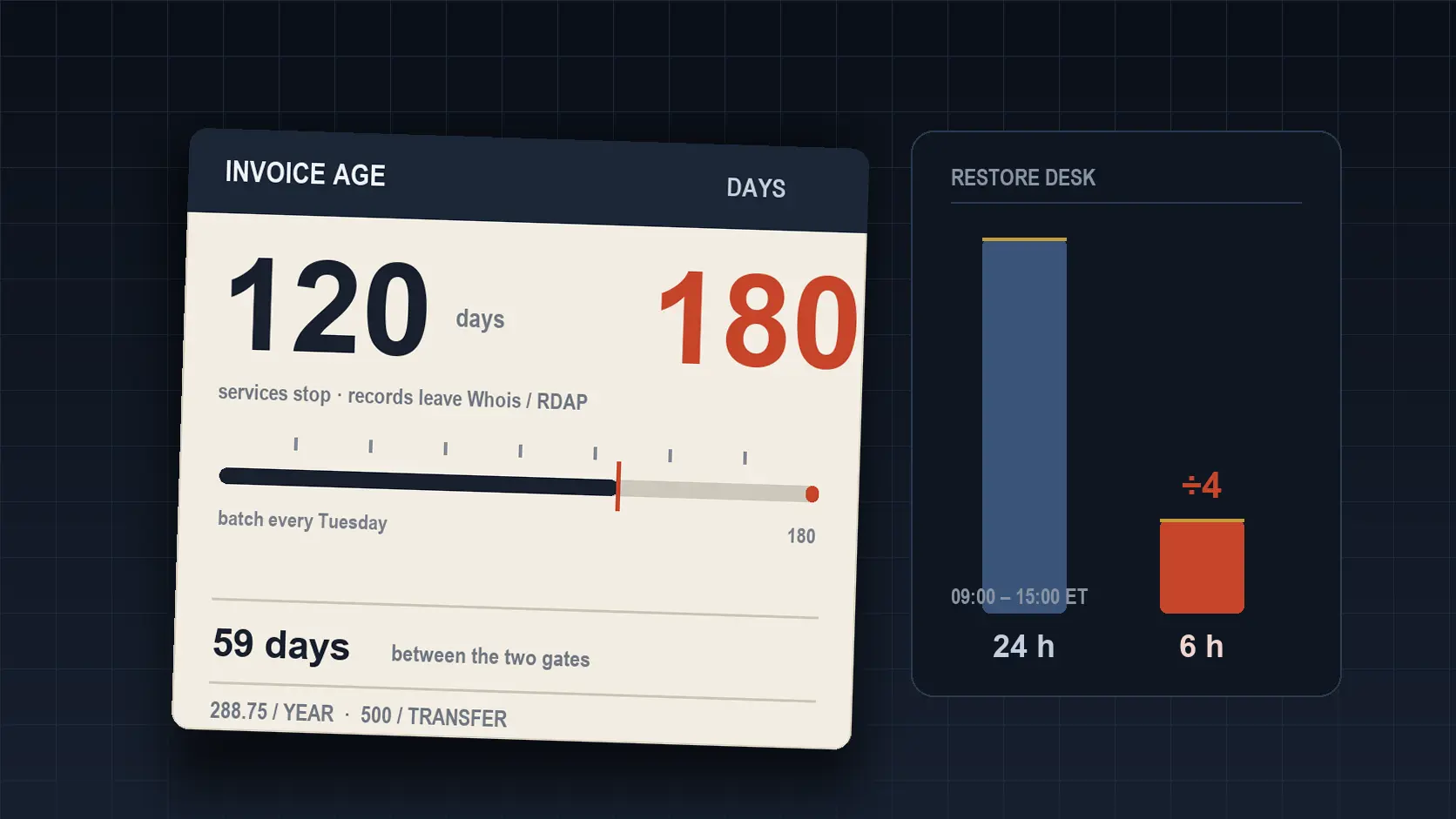
- Under ARIN's revocation and reinstatement rules, an invoice 120 days past due stops services and removes the resources and their records from Whois and RDAP, in a process that runs every Tuesday. At 180 days ARIN terminates the Registration Services Agreement, revokes the resources and returns them to the available inventory for reissue.
- Reinstatement between 120 and 179 days requires payment of all outstanding invoices plus bank acknowledgement of receipt. After revocation it requires reapplying, qualifying under current policy, paying past-due and any additional fees, and executing the current agreement — and it only works if ARIN has not already issued the resources to someone else.
The smallest bill in the fee table starts the biggest clock
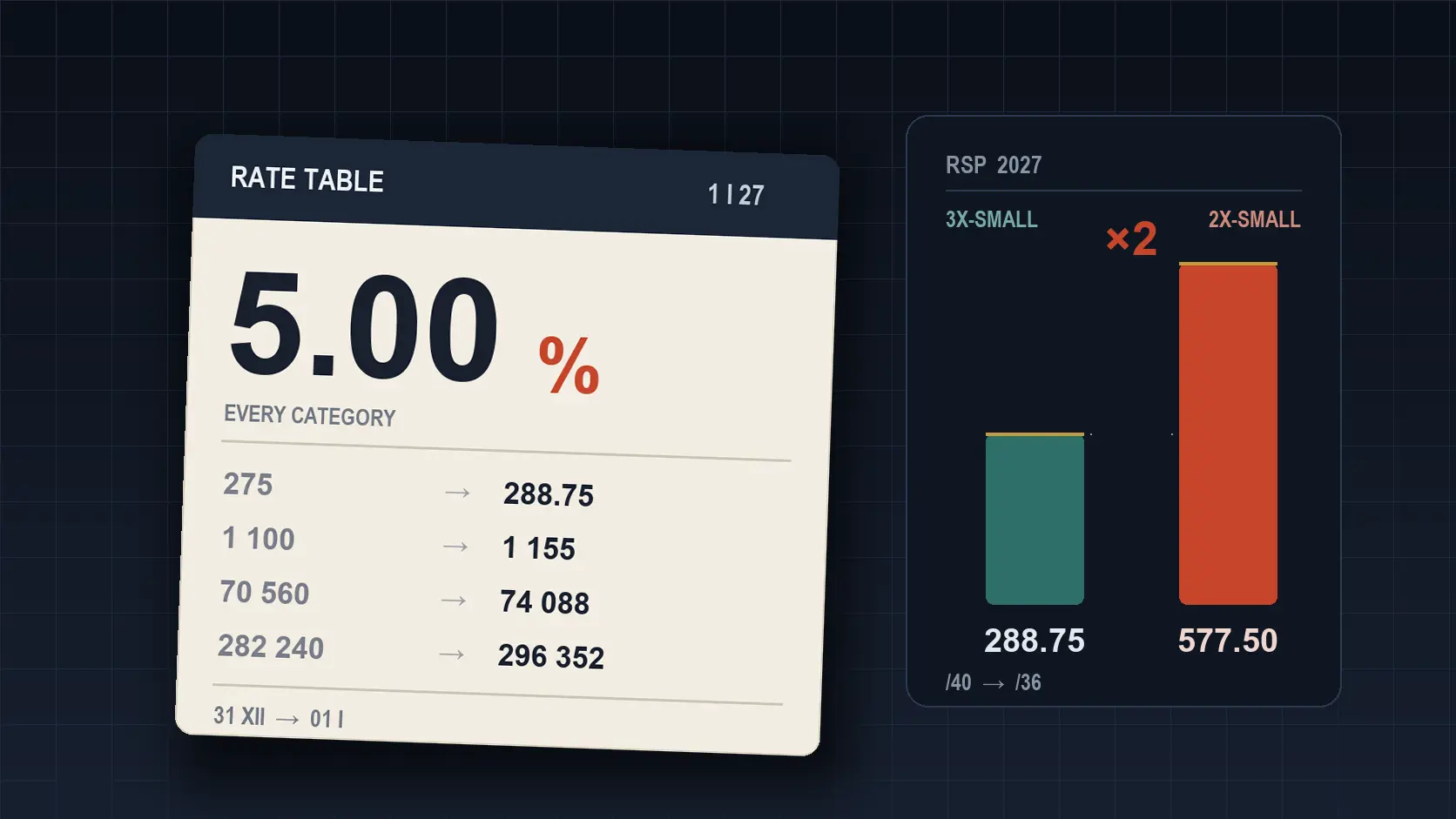
In the 2027 schedule a 3X-Small organization pays $288.75 a year. One source-transfer processing fee under NRPM 8.3 or 8.4 is $500, charged before evaluation and non-refundable. The registry therefore charges 1.73 times a small member's entire annual fee to move a block once, and the annual fee is the line whose non-payment removes every resource the organization holds.
That asymmetry is the whole design. A transfer is an event the customer wants, priced at $500. Continued registration is the thing the customer already has, priced at $288.75, and it carries a six-month deletion ladder triggered by the smaller number. The fee schedule states the terms without decoration: fees are non-refundable, may not be prorated, are nontransferable and must be paid in full.
Two dates, one script, and a Tuesday
The ladder has two steps and the second is automatic. At 120 days past due, services stop and the resources and associated records come out of the public directory. The removal is batched: "This process runs every Tuesday." An operator that misses the day does not lose anything at day 120 exactly; it loses the record on the next Tuesday, and the public evidence of its holdings disappears before any revocation happens.
At 180 days past due, ARIN terminates the Registration Services Agreement, revokes the included number resources and returns them to the available inventory for reissue. Sixty days separate the two steps, and nothing in the published text requires ARIN to warn between them.
The visible consequence is a Whois and RDAP gap. Anyone checking a counterparty's holdings — a buyer doing diligence, an operator checking an ASN before a peering session, an abuse desk tracing a prefix — sees nothing rather than an unpaid-account marker. The registry's record of the organization does not go red. It goes blank.
What coming back costs
Inside the 120-to-179-day window the repair is financial: pay every outstanding invoice and produce ARIN's bank confirmation that payment arrived. The published text is specific that ARIN "must have an acknowledgement from our bank confirming receipt of payment", which puts a settlement step between the customer's intent and the restoration.
After revocation the repair changes in kind. The organization contacts ARIN through Ask ARIN with the organization identifier, name, the resources to reinstate, a call-back number, and files it under Payments and Billing with a subject line of "REINSTATE Request". If the resources have not already been reissued, ARIN works with the organization — but it must reapply for the resources, qualify under current policy, pay the past-due fees plus any additional fees on the Fee Schedule, and execute the current version of the agreement.
Reinstatement requests are processed Monday to Friday, 9:00 to 15:00 ET. That is six hours a day, thirty hours a week, against a removal script that needs no operator and runs every Tuesday. The asymmetry is worth stating plainly: the registry can delete a customer's public identity on a schedule, and the customer can only restore it inside a business-hours queue.
The window nobody measures
Between day 120 and day 180 there are 59 days in which payment, not policy, decides the outcome. The published record does not say how many organizations sit in that window in a given week, how many are revoked, or how many revoked resources are reissued before the owner files a reinstatement request. Those three counts would turn the ladder from a procedure into a measurement of small-operator fragility. ARIN publishes none of them.
The one number an operator can act on is the Tuesday. A payment that arrives on a Thursday has already crossed a batch boundary, and the record stays dark until the following week — which is the cheapest possible lesson in how registries enforce payment.
Sources
Member Briefing
Read the full trend briefing
Members read the full briefing with the source notes behind every finding.
Strategic Circle
A daily briefing in your language, built from changes we have verified.
Join for USD 20/monthCancel anytime.
Members also get the full research library, a daily briefing on the networks they follow and the private forum.