Summary
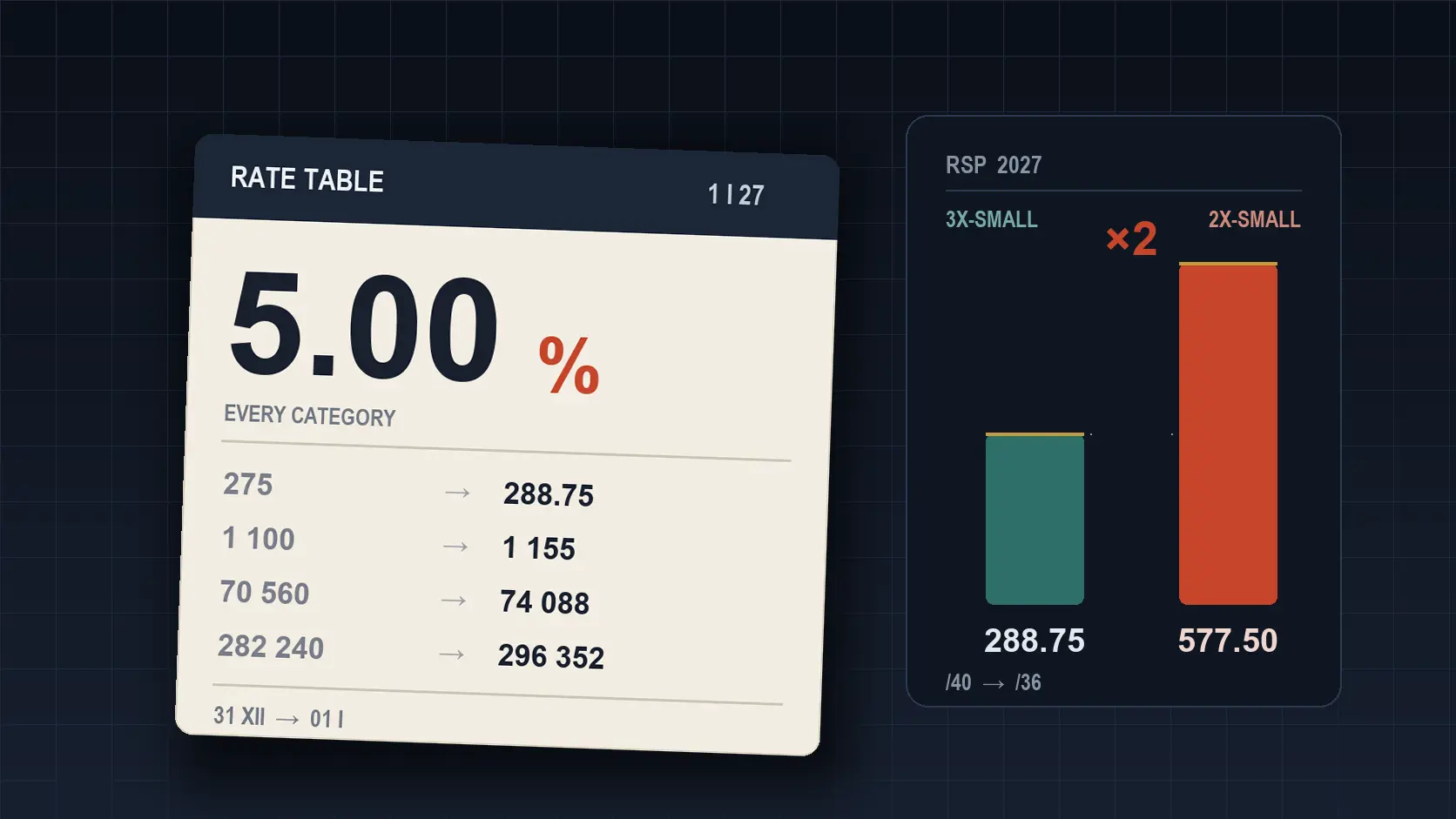
- ARIN's 2027 Registration Services Plan schedule moves all eleven service categories by exactly 5.00% from 2026, from 3X-Small at $288.75 to 5X-Large at $296,352. The published rule caps the annual increase at no greater than 5%, so the Board used the entire allowance.
- The single non-5% change is the five-year IPv6 fee waiver, which the 2027 schedule still dates to 31 December 2026. A 3X-Small organization holding a /36 of IPv6 becomes 2X-Small on 1 January 2027 and pays $577.50 instead of $288.75.
The table moves once
Read the two schedules side by side and the arithmetic is flat. $275 becomes $288.75. $550 becomes $577.50. $1,100 becomes $1,155. $2,205 becomes $2,315.25. $4,410 becomes $4,630.50. $8,820 becomes $9,261. $17,640 becomes $18,522. $35,280 becomes $37,044. $70,560 becomes $74,088. $141,120 becomes $148,176. $282,240 becomes $296,352. Eleven categories, one multiplier, 1.05, and a rule that says the annual increase may be "no greater than 5%". The Board picked the ceiling and used it on every line.
Categories are assigned by aggregate holdings across three resources at once: IPv4 block size, IPv6 block size and ASN count. 3X-Small means a /24 or smaller of IPv4, a /40 or smaller of IPv6 and one to three ASNs. 2X-Small means anything larger than a /24 up to a /22, anything larger than a /40 up to a /36, or four to fifteen ASNs. Same fee, three separate ways to trip it.
The registry bought IPv6 adoption with a discount, then sent the invoice
The waiver dates from the 2022 fee schedule and ran five years. Its terms were narrow and generous at once: a 3X-Small organization could hold up to a /36 of IPv6 and stay in 3X-Small. Everyone else in the table pays for IPv6 size, so this was the one place where the registry gave address space away without moving the customer up a row.
ARIN's July 2026 notice sets out the ending without euphemism: the waiver was "a time-bound incentive to support IPv6 adoption among smaller organizations", it expires on 31 December 2026, and from 1 January 2027 organizations are billed on aggregate holdings, which "may result in a move from the 3X-Small billing category to the 2X-Small billing category". ARIN adds that it will contact affected customers.
The 2027 schedule repeats the same expiry date in the same footnote. A schedule that takes effect on 1 January 2027 therefore documents, in its operative text, a relief that ends on 31 December 2026. There is no renewal in the document and no successor band. The waiver is not being phased down; it stops.
What the cliff is worth
The difference between a /40 and a /36 is four bits of prefix length. In address terms that is 4,096 times the space, or about 2.8 undecillion addresses instead of 1.2 septillion, and the operator will route the same handful of subnets through either. In fee terms it is $288.75 a year, which is exactly one 3X-Small annual fee. The penalty for accepting the registry's own IPv6 advice is one extra membership per year, forever, until the space is handed back.
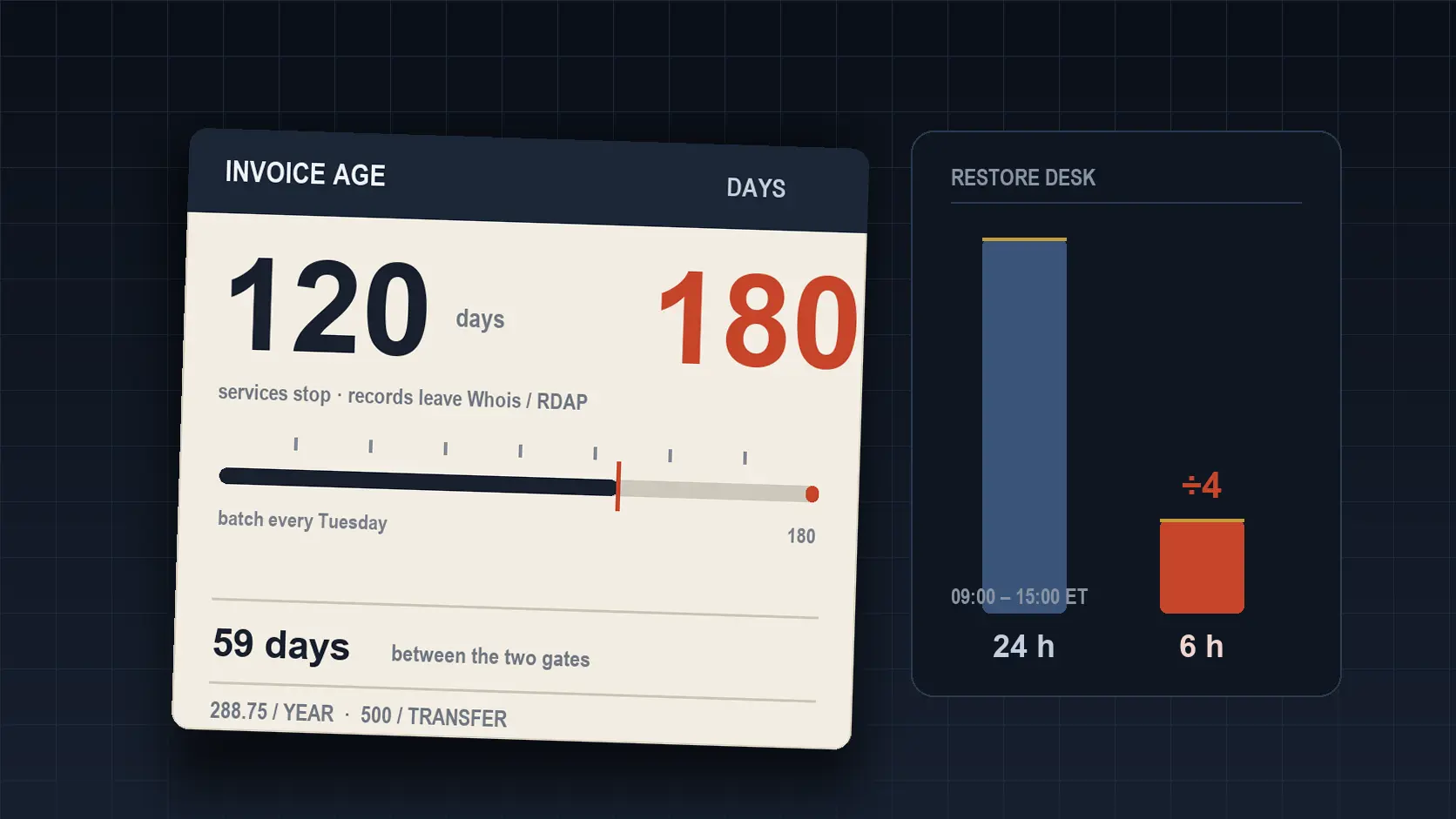
The rest of the 2027 table puts that number in context. A single source-transfer processing fee under NRPM 8.3 or 8.4 is $500, charged before evaluation and not refundable. One transfer therefore costs 1.73 times a 3X-Small organization's entire annual registry fee. The registry charges more to move a block once than to keep a small account open for a year, and the customer who took a /36 pays about one transfer free of charge, every year, for holding it.
Who is in the cohort
The one number that would size this properly is not published. ARIN says it will contact impacted customers but has not said how many 3X-Small organizations actually hold more than a /40 of IPv6, and the July notice gives no count either. That count is the fact that turns a category rule into a bill. Without it, the cohort is invisible outside ARIN's billing system, and the affected operator finds out in January.
The exit is a renumbering project. An organization that returns enough IPv6 to fall to a /40 or smaller goes back to 3X-Small, because the table prices holdings, not history. Renumbering a live network out of a /36 to save $288.75 a year is a decision most operators will postpone, which is the cheapest possible outcome for the registry and the most expensive for the customer.
Sources
Member Briefing
Read the full trend briefing
Members read the full briefing with the source notes behind every finding.
Strategic Circle
A daily briefing in your language, built from changes we have verified.
Join for USD 20/monthCancel anytime.
Members also get the full research library, a daily briefing on the networks they follow and the private forum.